avatarDiane Neill Tincher

Summary

Jizō statues in Japan serve as guardians for children and travelers, symbolizing compassion and protection, and are often adorned with red bibs and caps by mothers praying for their children's well-being.

Abstract

Jizō is a revered bodhisattva in Japanese culture, known for guiding souls before birth and protecting children, including those who have passed away. These statues, typically found along Japan's old highways, are dressed in red garments to ward off evil and illness. Jizō is believed to shelter the spirits of deceased children who are engaged in a daily struggle of building and rebuilding stone towers to reach heaven, a task perpetually undone by demons. The practice of leaving stones and toys near Jizō statues reflects the gratitude of mothers whose children have been healed, as well as the collective effort to aid these spirits in their penance. Additionally, Jizō is a patron for the 'muenbotoke,' souls without family to care for their graves, providing solace to these restless spirits.

Opinions

  • The author suggests that the red clothing on Jizō statues is more than decorative, serving as a spiritual shield against demons and illnesses.
  • There is an underlying belief that Jizō's compassion extends beyond the living, offering comfort and protection to the souls of the deceased, especially children and 'muenbotoke.'
  • The act of stacking stones near Jizō statues is seen as both an offering of thanks and a practical means of assisting the souls of children in their spiritual journey.
  • The author implies that the cultural significance of Jizō is deeply rooted in the daily lives and spiritual practices of the Japanese people, particularly in the context of honoring and caring for the departed.
  • By inviting readers to join Medium, the author expresses a desire to share more insights into Japanese culture and traditions, indicating a commitment to educating and engaging a wider audience.

JAPANESE CULTURE AND TRADITIONS

Who is Jizō, and Why the Bib?

Along the old highways of Japan, you will find Jizō statues, often wearing a red cap and bib.

Jizō is a bodhisattva, that is, one who achieves enlightenment but postpones Buddhahood in order to help others.
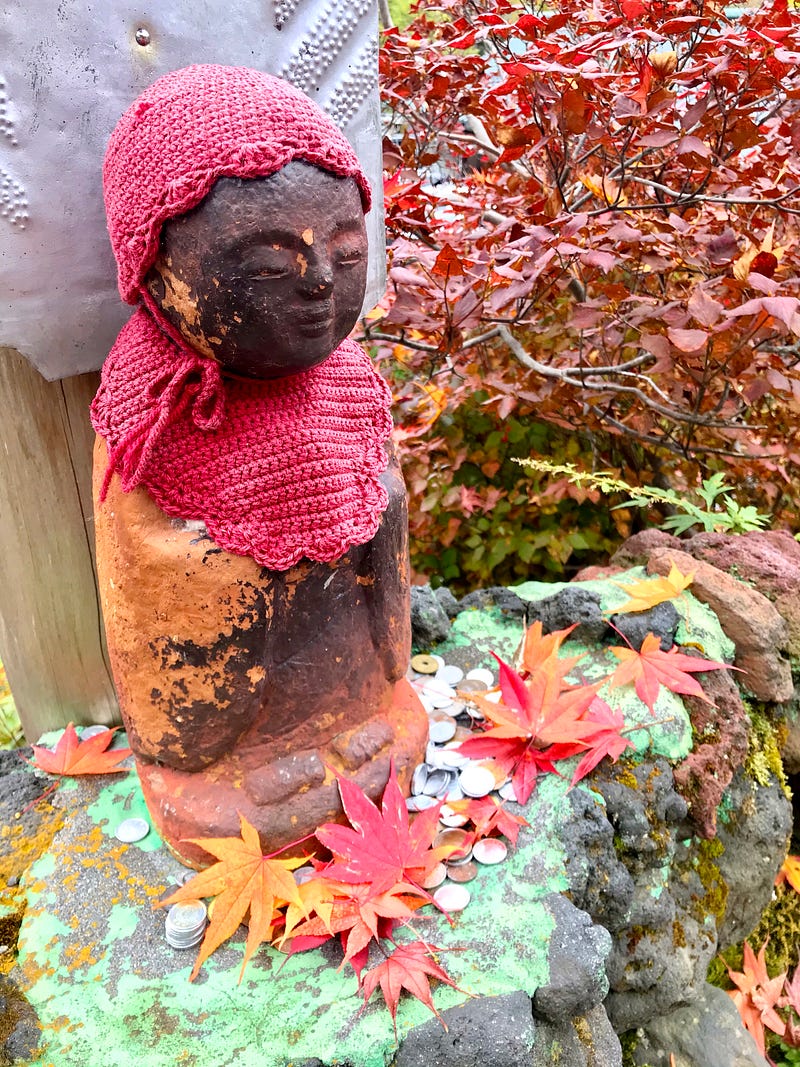
Jizō statue near Ryuzu Falls, Tochigi Prefecture.

Jizō was originally the keeper of souls before they were born. From the late 1800s, Jizō came to be known as the guardian of travelers and children, both in this world and the next.

He watches over all children who have died, including miscarried and aborted babies. These children did not have time in their brief lives to build up good karma, as well, they suffer judgment for the heartbreak that their deaths brought to their mothers. Each day the children build towers of pebbles along Sai no Kawara, the riverbank of souls in limbo, in hopes of crossing over and into heaven. But each evening, demons knock down their towers and beat the children.

Don’t worry, though, Jizō rescues the children, hiding them in his big sleeves.
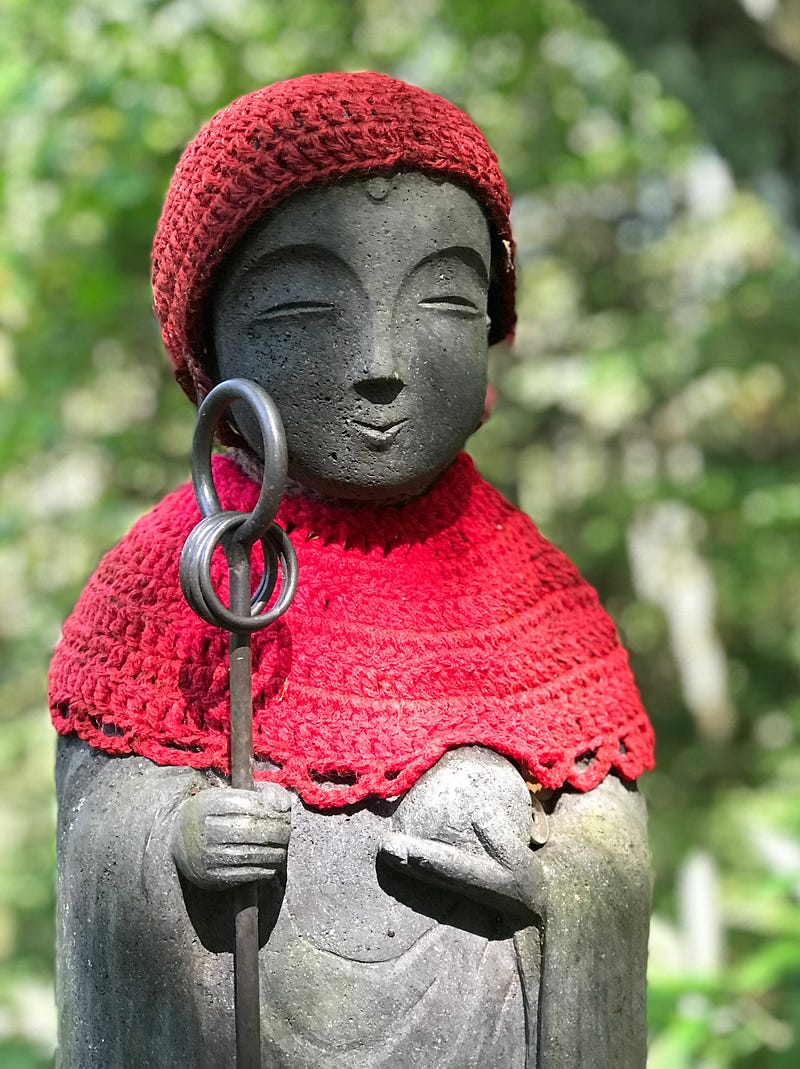
The Jizō of Jizō Pass, Nagano Prefecture.

Thinking of their children undergoing this suffering, mothers pray to Jizō to take care of them. Red is the color for expelling demons and illnesses, so mothers clothe Jizō statues in red bibs and hats, both as a show of gratitude and also in prayer that Jizō will care for and protect their children.
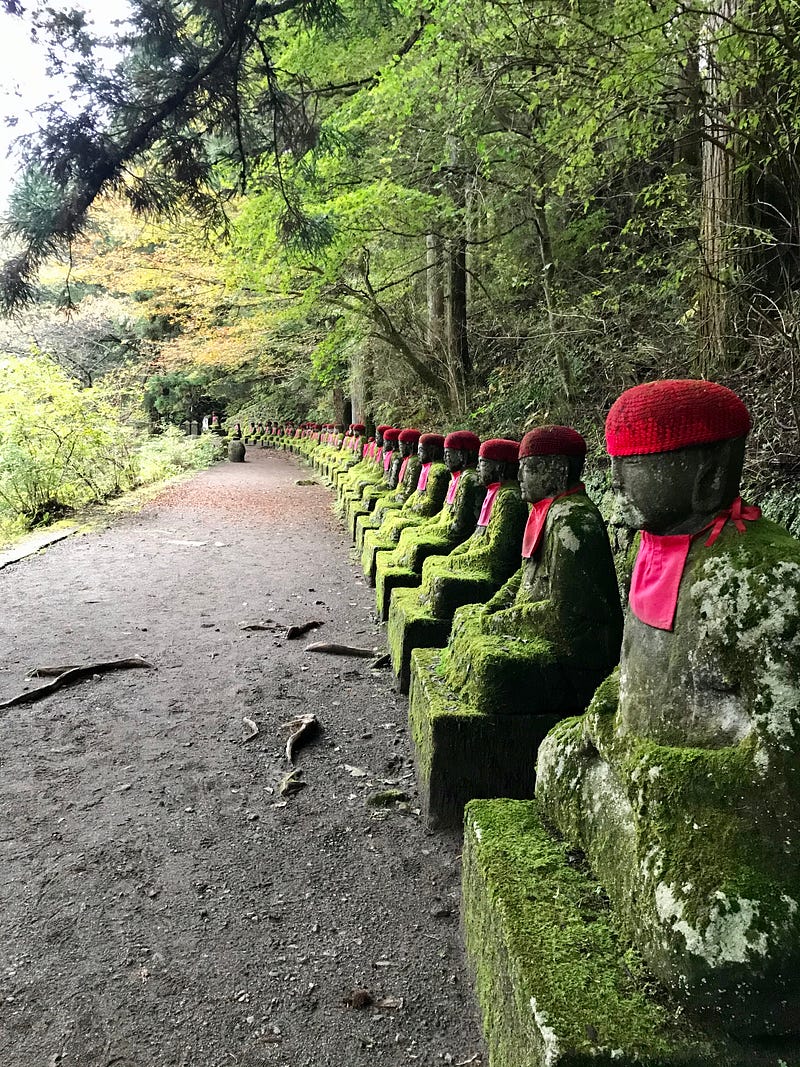
Jizō statues line the walkway along the Kanman ga Fuchi Abyss, Tochigi Prefecture.

You may see piles of stones around Jizō statues, placed there to help the little ones perform their penance, or sometimes toys, left there by mothers thankful to Jizō for healing a sick child.
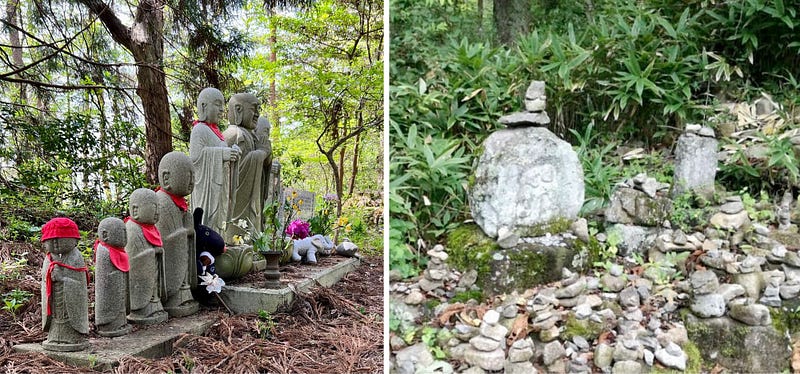
Left: Toys and flowers for Jizo on Sado Island. Right: Stone piles offered to help the children out of limbo, along the Kiso Road, Gifu Prefecture.

Jizo also protects the spirits of muenbotoke, those who have died an unnatural death, at sea, along the road, or those who have no family to look after their graves. These “unconnected dead” find comfort in the care of compassionate Jizo.
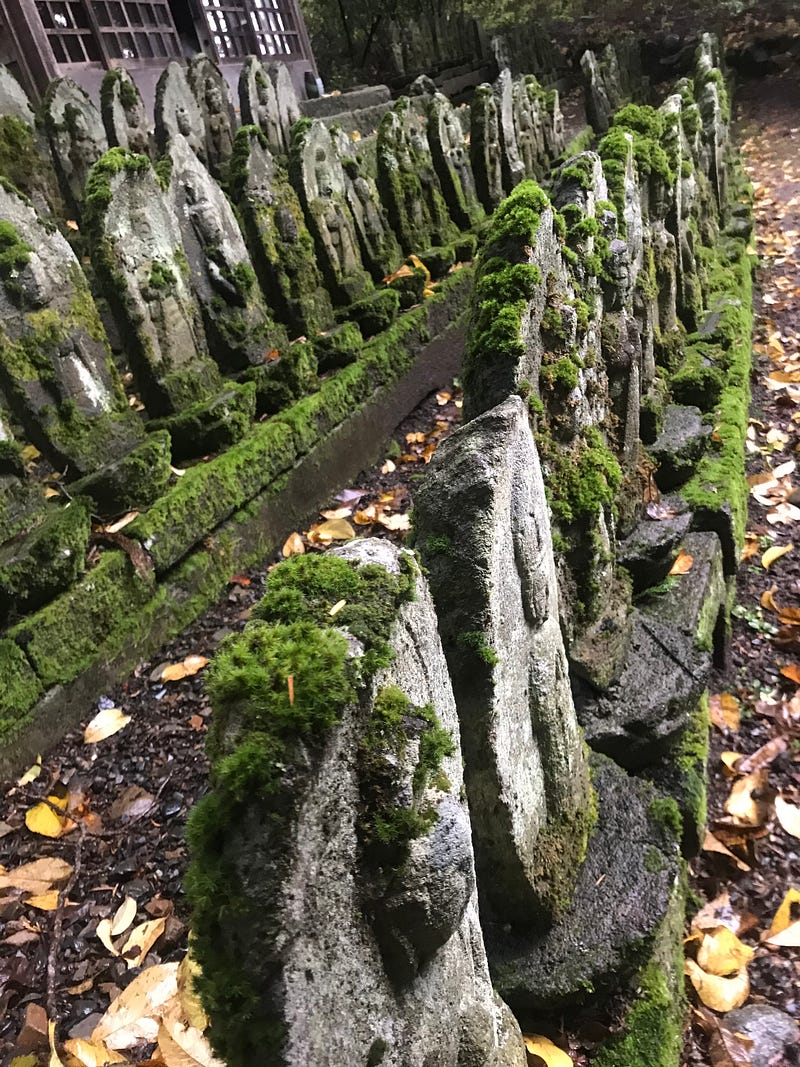
Some of the 200 Jizō statues commemorating the Muenbotoke, homeless spirits, who died along the Nakasendo Way. Hachiman Shrine, Narai, Nagano.

Photos ©Diane Neill Tincher.

If you would like to join Medium to get access to unlimited stories, using the link below will provide me with a small commission. Thank you!

If you have questions about Japan or suggestions for articles, please add them in the comments. For more photos and information on Japan, follow me on instagram at: https://www.instagram.com/more_than_tokyo/

Japanese Culture
Japan
Japanese History
Buddhism
Japan Travel
Recommended from ReadMedium