Abstraction Will Make You More Politically Moderate
How Asking “Why?” Reduces Political Polarization
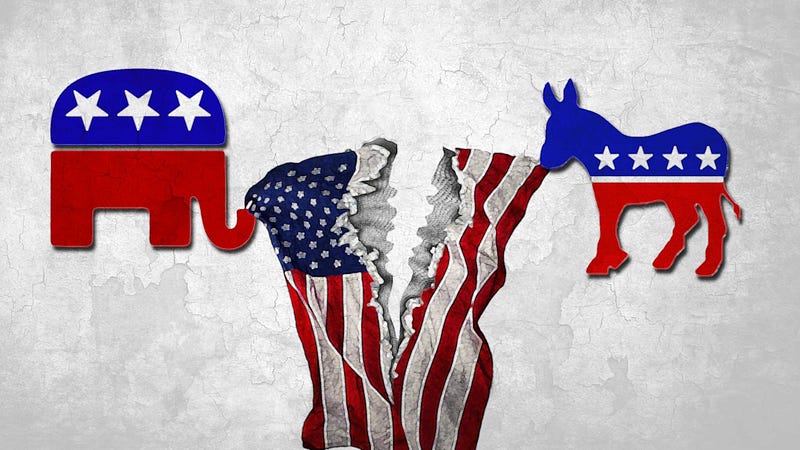
It’s difficult watching the country tear itself apart, when there is such a simple solution. It’s even more painful when people rhetorically groan “why?” without really caring about the answer. Research shows that Abstract thinking can make you more politically moderate, as written about by the Illinois News Bureau, based on the paper Polarized Attitudes Toward the Ground Zero Mosque are Reduced by High-Level Construal. A year later the study’s authors followed up with the paper Disfluency Disrupts the Confirmation Bias.
“Previous research showed that abstract thinking enhances creativity and open-mindedness, but this is the first study to test its power to moderate political beliefs, Preston said.” — Abstract thinking can make you more politically moderate
I won’t rehash what has been written in Illinois News Bureau article, but I intend to add emphasis on the part of abstraction. The book Social Psychology of Political Polarization (2016) picks up where the other studies left off and finds more evidence supporting abstraction. One chapter, “From Silos to Synergies: The Effects of Construal Level on Political Polarization,” finds that “Abstraction Reduces Conservatives’ Prejudice toward Non-Normative Groups” and “Abstraction Reduces Ideological Difference in Moral Values.” The authors of this chapter conclude that:
“a relatively innocuous shift in mindset has the potential to meaningfully affect the course of political disagreements… more work is needed to full understand how, when, and for whom abstract (vs. concrete) thinking will reduce or amplify political discord.” — Social Psychology of Political Polarization, p.157–158, 2016
Another recent study takes a different approach. Re-construing politics: The dual impacts of abstraction on political ideology claims that abstraction cuts both ways. Of course it does; its a double-edged sword, as I have discussed in The Abstraction of Jordan Peterson and The New Reproach of Abstraction. It entirely depends on the type and integrity of abstraction.
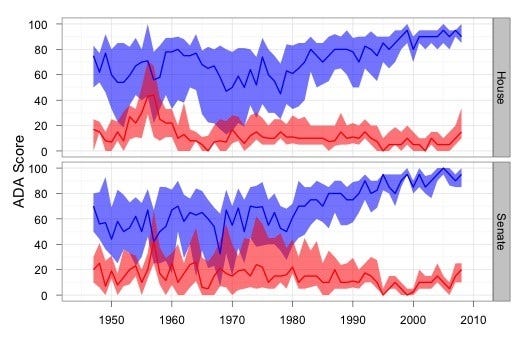
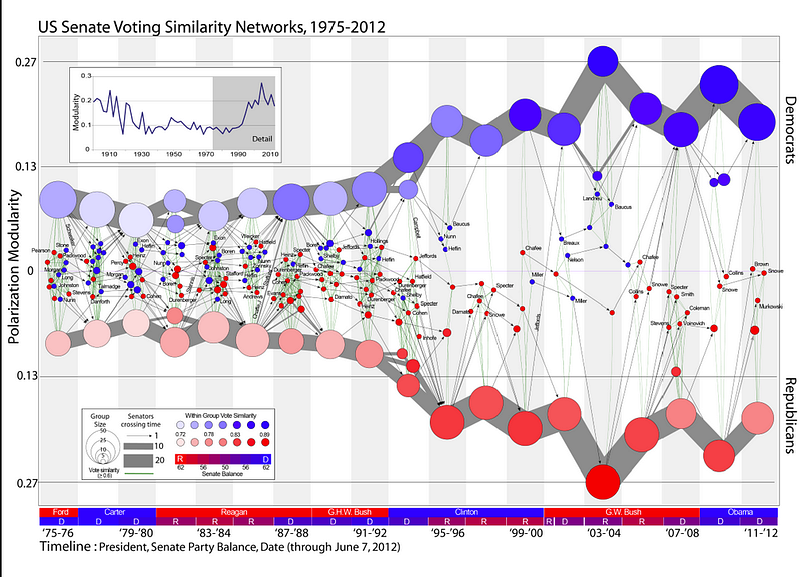
Political polarization is a massive problem in the United States. It can not be downplayed or ignored, even though many people embrace and cherish their one-sided politics. This is something we need to confront head on through abstraction. Polarization is the slippery slope to extremism, and the politics of it help no one. How should the average person interpret this? It means two false ideologies are beating the crap out of each other. It’s counterproductive. The chart below shows the increasing gap over time.
The above journal papers were also cited in our 2014 film/webseries The Abs-Tract: Core Philosophy. As in the paper, we encourage our students to ask “Why?” (at least 3 times) in all aspects of life, to reach higher states of conscious awareness and knowledge acquisition. You can see the citations to the above papers near the end of this episode:
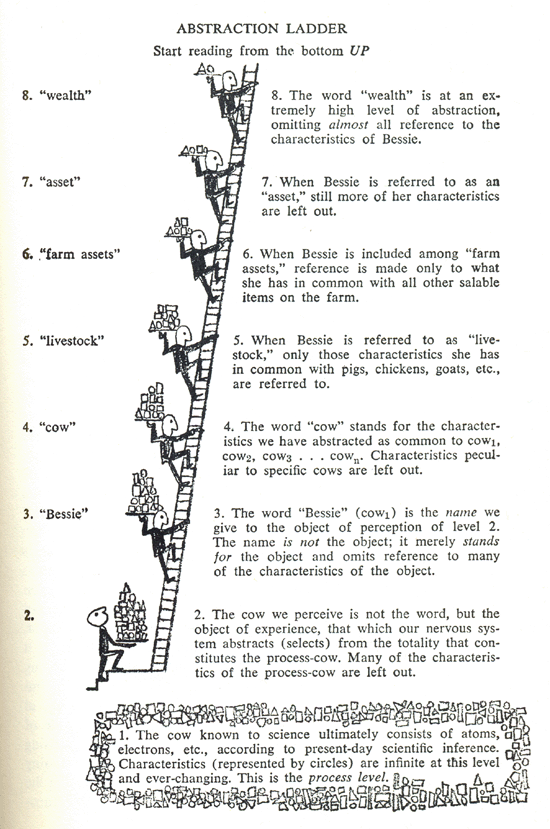
Asking why is similar to climbing up the ladder of abstraction, which is a classic example of abstract thinking. When we are able to move up and down levels of analysis, we can think more rationally and objectively, and this can lead to reduction in political polarization.
It is important to conceive of abstraction not just as multi-level of thinking, or diagrammatic thinking, but critical thinking, and ultimately ethical thinking. Anyone can think abstractly for their own purposes, so that doesn’t make it inherently good. One could make the argument Nazi’s employed a lot of abstraction, but that is facile. Of course they did, but not the kind that reduces political polarization. They didn’t think abstractly about their own political paradox, and neither do Americans.
When we endorse abstraction we are talking about critical thinking and clear knowledge representation. The idea here is that people on extremes of the political spectrum will respond positively to new information if its presented properly, especially the abstract construal of knowledge, as it relates to the big picture and different levels of analysis. We can and must reverse this trend. Imagine that.
For even more info on US political polarization you can watch this short BBC video:
The Abs-Tract Organization is a boutique research and media outfit, centered around the broad concept of “abstraction.”
If you appreciate the work we do, please support us on Patreon for $1.
Join and support our growing metamodern project at http://www.abs-tract.org and on twitter @TATO_tweets.