
About Me — Stephenie Magister
15 years ago, an unexpected Xmas gift set me free
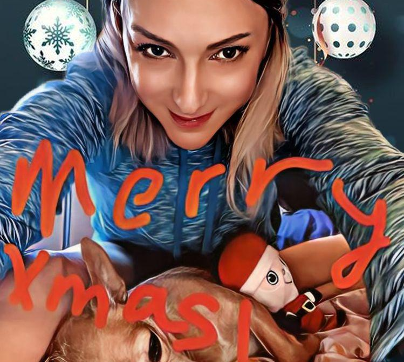
Circa 2007, my early twenties. Dead broke, always borrowing someone else’s laptop, committed to writing at least 2,000 words each day.
Whatever it took.
Musicians, artists, and addicts understand the obsessive pursuit that woke me every morning and sometimes in the middle of the night. I had so much to say. I didn’t need anyone to listen. I just needed to get it out.
Write the story. Save it. Preserve it.
I wrote by hand when I had to, but a laptop helped my hands move as fast as my mind. I later learned to slow down, to appreciate the patient focus of a pencil, but 2007 was barely ten years since I’d gotten out of the last hospital.
Along with standard hospital visits to document my rapidly diminishing weight — trauma and dysphoria manifest in all sorts of ways — I stayed longer periods at the Children’s Rehabilitation Center, then Millcreek of Magee Treatment Center, then Oak Circle Center of Whitfield, each one in that deep south state of Mississippi.
In the hospitals, pencils were dangerous weapons, so I stared out the windows and used my mind to write. I built a memory palace bigger than my mind could contain. When the months turned into more months and the hospital wouldn’t let me leave, the stories kept coming.
These stories felt like the only things that were truly mine. They belonged to me.
My body didn’t belong to me. My feelings didn’t belong to me. But these stories were mine.
Once I got out of the last hospital, I used every computer I could get my hands on to get the stories out of my mind and to a place that had a chance of lasting.
Write the story. Save it. Preserve it.
I made random scribbles or wrote entire drafts on pages, but if Y2K had taught me anything, it was that the scaremongers got it wrong. Digital was forever.
So I wrote on the computers at Hinds Community College. I borrowed a friend’s laptop. I used my dad’s. I saved everything to floppy disks and emailed each draft to myself.
Write your story. Save it. Preserve it.
My life would be easier if I had my own computer, but I might never have enough to afford my own.
And then my family let me know I wouldn’t have to.
My favorite #christmasmemory
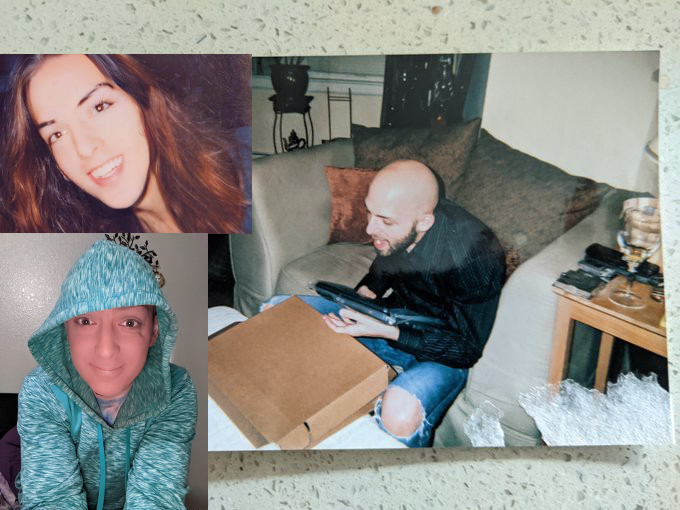
I still can’t believe how easy it was to make people think I was a boy just by wearing a beard and shaving my head.
But despite the disguise?
The look of delight is sincere.
I’ve written extensively about the abuse I survived from my parents, my brother, and my sister. The harmful impact of their actions doesn’t disappear just because I admit they also contributed to something good.
And the thing they did that Xmas wasn’t just good. It was a miracle.
That computer let me obsessively write for hours every day. It changed my life.
Finally, I could write my story.
Finally, I could save my story.
Finally, I could preserve it.
With that computer, I took off
I wrote novels that never got published.
I wrote tons of short stories, most of which were published but are now out of print.
Note: You can still buy a copy (Amazon) of the Atrum Tempestas horror anthology for the low low low (low) price of just under $30. Just look for the story Skin Deep from when I was still going by the name Stephen Morgan.
I began attending a writing workshop in Athens, GA, where I discovered a profound feeling of community, kinship, and belonging among other writers.
I hit my mid-twenties, got sick of working retail, went back to school, and blazed through every essay assignment.
I dove into the science of storytelling so deeply that it became my Master’s thesis: Book DNA: validating how successful mystery literature is constructed (written as Stephen Morgan).
I wrote whatever anyone would hire me to write, whether that be Wild Turkey advertorials in the lifestyle magazine Athena (now defunct), author interviews for the horror-zine The Monsters Next Door (also now defunct lol), and more horror short stories like “Up-Chuck Charlie” at Yellow Mama (not defunct…just out of print).
From writer to editor
I kept writing, but more and more, I used my talents to help other people tell their stories, too.
I took jobs with boutique publishers like Entangled Publishing, where despite encountering the same sick systems I’d been raised in, I discovered as much joy in serving as an editor for best-selling and award-winning authors as I did in empowering debut authors to fulfill their publishing dreams.
I wrote for ScreenRant, Script Magazine, and Writer’s Digest.
I switched hats from interviewer to interviewee and answered questions for Michael Lee Simpson, an award-winning entertainment journalist with credits among Variety, Entertainment Weekly, and Creative Screenwriting.
I picked my damn jaw off the floor when Michael next time invited me to discuss Stephen King with him alongside legendary filmmakers like Marcus Nispel, Michael Grais, and Jeffrey Reddick.
I laughed when he asked me back to discuss with more filmmakers whether the newest Lord of the Rings streaming series was going to suck.
I poured my heart into one memoir short after another — thank you, Medium — each time a little closer to the wholeness and healing that comes from speaking your truth.
I remembered my story is just as worthy as everyone else’s.
Worthiness begins from within
I got a new computer after a while, but it started with the one my family got for me on Xmas 15 years ago. That memory is as precious to me as this other one from over 30 years ago when I was just a little girl enjoying a winter vacation with my mom at the local Best Western.
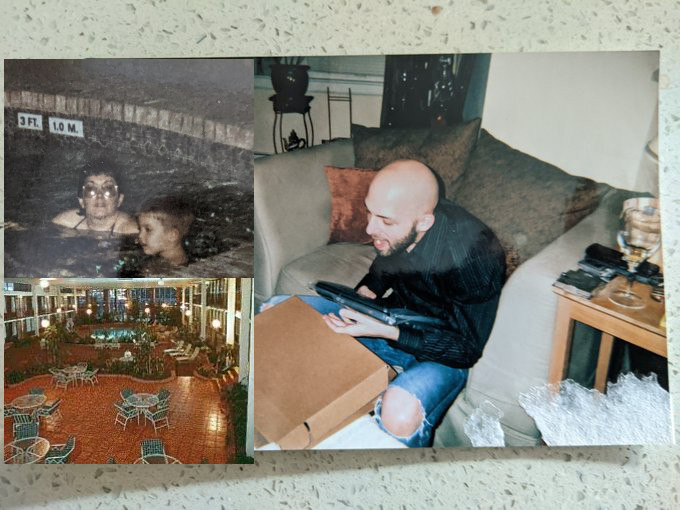
I have a new family now. Everyone just out of view in those pictures does. That’s the way it goes. Relationships end — including those with people we once called friends and family.
My mom has since passed away. I still sometimes look at the obituary I wrote for her and yearn to fall asleep watching Double Indemnity together just one more time.
My dad has dementia, and in one of my memoir shorts, you can read about me telling him goodbye.
My brother and sister remain in my heart, but after the abuse I endured from them and their friends throughout childhood and until recently in adulthood, I accept that loving a person doesn’t make them safe.
For my safety, we will probably never talk again.
That’s okay. It doesn’t mean any of those relationships were a failure. Success doesn’t happen on its own. We decide what we take away from all the things behind us.
And me?
My heart swells with gratitude for my favorite Xmas memory and the people who helped make it possible.
I have a good life now. A wife I love like no other, a step-daughter I love like my own, a basket of fur babies that look to me as their mom, and a bright future ahead in 2023 and beyond.
The end (of the article)
If you like my work and want to support it, buy me a cup of coffee! For more of my content, you can follow me for free (3 articles a month) or for $5 a month (unlimited access).
I’m also an editor for best-selling and award-winning authors, but to hire me, you need to go to Stephenie Edits (offsite).


