
About Me — Scott Ahlsmith
Plus qu’hier, moins que demain¹
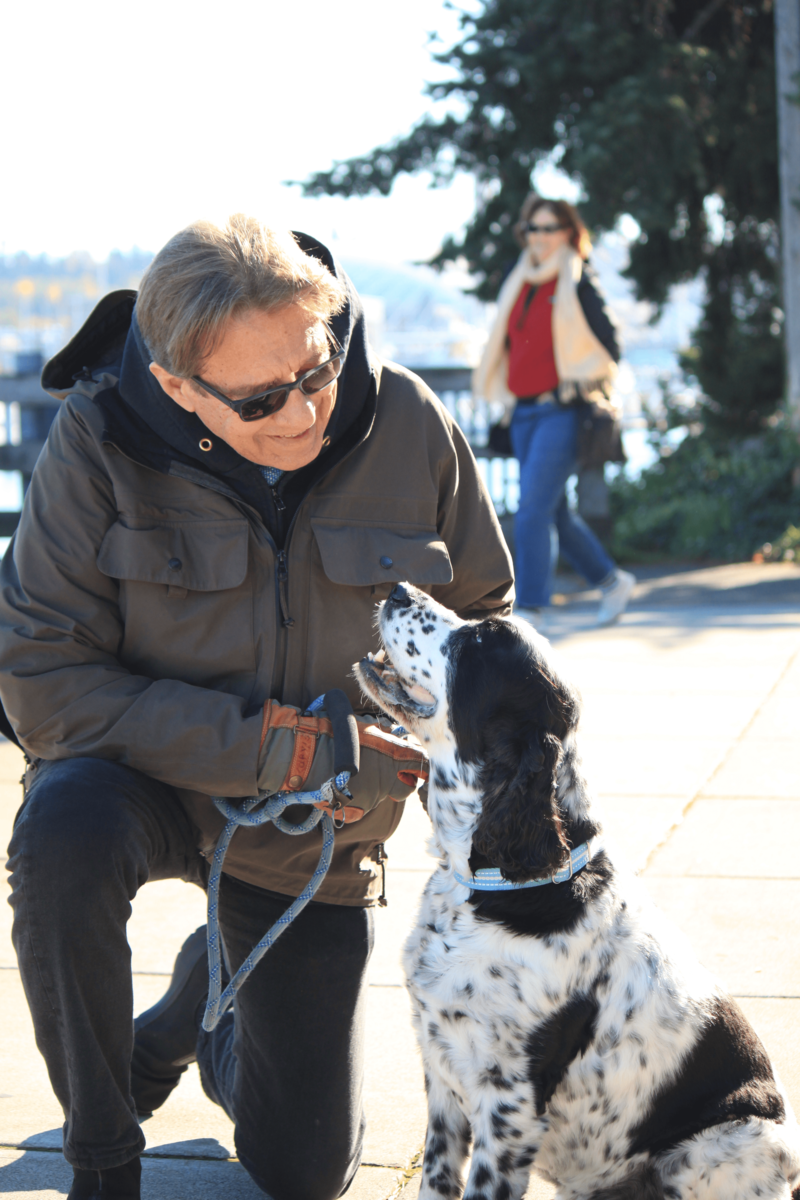
The attending physician said, “the next eight hours will determine whether you survive or not.”
After two near-death experiences and one actual death, this was not good news.
I've led what many politely call "an interesting life." By interesting, they mean tending to go beyond traditional boundaries — also known as pushing the envelope."
My first near-death event involved a misdiagnosed ruptured gall bladder.
After exploratory surgery, I learned the rupture was a few days old, and my body constructed a wall of fat around the toxic debris field. My surgeon attempted to add humor to the situation, telling me, "it was like your body created a little sandbox to protect you."
The concept of my cells protecting me by creating a sandbox was my first experience with self-healing.
Next, at age 42, I survived a significant heart attack followed by quintuple bypass surgery. This incident taught me the importance of managing stress, so I filed for a divorce. Problem solved!
On December 1, 2015, I experienced a Sudden Cardiac Arrest in a downtown Seattle elevator. Fortunately, one of our software engineers was in the same elevator. He recently migrated from Norway and learned English repeatedly, watching a CPR video. His chest compressions fed oxygen to my brain until the paramedics arrived with their defibrillator.
Spoiler Alert: There was no brilliant flash of light, no singing angels, and no reuniting with my beloved Samoyeds, before, during, or after this event. There was only a two-week gap in my memory and subsequent weeks of challenging physical therapy.
A rare autoimmune disease with the equally rare name of ANCA-associated vasculitis — microscopic polyangiitis (MPA) caused the fourth and the "eight hours to survive" event. This autoimmune disease flipped my antibodies from protectors to killers — so much for the self-healing sandbox theory.
These rogue antibodies attacked healthy capillaries, whose job was to drip feed blood to my heart, lungs, sinuses, kidneys, nerves, hands, feet, and most everything else.
When a routine lab test indicated I was experiencing renal failure, I crawled into Tacoma's CHI Franciscan hospital.
Most ANCA vasculitis patients confirm that their disease was misdiagnosed and mistreated for months. In my case, I believe this disease slowly attacked my vital organs without proper treatment for at least ten years.
No one is sure what triggers ANCA vasculitis. Still, my intuition is that two college summers spent spraying Iowa roadsides and cornfields with herbicides and pesticides did little to prevent the disease.
And now, for some good news.
I survived the eight-hour survival test. I feel better and have more energy than during the past ten years. I walk at least two miles (3.2km) every day, climb five flights (U.S. and metric) of stairs, and employ contemporary alternative medicine (CAM) practices under the watchful care of a team of really smart, supportive, and dedicated medical professionals. My kidneys responded to CAM treatments which allows me to reduce dialysis from 12 hours per week to six with an occasional two-week lapse for international travel. The only remaining disruption is a RITUXAN infusion every six months to keep the vasculitis in remission.
Do Not Waste This Disease
As you might imagine, after four flirtations with death, the prognosis was less than encouraging, but giving up or living in the — why me? — world is not my style.
With the help of my medical team and a good bit of trial and error, I began systematically attacking this disease and sharing my progress with other patients using my home-grown website named DoNotWasteThisDisease.com or DNWTD.com for acronym aficionados.
Much of my improved health is due to intense visualization, meditation, creative thinking, exercise, nutrition, and a strict regimen of daily healthy habits. These wellness activities focus on improving my body, mind, and spirit. This website will become a repository for collecting and sharing these practices with others.
The website’s purpose and my writing assure individuals with chronic diseases that we can be both well and ill at the same time.
We don't have to choose one or the other.
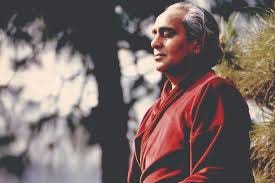
Swāmī Rāma
One of my life's blessings was meeting Swāmī Rāma while conducting biofeedback research at Menningers in Topeka, KS.
His sponsors, Dr. Elmer & Alyce Green, held informal evening meetings in their living room. About ten of us sat around Swāmī and listened intently for hours as he shared ancient wisdom.
He spoke about Ayueravedic techniques, yoga, meditation, breathing, truth, nutrition, healing, visualization, and his ability to control psychophysiological processes, like simultaneously raising and lowering the temperature in adjacent areas of this hands by 10°F (12.2°C).
With extensive mindful and body preparation, Swāmī could place his heart in rapid atrial fibrillation, so it stopped pumping blood for several minutes — much like my Seattle elevator experience.
Much of my healing is due to Swāmī's mentoring.
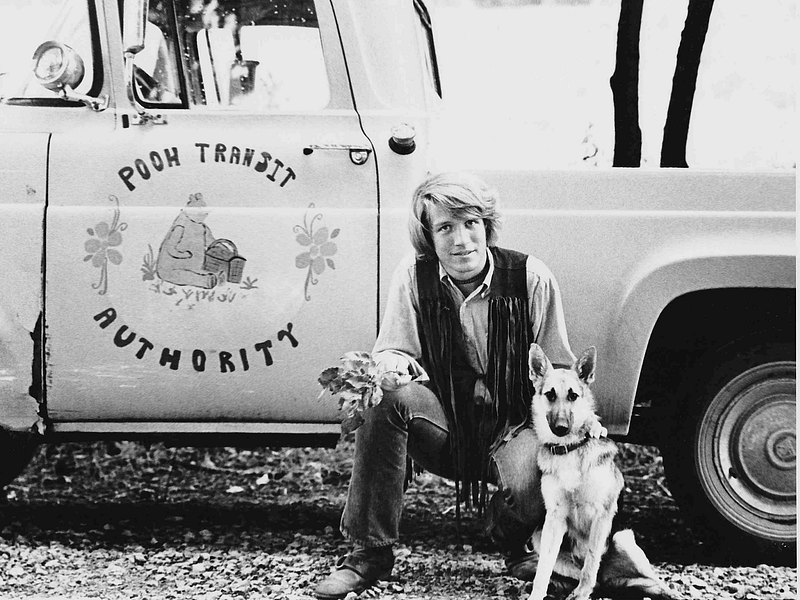
Woodstock
1969 was a seminal year. We were on sensory overload ranging from the Viet Nam Moratorium March to anti-establishment protests and from hippies and communes to sex, drugs, and rock & roll (not always in that order).
I lived at The House at Pooh Corners, a commune of like-minded creative types, located on a small acreage outside of Lawrence, KS. Four of us were permanent residents while dozens of others crashed for hours or weeks due to a short mention in the day's predominant social media: the: Whole Earth Catalog.
The abundant hemp crop planted along the railroad tracks between our property and the Kaw River was an additional attraction. The U.S Government planted this crop to supply the Army with rope during the First World War.
In 1969 the Army no longer needed rope. However, irrigation from the river and the rich eastern Kansas soil produced a bumper crop of marijuana which helps explain Pooh Corners' popularity and the sagging rafters from the harvest drying in the attic.
The drive from Pooh Corners to Woodstock was nearly as eventful as the concert. I stopped for hitchhikers wanting to attend the concert and made a truckload of new friends.
During one of our attempts to buy gas in northern Arkansas, we met a father and son dressed in matching bib overalls with shotguns pointed at us. They indicated we should keep driving because "we don't serve your kind here."
As a blond hair, blue eye, small-town Iowa boy, this was my first exposure to discrimination. We wished them peace and love and left a small bouquet on one of their gas pumps.
As we drove away, we heard two loud gunshots and figured they needed to punctuate their prejudice.
After three days of driving, parking miles from the concert venue, and trudging through wet, muddy fields, we experienced a religious phenomenon. The fencing was down, and the concert was free by the time we arrived.
The overall vibe was harmonious and frequently naked. The music was mesmerizing, and despite the lack of food and restrooms, there was no violence.
Woodstock was an explosion of ideas — a magical head trip.
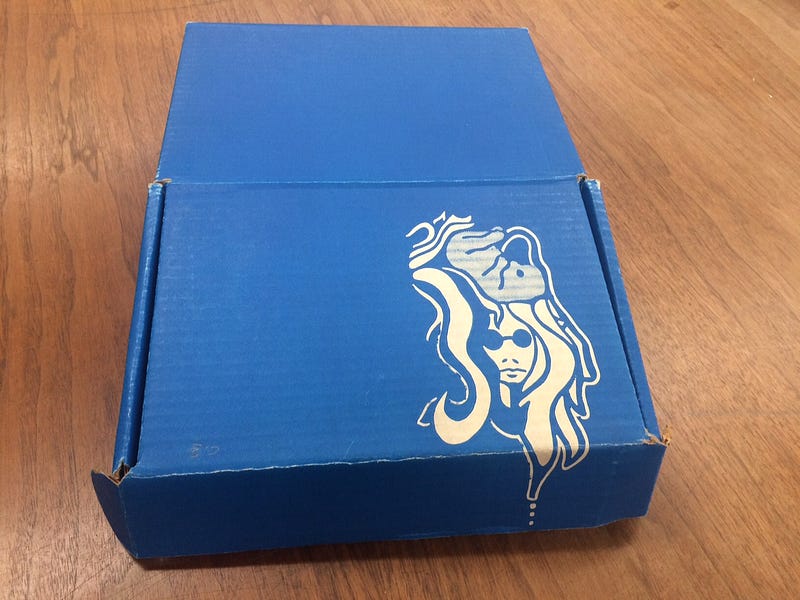
University of Kansas 1971 Yearbox
The following year, I accepted the position of editor-in-chief for the University of Kansas 1970/71 Jayhawker yearbook.
A revered KU publication, the first Jayhawker went to press in 1873 and the Chancellor’s custom bookshelves display every edition since then . . . except one.
"Chaotic turbulence" aptly describes the early 1970s. From Viet Nam war protests to counter-culture movements, Buffalo Springfield's For What Its Worth became an appropriate anthem.
There’s something happening here But what it is ain’t exactly clear
I felt this KU yearbook should record the stories of the year's protests and civil disobedience for posterity.
Taking a page from Marshall McLuhan's playbook, our staff's mantra became "the medium is the message." And the medium shifted from the traditional yearbook binder to an oversized DIY blue cardboard box complete with "insert Tab A into Slot B" assembly instructions and dimensions intentionally larger than the Chancellor's bookshelves.
Nowhere on the box was the year nor the name Jayhawker printed. The sole design element was a high-key graphic of a fetus in long flowing hair symbolizing the 'birth of ideas.'
The 1971 Jahawker Yearbox became the message.
Travel
Most of my post-college career involves travel, which is still a passion and never was a job.
My travels began with an incentive trip to San Juan to recognize top-selling Bissell vacuum cleaner salespeople. Contrary to attempts at humor, the job didn't suck.
My next destination was Málaga to reward top-selling Midas Muffler associates and then to Cannes to honor top-selling Utica National Insurance agents.
I also led travelers to Moscow to legitimize a boondoggle and tax write-off for wealthy North and South Dakota sugar beet farmers. The result was introducing Soviet Union farmers to decadent and rude American tourists.
Those incentive trips, hundreds of additional worldwide itineraries, and noteworthy events fuel my desire to write and share.
I travel for pleasure today, although I still enjoy telling others where to go.
Family
I spent my first five years on our central Iowa family farm. My nanny was a Collie named Lady. As a herding dog, she kept me out of the machine shed and the water cistern, which contained fascinating goldfish to reduce the algae and attract curious four-year-olds. Lady was very good at her job and initiated my respect and love for animals.
My father was an engineer, inventor, visionary, and banker, and he was a waste-not-want-not product of the depression.
He and my mother met at an Iowa State mixer after graduation ceremonies. They wrote letters (strategically destroyed before I was old enough to read) to kindle their love for the next two years. My mother was a dietician for Stouffer's restaurants in Cleveland, OH, and my father was designing high clearance sprayers for Iowa's cornfields.
My father died in 2017, and my 98-year-old mother continues living in The Village, an innovative senior lifestyle community she and my father envisioned, built, and opened in 1991.
My kid sister, Sana, died at age 38 from an improper ovarian cancer diagnosis a few days after my first heart attack.
Our family's hearts broke in many ways that year.

Every day, my son, Taylor, makes me a grateful father. He's compassionate, empathetic, talented, and intelligent enough to marry Rachel.
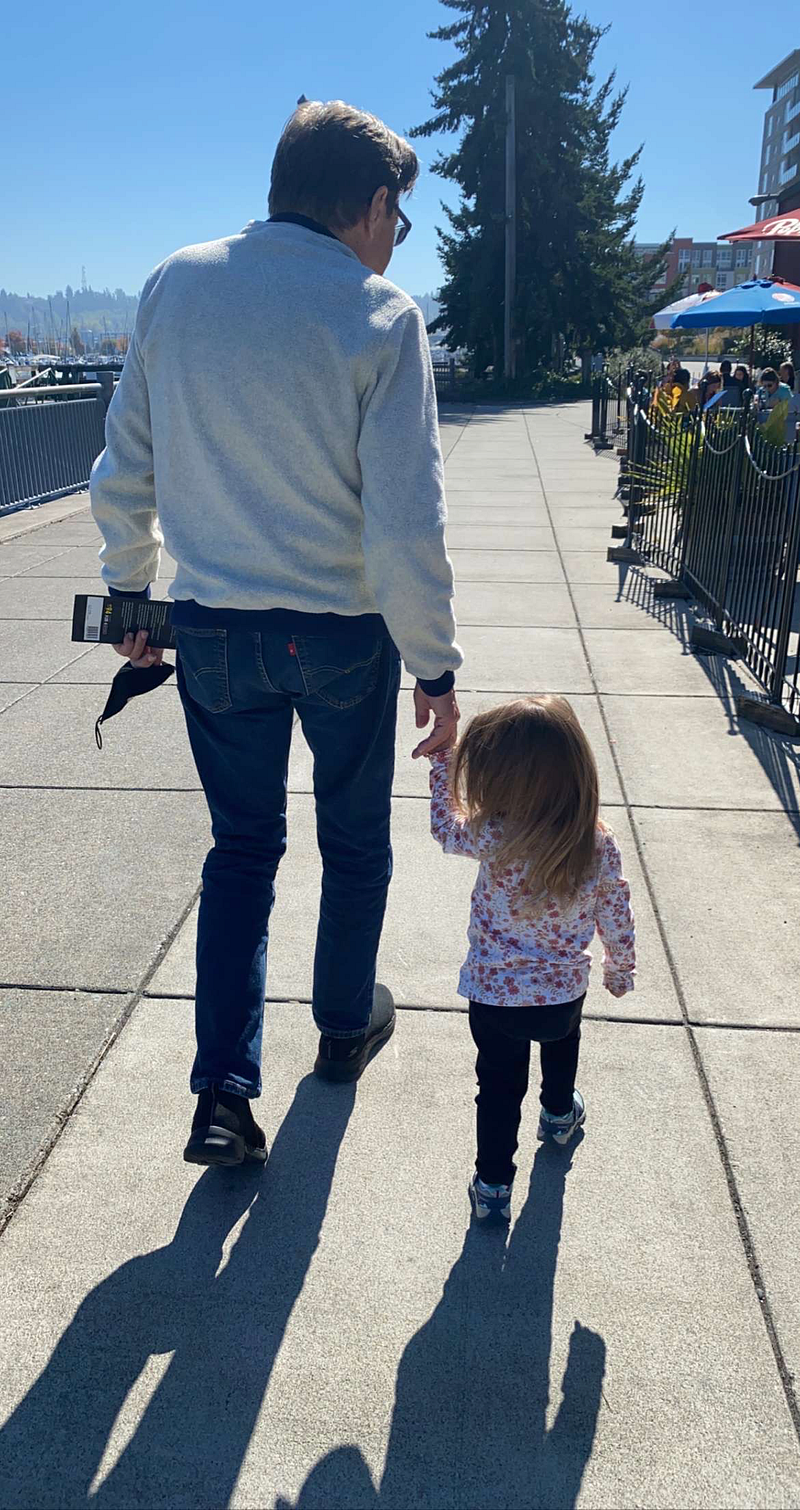
Together, they're instilling their best qualities in my granddaughter, Olivia. Fortunately, they only live about 20 minutes away so that I can closely monitor and critique their progress.
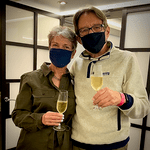
Success with marriages eluded me. However, I met my best friend, Kristi, more than 16 years ago. Our relationship began in a Cuban bar on St. Patrick's Day in Prague.
What could go wrong after that?
We live apart but share parenting responsibilities for Harley, our English Springer Spaniel.
During Kristi's career, she guided and directed, as president, a very successful multi-billion dollar luxury travel consortium for 25 years.
Kristi's strengths include fierce independence, a finely tuned intellect, and the ability to condense long-winded concepts into a few key takeaway points.
I know she’ll reach for her red pencil once she notices the length of this autobiography.
She often mentions how her graduate school thesis about dealing with troubled adolescents was excellent management training and patience for extending our friendship.
Our mutual love for travel and the friends we've made provide us with an impressive global support group.
Finally, you're nearing the end . . .

When I write a story, I try to picture the intended audience. Frequently, I create a reader persona to make sure I write about something my audience finds interesting.
The persona for this story is Olivia, my three-year-old granddaughter. While she's too young to read, I want her to know the G-rated portions of Papa Scott's life.
So long, and thanks for all the fish.²
Disclaimer — As with any medical treatment, be sure to speak with your doctor about using any Alternative Contemporary Medicine (CAM) practices and stop using them immediately if you experience pain or other discomforts.
© SamBuca Partners, Inc. 2022
[1]: The phrase "more than yesterday, less than tomorrow" was penned by French poet and playwright Rosemonde Gérard in a 19th-century love poem written for her husband, Edmond Rostand

[2]: From the Hitchhiker's Guide to the Galaxy written by Douglas Adams.