
About Me — RGomez
A kid from Mexico finds the wonderful world of reading and writing: An interview by A. P. Lambert, https://creativeandbeyond.com/
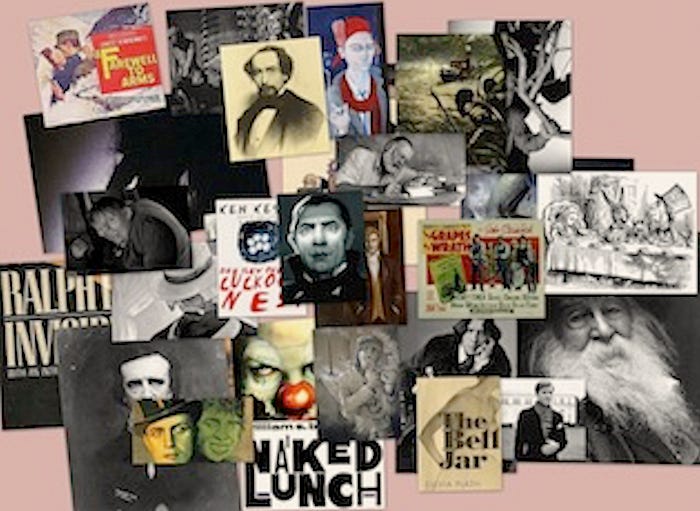
A.P.: Tell us about yourself.
I was born in Castanos, Coahuila, Mexico on June 7, 1950. The pueblo was so tiny it only had one plaza.
Spanish is my first language.
We moved to Chicago, IL, during the summer of 1957. First grade was two months away. I recall Mom and me sitting at our dining room table one afternoon while she struggled to teach me the alphabet — in English, of course.
Mom didn’t speak English either.
I squirmed with angst. My need to learn English was critical. I shared Mom’s desperation as I weathered a tearful panic during those early lessons. I’m sure I would’ve bailed out if Mom hadn’t led me by the hand.
In time, I became an excellent reader. But during those elementary days, I had no clue how reading was shaping my life. As a migrant kid, you see, I stood out in my classmates’ eyes — as different, let’s say. Perceptions soon changed when at last I had to read before the class and they heard I wasn’t so strange after all.
I felt accepted.
It seeded confidence.
One wintry afternoon, snuggled in the drafty attic of our tenement, I came across Aesop’s hilarious fables. It wasn’t the morals of his stories that inspired me to read on — I didn’t understand them — it was the fools Aesop wrote about that tickled my sense of humor. I’d read my favorites to Mom. She’d pretend she didn’t understand the story, and I’d explain it.
Clever woman!
Thank you, Mom.
Throughout the course of my education, now and then an English teacher would ask if I’d considered becoming a writer. No! That did not compute. Not yet anyway.
During my adolescence, I was a bona fide sports nut. I used to sleep with my oily, six-fingered baseball glove and dream of the day that I’d become the next great shortstop for the Chicago White Sox.
In my freshman year in high school, I had my first reading epiphany. Having read Steinbeck’s “The Pearl,” and moved by the tragic story, I sensed in my gut that reading was no longer enough for me.
But… what did I need?
I didn’t know.
I wouldn’t write for some time yet.
But that one season something had in fact changed me. Along with baseball bats and gloves, I now carried mangled paperbacks shoved into the pockets of my blue jeans and windbreakers.
A.P.: Tell us about your favorite creative activities.
Good question. On my computer, I have a sticky note that reads: “Don’t think. Act! And trust yourself.” I read it before each writing session. It’s as good a mantra as any. I’ve practiced this advice so much, in fact, that it works for me like the flick of a light switch:
Turn off doubt.
Let myself be — which has led me to interesting writing strategies.
Consider: If I’m editing a piece whose timing coincides with weeding our lawn, I encourage my subconscious to understand that the writing task is no different than pulling weeds. I’m extracting unnecessary words. When I’m done with our yard, I’ll step back, look at our pristine lawn, and see with great clarity how I want my manuscript to look.
Another example?
Okay.
When I’ve written something that’s too dense to understand, I can improve its readability by chopping firewood. After splitting logs, not only have I expelled nervous energy, I enjoy having broken down complex work into ‘manageable’ pieces. The benefits are rich.
How might you improve an article by washing a glass?
A.P.: When does creativity come easiest to you?
I’m blessed here. Very little distracts me. I can space out and focus on an idea in the middle of a dense crowd during an uproarious super bowl game or amidst a pair of nice legs walking by.
Early morning, however, is the most natural time for me. I enjoy writing before attending to anything else. Unlike a crowded stadium, where I must shut the world out, in the morning I’m already there.
A.P.: What has been the greatest challenge for you regarding creativity?
Ideas flood me. As a lifelong pantser, my greatest challenge has always been deciding which of many possibilities best suits a message that I’m trying to convey.
Learning to outline has helped me so much. It’s much easier to reach a destination if you first know where you’re going.
I’m a smart pantser now. Having your cake and eating it too is possible.
A.P.: Where do you look for inspiration?
Everywhere. I practice mindfulness. I leave myself open to life — and inspiration will arrive. “The Unbearable Lightness of Being” comes to mind, as a feeble attempt to share the awe in which I live my life. It is all such a grand symphony. From watching a spider dangling from a long thread of web to peering deep into outer space, I am a big-eyed kid.
A.P.: What is one suggestion you would give to someone who wants to further develop their creativity?
Play. Play anything. Play daily.
Creativity is a playful child looking for gamers.
A.P.: Where can people find you or your work?
Early work is published offline in newspapers, journals like Nuestro, Rio Grande Quarterly, Second Coming, Saguaro (the University of Arizona at Tucson), Hispanic Magazine, The New York Times Magazine, anthologies like “North of the Rio Grande: The Mexican-American Experience in Short Fiction,” Chicken Soup for the Latino Soul, college textbooks like “Common Ground: Reading and Writing about America’s Cultures.”
Online magazines include 50-Word Stories, 101 Stories, The Drabble, Blink Ink — others.