avatarElisabeth Khan

Summary

The web content is a reflective narrative about a memorable visit to Shantiniketan, a place of peace and learning founded by Nobel laureate Rabindranath Tagore, highlighting the beauty of the landscape, the cultural significance of the location, and the author's personal experiences.

Abstract

The article titled "Abode of Peace" recounts a visit to Shantiniketan, a place deeply connected with the Indian Nobel laureate Rabindranath Tagore. The author paints a vivid picture of the journey through the lush green rice paddies of West Bengal, the unique architecture of the area, and the daily life of its inhabitants. The narrative captures the essence of the place through sensory details, such as the soot and cinders from the train ride, the hazy grayish-blue sky, and the children playing in the village pond. The author reminisces about the Poet's presence, as seen in his wooden sandals left untouched and his spartan room, which evokes a sense of reverence. The article also touches on the local culture, including the significance of the pink lotus buds, which are considered favorite flowers of Lord Krishna, and the open-air teaching methods under the banyan tree. The piece is enriched with a personal poem inspired by the visit and concludes with a mention of a haiku that sparked the author's memory.

Opinions

  • The author seems to appreciate the beauty of discomfort during the train journey, finding excitement in the soot and cinders.
  • There is a sense of awe in the description of the West Bengal landscape, particularly the unique shade of green after the monsoon.
  • The author holds the Poet, Rabindranath Tagore, in high regard, as indicated by the reverence shown towards his personal items and the environment he created at Shantiniketan.
  • The interaction with the local girl selling lotus buds suggests the author's respect for the cultural significance of the flowers and empathy for the young vendor.
  • The author values the experience of the visit but also acknowledges the transient nature of their presence, emphasizing the role of a traveler as a mere passerby.
  • The mention of the haiku by Harsh Kundulli indicates the author's appreciation for poetry and its power to evoke memories.

Abode of Peace

Memories of a long-ago visit to Shantiniketan
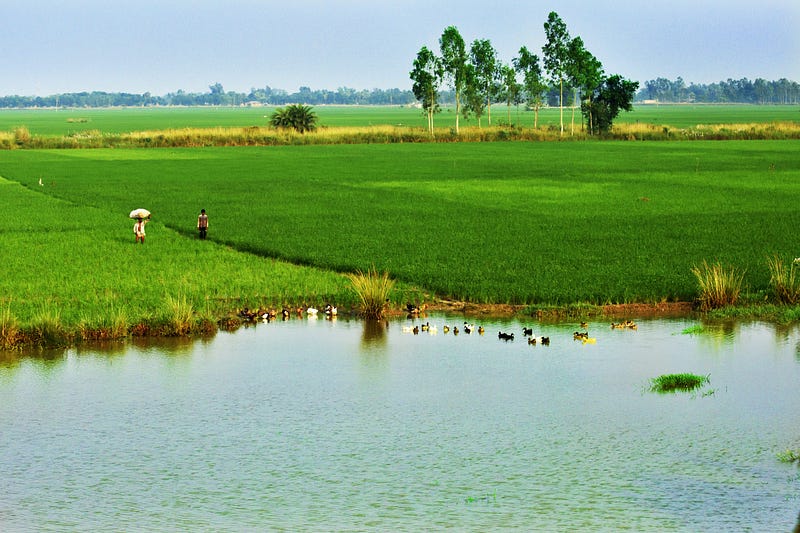
Photo by manzur alam on Unsplash

Not that I enjoy discomfort per se but isn’t it exciting the way soot and cinders come flying in the compartment’s open window and settle on my hair and skin?

The train chugs through the countryside rice paddies to the left and right a shade of green hard to imagine if you haven’t seen West Bengal at the end of the monsoon.

The sky at noon a hazy grayish blue Pale plumes of pampas grass Dark thatch on round mud huts Buffalo wallow in a village pond Children splash and wave.

Of Bolpur I remember this: the Poet’s wooden sandals left untouched upon the floor, his spartan room glimpsed reverently framed by the cordoned door.

The pathways and the banyan tree — He liked to teach in open air… A little girl walks up to me, arms full of pink lotus buds on long, leafless stalks, for sale.

“They are Lord Krishna’s favorite,” she says, too shy to look me in the eye. I’d love to buy them all from her but as a traveller, what can I do? I am only passing through.

“The Poet” refers to Indian Nobel laureate Rabindranath Tagore, who founded Shantiniketan (“Abode of Peace”), now called Vishva-Bharati University, in 1921.

This unpublished poem dates from circa 2000, and is based on my vivid memories of an unforgettable experience in 1975. I felt compelled to dig it up from among my old papers after reading this lovely haiku by Harsh Kundulli.

Priyanka Srivastava Shringi Kumari FILZA CHAUDHRY Runjhun Noopur Desiree Driesenaar Salam Khan Christine Van den Hove Shelley Schanfield Hadjira Hussain Khan Mziqbalk Dr Mehmetyildiz Holly Jahangiri Roz Warren

Poetry
Poem
Nature
Travel
India
Recommended from ReadMedium
avatarConnie Song
Living in the Moment

Poetry

1 min read