
Ableism in an ‘Inclusive’ Environment
Diversity, equity, and inclusion needs to stop ignoring disability.
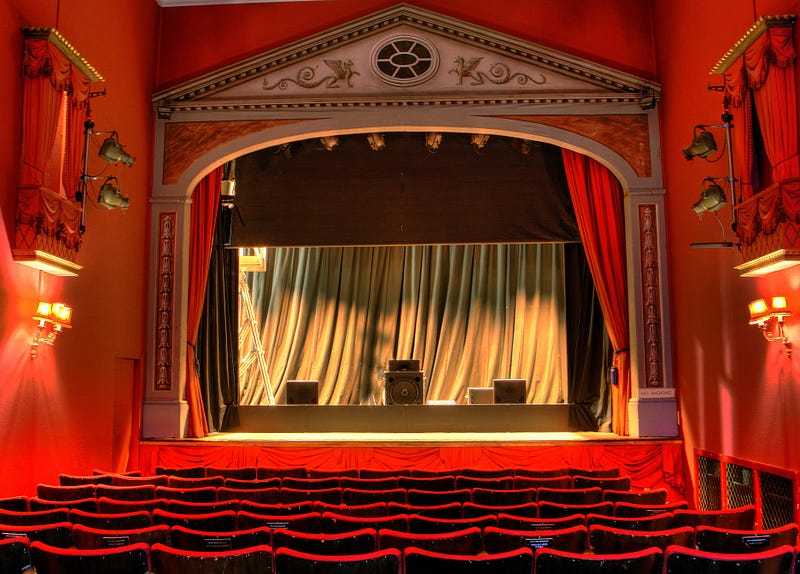
This year, my university held its first sensory friendly performance of one of our productions. That same semester, they put up a different production that featured an offensive portrayal of a disabled character and many uses of the r-word despite the many objections of disabled students in the program. How both these things could happen in the same program at the same time reveals the flaws of an industry that tries to improve while also desperately clinging to the past.
Like the rest of the theater industry, my program has been trying to fix past mistakes with a newfound commitment to diversity. A Diversity, Equity, & Inclusion Committee (DEIC) was formed, and efforts were made to use more socially conscious language and casting. The DEIC spent a lot of time on issues of racism, misogyny, and sexual/gender identity, but disability always fell by the wayside.
The DEIC had a lot on their hands with our department. I spent a year on that committee, so I know the level of prejudice they’re up against. However, there’s a difference in opinion between the disabled people in the department and the rest of the committee.
We feel that disability is a part of diversity, equity, and inclusion. The committee doesn’t.
This is an issue with theater as a whole. People in the theater industry love to tout theater as this welcoming, inclusive environment, but they’d rather pretend disability doesn’t exist. This is just some of the ableism my friends and I have experienced in this allegedly “inclusive” environment.
Casting and show selection
I loved acting. I used to audition every semester even though playwrights didn’t have to. According to my audition feedback sheets, I was good.
Four semesters. Six shows per semester. One callback.
For reference, someone with my scores could usually expect two or three callbacks, especially with larger shows that gave nearly everyone a callback. I only got the one callback, and I didn’t get in that show.
I was constantly getting told that I wasn’t getting callbacks because I wasn’t an acting major, yet I watched so many other non-acting majors routinely get cast in shows. I eventually got so frustrated that I stopped auditioning.
When a ten minute play of mine was chosen for the school’s festival, I was so excited. The play featured a disabled character, so they had to cast me, right?
Right?
They didn’t. At least, not at first.
They asked me if I was okay with a nondisabled actor playing the role. If I wasn’t comfortable with it, we didn’t have to do the show, they assured me.
I wasn’t okay with it, but I wanted my show produced. I said yes.
They cast a friend of mine, who turned down the role on principal. She didn’t want to act disabled. My teacher told me he was looking for a disabled actress from outside the school since we didn’t have anyone in the school who could play the part. I begged to play it, and he agreed.
As the only physically disabled person in the department, I wasn’t the first choice to play a physically disabled person. Or the second choice.
If you thought they’d be better with other disabilities, you’d be dead wrong.
The school never hesitates to select shows with disabled characters despite their poor handling of them. In the most recent semester, the school produced Our Lady of 121st Street by Stephen Adly Guirgis. The show features a character named Pinky, who’s intellectually disabled after a traumatic brain injury.
Pinky has no agency in the show, and he acts very childlike (he’s in his 20s/30s). His only purpose is to create conflict for his brother Edwin, who longs to do more with his life but feels overburdened with his brother’s care.
The portrayal of Pinky in the source material is bad enough, but my school somehow managed to make it worse. They dressed the actor playing Pinky in what were effectively children’s clothes, and they used makeup to give him extra rosy cheeks. Both of these things are stereotypes of people with down syndrome, which Pinky doesn’t even have. They had this actor use videos of people with down syndrome as a reference, which is just creepy.
A couple neurodivergent students and I begged them not to do this show when the season was announced, but they refused. We begged them to get a disabled actor and have one of us assistant direct, but they refused. After preview, we begged them to change the costume/makeup, but they refused.
We tried to get the DEIC involved, but they didn’t want to. They didn’t think it was that bad, and they had bigger issues to deal with.
The building
I know the university itself is responsible for the buildings, but the faculty inside are responsible for some aspects. They can put in work orders when things break, and they can request things like automatic doors when accessibility is an issue.
Emphasis on “they can.”
The front doors on the building have been an issue since I started school there four years ago. They break constantly, and whatever genius designed them made it so after hours when you have to swipe your card to get in, the automatic part doesn’t work.
I’ve been raising issues with these doors the whole time I’ve been in college, and it’s done nothing. It’s not even that they don’t care, they don’t believe that there’s a problem. Even when I get stuck between the doors, they act like nothing’s wrong.
The office door has also been an issue. There’s no automatic way to open the door, and the staff get mad when I bump the door with my chair to knock because it’s a glass door. Meanwhile, there’s a couple people who bring their dogs to the building, and the dogs scratch on the door when they want to be let in. People think it’s cute. The dogs are treated better than me.
I once got stuck in the bathroom because the button stopped working while I was inside and none of the faculty saw this as an issue because it was only five minutes. Yep.
This past year, the professor in charge of the school and my program informed me that they’d be putting in a button on the office door. I told him that was great and asked if they could also get the workers to fix the buttons at the front entrance. He accused me of not being grateful enough.
Can’t freaking win.
General attitudes
If you hadn’t noticed, my school doesn’t consider disability accommodations a priority. I think a lot of this has to do with them not understanding anything about disability or disability rights.
Most professors see me as just a wheelchair user, which is obviously synonymous with paraplegic. Everytime I go to them about an issue or accommodation with my arms or nonexistent fine motor skills, I break their brains. Every. Single. Time.
My playwriting professor (Mr. You’re Not Grateful Enough) constantly told me I needed to write different genres once in a while because all my plays were the same. Almost all my plays were different genres, they just all had disabled characters. I have since confirmed that he does think disability is a genre. This man is tenured.
An acting professor randomly called me the most inspirational person in the class. I was literally doing nothing. I told her after class that disabled people generally consider that offensive. She acted like she understood, but later complained about me being sensitive to her other class. Somehow I came out of that situation apologizing to her.
This is just my experience at my school, not the wider theater community. I’ll go into that in a part two of this, but I hope this part emphasized for you where disability can fall through the cracks of diversity.
If you’d like to support my writing, you can use this link to sign up for a Medium membership. I earn a small commission when you use this link.