
In Just 6 Months, ‘Fever Cameras’ Have Become a Full-Fledged Industry
More than 150 companies now sell alleged fever-detecting technology aimed at the coronavirus
In October 2016, a Shenzen-based video surveillance company called Sunell set up an experiment: It installed thermal cameras and facial recognition in the entrances of six schools in northern Beijing.
Students who entered would have their faces recorded for facial recognition, and their temperatures taken by thermal imaging. While initial accuracy wasn’t up to par, the company refined its technology over the next year. And then it started to expand its services.
Sunell added more schools (and prisons) to its roster of clients, eventually snagging a contract for all schools in the Anning District of Lanzhou City in 2018. To date, the company claims it has detected the temperatures of 6.86 million students.
In 2020, the coronavirus pandemic has proven to be a huge opportunity for Sunell. The company has publicized 20 new installations of its fever detection technology in Chinese schools since March. And Sunell has now started to resell its technology to at least 19 other companies, according to a list compiled by video surveillance trade outlet IPVM.
To date, the company claims it has detected the temperatures of 6.86 million students.
As much of the world adapts to a new normal after the peak of the coronavirus pandemic, and the United States still struggles to rein in rampant cases, the thermal imaging industry is pitching itself as a crucial part of reopening efforts.
There are now 170 companies selling fever detection technology meant to detect people potentially suffering from the coronavirus, up from fewer than 30 companies selling similar technology before the pandemic, according to the IPVM list.
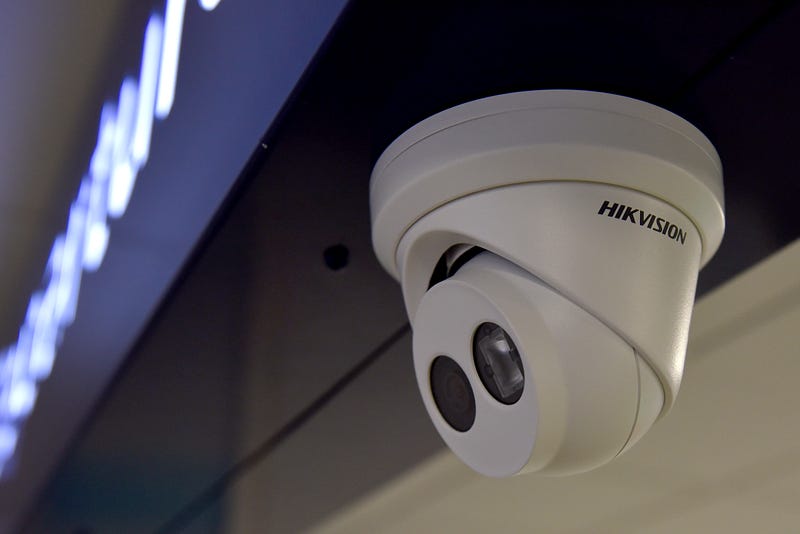
Many of these companies are reselling thermal cameras from larger firms and adding their own fever-detecting software or algorithms, or simply packaging cameras and computers as a ready-to-operate screening station. The biggest manufacturers are Sunell, FLIR, Dahua, Hikvision, TVT, and YCX — all Chinese except for FLIR, an a U.S.-based company. In addition to their own direct sales, these six companies resell through 47 other companies that have newly started selling fever cameras with core technology.
Signs point to the long-term adoption of the technology, as companies invest in fever-detecting infrastructure: FLIR CEO James Cannon told investors in May that the company had booked $100 million in coronavirus-related sales in the first quarter alone, and the company was set to install fever cameras in GM factories. It’s also set to beat analyst expectations for its second financial quarter, according to preliminary figures FLIR released this week.
However, Chinese surveillance giants Hikvision and Dahua will rely on growth outside of the U.S., as they have both been put on federal blacklists for human rights abuses.
FLIR CEO James Cannon told investors in May that the company had booked $100 million in coronavirus-related sales in the first quarter alone.
Cameras aren’t just being installed for stationary checkpoints. Robotics company Cobalt has outfitted its roving office robots with FLIR temperature sensors, and is pitching its tech as a complete “return to work” solution. Rather than having a person with a thermal scanner, a Cobalt robot autonomously does the test, according to a video on Cobalt’s website. The robots can allegedly tell if employees are wearing masks, and will remind workers to wear PPE if masks are not detected.
Another company, Invixium, makes a facial recognition kiosk that has been upgraded to determine a person’s temperature. It shows off a web platform that allows a company to monitor their entire staff’s temperatures, as well as breaking out statistics by date and age of employees.
Fever cameras all typically work in a similar way. A thermal camera captures an image of a person’s face, and then software analyzes the perceived temperature of that person’s skin. Based on how warm a person’s skin is, the software tries to guess their internal temperature. Skin temperature is typically closest to a person’s true body temperature in the area around their eyes and tear ducts, FLIR told OneZero in a previous interview.
In tests performed by IPVM, in optimal conditions, these fever cameras can be accurate to 0.3 degrees Fahrenheit.
Real-world conditions are not always ideal. In one test, a temperature sensor kiosk made by ZKTeco was accurate when the sensor was 18 inches from a person’s face, but was inaccurate by nearly two degrees when the person stood a little farther away at 32 inches from the sensor.
Some manufacturers like Hikvision and Sunell scan a person’s forehead instead, claiming that tests are similarly accurate and people who wear glasses don’t have to take them off. However, hair covering a person’s forehead was found to obscure these temperature scans, and higher temperatures elsewhere on the face were ignored by Hikvision and Sunell’s cameras, according to IPVM testing. Hair, hats, helmets, or applying a cold or warm compress to the head can all alter the effectiveness of the tests.
These nuances are now being passed along to the dozens of companies that rely on Hikvision and Sunell’s technology, and the final clients that they sell to, creating a global game of telephone for the crucial caveats that make each system actually effective.
The biggest caveat to fever detection is that people with the coronavirus don’t always exhibit a fever. Studies suggest that 20% to 40% of cases can be asymptomatic, meaning those capable of spreading the disease wouldn’t have elevated body temperatures to detect.
Companies like Sunell are undeterred.
“We believe that we will definitely win this battle and return to more normal times in the nearest future,” the company wrote.
Update: This story has been updated to acknowledge that FLIR is a U.S.-based company.