Confessions of a Former Black Nun
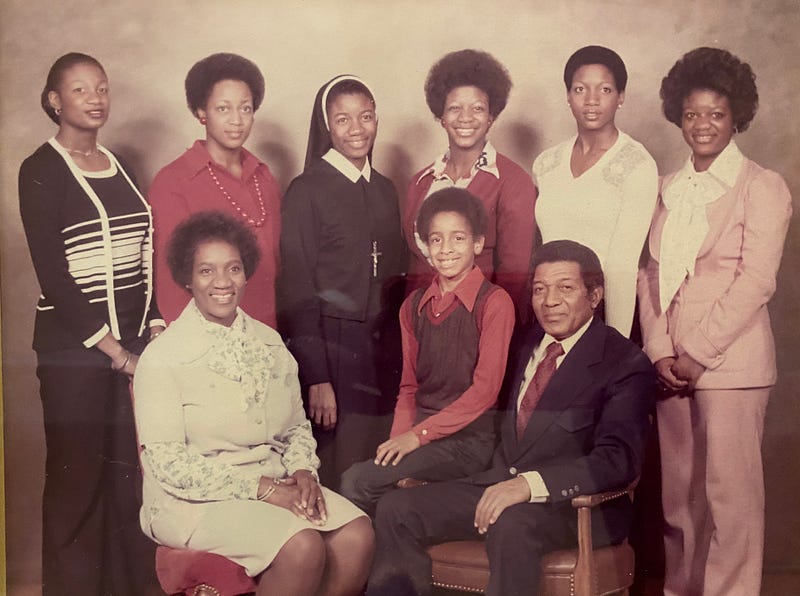
After graduating from a Catholic high school where I was the only Black in my class, I did what some of the white girls did and entered the convent. Since I wore full religious garb, I was quite an anomaly. “Gee, I’ve never seen a Black nun before,” was how I was most often greeted. For the thirteen years that I was part of a religious community of Catholic Sisters, I not only embraced a non-traditional lifestyle but encountered systemic racism in ways that still haunt me today.
Trust me, it took a long time for me to even admit that there was racism in religious life. And it took me even longer to admit that some of my religious sisters were racist. When I entered the convent at 17 years-old in 1969, I was told that if I had wanted to join even five years prior, they would have discouraged me to do so, or at least encouraged me to enter one of the already desegregated communities or one of the few black religious order in the South. The rationale was that Black women would “feel like a fish out of water.” They definitely had that right about how a Black woman would feel. Yet the burden remained on Black women to adjust. For many years, I accepted that burden.
As a fish out of water in religious life, I was expected to learn how to swim on dry land. My White religious sisters were doing nothing to make the waters conducive for other kinds of fish. During my formation years, I took double rotations in the laundry as I was not permitted to care for the nuns in the infirmary as the older nuns did not want to be treated by “a Negro.” I was denied being able to go to the National Black Sisters Conference as they saw no reason why we needed to gather separately and considered such groups radical. For a gathering of Black sisters and priests in the diocese, hosted by the newly arrived Black Auxilary Bishop (the first and only for the diocese), I was first denied but then allowed to go, but only after a call from the Bishop himself. Still, they placed conditions on how I would be able to attend. Since I was the only Black in our local community, I had to be accompanied by another Sister, who, of course, was White. Luckily, she was sensitive enough to ignore her assignment to monitor the event and brought work to do and remained in the rectory parlor during the dinner.
I ignored racially insensitive comments made to me on a routine basis as they echoed what I had heard from Whites all my life. This was just how White people were, I thought. It didn’t matter that they were nuns. I found solace not in advocating for culture change within religious life, a task that would have been impossible, but in working to be the human translator about whites for the black community. I understood and made excuses for their intentions and minimized any negative impact on me or other Blacks. I focused my energies on social justice issues, particularly in working with black youth, as a way to hold onto my black identity. With much resistance from community leadership who did not want the Black community to be a priority area for ministry, I founded a diocesan Black youth group that grew from fourteen students to hundreds over the course of a few years. My efforts in building this group were not met with pride but with fear. Mirroring the White flight at that time, the community had recently moved the motherhouse from the predominantly Black inner city to a all-White town twenty-five miles outside of the city.
As the youth group expanded, so did the fear. I was told by community leadership to change the venue for the youth group’s activities from one of our Catholic girls’ high school to a parish in the inner city. They wanted to avoid giving the school a “Black image” and were afraid that White parents from the feeder schools would no longer want to send their daughters there if the school had “too much of a Black presence.” For me, that meeting was what social scientists define as a critical incident. Critical incidents are often turning points in decision-making, as the situation serves as a huge wake-up call and often causes significant risk of physical or psychological harm if the condition persists.
If religious life were culture-free, I might have been able to survive, but it wasn’t. Because of the number of nuns of Irish ethnicity, Saint Patrick’s Day was celebrated as if it were a high holy feast. Because of the order’s German roots, German customs even influenced how we folded our underwear. Over thirteen years, I ate many meals in the convent and never once was there cornbread and greens (let alone the rice and beans and plantains that I was used to from my Panamanian and Jamaican heritage). And although our liturgies were beautiful, never was a Negro spiritual or gospel song even hummed. But it was even more than the feasts we celebrated, the customs we followed, the foods we ate, or the kinds of songs we sang. White European cultures were so embedded in the thinking, values and ways of knowing in religious life that if I had continued to live in that environment, I would have no choice but to act like a White person and embrace a White identity. Trying to explain that to my religious sisters was like trying to get a fish to understand the concept of wetness. For me, holding on to my Black racial identity in religious life would have been like a fish trying to survive outside of water.
Thirteen years after I entered, when I told our religious superior that I wanted to leave, she was dumbfounded. “What will I tell the community,” she wondered aloud, “you’re so popular.” She then asked why I wanted to leave. When I told her that I had to leave because of racism, she seemed confused. “You knew you were Black when you entered, how has that changed? She asked. “Sister, this is your cross to bear,” she affectionately said.
My race was to her and is to so many White Catholics, “my cross.”
Racism in the Catholic Church persists. Prominent Catholic commentators like Fr. Dwight Logenecker reject the Black Lives Matter Movement as a heretical ideology. Others take the time to speak out about religious statues but are silent when Black lives are murdered due to police brutality because they do not want to speak on “political issues.” As of 2018, one in six white Catholics, believe that these killings are isolated incidents and not the result of systemic racism. Among Trump supporters, White Catholics poll numbers have not changed since his election, despite his well-documented history of racism that has continued throughout his administration. Catholics are committed to being pro-life but apparently, only if it is the life of an unborn.
In 1979 and reaffirmed in 2018, the U.S. Pastoral Letter of Racism, Brothers and Sisters to Us states: “Racism is a sin: a sin that divides the human family, blots out the image of God among specific members of the family and violates the fundamental human dignity of those called to be children of the same Father.” Most White Catholics believe this…but steeped in white privilege and in racially encapsulated and racially myopic worlds, they have no idea that they are even sinning.