
Health | Nutrition
How I Healed My Gut After a Decade of Antibiotic Damage
Foods, habits, and knowledge that made the biggest impact
I had strep throat 20 times by my 20th birthday.
Every 3–6 months for as long as I can remember, my mom would take me to the hospital. I would get diagnosed, prescribed antibiotics, and we would pick them up on the way home.
Back then, we didn’t know the harmful effects of antibiotics. After a decade of regular use, my gut health dropped to an all-time low.
Here’s how I repaired my gut microbiome in just under 6 months. And how you can too.
The damaging effects of antibiotics
If you’re new to the concept of gut health, here’s a quick breakdown:
Your body is made up of trillions of bacterial cells. In fact, Julia Enders, author of “Gut”, writes that 90% of our bodies are actually made up of bacteria.
From the second we are born, everything we eat, touch, and breathe creates a unique culture of bacteria within our bodies, known as our gut microbiome.
Just like any group of people, there are good and bad bacteria.
Good bacteria promote healthy functions such as digestion, inflammation control, and your immune system. Bad bacteria, can cause stomach pain, digestive trouble, and affect nutrient absorption.
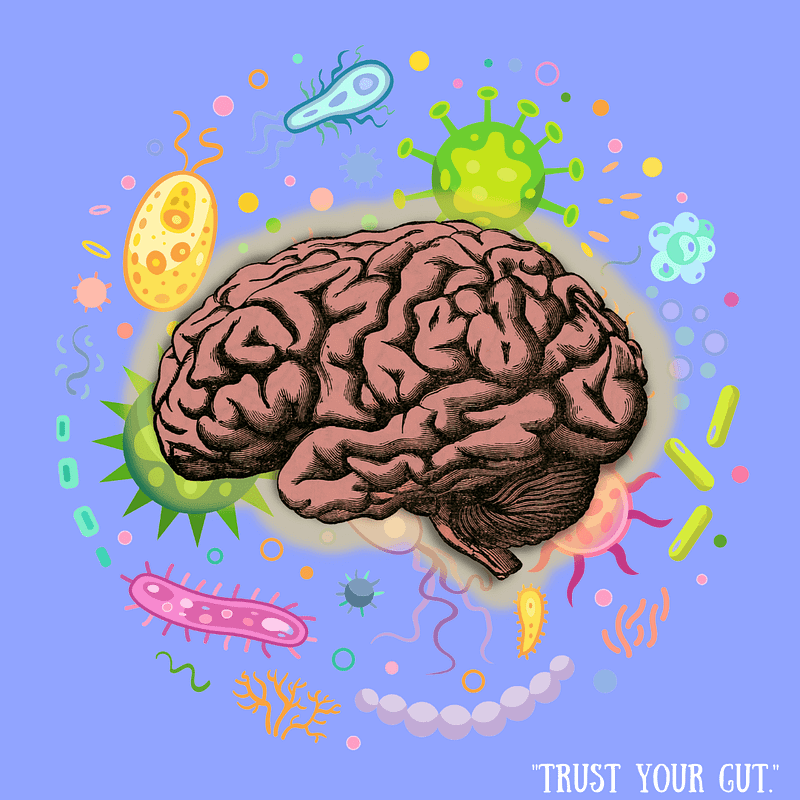
Gut health is also directly linked to mental health.
A stream of nerves (known as the vagus nerve) runs from your brain directly into your gut. A healthy gut is a happy mind. Poor gut health has been linked to anxiety and depression.
When our bodies encounter bad bacteria we can’t fight off by ourselves, we call in backup. Antibiotics make us feel better by killing bad bacteria.
The problem is, they kill a lot of good bacteria in the process.
The battle for gut domination
Your gut microbiome is really a microcosm of life. Good bacteria are the do-gooders, professionals, and taxpayers. Bad bacteria are vandals, crooks, and thieves.
Just like in life, our bodies are home to different cultures of bacteria, all with unique functions.
Escherichia coli, for example, help break down and support digestion. Bacteroidetes help reduce inflammation. Helicobacter pylori, on the other hand, can damage stomach tissue and cause inflammation.
The point is, not all bacteria are bad. Just like not all people are bad.
Antibiotics act as nuclear bombs, killing all bacteria in sight. Although effective, the aftermath prevents many species of good bacteria from growing back.
This is exactly what happened to me.
After a decade of regular antibiotic use, my gut became a baron wasteland. When it came time to repopulate, my gut microbiome resembled something from Mad Max rather than a diverse, cultured society.
How I repaired my gut microbiome
Amazingly, many practicing physicians still don’t know the extent that antibiotics can permanently damage one’s gut microbiome. Many of them don’t know much about gut health at all – the concept is still relatively new.
It wasn’t until I started seeing a naturopath that I was able to find relief.
My symptoms were chronic fatigue, brain fog, a constantly achy gut, and an overactive digestive system (which caused me to become nutrient deficient).
After some experimenting, we put together a sustainable health plan for gut recovery.
Below, is an overview of my treatment plan with quoted excerpts from my naturopath. I hope it acts as a great foundation for you to build your own healthy gut.
Foundational habits:
“The purpose of these habits are to stimulate the body’s ability to heal while removing obstacles that prevent healing.”
- Sleep — 7 hours per night minimum.
- Movement — Strategic movement and daily stretching to support recovery (not necessarily cardio).
- Mindfulness — Mindset is the foundation of mental health. It determines your stress pathways.
- Nature — 20 minutes of daily outdoor time reduces cortisol levels and assists in sleep.
- Play (yes, play) — Unstructured, unscheduled time. It is meant to be active and not meant to be productive. Some examples are singing, creating art, being silly, etc.
Foods to eat:
“Foods to support a healthy microbiome — largely prebiotics and probiotics.”
If you’re unfamiliar with pre- and probiotics, here’s a quick breakdown:
Prebiotics support existing good bacteria. Probiotics, introduce new good bacteria that kills bad bacteria.
Prebiotic foods: Jerusalem artichokes, asparagus, onions, chicory, garlic, leeks, bananas, fruit, asparagus, legumes, eggplant. **If nothing else, eat as many colourful vegetables as you can.
Probiotics foods: bone broth, sour cream, yogurt, anything fermented (i.e. sauerkraut, kimchi, pickles, kombucha).
**Personally, I take both prebiotic and probiotic supplements in addition to eating these foods. This has made the biggest impact for me, in repairing my gut health.
Foods to avoid:
“This is a short-term decrease of foods that are the most common food sensitivities.”
Personally, my body doesn’t respond well to gluten or dairy. I discovered this by following an elimination diet.
I first removed the following foods from my diet and then reintroduced them one by one: gluten/wheat, dairy, eggs(at least a large intake of eggs), sugar, corn, chickpeas, processed foods, and high-fat foods.
In addition, I removed:
- Alcohol — as it negatively affects digestion
- Coffee — can be acid-forming for some people**
- Sugar — negatively affects the growth of good bacteria
**Now, I know what you’re thinking: “How dare you suggest I stop drinking coffee?!” I get it — coffee is awesome.
But, for some people (like me), coffee can trigger over-elimination (yes, I’m talking about pooping).
Coffee keeps us regular. It does this by stimulating acid production in the stomach. This can cause some people to evacuate food too quickly, before their body has time to properly digest it and absorb nutrients.
Food preparation:
“Avoid cooking with olive oil at a high temperature.”
All cooking oils have what’s called a “smoking point” — the temperature at which they will smoke. When oil smokes, it produces carcinogens that have adverse effects on gut health.
Olive oil is incredibly healthy yet has a low smoking point. This means, cooking with it at high temperatures can be harmful to your body. Personally, I like to use olive oil as a topper or dresssing.
For high-heat cooking (like baking or sautéing), I’ve switched to avocado oil, and feel a world of difference.
Before eating rituals:
“This is a list of items to help turn on your parasympathetic system (rest and digest system). Your body will be better able to release enzymes to help break down your food.”
- Before eating, stop and take 10 deep belly breaths.
- Smell your food before eating.
- Take time to sit and chew your food, really tasting it, allow the food to become as close to liquid as possible before swallowing.
- Avoid stressful discussions, watching TV, or working at the computer while eating.
- Avoid excessive cold food or water with meals.
- Consider a leisurely walk after meals when possible.
- Most importantly, slow down when eating!
**Another helpful eating practice for me has been to stop eating 3 hours before bed, as digestion can interrupt REM sleep.
Supplementation:
Over the past 6 months, I’ve taken various natural supplements to help enhance my energy levels and create a diverse culture of gut bacteria.
Disclaimer: I’m not a medical professional. Please consult with one or perform your own research before taking any of the following supplements.
That being said, here are the supplements (and brands) that have made the biggest impact:
- Probiotics — “MegaSporeBiotic” by Microbiome labs
- Gastrointestinal support powder — “GI Revive” by Designs for Health
- Prebiotic powder — “MegaPre” by Microbiome labs
- Mitochondrial energy support — “Carnitine Synergy” by Designs for Health
- Adrenal support — “DFH Adrenal Complex” by Designs for Health
- Fish oil — any reputable brand
- Vitamin D — any reputable brand
- Zinc — any reputable brand
- Magnesium Threonate (for sleep) — any reputable brand
The process took about 6 months (to summarize)
It hasn’t been easy, but my journey toward gut health has been life-changing.
Last year, I took a vacation and was able to enjoy myself without constantly planning my next trip to the bathroom. This was the first time in… maybe ever.
Using the treatment plan above, I found noticeable relief after 1 month, felt like myself again after 3, and like a brand new person at 6.
In addition to the information above:
- Be patient
- Experiment
- Listen to your body
- Most importantly, trust your gut
If you’re experiencing fatigue, stomach pain, or just feel “off”, seek out help. You deserve to feel better.
To learn more about gut health in a very accessible way, I highly recommend the book “Gut” by Giulia Enders.
Lastly, if you’re someone who experiences adverse effects from coffee, I’ve got just the thing for you:
👉 Get your Free 30-Day Flexible Journaling Guide, here.🐦 Let’s connect on Twitter!


