
I Think I Am Still Alive
Here is what will happen in the first year of the pandemic
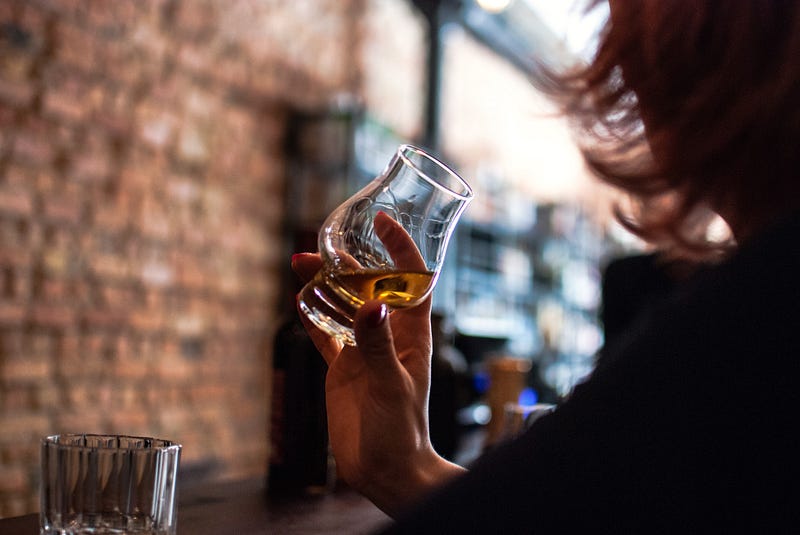
It is March and I am standing behind the pine of the dive bar I work at holding a spray bottle full of sanitizer. I have cleaned everything I can think of that has ever been touched. The light switches. The doorknobs. The undersides of the stools. The skin of my hands is cracking from the frequency of antibacterial soap and I do not know it yet, but the smell of hand sanitizer will soon permeate every part of my life. Someday when I make lists of my olfactory memories, Clorox will fall somewhere between jasmine and whiskey, and it will evoke feelings of comfort and terror in a confusing malaise that will rise up into my chest in waves.
We are not wearing masks yet. We don’t know about masks. We don’t know much of anything; we just know that people are dying, or it’s just another flu, or it’s the end of the world. What we do know is that we are waiting.
It is March and each day we wait. Everything else we do is a backdrop for waiting. Waiting to know anything. Waiting for anything to happen. We have no language for anything that is about to happen. In a year, we still will not.
Entire aisles at the grocery store are already barren. Italy has already shut down. We are Americans, though, frontline servants to the gods of the Dollar, and we cannot afford to be alive as it is. So we open the doors to our restaurants and bars, advertising how clean it is inside. The sanitizer will save us, we think, and what we mean is, the sanitizer will keep the doors open one more week. So we can pay the rent. So we can eat. Each day we carry out these rituals. We pray to the gods of Sanitizer and we wait.
A week ago my theater company hosted a masquerade ball to raise funds for our annual carnival under a looming blanket of apprehension. The DJ did not want to come. Guests who had RSVP’d sent messages to tell us they thought it best to stay home. Our attendance was shockingly low. We carried on, aware that Seattle was in trouble, but Seattle was not here. Now I have a collection of photographs of paper signs hurriedly taped to the empty metal shelves of my neighborhood grocery store: Due to high demand this product is unavailable. Facebook Marketplace has become a black market for toilet paper and Lysol wipes. There is no rice to be found anywhere in the city.
At 6 p.m. we receive the Official Notification: We are closing indefinitely. My boss walks through the door and I set two shot glasses down, one for him and one for me. This is our last night. The whole city is closing, and we are not sure what closing means, exactly. Not yet. We only know that after tonight we are not essential. Eventually we will learn the phrase “essential worker,” and we will learn that essential really means expendable. In several months we will all become expendable too.
My co-workers filter in, and then a few neighborhood regulars, and we sit treacherously close to one another, huddled in our favorite corner. After this night, we must go home alone and stay there. After this, we are all on our own. We do not yet have a language for our helplessness.
We do not know how novel this is, this last night of us together, unmasked, while the Mystery Virus crawls across our country, coming for us too, we hear. We cannot tell if the threat is real yet, only that the consequences are. Tomorrow we will not have jobs, and we will not have a plan, because bartending had always been the thing we could still do when everything else went to hell. Tomorrow we will wake up in a world that is unlike any we have ever known, and we will have to do it without anybody to sit with us but ourselves, and we will not be ready. So we drink.
We drink because we cannot do anything else. My co-worker takes my place behind the bar, I go sit down with my friends, and none of us knows if it is for the last time.
At midnight my boss takes us to Church: a shot of bourbon, a shot of scotch, and a beer for each of us while Johnny Lee Hooker plays through the speakers. I fall off my barstool, and the traveling scientist I met a few days ago helps me back onto my seat and I don’t care enough to be embarrassed.
Later that night I will fall down in the street and tear the knees of my jeans and go back to his hotel room with him. In the morning he and I will wake up together feeling rebellious in a downtown historic hotel that is a sudden ghost town, and we will push the elevator buttons with our knuckles covered by our sleeves. He will invite me to go north with him, to his family’s rural cabin, and wait out the pandemic there. I will tell him I can’t. That I can’t leave my city.
I will love my city more fiercely than I ever have before, and then I will decide that if I do not leave it I will die.
Someone will text me to say that the last normal thing we did together was go see the movie Cats.
I will lose touch with the scientist. I will abruptly stop returning his calls and I will not know why. Sometimes I will think of him when I wear the jeans with ripped knees, but first I will go months without wearing jeans at all.
My landlord will call to inform me that rent is still due each month, and I will cry on the phone, and she will tell me how sorry she is, and her voice will sound empty, and I will wonder if she has ever gone hungry. The electric company will unofficially advise me not to pay my bill yet; they will not cut service while the city is shut down. In a year I will have made several payments and still owe the electric company $900 because of the accrued late fees. It will go to collections. I will see it on my credit score, something looming and tangible to remind me that this all really happened.
My friend, a photographer, will take socially distanced portraits of people in our neighborhood and the images will feel like they are of the space between us all. She will photograph me in an antique chair I’ve dragged down the stairs into the alley outside my apartment. We will stand facing each other and feeling as though every sentence exchanged is a message in a bottle tossed into an unforgiving sea; we will feel the unforgiving distance between us. We will learn what six feet is, and watch it push on our bodies. With her, I will feel the first desperation of distance. I will stand before her and miss her. I will wish I could hug her and watch her walk away in the rain, away from me.
“Social distancing” will become a buzzword and “six feet” will become a holy incantation, and I will learn to match my own feet up with the yellow shoe-shaped stickers on the floor in the checkout lanes of the grocery store.
Starbucks and the grocery store will become the only places anybody can go and I will feel guilty in the drive-through. I will tip five dollars for every nitro cold brew I buy even though I cannot afford to be tipping at all, and I’ll be unable to decide if I am jealous that the baristas are able to work. I will know I am part of the problem and go through the drive-through anyway.
I will consider getting a job at a grocery store and decide against it because I have health conditions that put me at risk and I will not know what “risk” even means yet.
We will be told to wear masks, we will be told that masks don’t really make a difference, we will be told to wear masks again. Our state will require in-person voting for the presidential primaries during a stay-at-home order, while running only five polling locations instead of the usual 180. On the day the people of my city must choose between their safety and their civic duty, there will be 1,387 confirmed virus cases in our county and we will think that is a lot.
We will make impossible choices and be sure each one is the most difficult one we’ll ever have to make and we will be wrong.
I will become alarmingly conscious of the notion that my life’s work as a performer and theatrical director is falling apart. I will manically try and facilitate virtual collaborations and discover that there are no collaborators because everyone else is falling apart, too. I will try to perform Not Falling Apart. I will begin writing a graphic novel about love and dystopia and it will go nowhere and become nothing. I will go to the grocery store again. I will clean every item I bring home on my porch with contraband Lysol wipes.
I will realize I have attached my entire identity to the things I do and now I am doing nothing.
I will learn to do my own eyelash extensions badly and The Internet will start giving itself haircuts. We will perform Whimsy together in order to feel less alone. The word “together” will be everywhere like propaganda, and we will not realize until much later how alone we were the whole time.
My bar will serve as a neighborhood food pantry, my co-workers coordinating and volunteering in dutiful masks and gloves, and I will help with PR from a distance because I am too afraid to go near anybody. I will perform Helping but I will not feel helpful. I will see photos of my co-workers on The Internet, and I will cry because I miss them.
In the suburbs people will protest, holding signs demanding haircuts, and small business owners will be cornered into taking sides. My roots will grow in, and I’ll consider bleaching them myself, and I won’t.
I will listen to NPR and hear accounts from people who barely survived the virus, describing the feeling of drowning. I will listen to health care workers talk about facilitating FaceTime goodbyes in hospitals. I will think of how screens are the bridges to our most intimate moments and I will hold my breath and imagine drowning. I will give my most intimate moments to screens because there is no place else to put them.
The Internet will learn to crochet and offer photos of their intentionally wacky work-from-home outfits, and I will cheer them on, and I will mean it. There will be a spirit of levity that is a Band-Aid of desperation. People with jobs will talk about how guilty they feel for not having to be afraid of losing their homes.
There will be no unemployment for me. I will host Zoom happy hours and my friends will pity-tip me over Cash App. I will watch The Internet take up yoga while I commodify everything I know how to do in order to make ends meet.
I will commodify myself on screens for the sake of buying groceries and paying vet bills. I will perform Commodity. I will not understand the damaging impact this has on me, not yet. I will not understand that this is different. I will not understand how different it is until much, much later, and I still will be unable to explain why.
My friend will organize a socially distanced dinosaur costume parade in our neighborhood. I will feel like everybody but me is charming. I will remember having been charming once. I will remember having ideas once. I will begin to run out of ideas, and searching for them will feel like putting my hands in dark water and trying to locate something I cannot see.
I will read articles about neighborhoods clapping every night for essential workers. We will define and redefine the word “essential” as a culture. As a culture we will invent new ways to be alone. We will invent new ways to make each other alone.
I will begin to suffocate inside my own home.
My friends and colleagues will download the Houseparty app and I will Zoom with my cousins every night, and “Zoom” will become a verb, and I will be unable to complete any basic house chores. I will escape into The Internet in order to avoid my own pitiful, powerless life.
“*Gestures vaguely*” will become the only way we can explain any of this on Twitter. We will make our pilgrimage to TikTok where we can show ourselves gesturing vaguely.
My friends will do kind things for me. They will send money and drop off groceries and buy art from me, and I will feel like I do not deserve any of it, and I will think about how the thing that fixes everything seems to be money. I will think about what it means to be out of ways to make money. I will think about how I have never before been out of ways to make money. I will continue to perform Commodity.
The deaths will roll in, the ones that are more than statistics. My cousin’s grandfather will perish in the first wave of U.S. virus deaths, and she will say goodbye to him over FaceTime. She will drink airplane bottles of vodka in her bed, in the room where she is secluded in her home, which is a sick house, while we hold a virtual memorial together over Zoom. There will be no one allowed to hug her for days, which will feel like an eternity. Another cousin of mine will wait for their partner to recover in the hospital, and we will pray, and their partner will not recover, and we will have no words. When my friend dies of the virus, I will not talk about it. Instead, I will talk about anything else.
When I walk my dog, the neighbor in the yellow house on the corner will wave to me. At night, I will write messages in chalk on the sidewalks all over the neighborhood. The messages will say things like “I am scared, too” and “We are in this together,” but as time passes, I will begin to feel confused about what “together” means.
I, a once-performer, will perform my own humanity and not understand I am doing it.
I will begin creative projects that I can’t finish and post selfies on Facebook of me at my laptop to show that I am working on things. I will livestream myself walking my dog. I will livestream the silence in the streets. I will stand in the middle of empty downtown streets and take photos. But I won’t do anything useful.
The Internet will invent Quarantine Outfits and the jokes about not wearing pants will get old, but we will still laugh. We will not know that everything will only get worse.
The Internet will learn to bake bread and I will sit for hours staring at the vacuum wondering why I should bother when none of this feels real. My roommate will reorganize the pantry while I feel like I am standing outside of my own body, watching myself choke and continue to pretend I am not choking. My home will become thick with tension. I will spend day after day in my apartment which has never before been smaller or more full of people and think I have never been more lonely in my entire life. I will be lonelier, later.
There will become a palpable divide between employed-from-home people, essential workers, unemployed people receiving unemployment, and unemployed people not receiving unemployment. I will be among the latter, and wonder if I have anything in common with my employed-from-home friends who are telling The Internet how much they miss dressing up and going to the club. I will watch them mourn the Before Times and I will resent them and I will feel guilty for my resentment. I will swing wildly between empathy and hostility while spending five hours a day in the bathtub trying to read books I will eventually give up on.
The Internet will flood with inspiration porn, actual porn, food porn, and extravagant images of people performing Hope, and I’ll think this is my moment, too. I will make something beautiful, I will perform Connection, I will be one of the people who shines a light. I don’t know it yet, but I won’t be. I will be one of the people who breaks.
I will be one of the people who breaks, and breaks everything around me.
I’ll see a therapist over a screen and I will feel like my entire world is made of windows and screens.
Friends will give me lists of reasonable and practical things I could have done instead. In a year I will understand that the helplessness of waiting for the places I was employed to survive was too much for me to hold. Too much weight. Too much waiting. Too much laying on my back and staring at the ceiling and trying to have faith in a future, when I could not give a shape to any kind of future at all. That I could not imagine a future at all anymore. I will realize that I am the coyote who chewed off her own leg because she thought it was caught in a bear trap, when really it was just stuck in a sliding door. When I try to describe the bear trap, people will look at me like I am crazy and it will be because I am.
Some days I will be unconvinced that my screen therapist is a real person and I will wonder if I am spilling my secrets into another performance.
I will listen to people around me use phrases like “Do what you have to do,” and “Get it done,” and “Keep going,” and I will wonder why I can’t do anything but launch myself into chaos. I will have no answers, so I will frantically invent them and they will not be enough. I will vaguely remember being somebody who was once useful in an emergency and know that all I am now is parts of somebody who used to be a lot of things.
I will forget how to drive a car in traffic after months of empty streets. I will have constant panic attacks behind the wheel. I will pick fights with my best friend and I will not know why. The crowds around me will seem slightly feral, and I will realize I am feral too.
My 80-pound elderly dog will become severely ill. When he collapses in the front yard, my neighbor will watch me struggle to carry his half-limp body up my front stairs. She will stand across the street with a bandana over her nose and mouth, unable to come near us, unable to help me bring him inside. I will hear her gasp audibly, I will look up and see that her eyes are red with tears. I will imagine her face scrunched with crying behind the bandana, and my own face will scrunch with crying — ugly crying that nobody can see behind my mask. “I am so sorry,” she will say from the sidewalk, and my heart will roll onto its side and heave.
During my dog’s last moments, my on-again-off-again ex and I will wear full PPE and hold him in the clean white room at the vet’s office, but we won’t be able to feel the softness of his fur through our gloves. I will not be able to see my vet’s face while she injects the final mercy medicine into my dog’s limp foreleg, and I will wonder if my dog can feel the warmth of my hands, if it is enough. I will sob behind my mask and the wet paper will cling to my cheeks. My goggles will fog. While my dog dies in my lap I will fall back in love with my ex and we will get Starbucks coffee and sit on the shore of Lake Michigan and cry, and we will not live happily ever after.
I will read inspirational articles about small businesses in my community surviving through exceptional and innovative means. There will be showcases about survival, and I will wonder if we are all just performing Survival. The Internet will talk about mutual aid networks and faith and compassion and dignity, and I will have no faith or dignity left to participate. Bars will advertise the fancy gloves and masks their staff are wearing, and plexiglass barricades will be erected like shrines. We will perform Safety-with-a-capital-S. I will watch my city try and resuscitate itself in a feat of acrobatic necromancy, trying to fit into its old prom dress.
The Internet will reveal photos of venues that are too crowded and full of people who are not staying home like they should. We will hold grudges and gossip about our friends telling The Internet they have gone to eat dinner in a restaurant. It will become the summer of gloves and masks and judgment.
We will continue to perform Survival.
“When everything goes back to normal” will become a battlecry in casual conversation, and I will wonder who really believes they are coming home to a house that has burned down.
I will think of the part-time microblading business I had started a month before the virus arrived and feel my lungs becoming shipwrecked every time I think about touching the bodies of strangers, even with gloves on. I will say I am on hiatus, because I will not know how to say that I cannot bear to touch anyone. That I cannot do it and I am afraid to say so.
I will begin to write a story about shipwrecks but get stuck at the part where the main character sinks to the bottom of the sea.
I will understand that I do not have writer’s block; I am shell-shocked.
My bar will open again, and reopening or not will become political, and for the first time we will understand that all right answers lead to even more poverty for ourselves. We will have cyclical conversations about Surviving or being At Risk. It will be one or the other, for all of us.
Only three of our bartenders, including myself, will come back to work, this time wearing fashionable handmade cloth masks. When I wash them I will wipe down the shared washing machine in the basement with contraband Lysol wipes because I will be afraid of what the neighbors might have touched.
The Internet will explode with bartenders in my city publicly scolding people like me for encouraging dangerous and deadly behavior. There will be an Internet Bartender War. I will be called names. I will be told I am The Problem by people who are making the Correct Choices, and I will wonder how anybody could not understand that I am just trying to Survive, and I will cry because I will know they are right and I have no choice.
I will hold the guilt in my throat each day when I open the bar, and I will bury it with whiskey. People who used to be my friends will post snarky remarks on my Facebook updates about being back at work. I will faithfully wear my mask and ask the public to defy their safety and that of others so that I may continue to eat. I will feel like a monster. I will go home at night and try and wash the guilt from my hands with jugs of contraband Dial antibacterial, and a year later, my hands will still be caked in guilt. My hands will feel increasingly heavy each day, and I will carry them clenching each other, because they want to be held by other hands, and cannot be.
The Internet will have conversations about the moral quandary surrounding supporting service industry workers and boycotting open businesses who are putting their employees in danger. I will hold the tension of danger in my body from behind the bar until I am drunk enough to stop feeling it. I will think about drinking myself to death, and whether it would be romantic or not.
“When everything goes back to normal” will become a battle cry in casual conversation, and I will wonder who really believes they are coming home to a house that has burned down.
Service industry workers will talk about how the sales and the tips just aren’t what they used to be. We will talk about how we are afraid. My co-workers will run themselves ragged trying to find ways to keep the bar in business amidst the dwindling sales. My co-workers will run themselves ragged trying to pay their own bills amidst the dwindling tips. We will talk about what Saturday nights Used To Be as we stand at the helm of a sinking ship. My co-workers will reinvent every wheel imaginable. The helplessness will climb into our bones while we admit to ourselves that the only way a bar can survive is when it is packed with bodies.
Every night, I will look across to the people seated in front of me, and we will learn what “together” means. This will be my family. This will be my most precious memory of the year.
I will get into fights with angry drunk men who do not want to wear masks in my establishment, and my regulars will begin to carry bigger and bigger knives on them and stay with me while I close each night. I will be threatened with a gun at least once. A bartender at the tavern down the block will show me video footage of a patron licking the bar top and throwing a stool at him in response to being asked to wear a mask and to stop getting so close to other patrons. We will laugh and our laughter will taste like Malört: nausea-inducing, but something to get us by.
My patrons will all look like they have come back from running the gauntlet, and it will be because they have. They will sit six feet away from each other, masked, hungry for contact. We will not talk about the people who are absent, the people we have not heard from, because we will not want to ask if they are still alive.
Every night, I will look across to the people seated in front of me, and we will learn what “together” means. This will be my family. This will be my most precious memory of the year.
I will play Portuguese fado music and dramatically welcome them to Madame Nina’s Apocalypse Bar. I will imagine I am the mistress of an oasis in a dystopian setting of my invention. My patrons will play along, and together we will curate the most brilliant performance at all: The Bar at the End of the World — a play in an uncertain number of acts. We will all be mimes in cages with our faces pressed against panes of glass, wanting each other nearer and knowing it is forbidden. I will keep the lights low and in the dramatic pauses between our earnest and heartfelt moments we will imagine we are the violinists in the movie Titanic, and we shall all die together, drunk and singing sea shanties. And we will. We will die over and over and over again each night while we slam the dice cup down on the pine and roll for our salvation. My dear friend will name it the Waiting Room: the place that comes before the afterlife. The place where you go when you are not sure where you will go next. I will find small solace in the fantasy that I am already dead and am haunting this bar. It will be the realest thing to me in a whole year, this bar with its cracked black-and-white tiled floors and chipping wall paint and decrepit stage. This will be my most beloved place and I will lose that too.
My last shift will be a funeral for the bar. I will wear a ball gown and our friend will sing “Bridge Over Troubled Water” from the stage, and we will smoke cigarettes inside, and we will cry. We will unpack years’ worth of holiday decorations from the basement in the coming weeks. We will drink the leftover liquor and shake the dice cup and it will feel like no place has ever been more home than this one. I will let myself in with my key during the day to cry alone in the blue armchair by the window at least once. My boss will text me on the day he turns the keys over to the landlord. He will gift me the dice cup.
The world will take on a peculiar air of forgetting. We will stop talking about the time we were sent outside to vote during a stay-at-home order. We will stop talking about the unemployment that never came. I will notice this and I will think, Does anybody remember scrubbing boxes of crackers on their front porches? Does anybody remember the empty streets? The contraband toilet paper? Does anybody remember wide berths on the sidewalks, moving into the road to let other pedestrians pass, making longing eye contact with anybody? Does anybody remember when we didn’t know what this was, or how it was spread? Does anybody remember what those long months did to us?
I will forget, too, most of the time, but know it is all beneath the surface, like a sleeping creature in my belly. I will look back on it all in disbelief, and I will still know I am changed.
I will stand on the sidewalk in the middle of the afternoon holding a container of my dog’s ashes while reading crushing texts from a friend, and I will understand the difference between running away and knowing when the bones of a house are no good.
I will lose weight. I will lose control. I will lose my keys. I will cry in the bath.
I will move to New Orleans, and once again I will drive across Texas, this time alone. In New Orleans there will be three hurricanes and I will look at photographs of myself from a year prior, wearing lipstick and little black dresses and hair fascinators, and I will find myself nearly unrecognizable. Whoever that lady was, I will discover I am not her. I will begin to drink less. I will wear torn jeans and a ponytail and grow hybrid tea roses and a pomegranate tree in pots. I will stand on the front porch and listen to the brass of the second line passing a few blocks away and bask in the idea of being invisible. I will miss my friends and I will tell them all the time, and they will tell me I’m where I ought to be.
I will meet a woman who does tintype portraits on Frenchmen Street and when I tell her I’ve recently arrived, she’ll say, “Welcome home,” and I’ll move that word, home, around in my mouth for a while to test how it tastes. I’ll stand looking over the Mississippi River eating a beignet. I’ll discover that my favorite comfort food is fried catfish from the corner store. I’ll learn the name of the lady who owns the taco truck near my house. I will meet people and be continually surprised that they find me likable, because I am sure I am still wearing remnants of my year of calamity. I’ll begin an animated comic about being lost in a haunted house, and it will be a story about being unsure if I am also haunting the house. I’ll learn to dodge the trains on St. Claude. I’ll learn to drive in traffic again. I’ll spend New Year’s Day eating oysters, surrounded by soft lights. I’ll decide I don’t miss places and things and crowds anymore, and maybe I will someday, but sometimes it is so overwhelming to miss too many things at once. I’ll watch the city from the wings, from a peaceful perch. I’ll become just the nice lady down the block who drinks coffee on the front porch and waves hello to the neighbors. And I won’t have anything to explain to anybody. And eventually there will be days when the mornings do not feel like shipwrecks, but more like the expanse of the river on a hot day, full of secrets, but holding itself still enough to not feel like a threat. And I’ll lick the powdered sugar from my fingers, and then vigorously wash my hands while counting to 20, and say to myself, I think I am still alive.