
A Year Disconnected: 3 Lessons from Life Without Social Media
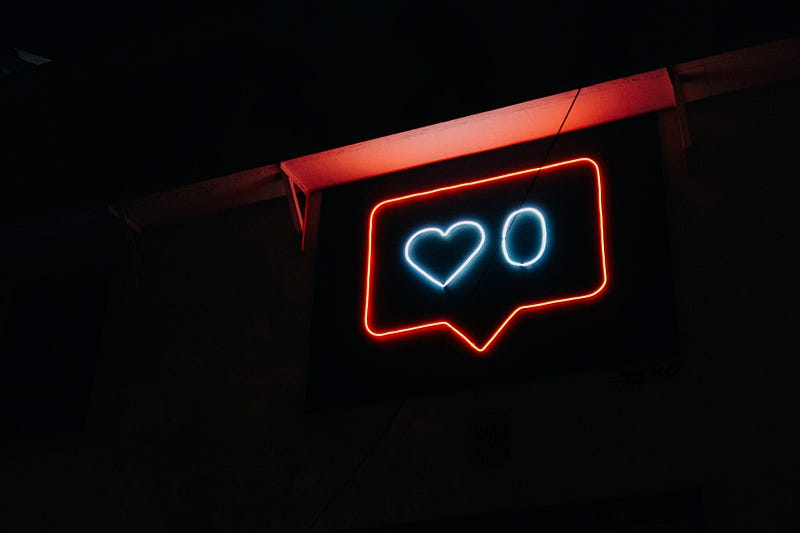
Just over a year ago, I permanently deleted my Facebook account.
That was followed by my Instagram account, which I soon realised was counteracting the benefits of ditching Facebook.
I have to admit that when I got rid of my profiles, I wasn’t 100% clear on my reasoning for it. Sure, I wasn’t very happy with the fact that Facebook, which also owns Instagram, effectively used my data as a product they could sell to the highest bidder. I also knew it was unhealthy to spend hours mindlessly scrolling my Insta feed, engrossed by the highlight reel of other people’s lives while my own passed me by.
A gut feeling told me to cleanse my life of social media, so one day, I bit the bullet, and did just that. More than a year later, here’s what I’ve learnt.
1. Leaving was easier than I thought
Once I had decided to leave Facebook, about 6 months passed before I brought myself to click the ‘permanently delete my account’ button (which was so well-hidden it required a Google search to find).
In the meantime, I came up with every excuse under the sun for not leaving. I had years’ worth of photos on my account; people wouldn’t be able to invite me to events; my family across the world enjoyed keeping up with my life; how would I remember my friends’ birthdays??
The stark truth is that none of these have actually been an issue since I’ve left.
I transferred my photos to a hard drive — it took an afternoon. My family have made a messaging group for us to catch up, through which we interact far more frequently than we ever did on Facebook. And what kind of friend am I if I can’t keep track of my buddies’ birthdays in my own calendar?
The one thing I have noticed is I do receive far fewer event invitations. Yet, I attend pretty much the same number of events! You see, the people who really want me there, find a way to invite me, usually by direct message. Those are the events I want to be at.
If any of this is ringing a bell, the best advice I could give you is to back up those photos, make a note of the birthdays and phone numbers of people you care about, and you will be absolutely fine.
2. I’m a better friend without social media
One of the things I have loved most about not having Instagram, in particular, is the feeling I get when I go for a coffee with a friend, hear about their latest holiday or achievement, and feel genuine emotion because it’s the first time I’ve heard of it.
I don’t have to fake an unconvincing ‘Oh, that’s nice!’ because, in reality, I saw the Insta post 2 weeks ago. I didn’t read the thread of comments to get the details, or share my happiness with a smiley emoji. I get to feel raw emotions in the moment, face-to-face, and it feels great. My friends can also see in my reaction and warmth that I’m truly happy or excited for them, and as a consequence, our bond grows stronger.
I’m also better at remembering the birthdays of people I care about. I have reminders set in my calendar so that I spend less time posting a ‘Happy bday!’ on the walls of people I haven’t spoken to in 10 years, and more time writing personalised messages to my closest friends.
3. ‘Comparison culture’ is the cancer that kills self-esteem
This is perhaps the biggest and most liberating change I have felt over the past year. If you take nothing else away from this article, please remember this subheading.
I simply cannot understate how freeing it is to stop caring about how your life, your achievements, and your material worth stacks up against other peoples’.
It’s crucial to recognise that comparing yourself to others does not make you a competitive or insecure person — it makes you human. As a species, we are hard-wired to want to be the cream of the crop. In prehistoric times, it was essential to our survival and development. Nowadays, however, material possessions and experiences are the currency of human competition, not food and water. Instagram and Facebook provide platforms on which to flaunt these, in the form of a highlight reel of life. As consumers, we are fed a constant stream of other peoples’ successes, and when we can’t match up to them, it eats away at our self-worth.
Take for instance a Friday night (pre-pandemic!) comfortably sat at home watching a movie and nursing a hot chocolate. You’re perfectly happy with this set-up, until you check your Insta feed and see that somebody you met once a year ago is out partying and downing #shots with their #squad. Suddenly you’re doubting yourself, and feeling like a bit of a loner.
Sadly, social media never shows us the flip side of the coin. We never see that perhaps the rest of that person’s weekend was a write-off because of a hangover from hell. Or that maybe they fought with their partner that night, or got thrown out of the club right after the photo. If we could see the whole story in an Instagram post, then our perception would be more realistic, and we’d go easier on ourselves for our own choices.
We also aren’t naturally good at acknowledging that priorities and circumstances are personal, so our choices and lifestyles will, and should, be different. Who wants to live in a world where everybody does the same things, dresses the same way, and has the same interests? Humans were not made to be homogenous, and diversity should be promoted and celebrated. However, the volume of other people’s lives that we ingest through social media is so overwhelming that we forget this, and instead, start to question why we are not living the same way.
The sad truth is that the voice of self-deprecation will always drown out that of positivity.
When I deleted Instagram, I limited the exposure I had to other people’s lives and, in turn, minimised how often I belittled aspects of my own life. My self-confidence is stronger, and because I’m not busy doubting myself, I can feel more positive about other people’s accomplishments too.
The Take-Home Message
When I had social media, I wouldn’t have said it negatively affected me. I didn’t feel particularly competitive, I enjoyed seeing friends’ updates, and I didn’t suffer from feelings of anxiety.
Yet, ditching my accounts has brought me nothing but positivity — the kind that I can actually feel day-to-day. I look at my own life and feel happy with my choices, trusting that when I made them, I did so because they were in line with my values and priorities at that time in my life. I catch myself comparing myself to others a lot less frequently, and I get so much more happiness from hearing about my friends’ success than I used to. It’s a genuine, selfless happiness that I don’t think I felt before.
If this resonates with you in any way, I really couldn’t recommend leaving social media enough. I don’t find myself yearning for it, so perhaps you also wouldn’t miss it as much as you think?


