
A Wintry Lesson
Fiction short
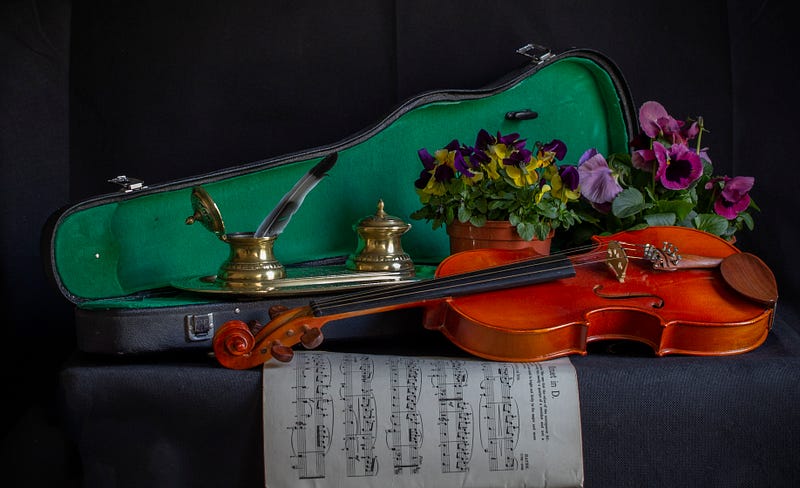
Lena was raised on violin lessons and minimal parental supervision. She did what she wanted whenever she wanted to most of the time. The constant violin practice and schedule of playing dates often make her want to bust out of the proper shell that she tires of. She likes playing for herself but not so much for an audience. Though she isn’t supervised much, she is expected to adhere to all parental rules or suffer the consequences which include not being able to have friends over or go to parties, and both tv and computer time can be taken away. Minimal meant strict.
The first time Lena picked up a violin, she felt happy. It became the one thing that filled the silence of the home. She never let anyone near it except her teacher. Her parents gave it to her because they were away often or when not traveling, worked long late hours. She hardly could express all she wanted to say to them when they called from a faraway place because phone calls were kept short just to say hello and I have to go which made her angry to have her conversations snipped in the bud. They wanted her to be responsible, but they had separate rules for themselves, rarely listening or dealing with any issues or feelings Lena tried to expose. Their lack of concern usually put Lena in rebellious mode, but she never thought to break or damage the violin because of those feelings, keeping it close to her. Playing the violin sometimes gave her an outlet for her anger, but not always.
At twenty-eight years old, her parents were still neglecting her, rarely calling or visiting. But Lena found something more important to fill her life, but the years leading up to this euphoric state, were filled with everything she did to annoy them and breaking every rule they ever set upon her while growing up still fabricating stories about her life to them.
When she was a teen, she would escape through her bedroom window to hang out with friends and smoke, sometimes doing drugs. But she didn’t like the lazy effect of drugs and after a while kept away from them. Her nighttime trips were never discovered making her provoke her parents even more by leaving drugs to be found around the house, behind and in cookie jars. She hid packs of cigarettes in their suitcases and drawers.
When very young, she broke her toys, even the expensive ones, just to displease them. The more they punished her by taking away play time or toys, the more she rebelled.
The one salvation for a short time was when they hired a new sitter or Nanny Bell as they called her. Bell took a big interest in Lena. She read to her, cooked her favorite meals, and took neighborhood walks with her. They even went shopping together. Lena simmered down with Bell around. She especially looked forward to having more time with Bell when her parents traveled. Bell stayed employed with them for two years, and when she announced that she had to take care of her sick mother, Lena was devastated. She didn’t want to lose Bell. Bell had made life bearable, and she actually enjoyed her life which made her feel proud, for the first time, of her musical abilities.
Lena put her energies into her music day and night for a while just to cloud the disappointment and sadness she felt over Bell’s departure. The newly hired nanny didn’t last long, nor the next, or next. She made it impossibly hard for anyone to be around her and escaped through her bedroom window almost every night. She felt she couldn’t breathe, the house walls closed in on her, and getting out was the only way she could cope. There was nothing in that house for her — no parents, no love, no Bell.
As soon as she could leave, she did. Though she stirred up more troubles for herself at college, she was free of the loveless house she was raised in and of her parents. She never felt connected with her roommates or classmates either. They talked a lot about growing up without parents or money and were struggling to keep their tuition out of the red zone, so she started gravitating towards students who grew up like her never having to worry about money. But they didn’t fill the void she felt either. She had relationship after relationship with men and women and they all seemed so insignificant to her and shallow.
Then one day she was traveling on the bus and saw through the window a woman and child begging for food or money according to the sign that lay at their feet. Anyone could see that they were cold and starving. Lena never saw such poverty which struck her frozen heart like a bolt of lightning. Maybe the cold inside her found common ground with the cold they were suffering. She wasn’t sure, but Lena found herself pulling the stop cord and moving to the front of the bus to get off.
She walks a block to where the woman and child are sitting on the edge of a low stone wall behind it filled with a wintry brush between plants and trees asleep for the winter. Lena just stares at them. The woman looks away not meeting Lena’s eyes when Lena keeps looking without saying a word. Just then, the female child, about six years old, approaches Lena. Her clothes and coat are tattered, and Lena can see the tips of her fingers through her gloves. Tears ran down Lena’s face and for the first time in her life, Lena stops thinking about Lena, her parents, and Bell, and her unhappy life. She takes off her gloves and places them over the little girl’s gloves. She wraps her scarf around her knotting it in the back of her neck, pulling the scarf upwards to her cheeks to keep her face warm. She didn’t have anything for the mother except the money in her pocket which she empties into their donation can.
Lena stays on to talk to the mother to see if she can get them out of the cold for a while and buy them a meal. The mother agrees and Lena walks them to the nearest restaurant. They eat until they think they will burst. There’s an ATM machine near the restaurant and Lena withdraws some money. She puts the mother and child in a taxi with herself and has them taken to a shelter. Before the mother and child go inside, Lena empties her wallet again and tells the mother to stay warm in the shelter. She promises to come back to see them and help them find a place to stay. Lena begins searching as soon as she returns to the college dorm. She looks up state and local agencies that will help the woman and a caseworker moves the woman and child to a long-term shelter while they find temporary affordable housing for them and apply for welfare assistance. The caseworker also agrees to help her find a job and childcare and get her daughter into school.
Lena marks this wondrous experience on her calendar like she would a reminder or a holiday. Meeting the mother and child became life-changing for her. She began working on relationships with her parents and friends. She leaves her music major and switches to sociology, later gaining employment in social work. Her feelings of being unloved and restless disappear, and getting into trouble becomes a past activity, something she used to do in order to get attention. Lena often visits the mother and child to see how they are doing. And through her work, Lena is now able to place many homeless people, who become like family to her. She never feels lonely again.