avatarZoë Poulsen

Summary

The web content describes a winter hike on Elsies Peak in Cape Town's "Deep South," offering a glimpse into the region's diverse fynbos vegetation and the unique flora found along the trail.

Abstract

The article titled "A winter walk on Elsies Peak" recounts the author's experience hiking in Cape Town's southern peninsula during the winter season. The author highlights the advantages of remote working, which allows for midweek hikes in optimal weather conditions, away from the summer's harsh winds. Elsies Peak, despite being a smaller peak, provides a short but rewarding climb with panoramic views and a rich variety of wildflowers. The hike is an opportunity to appreciate the Cape Floristic Region's biodiversity, including the endemic fynbos vegetation with its 9,000 plant species, 6,200 of which are found nowhere else in the world. The trail features black bearded Proteas, dogface flowers, and the "small brown Afrikaaner," each with unique characteristics and pollination strategies. The summit offers breathtaking views of the surrounding landscape, including the possibility of spotting southern right whales and great white sharks.

Opinions

  • The author expresses a preference for the serene beauty of the Cape Peninsula during winter, noting the contrast with the summer's harsh southeaster winds.
  • Getting up close to the fynbos vegetation reveals its extraordinary beauty and diversity, which might not be apparent from a distance.
  • The author is captivated by the endemic Cape Sugarbirds, recognizable by their long tails, and the intricate pollination dynamics involving Protea beetles and nectar-feeding birds.
  • There is a sense of wonder and privilege in observing the delicate blooms of Gladiolus maculatus, highlighting the author's appreciation for the region's unique flora.
  • The hike is presented as an enriching experience that combines physical activity with the opportunity to witness the natural splendor and wildlife of the Cape Peninsula.

A winter walk on Elsies Peak

Hiking Cape Town’s Deep South
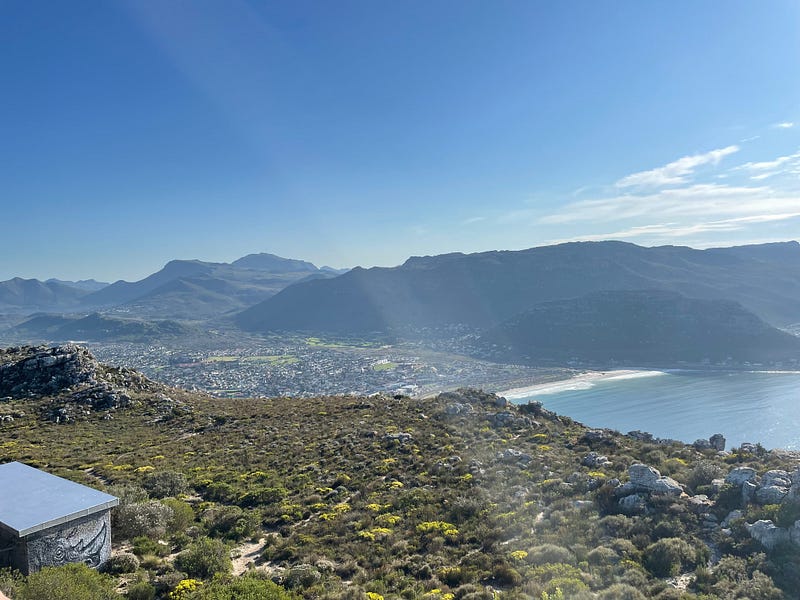
Views on a stunning winter’s day from Elsies Peak down towards the Cape Town suburbs of Fishhoek, Clovelly and Sun Valley with the Silvermine section of the Table Mountain National Park beyond. Cape Town, South Africa. Photo: ©Zoë Chapman Poulsen.

One of the joys of the flexible living of remote working in Cape Town is being able to head away from my desk during the week to enjoy hiking the mountains of the Cape Peninsula when the weather is at its best.

In contrast to summer when the harsh southeaster winds will do their best to blow you off the mountain tops, some of the most beautiful cool and sunny days arrive here during winter between the intense cold fronts after which the “Cape of Storms” is named.

The narrow and rugged mountainous Peninsula on which much of the city of Cape Town sits means that outdoor lovers are rarely too far from hiking trails that wind upwards from the city below offering stunning views.
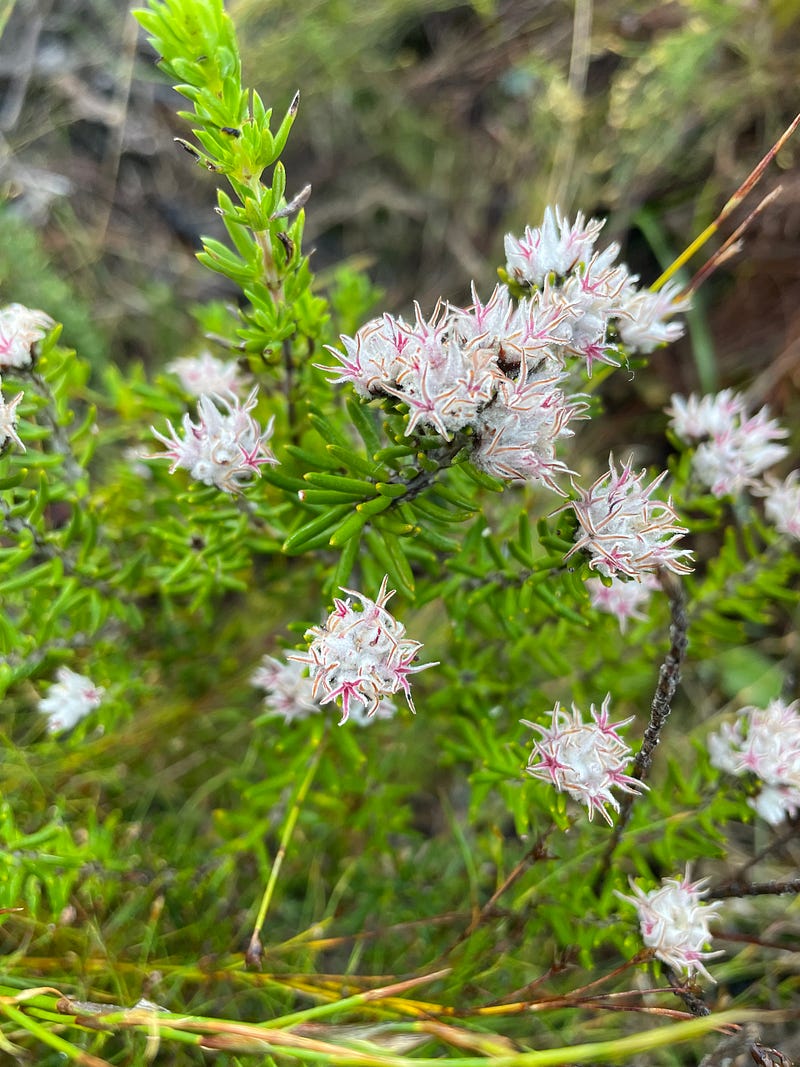
The woolly flowers of the dogface (Tricocephalus stipularis) in bloom on Elsies Peak above Glencairn, Southern Peninsula, Cape Town, South Africa. Photo: ©Zoë Chapman Poulsen.

Since I have moved to what is affectionately known as Cape Town’s “Deep South”, I have been rewarded with lots of new (to me) hikes to explore. Our trail of choice was Elsies Peak, a smaller but isolated peak with a short climb offering 360 views and a fascinating range of wildflowers to enjoy.

From a distance South Africa’s fynbos vegetation can look a tad brown and dull, but getting up close allows us to enjoy its extraordinary beauty and diversity.

South Africa’s fynbos forms part of the Cape Floristic Region (CFR), with a mind blowing 9,000 plant species crammed into an area the size of Portugal. More than 6,200 of these plant species are endemic to the CFR, meaning that they are found nowhere else in the world.
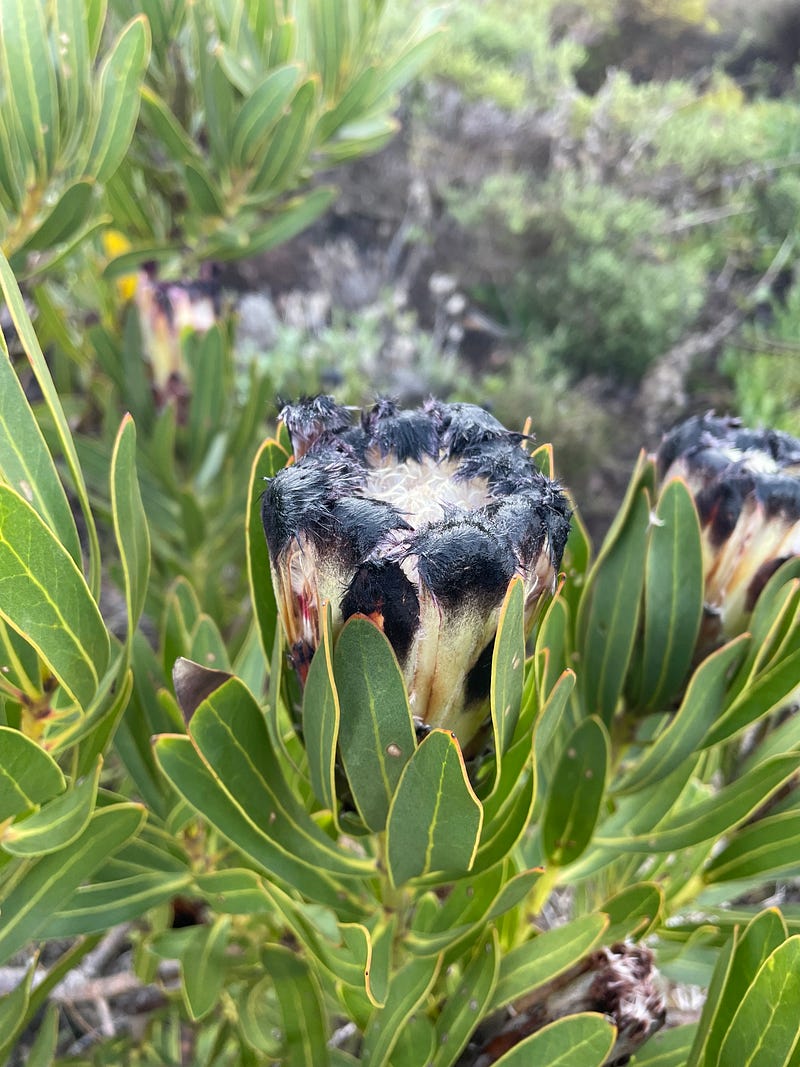
Morning dew on the black bearded Protea (Protea lepidocarpodendron) on the lower slopes of Elsies Peak above Glencairn, Southern Peninsula, Cape Town, South Africa. Photo: ©Zoë Chapman Poulsen.

As we started the climb upwards from the cars, it was still early and the strong mediterranean climate sun had not yet reached this corner of the Peninsula mountains.

The trail is lined with black bearded Proteas (Protea lepidocarpodendron) in full flower, with glistening dew on their animal-like furry blooms.

They are pollinated by the endemic Cape Sugarbird which visits the flowers to feed on their nectar and Protea beetles that travel from flower to flower to feed on the pollen. The Cape Sugarbirds are easily recognisable by their extraordinarily long tails, that are several times the length of the bird itself.
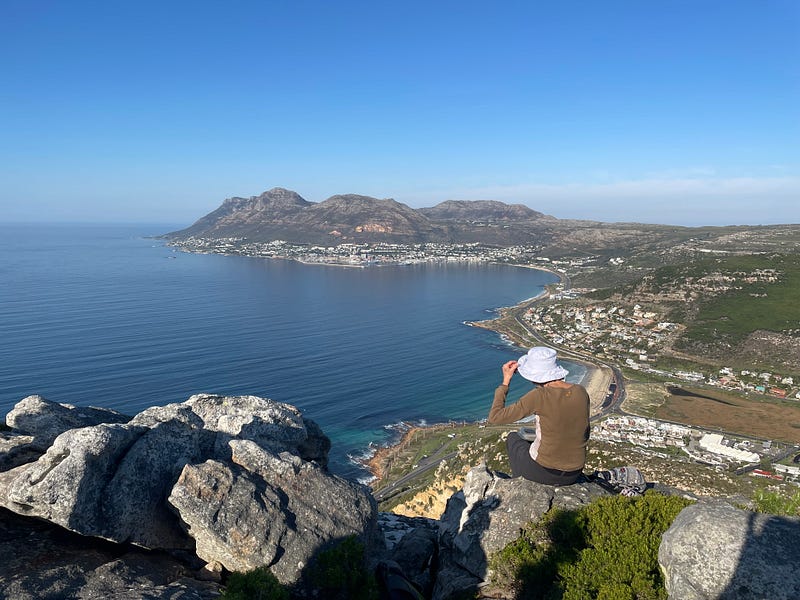
Enjoying the spectacular views towards Glencairn, Simonstown and the Swartkop mountains from the summit of Elsies Peak on an unusually calm winter day with the millpond like water of False Bay below. Southern Peninsula, Cape Town, South Africa. Photo: ©Zoë Chapman Poulsen.

As the trail wound its way upwards, the vegetation changes and the views open up southwards towards Simonstown and across to Cape Hangklip in the Overberg on the far side of False Bay.

More observant hikers may be lucky enough to spot visiting southern right whales later in the season from this extraordinary vantage point, and the occasional great white shark.

But the highlight of our hike was down below us. We spotted the first of many “small brown Afrikaaner” also known as Gladiolus maculatus with their delicate blooms nodding in the wind.
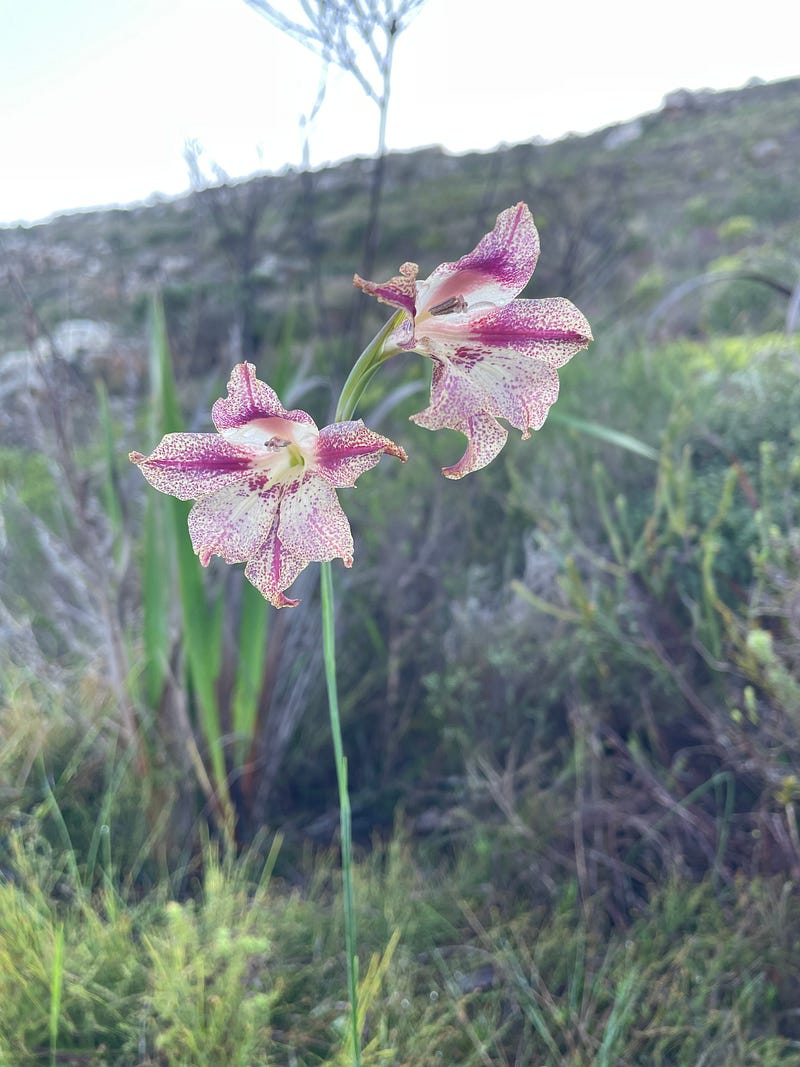
The beautiful mottled blooms of the “small brown Afrikaaner” (Gladiolus maculatus) is a common sight in the Cape Peninsula fynbos during the winter months. Photo: ©Zoë Chapman Poulsen.

Their winter flowers are yellow and wine red and mottled in colour. The flowers are sweetly scented, which suggests that they are likely to be pollinated by moths.

Onwards we climbed, winding upwards through the fynbos, scrambling from rock to rock as we neared the summit. Below us to our north was Fishhoek with its white sandy beach and the mountains of Silvermine beyond.

Hiking
Outdoors
Plants
Nature
South Africa
Recommended from ReadMedium