
A White Tiger and Animal Breeders’ Obsession with ‘Throw-Backs’
“Put them in a cage & leave them to it … you’ll get a throw-back”

The white tiger and breeder’s ‘throw-back’ syndrome:
The fully-coloured tiger’s comment: “Told you not to use clorox” in the cartoon above, is the sort of reaction that a comedian might utter when seeing something that stands out from the norm. Of course, it’s only a joke, the real reason for how this ‘different’ appearance came about is hidden behind the jest … and perhaps because of ignorance. We often make fun of things when we are don’t understand something.
Clorax producing albinism is of course, far too simple an ‘explanation’, and thus is an obvious ‘fun-take’. However, many amateur animal breeders (fanciers), seeking to produce a unique variation of their own particular breed, e.g. dog, cat, or bird, often take another simplistic approach, albeit well-meaning, but actually based on fingers-crossed hope ... and ignorance. They don’t really understand.
As a result, many such amateur breeders use a method that I like to call: ‘Hit and Miss’ … and hope for a surprise outcome’, when breeding their cherished animal specimens.
When they cross one of their favourite specimens with another one that has a different variation, they hope (just hope) that they can produce a fantastic new feature, or maybe a recurring rare type that has long since disappeared over the years ... a ‘throw back’ that will surprise the watching world.
Their hope is for a new ‘wow’ specimen that might bring them fame and riches when they on-breed it and sell it to other fanciers for much money. This is what I call ‘the throw-back syndrome’.
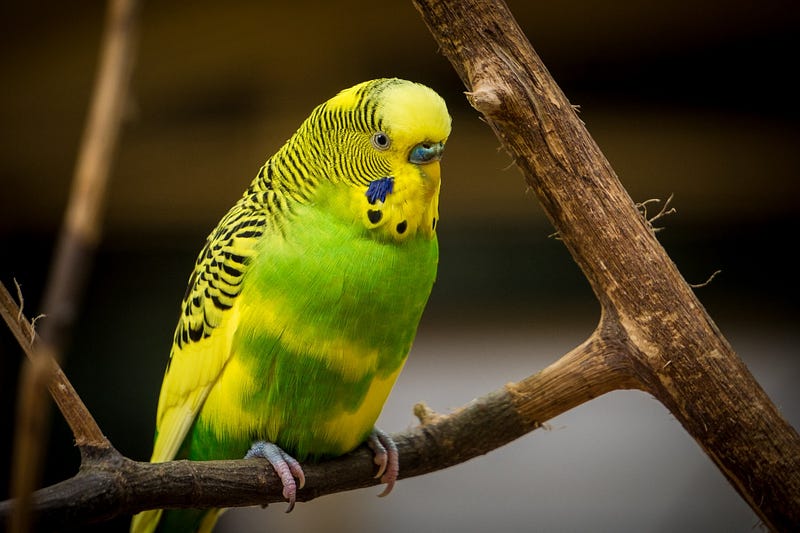
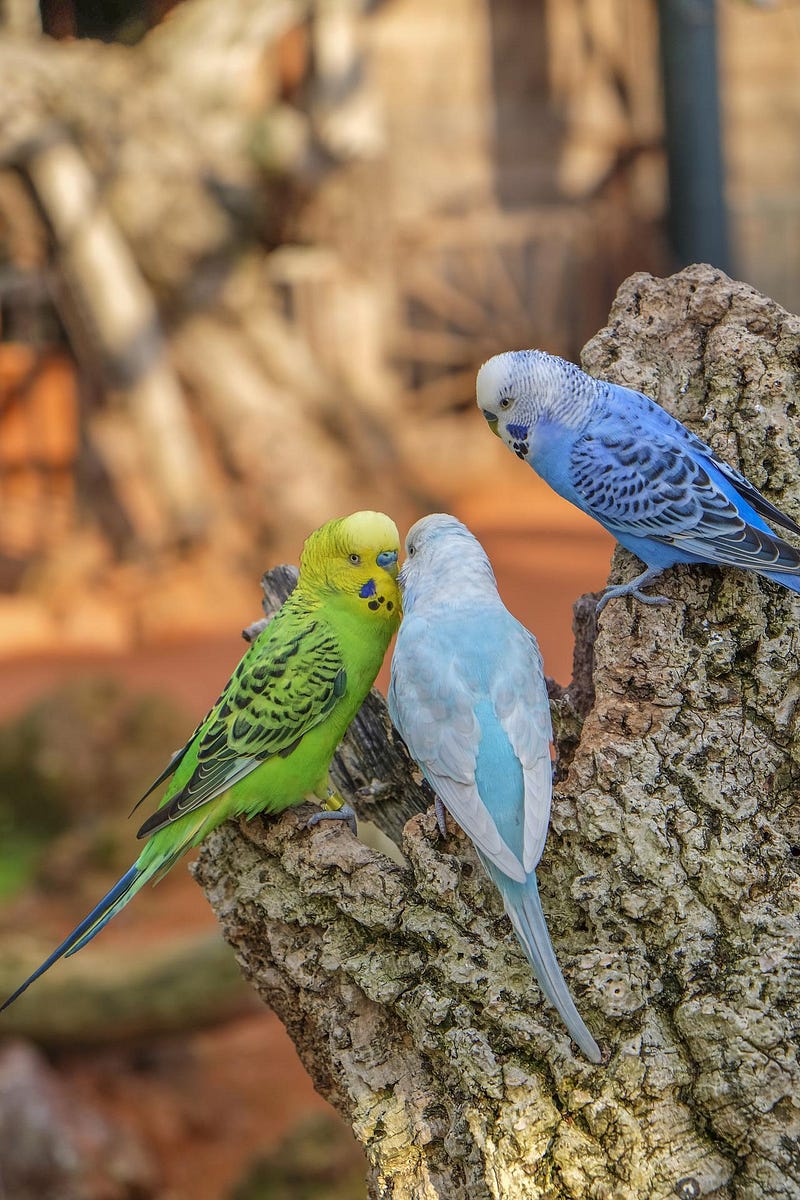
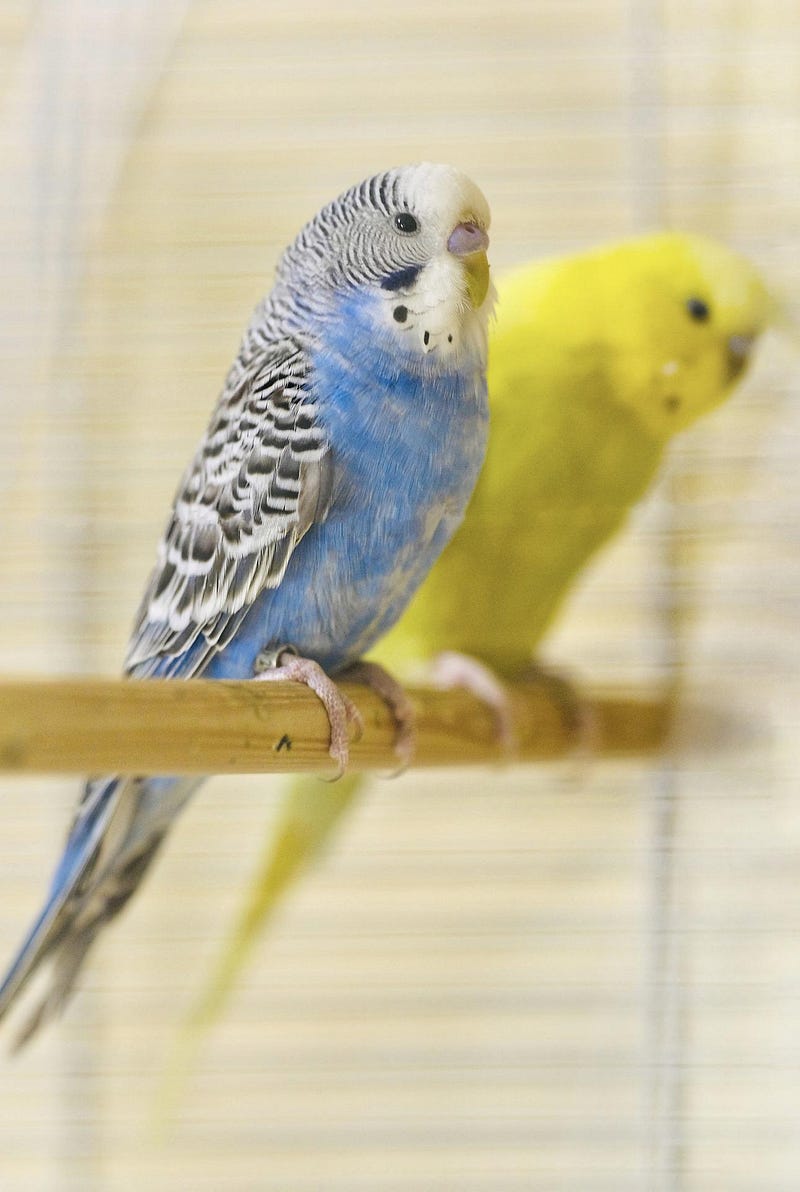
Take for instance, breeders of pedigree budgerigars where the original Australian wild budgie (green with a touch of yellow) can now be found in a glorious array of variational and different colours:
My friend the budgie breeder:
I once knew a budgie breeder who was very disciplined with his breeding programme. His cages were all labelled with pedigree information and specific ‘cross’ details. The labels would show the lineage of the birds in each cage. And in his breeding cages, where he’d place a selected male with a selected female, he would note on the label each prospective parent’s colour, origin and lineage. I admired his disciplined records.
When I took a special interest, not only as a friend, but as a biologist with a special knowledge of genetics, it quite amused me when he would regularly say: “I’m hoping for a throw-back”.
You see, keen as he was; knowledgeable as he was about budgies, he seemed to be ignoring the science of breeding … the underlying systematic control of variation in animals and plants. (a system that is based on the simple rules of genetics), first ‘discovered’ by Gregor Mendel with his now classic scientific break-through-work on garden peas ... (later, found to apply to animals too).
Gregor Mendel (1822–1884) was Abbot of of St. Thomas’ Abbey in Brünn (Brno), Austria (now the Czech Republic) and carried out his studies well before the term genetics came into our scientific lexicon, and before science came to recognise that Mendel’s variational ‘factors’ (as he called them) were in fact ‘genes’. Mendel is one of my favourite scientists and was a strong influence on me becoming a senior lecturer in Genetics & Evolution in the 1970s.
Back to Budgies and My Friend:
My friend simply got on with his enjoyable, well-meaning, well-recorded hope against hope, whilst me (the genetics-biologist), would be quietly ‘tearing my hair out’ witnessing what I regarded as ‘a waste of time on a hope that was more-or-less hopeless’.
So, I decided to try out a new ‘strategy-in-friendship’, my educationist’s background coming to the fore. “Why couldn’t I give him some budgie-genetics info?” I thought. Surely that would comfort and assist him in his endeavour to produce that fine specimen that would out-shine all others and bring him fame and fortune. What could be more simple?
I decided to ease him in slowly, by first giving him a neat summary of the history of Budgerigar Breeding: This is the summary that I gave him:
A History of Budgerigar Breeding:
(skim through this section quickly, unless you are a budgie aficionado!)
Between 1870–75: the very first registered sudden captive-bred colour mutations were Suffused Green (aka Dilute Yellow), Grey winged Green and two types of Lutino mutation. All three occurred in aviaries in Great Britain or Europe, though most didn’t survive for long. However, they were easily reproduced in great numbers during the early 1930s.
Between 1878–85: the Sky-blue mutation suddenly occurred in continental Europe, most probably in Belgium. Surprisingly, this variety was not imported into England until 1910.
1915: Dark-Greens were produced in France (where they were commonly called ‘Laurel’ which is the French word for Bay (leaf &/or tree))
1916: Olive-Greens were produced in France.
1918–28: Grey winged Greens and Grey winged Blues appeared.
1920: The ‘Crest-Factor’ mutation appeared in Australia; and Suffused Blues (aka Dilute Whites) in England and France; and Dark Blues (aka Cobalts) in France.
1921: Mauves appeared in France.
1930: Violet-Greens appeared in Australia (then called ‘Satin Greens’); and Yellow-wings were developed by H. Pier in Sydney.
1931: Cinnamons in England, Australia & Germany; and an unknown type of Fallow in California, U.S.A. but it soon vanished; The German fallow, later genetically re-classified as the Bronze fallow (aka Brown Brown); A plum-eyed mutation, similar looking to the Fallow mutations, occurred in England. It seemed to vanish or at least became very rare. It is thought that it probably was a Brown wing, one of the rarest colour mutations of the species; and also in 1931, the first Albino specimens were produced in both England and continental Europe.
1932: The English fallow appeared. In Australia these have been genetically classified and identified as the Dun fallow or Grey-brown fallow (aka the Australian fallow). The Beige fallow or Pale-brown fallow has been classified in South-Africa, but no reference seems to be available on this particular mutation; The Pied (aka Danish Pied or Harlequin) in Denmark; The Banded Pied in Australia.
1933: The Yellow Wing and Grey-Factor appear in Australia; Both Lutinoes occurred in England and continental Europe; Three Opaline mutations and an Opaline Green hen was captured in the wild and sold to S. Terril in Adelaide. It was later-on reproduced and is most probably the ancestor of all Opaline specimens in Australia. Two sudden captive-bred Opaline mutations occurred in England and Holland.
1934–1948: Various Yellow-faced Blues and Golden faced Blues occurred in several locations; The Dutch Pied in Belgium; The Texas Clear body in the USA: The first Cinnamon-Inos (aka Lacewings) cross-over mutation was produced in Australia; and the first Dark-Eyed-Clear (DEC) variety was produced in Belgium by combining the ADM Pied (aka Danish/Recessive pied) with the Dutch Pied (Continental or Clear flighted).
1970–74: Spangled specimens were produced in Australia.
1975: Saddleback specimens were produced in Australia.
1992: Blackface specimens made their first appearance in Holland.
My friend welcomed the above info and was quite fascinated by the history, but he didn’t take so easily to the next thing I gave him … and that was: ‘A Detailed Scientific Table of Primary Budgerigar Mutations’.
It was too much for him … and, to save you the same agony, I won’t reproduce it here, but if you do want to take budgerigar genetics further, and seriously, then here’s a link to Wikipedia’s budgie colour genetics site. It contains the very same table of ‘Primary Budgerigar Mutations’ that I gave to my friend, and much more.
Good luck with it … and happy reading!
A Simple Take-Away:
If you think that all this is too complicated for you then let me take you back to the comedian’s method of dealing with unexplained colour variation:
I’ve written another story: ‘Cat Genetics, Big Cats, and The White Tiger’ that may reveal how some animals get to be striped & white. After all, tigers are only big cats … aren’t they?
You’ll find it (along with this one) in my Animal Stories Collection, so do check out that collection from time to time and keep your eyes open for the ‘Cat genetics & Big cats’ one.
***********************
“A White Tiger and …‘Throw-Backs’” * is written by Fred: Almost Famous * * * * * © Fred Ogden 2022 * * * * *

* * * (Feel free to share it on social media if that’s your scene) * * *
You can also Clap & Comment (via icons at top or bottom of this article)
******************************************
NAVIGATION PANEL: TO EVERYTHING FRED: (clickable links)
- All You Need to Know About Fred (including an Index to Fred’s Stories)
- New Index to ALL Fred’s Story Collections
- Get Fred’s new stories delivered to your email inbox … There’s no charge
- Fred’s Email: [email protected]
******************************************
- Follow Fred on Medium: 👉 Fred’s Follow-button (top of all his stories), and he’ll click YOUR ‘follow’ button if he finds your stories appealing.


