avatarDr. Hettie V. Williams

Free AI web copilot to create summaries, insights and extended knowledge, download it at here

3520

Abstract

violence</a> and insurrection in U.S. history since the mid-nineteenth century. This is exemplified with events such as the American Civil War, the violence that followed in the Reconstruction South and the racial rebellions and white riots that defined much of the twentieth century. Historians define the Civil War as a type of insurrection against the legitimate government of the United States by Confederates. This insurrection of the Confederacy was fueled by an attempt to protect racial slavery under the guise of states’ rights and this is clear in South Carolina’s <a href="https://avalon.law.yale.edu/19th_century/csa_scarsec.asp">articles of secession</a>. Here are but a select few incidents of white mob violence and war (against African Americans in particular) to make note of just a few events since the mid-nineteenth century:</p><p id="007b">· The Civil War 1861–1865 (more than 600,000 Americans killed including African American soldiers as a result of a white supremacist insurrection orchestrated by Confederates against the Union)</p><p id="2005">· Reconstruction South 1865–1876 (the <a href="https://eji.org/wp-content/uploads/2020/07/reconstruction-in-america-report.pdf">Equal Justice Project</a> has identified 2,000 racial terror lynchings of Black women, men, and children that took place during Reconstruction)</p><p id="49c1">· Post-Civil War racial unrest takes place in cities such as New Orleans, Louisiana, Memphis, Tennessee, Meridian, Mississippi and Charleston, South Carolina between 1866 and 1876</p><p id="3229">· Colfax Massacre, 1873 a white militia killed more than 50 Black men</p><p id="4810">· <b>Jim Crow Era White Mob Violence and Lynchings in the twentieth Century</b>:</p><p id="c802">· <a href="https://www.ncdcr.gov/learn/history-and-archives-education/1898-wilmington-race-riot-commission">Wilmington Insurrection</a>, 1898 an insurrection led by white supremacists in an attempt to overthrow the elected government in Wilmington, North Carolina</p><p id="b1e4">· <a href="https://www.journals.uchicago.edu/doi/abs/10.2307/2716690?journalCode=jnh">Atlanta Massacre</a>, 1906 (white mobs attack African Americans and targeted Black owned businesses in Atlanta leaving more than a dozen African Americans dead)</p><p id="f146">· <a href="https://www.theworldwar.org/learn/wwi/red-summer">Red Summer</a>, 1919 (marauding angry white mobs killed hundreds of African Americans during the summer of 1919 in multiple cities across the U.S. including in places such as <a href="https://www.zinnedproject.org/news/tdih/elaine-massacre/">Elaine</a>, Arkansas estimates indicate that more than 100 African Americans were killed by white mobs)</p><p id="15ef">· <a href="https://www.tulsahistory.org/exhibit/1921-tulsa-race-massacre/">Tulsa Massacre</a>,1921 (between May-June white mobs destroy the Black section of Tulsa using guns and explosive devices destroying nearly the entirety of the area killing at least 36 injuring more than 800)</p><p id="cea6">· <a href="https://www.britannica.com/topic/Rosewood-riot-of-1923">Rosewood Massacre</a>, 1923 (destruction of an African American town in Florida by white mobs that killed at least 8 people by official accounts)</p><p id="5326">· <a href="https://www.blackpast.org/african-american-history/harlem-riot-1935/">Harlem Riot</a>, 1935</p><p id="1757">· <a href="https://www.blackpast.org/african-american-history/detroit-race-riot-1943/">Detroit Race Riot</a>, 1943</p><p id="7620">· Civil Rights Era, 1954–1968:</p><p i

Options

d="6b9a">· <a href="https://www.loc.gov/collections/civil-rights-history-project/articles-and-essays/murder-of-emmett-till/">Murder of Emmett Till</a>, 1955 in Money Mississippi by white supremacists Roy Bryant and J.W. Milam</p><p id="921c">· <a href="https://snccdigital.org/events/medgar-evers-murdered/">Murder of Medgar Evers</a>, 1963 by a white supremacist in Jackson, Mississippi</p><p id="67b9">· <a href="https://www.britannica.com/event/16th-Street-Baptist-Church-bombing">16th Street Baptist Church Bombing</a> in Birmingham, Alabama, 1963 (white supremacist Klansman Dynamite Bob kills four African American teenagers in a Church Birmingham Church)</p><p id="35c4">· <a href="https://www.fbi.gov/history/famous-cases/mississippi-burning">Freedom Summer Murders</a>, 1965 (murder of three civil rights workers James Chaney, Micky Schwerner and Andrew Goodman by white supremacists)</p><p id="e35e">· Assassination of Martin Luther, King Jr., 1968</p><p id="e989">At the founding of the Republic, this nation was a democracy in name only. In fact, as historian Jelani Cobb has recently pointed out, on twitter, <a href="https://twitter.com/jelani9/status/1347621406545227781">“most”</a> of the nation’s elections “were illegitimate.” Fair and equal elections only really began after the signing of the <a href="https://www.justice.gov/crt/history-federal-voting-rights-laws">Voting Rights Act</a>, and this Act was more or less eviscerated in the 2013 <a href="https://www.scotusblog.com/case-files/cases/shelby-county-v-holder/"><i>Shelby vs. Holder</i></a> decision. There have not been many fair and free elections in U.S. history because of white supremacist terrorist violence. American history has been marred by an unmitigated level of virulent anti-Black violence in nearly every decade of the twentieth century to the present. It has taken many forms including racial terror lynching, bombings, use of explosive devices, mob violence and police brutality.</p><p id="bb98">A number of white Americans are what I like to call myth eaters: those who consume false narratives about U.S. history to justify white supremacy and assuage their anxiety about Black people. For them, history is but a tool to misuse the past to preserve the status quo. Jeanne Theoharis argues, in her brilliant book <a href="http://www.beacon.org/A-More-Beautiful-and-Terrible-History-P1333.aspx"><i>More Beautiful and Terrible History</i></a><i>: The Uses and Misuses of Civil Rights History</i> (Beacon Press, 2018), that critical moments and historical figures in the Civil Rights Movement have been distorted, misremembered, or mythologized in public spaces, and in texts, to justify attacks on movements for social justice such as the Black Lives Matter Movement (BLM). With this essay, I join a <a href="http://www.megankatenelson.com/historians-contextualizing-the-capitol-insurrection-a-roundup/">chorus of historians</a> such as Karen L. Cox, David W. Blight, Heather Cox Richardson, Keisha Blain, Rhae Lynn Barnes, Keri Leigh Merritt, Jelani Cobb and many others who have been quoted in interviews or written critical essays about the Capitol siege of January 6 as an incident rooted in a history of white supremacist thinking and violence.</p><p id="182d">The myth eaters close their eyes to an accurate retelling of the past because it does not serve their purpose. Their interest is not truth, as elucidated through logical reasoning and facts, but, rather, the maintenance of white supremacy.</p></article></body>

A White King and Myth Eaters:

The Capitol Siege in Historical Perspective

by Hettie V. Williams, PhD
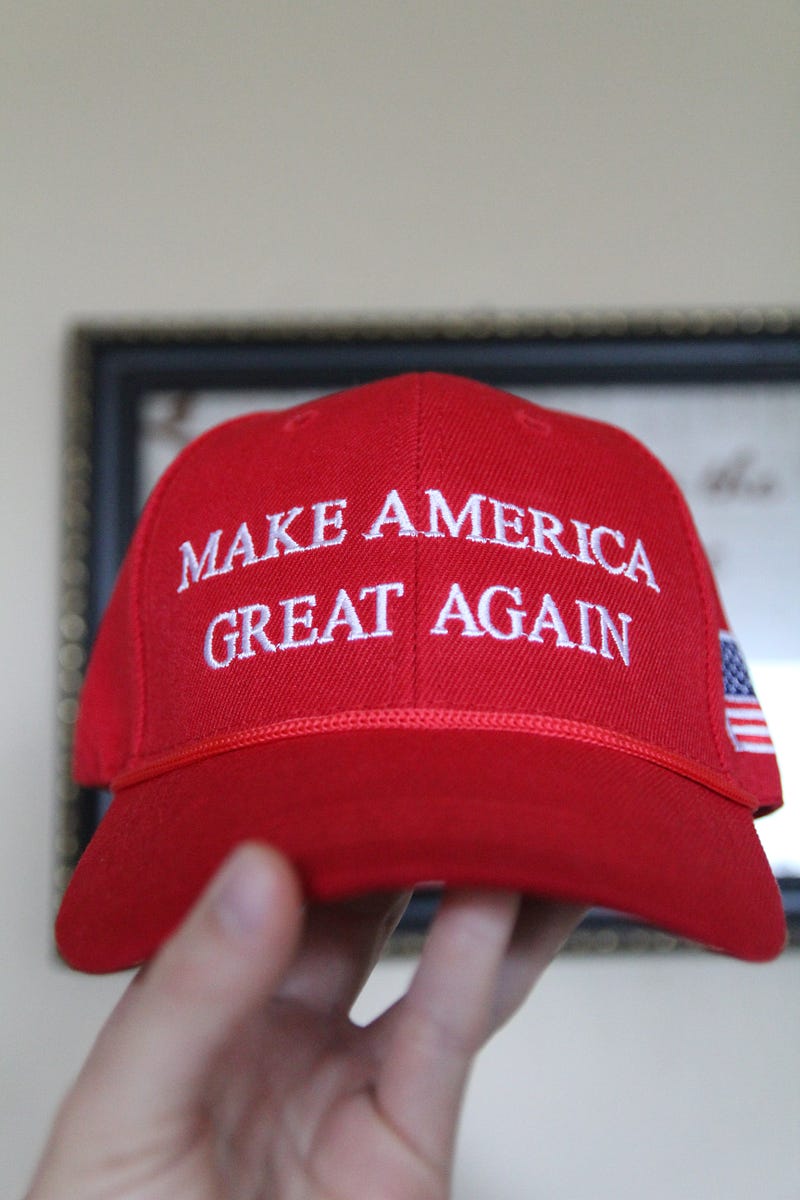
Photo by Aubrey Hicks on Unsplash

A majority of white voters across every demographic including gender, age and class voted for Donald J. Trump in two presidential elections. He is their king. According to the Pew Research Center, an estimated 58 percent of all white voters selected Trump in 2016 (31 percent voted for Hillary), and more than 50 percent voted to reelect Trump in 2020. He is their white king. I wrote about white racial anxiety a few years ago in a Huffington Post article suggesting that this anxiety will only increase as the nation becomes characteristically more ethnically diverse — and noticeably less white. Race is power. And, the majority of white people (nearly 60 percent of active registered voters that is), regardless of how “woke” they claim to be, seek to preserve their power. This is illustrated in their votes for a man who did nothing to hide his racialist thinking, contempt for women, disdain for Black people, immigrants and the disabled. Don’t believe the hype about white wokeness.

The recent siege on the Capitol building of the United States government can only be framed historically as a white supremacist terrorist attack on the U.S. Capitol incited by a cast of characters who supported Donald J. Trump — the forty-fifth president of the United States. More recently, nearly 200 members of the U.S. House of Representatives have signed on to an article of impeachment that accuses Trump of “incitement of insurrection.” This is the second attempt to impeach this man. How did it come to this? White mob violence and white supremacist insurrection is not new in U.S. history. That said, this is who we are and what we have been, in many instances, within the context of U.S. history.

There have been several incidents of white supremacist violence and insurrection in U.S. history since the mid-nineteenth century. This is exemplified with events such as the American Civil War, the violence that followed in the Reconstruction South and the racial rebellions and white riots that defined much of the twentieth century. Historians define the Civil War as a type of insurrection against the legitimate government of the United States by Confederates. This insurrection of the Confederacy was fueled by an attempt to protect racial slavery under the guise of states’ rights and this is clear in South Carolina’s articles of secession. Here are but a select few incidents of white mob violence and war (against African Americans in particular) to make note of just a few events since the mid-nineteenth century:

· The Civil War 1861–1865 (more than 600,000 Americans killed including African American soldiers as a result of a white supremacist insurrection orchestrated by Confederates against the Union)

· Reconstruction South 1865–1876 (the Equal Justice Project has identified 2,000 racial terror lynchings of Black women, men, and children that took place during Reconstruction)

· Post-Civil War racial unrest takes place in cities such as New Orleans, Louisiana, Memphis, Tennessee, Meridian, Mississippi and Charleston, South Carolina between 1866 and 1876

· Colfax Massacre, 1873 a white militia killed more than 50 Black men

· Jim Crow Era White Mob Violence and Lynchings in the twentieth Century:

· Wilmington Insurrection, 1898 an insurrection led by white supremacists in an attempt to overthrow the elected government in Wilmington, North Carolina

· Atlanta Massacre, 1906 (white mobs attack African Americans and targeted Black owned businesses in Atlanta leaving more than a dozen African Americans dead)

· Red Summer, 1919 (marauding angry white mobs killed hundreds of African Americans during the summer of 1919 in multiple cities across the U.S. including in places such as Elaine, Arkansas estimates indicate that more than 100 African Americans were killed by white mobs)

· Tulsa Massacre,1921 (between May-June white mobs destroy the Black section of Tulsa using guns and explosive devices destroying nearly the entirety of the area killing at least 36 injuring more than 800)

· Rosewood Massacre, 1923 (destruction of an African American town in Florida by white mobs that killed at least 8 people by official accounts)

· Harlem Riot, 1935

· Detroit Race Riot, 1943

· Civil Rights Era, 1954–1968:

· Murder of Emmett Till, 1955 in Money Mississippi by white supremacists Roy Bryant and J.W. Milam

· Murder of Medgar Evers, 1963 by a white supremacist in Jackson, Mississippi

· 16th Street Baptist Church Bombing in Birmingham, Alabama, 1963 (white supremacist Klansman Dynamite Bob kills four African American teenagers in a Church Birmingham Church)

· Freedom Summer Murders, 1965 (murder of three civil rights workers James Chaney, Micky Schwerner and Andrew Goodman by white supremacists)

· Assassination of Martin Luther, King Jr., 1968

At the founding of the Republic, this nation was a democracy in name only. In fact, as historian Jelani Cobb has recently pointed out, on twitter, “most” of the nation’s elections “were illegitimate.” Fair and equal elections only really began after the signing of the Voting Rights Act, and this Act was more or less eviscerated in the 2013 Shelby vs. Holder decision. There have not been many fair and free elections in U.S. history because of white supremacist terrorist violence. American history has been marred by an unmitigated level of virulent anti-Black violence in nearly every decade of the twentieth century to the present. It has taken many forms including racial terror lynching, bombings, use of explosive devices, mob violence and police brutality.

A number of white Americans are what I like to call myth eaters: those who consume false narratives about U.S. history to justify white supremacy and assuage their anxiety about Black people. For them, history is but a tool to misuse the past to preserve the status quo. Jeanne Theoharis argues, in her brilliant book More Beautiful and Terrible History: The Uses and Misuses of Civil Rights History (Beacon Press, 2018), that critical moments and historical figures in the Civil Rights Movement have been distorted, misremembered, or mythologized in public spaces, and in texts, to justify attacks on movements for social justice such as the Black Lives Matter Movement (BLM). With this essay, I join a chorus of historians such as Karen L. Cox, David W. Blight, Heather Cox Richardson, Keisha Blain, Rhae Lynn Barnes, Keri Leigh Merritt, Jelani Cobb and many others who have been quoted in interviews or written critical essays about the Capitol siege of January 6 as an incident rooted in a history of white supremacist thinking and violence.

The myth eaters close their eyes to an accurate retelling of the past because it does not serve their purpose. Their interest is not truth, as elucidated through logical reasoning and facts, but, rather, the maintenance of white supremacy.

Capitol Siege
Mob Violence
History
American History
Race
Recommended from ReadMedium