
A Week in the Ventana Wilderness
Just coming down from an incredible experience — backpacking for a week in the Ventana Wilderness just east of Big Sur, CA with Ward, who has been hiking and exploring in this magical place since he was a teen in the late ’70s — couldn’t ask for a better guide and companion.
All images © Scot Hacker, 2022. Do not copy, distribute or reproduce images without permission.
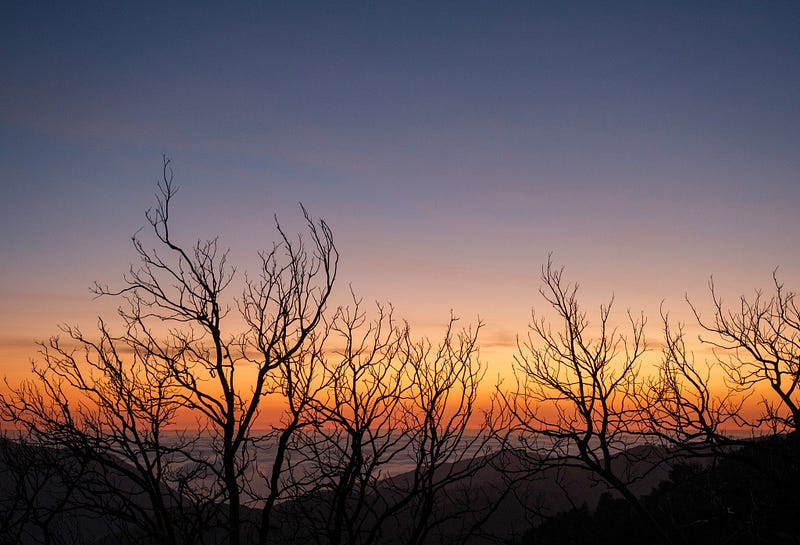
With loaded backpacks and a bunch of heavy camera gear, we traipsed, ambled, grunted and perambulated ~40 miles over five days (and two miles of vertical). On days 2–4, we saw no other humans, no trace of civilization. It’s hard to describe how different this was from, say, five successive day hikes — it takes time to immerse oneself in this experience of solitude, completely outside of society and civilization — day hikes don’t allow for the same sense of timelessness.
I kept around 200 of the images I shot that week and have included a few of them here. The full Lightroom album is available if you’re curious (comments allowed if you have an Adobe login), and the Flickr album populating slowly as I trickle them out.
Many thanks to David Yocom for his excellent review, Ventana Double Cone, which was published with perfect timing right before our trip.
True Wilderness Unlike a state or national park, a true wilderness has no roads. No fees, no information stations, no bathrooms, no guided tours, no general stores, no postcards or snacks or roads… it’s just… wild. There is a bit of minimal infrastructure — a few (very few) sanctioned campsites and some weathered trail signs, and that’s about it. Which also means no car camping — just backpackers and a few trail runners. On days 2, 3, and 4, we did not see another soul. Nor did we see any trash, or any hint that there was a humming civilation a few miles away (only the occasional contrail breaks the illusion that you’ve stepped back 10,000 years in time).
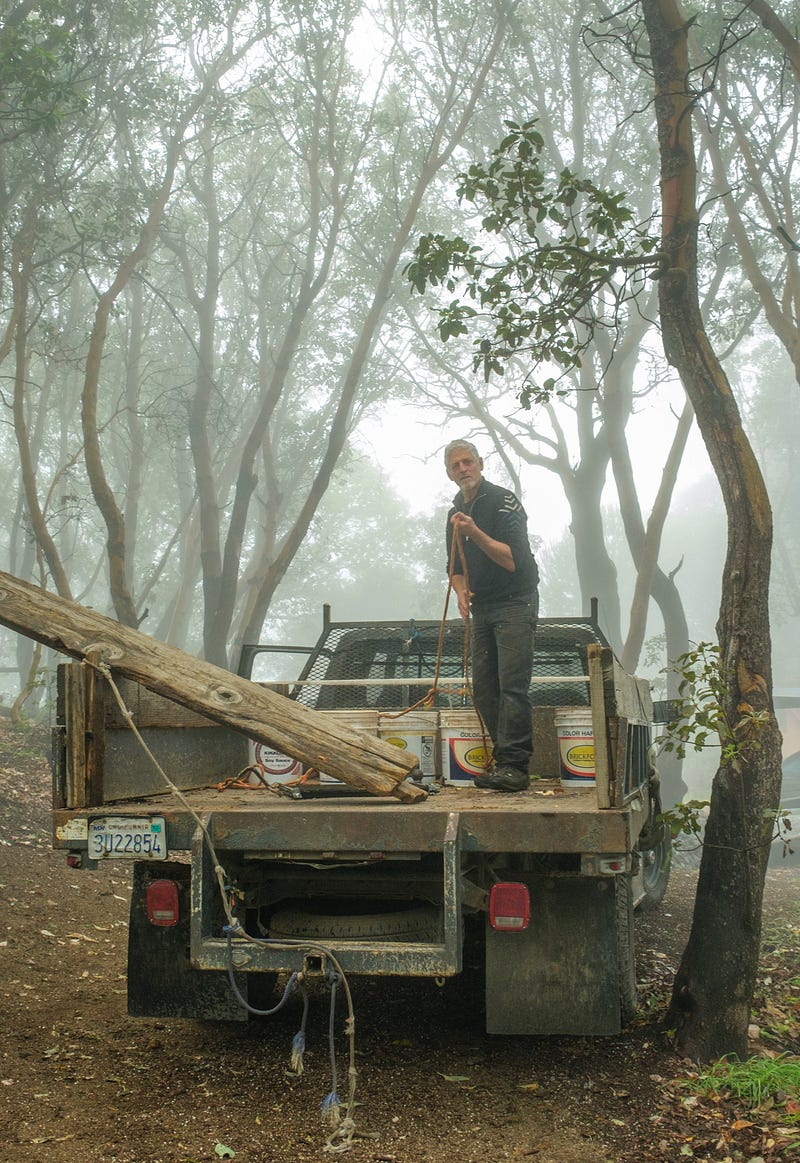
Free Ride The first 1.5 miles of the hike into Ventana from “The Hoist” is a steep, ruddy, private dirt road rising the first thousand feet to the real trail head.
No sooner had we set out up the road than a local named Theo stopped his pickup and asked if we’d care for a ride. Not too proud, Ward and I hopped in the back with our packs, and he told us to hold onto the headache bar above the cab. Soon he stopped the truck, opened the cab door, and let out his gorgeous Huskie, Osiris. As he drove carefully but quickly over the pocked surface while Ward and I stood up in the back holding on, Osiris ran ahead of the truck, then behind, as joyous to lead as to follow.
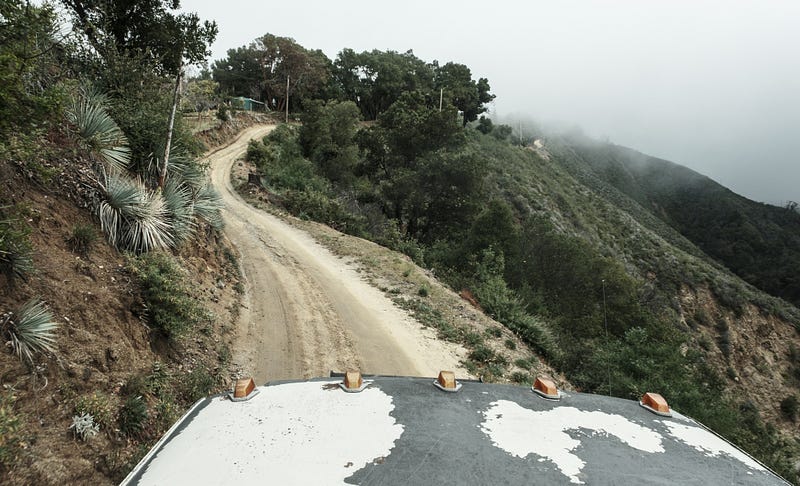
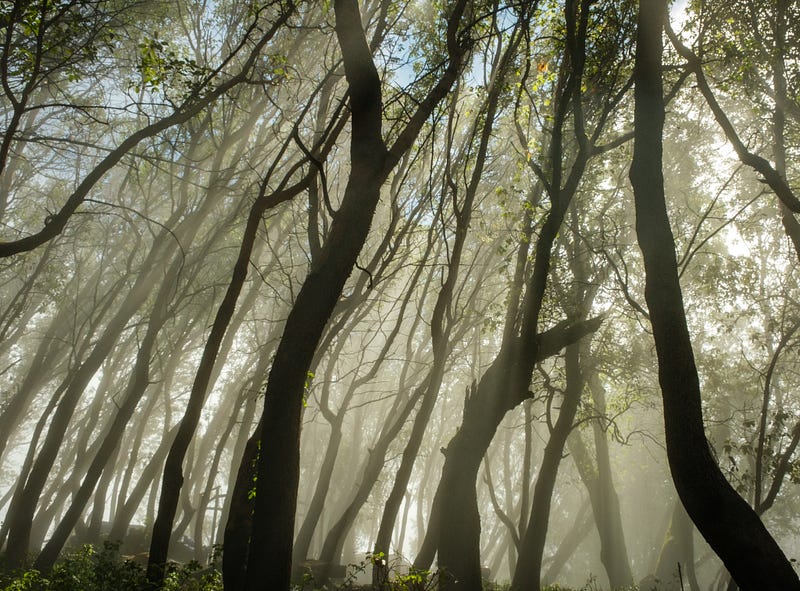
Soon we headed into a low cloud, and the landscape started to change. At the end of the dirt road, Theo bombed up a steep driveway to his personal network of hobbit houses, and invited us in.
Theo is one of Ventana’s fringe dwellers — people who have carved out an existence on the very edge of the wilderness — eccentrics building their dream dwellings, trying to live close to the earth. Said he made his living selling firewood, making handmade lyres, and writing children’s books. Incense filled the air, and Hindu & Buddhist artwork lined the walls. We talked about life in Ventana, architecture, dogs and scuba diving(!), then we headed out, packs full and hearts willing.
Day 1, The Hoist to Pat Springs Finding water would prove to be a challenge. The magical pipes sticking out of the side of a hill at Pat Springs had been reduced to a trickle.
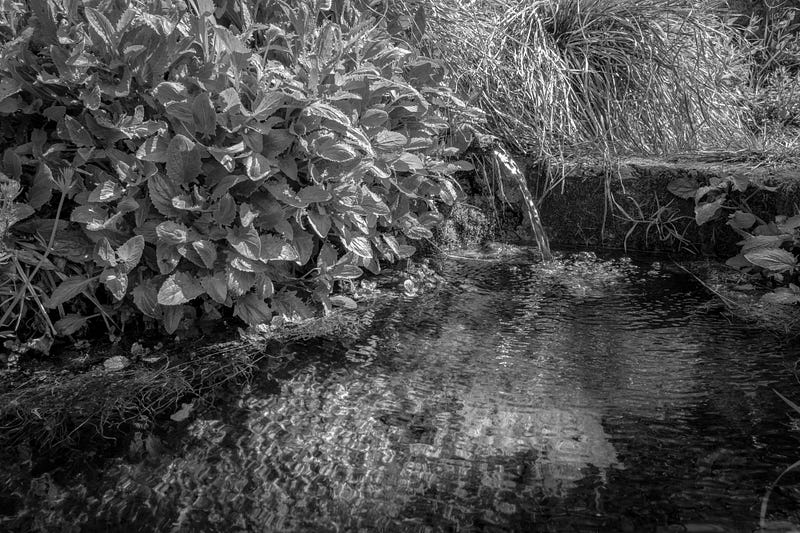
This was surprising at first because we thought Monday’s storm would have filled all of the creeks, but here in mountainous areas, we are dependent on deep springs, not surface creeks, and the water table has nearly run dry after multiple drought years. We carried what water we could. If either of the two “pin prick” water sources at Pat Springs or Lone Pine had run dry, we would have had to turn back.
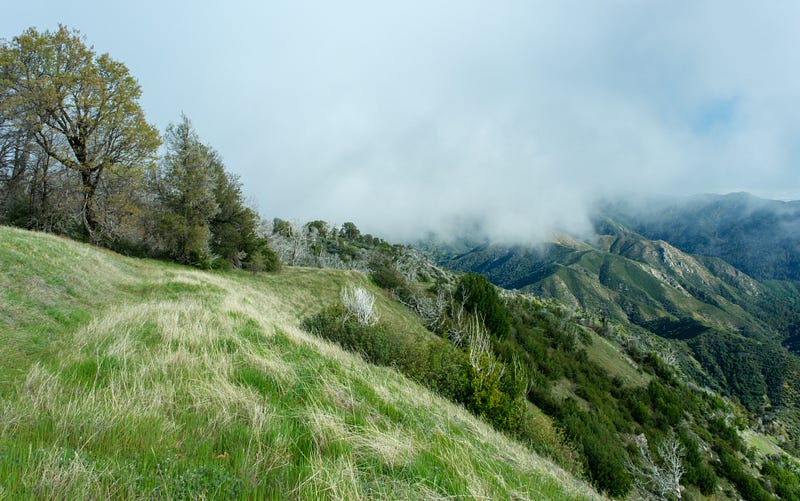
We landed at our campsites on the first two days right around sunset, leaving the dilemma: Shoot the vista, or set up the tent? Sophie’s choice, so we did both (of course). The views from Pat Springs are unparalleled — this has become one of my sacred spots on earth, up there with Bryce Canyon and Kauai’s Kalalau.
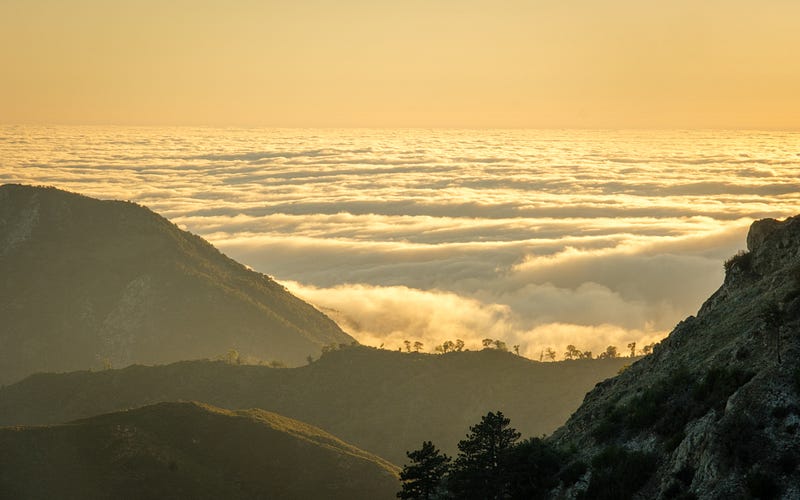
Looking down at the tops of clouds makes it feel like that rare view you get from an airplane window, but without all the plastic and metal.
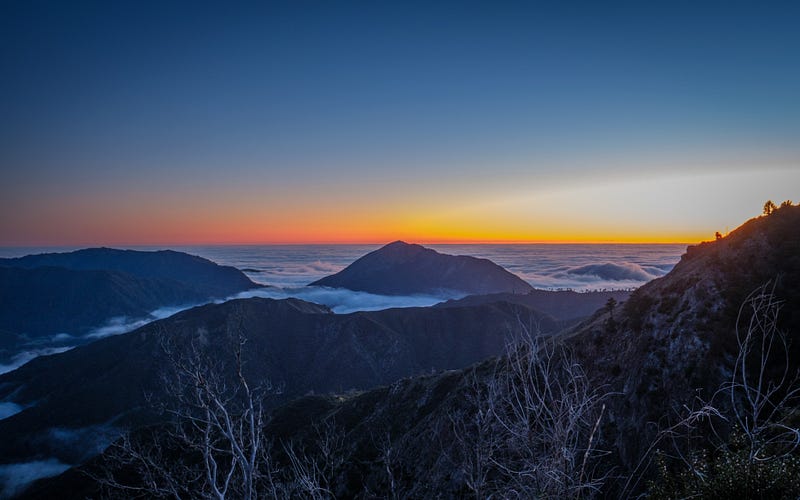
Day 2, Pat Springs to Ventana Double Cone Woke up crisp at Pat Springs, amazed by the rippled hills spread out in front of us. No critters had invaded the bags we’d hung from a tree. Ate goopy dehydrated eggs that needed a frying pan I didn’t have. Today was to be our biggest day — almost nine miles, with half a mile of ascent, much of it exposed. Filled our H2O from the trickle that remained at Pat Springs and set out.
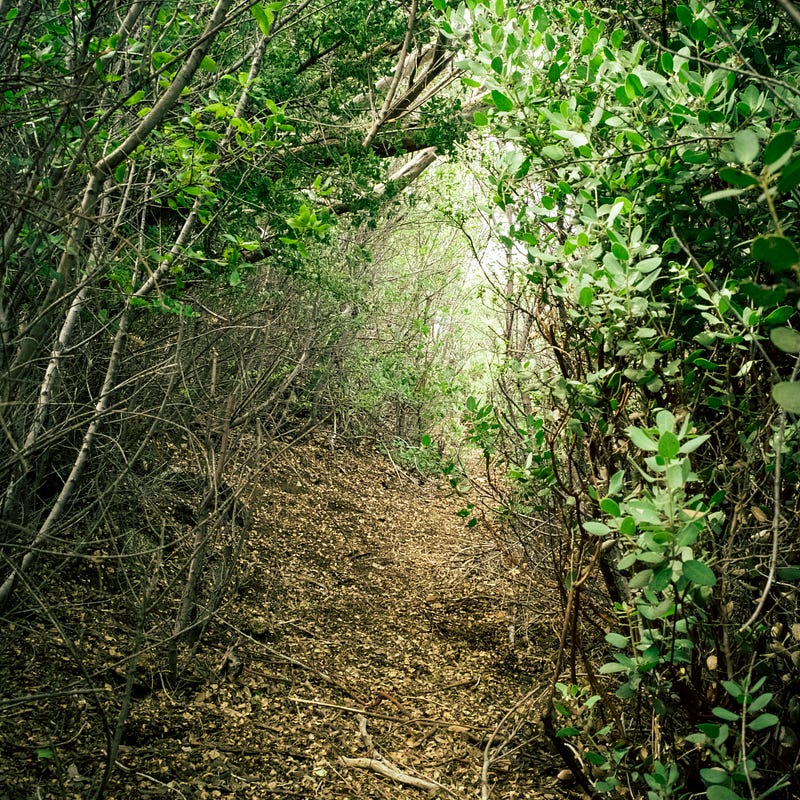
From Puerto Suelo, the brush got thicker. There is no forest service to keep the trails clear — volunteers do that if you’re lucky, hiking out with sheers to cut back the oak and madrone that grows into the trail and claws at your arms and legs and pack. Through areas that were green with new growth, and blackened from the Soberanes fire of 2016. Refilled our tanks from the seep at Lone Pine — if it had dried up, we would have had to turn back.
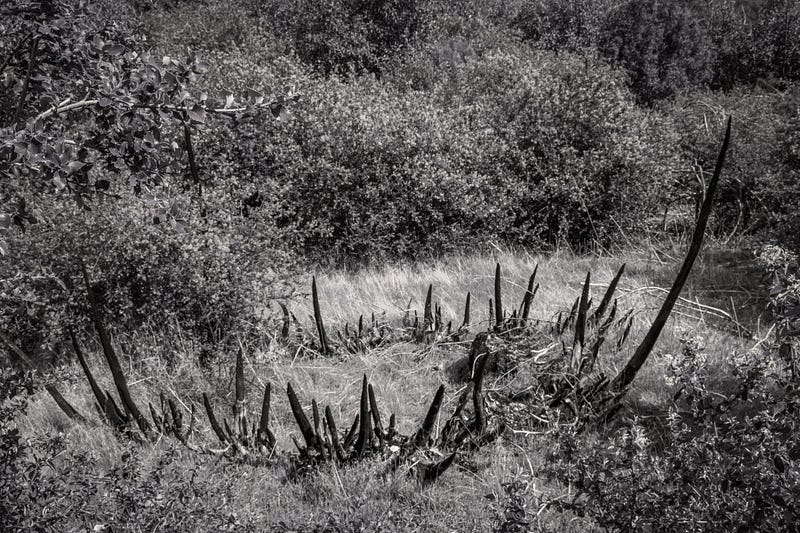
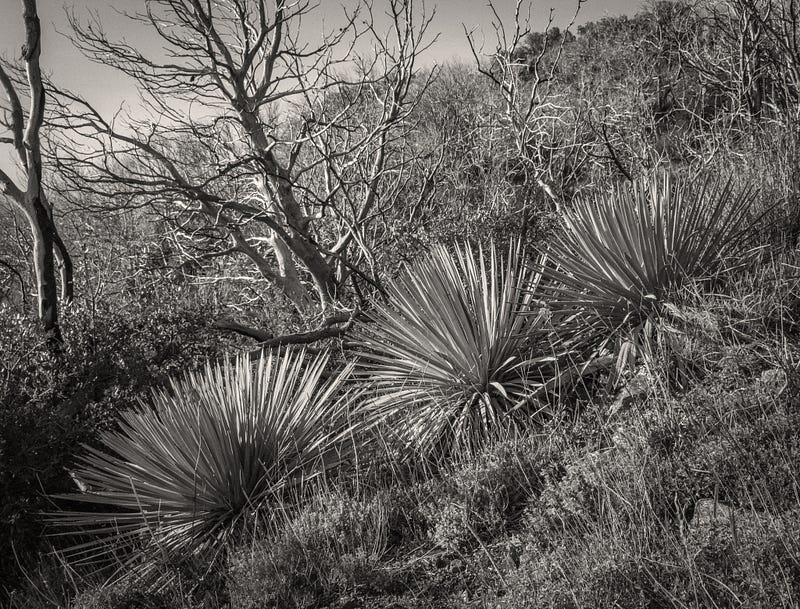
Yucca dotted the landscape. A burnt trunk left behind a spiked crown. At one point, physical exhaustion gave way to sleepiness, and I layed down in the trail and cat-napped on my pack.
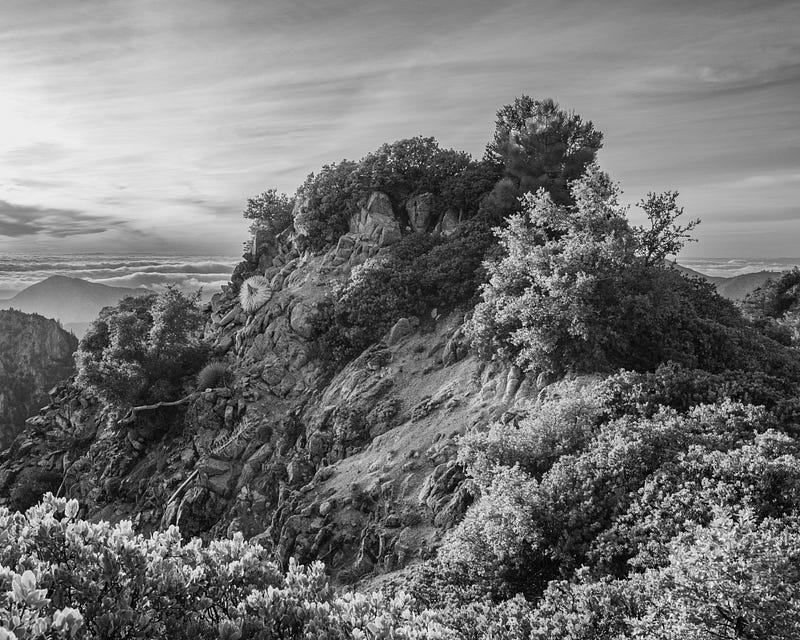
This had been the toughest slog, but finally the trail turned upwards onto a final peak, and there we were at Ventana Double Cone. VDC had been a lookout station once upon a time, and there are still a few wood and stone remnants of the old structure. Did someone live out here, watching for fires? How did they get supplies?
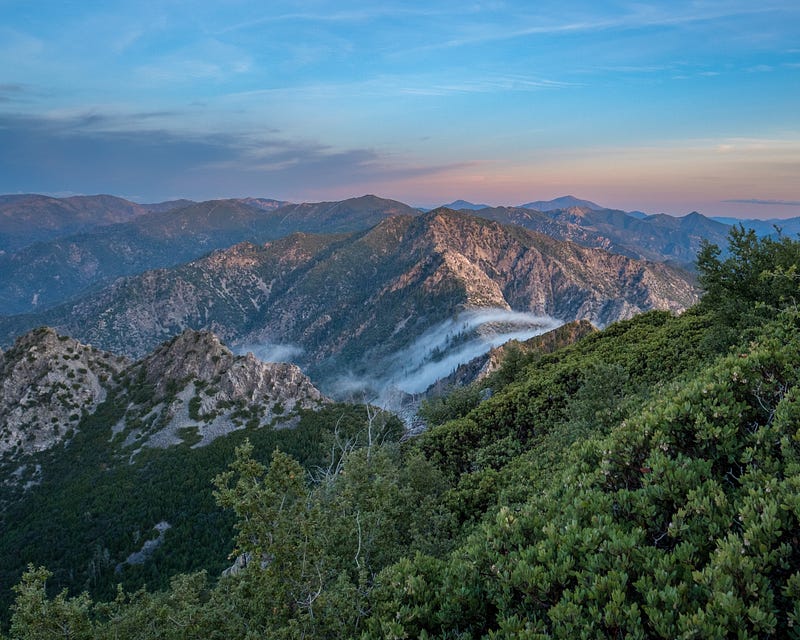
Awe-inspiring 360° view of rippled mountains in all directions, golden light, pink and orange reflecting off granite slabs and impossibly rugged mountains as far as the eye can see. Ventana just goes on forever, never quits.
Ward and I hunted for the best place to pitch a tent, but there was little protection from the wind on the ridge. Finally spotted a flat area a bit downhill and found it perfectly flat, smoothed by recent rains. Talking to a trail runner later, realized later we might have camped on an emergency helipad. Fine, it was perfect.
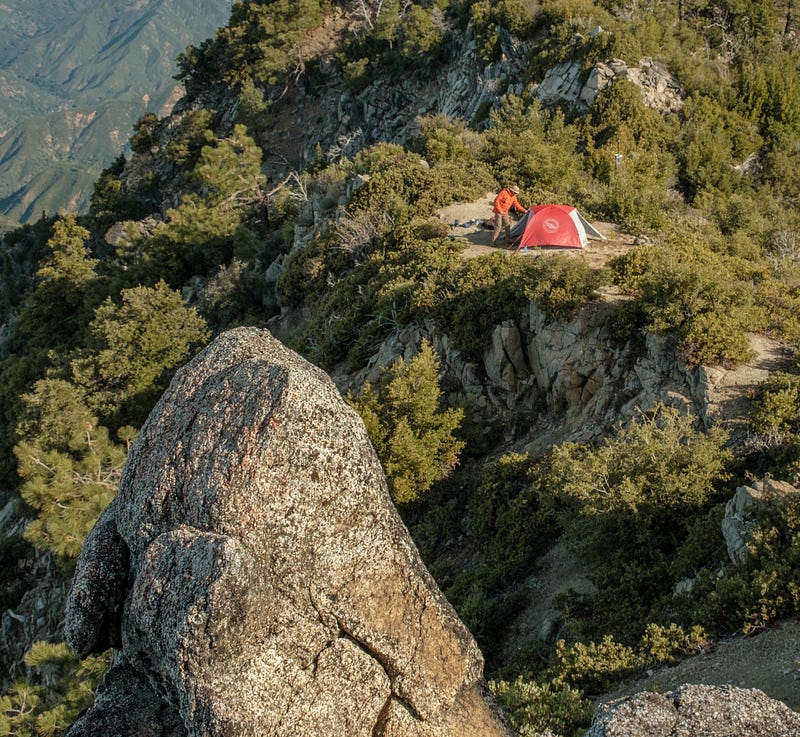
We switched out of sweaty clothes into thermal layers. Still, had to eat dinner in the tent to keep the chill at bay. Tent worked wonders, and soon we were able to venture out to enjoy the sun setting over roiling clouds.
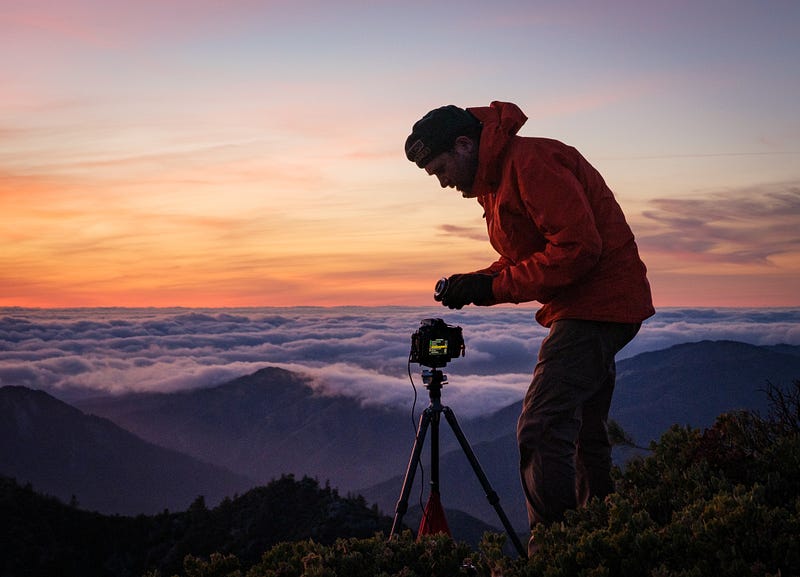
Day 3, Ventana Double Cone to Mystery Camp Crack of dawn, I peeked out the tent flap to see Ward had been (once again) up an hour before me, reveling in dawn’s first light. Pulled on boots to pad around the mountaintop before coffee, first golden rays poking through.
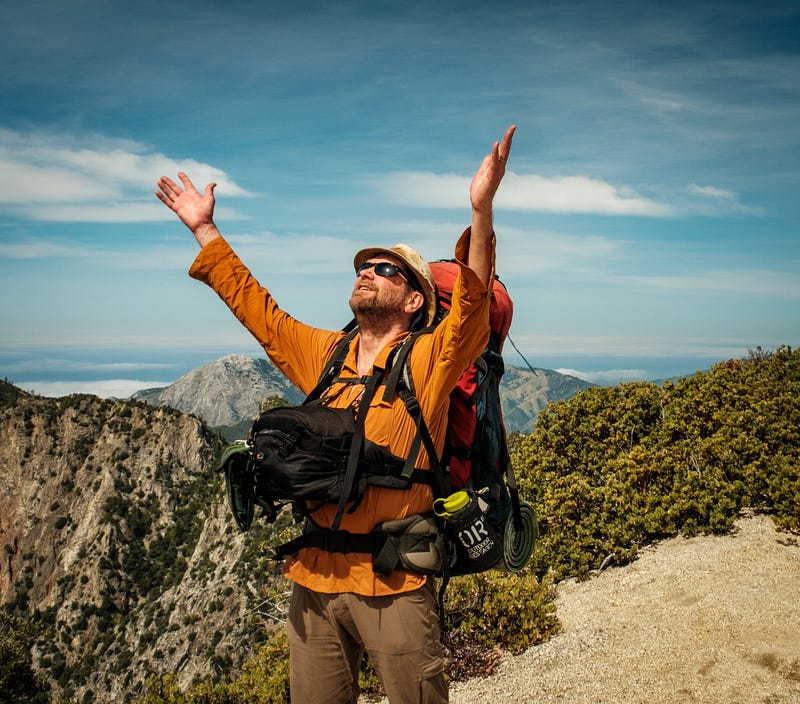
After a tough two days, we’d planned a short one to Lone Pine (source of water) but found ants in abundance and no view, so pressed on to a small camp we’d passed earlier, not on our maps. We dubbed it “Beer Camp” (because we decided to finally drink the one beer we’d each been carrying that night, worth about a pound each (in mass, not money)). Beer Camp turned out to be a great call — wonderful view, and a large hill behind we were able to explore with all the time in the world.
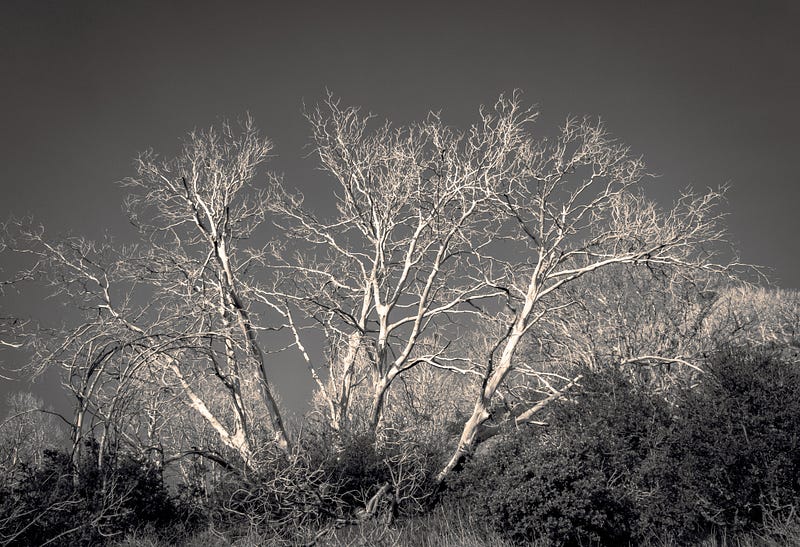
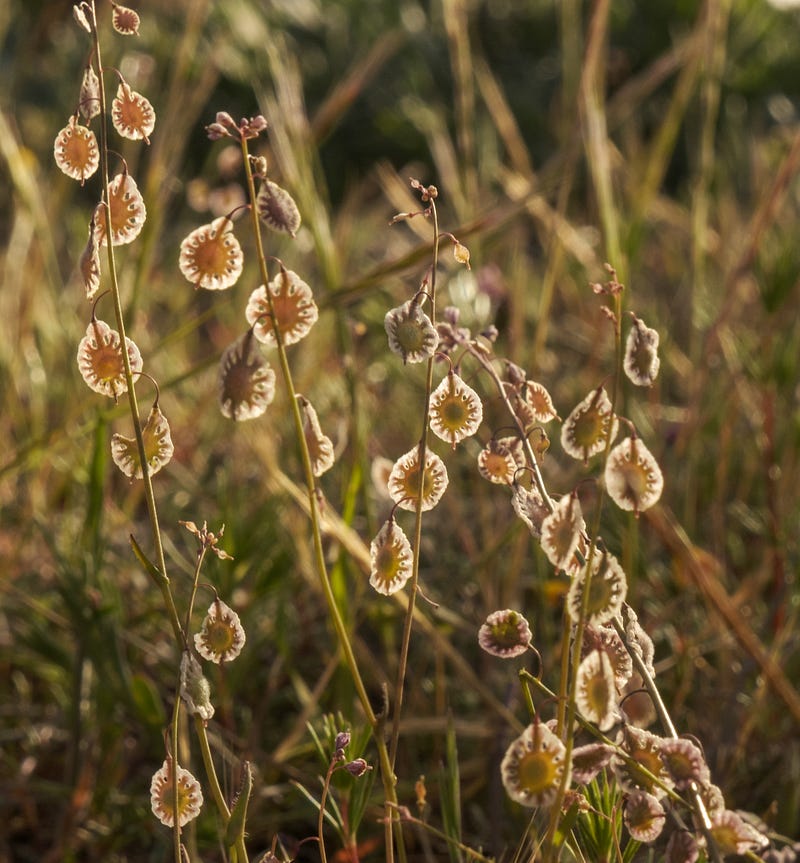
Fascinated by the afterlife of yucca — they die and decay slowly — ghost cactii, I suppose. Dry year meant few wildflowers this time (probably more next month), but we did have a patch of dainty “Fringe Pods” at our camp. Laying down in the grass with the pods, I felt a sting on my thigh and thought it was a rock, then flipped over to find a tiny spider (size of a pencil eraser) biting through my pants. Two weeks later, still had two red bumps (receding).
After pitching tent, headed up the adjacent mountain and realized I might be the first person walking that particular soil for a hundred years, who knows? Rotting yucca, granite formations, ghost trees, infinite combinations. A rock slipped, I slipped, reached out to stabilize and grabbed a cactus stalk. Blood spilled from a finger, and I sucked it back to camp, almost getting lost. Glad to find Neosporin and butterfly bandages in the kit. Sun set over our unnamed camp, and we ate our dinners over the glow of the stove (still no fires!)
When I returned from the hill, Ward headed out to find his own vantage points. Told him I’d put a headlamp on top of the tent if he hadn’t returned by dark, to find camp in the dark. Only the slight glow of a distant city on the horizon reminded us that civilization was still out there.
Day 4, Return to Pat Springs Starting to love waking up to the glow of daylight through tent fabric, granite and cactus arranging themselves outside. As the sun rose, a perfectly geometric rectangle of light emerged and glided over the chaparral below — must have been the way the sun hit a notch in the ridge above us at that time of day, but it was weird to see such geometrical lines out here where nothing is straight. Stinky socks hung on a ghost branch like Christmas, drying out.
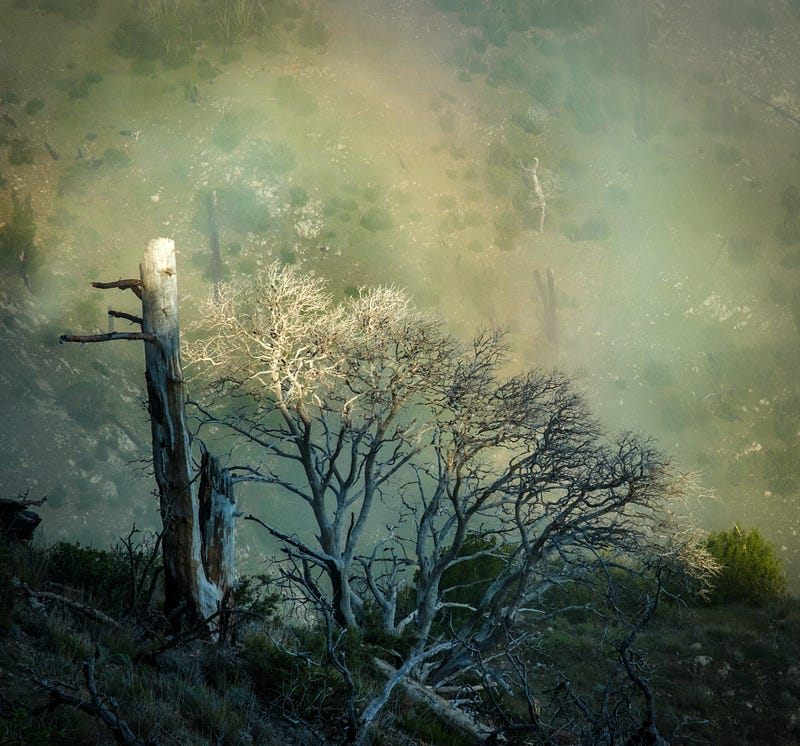
It was to be just another three miles from Cowboy Camp back to Pat Springs, but we had to pass through the worst of the burn scar, always devastating.
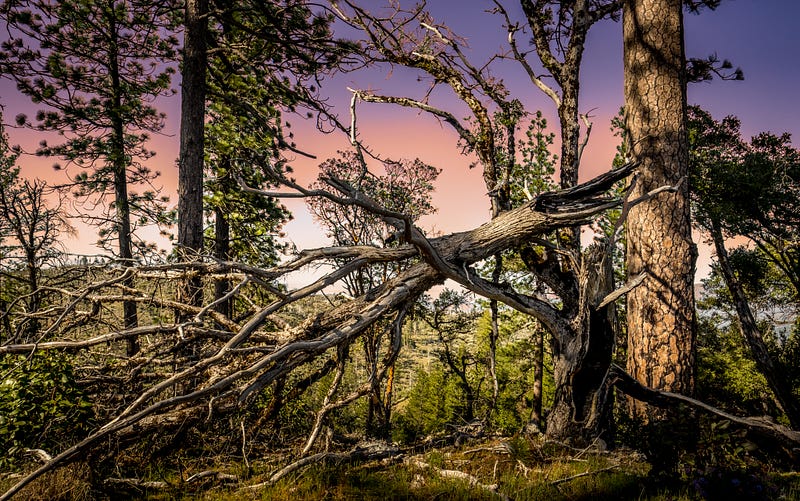
There’s a steep-ish hill rising above the campsites at Pat Springs that feels like rare earth — the forest floor covered in granite and pine cones and endlessly complicated terrain; boundless views in all directions.
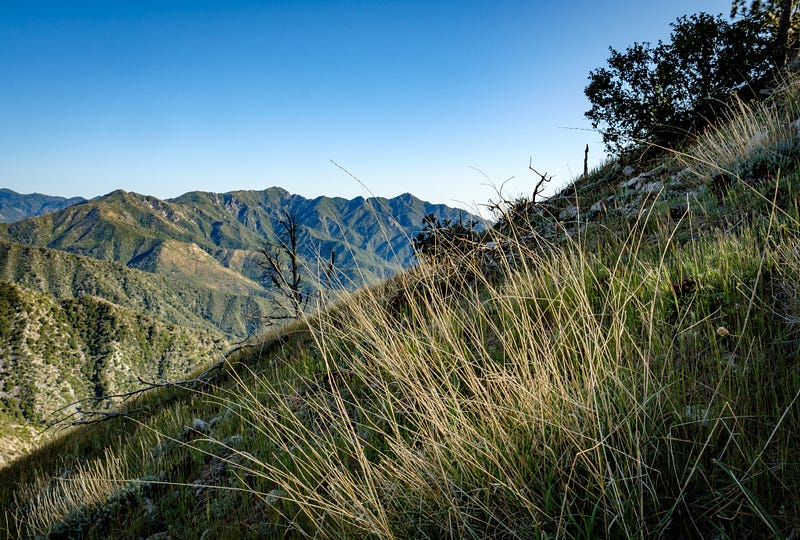
An intersection of the boundary of the 2016 Soberanes fire — some trees burned or partially burned, others intact. “Something lives, something dies.”
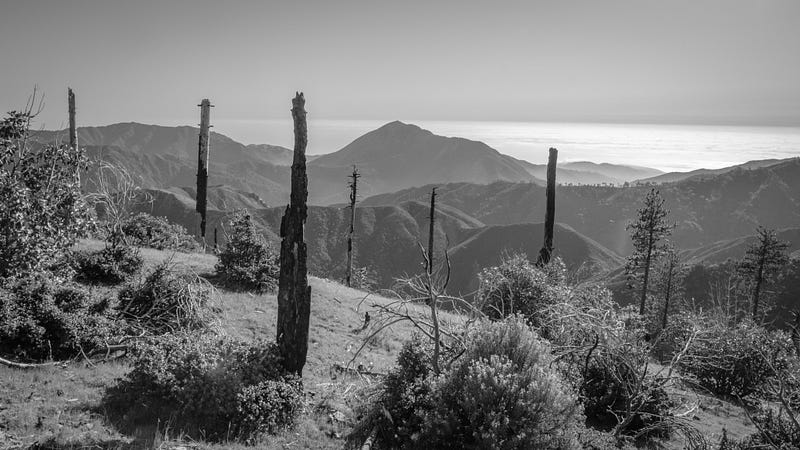
We had arrived early, leaving an afternoon of unstructured time, which I’m not used to dealing with. At first I felt unsettled, uneasy. After Ward came up with a clever device to fill our water reservoir from the slow spring trickle, we went our separate ways, and I sank into it, meditating the afternoon away, alone in nature. It’s hard for me to slow my motor, and this was a rare opportunity to be lulled into solitary peace.
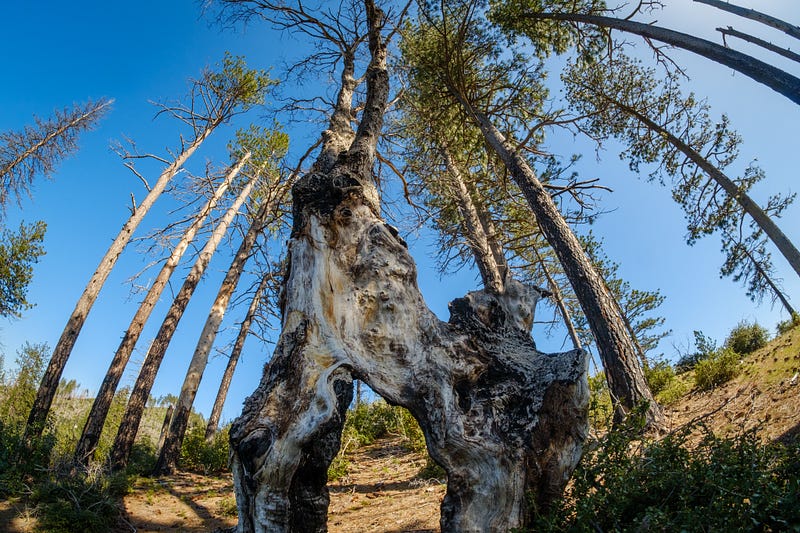
Sat and gazed into the endless vistas, got close up with the puzzle pieces of half-burnt bark, hugged an enormous sideways tree, and went “shopping” for bark gifts for Amy and Eli and Miles. Closed my eyes and it was beautiful, wind wrapping around my head, sunshine on my shoulders. Opened them, and it was still beautiful.
Spent the rest of the afternoon ambling around on this amazing hill, alone, moving slowly, absorbing what I could. Saw one squirrel — the only mammal of the trip — and imagined how different this area would be if there was more water → faster recovery for the fire-ravaged forest → more hospitable habitat for forest dwellers. Eventually made my way back down to the camp and spent the evening with Ward.
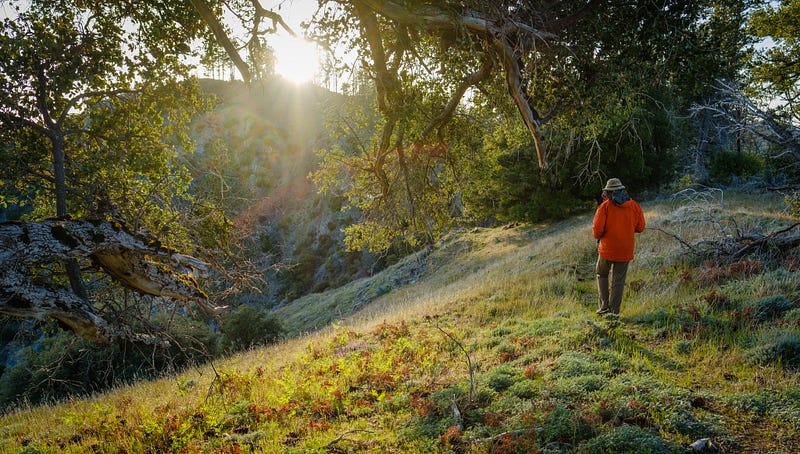
Made our first and only fire of the trip here, where there was an adequate supply of water to dowse flames completely. As I was falling asleep, the glow of the fire reflected onto the underside of an oak leaf overhang above me, and the whole rest of the sky was filled by stars and distant clouds, and I felt the most profound contentment.
Felt enormous gratitude to Ward for sharing this place that means so much to him
Day 5, the way out Growing up in California, when we see vibrant colors in the sky, it means sunset… over the Pacific looking west. But from some of these high peaks, looking toward the east, sunrise is every bit as vibrant.
Another long slog today — Pat Springs back to The Hoist. We hadn’t seen a piece of trash in five days, nor any human but each other. We did encounter a few trail runners (one pair was doing the whole 40-mile circuit in one day, ultralight-style — amazing how small a pack can be when you don’t need to survive for a week).
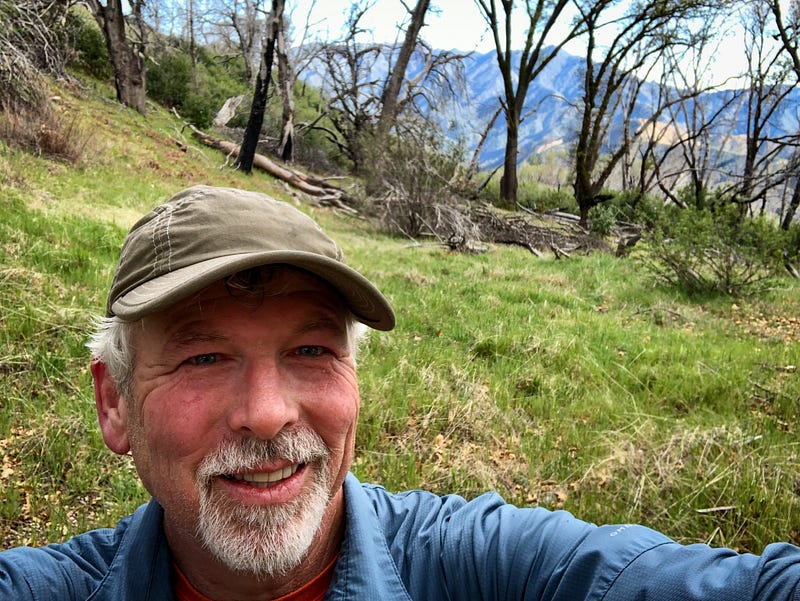
Hard to say goodbye to magic Pat Springs, but All Things Must Pass. Regrouped at the junction down to Coming’s Camp — the same one we’d try to stay at last year but had found bereft of water. Now the trail sign is decaying on the ground — end of an era?
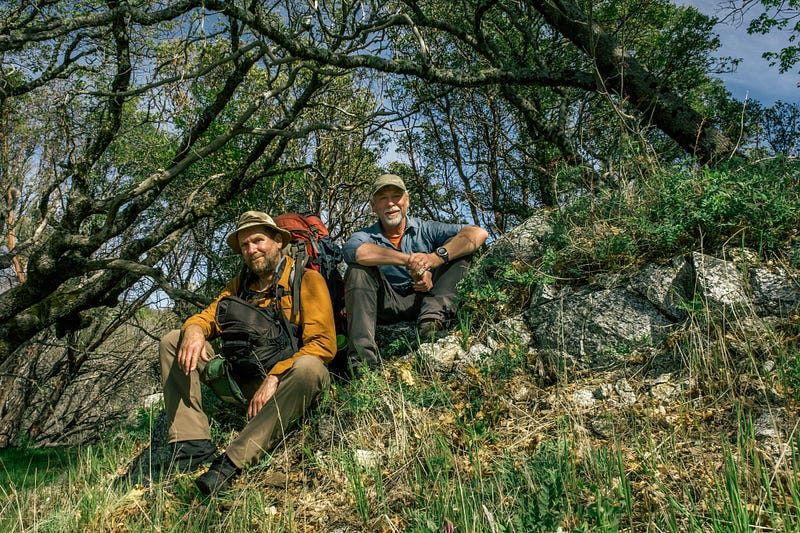
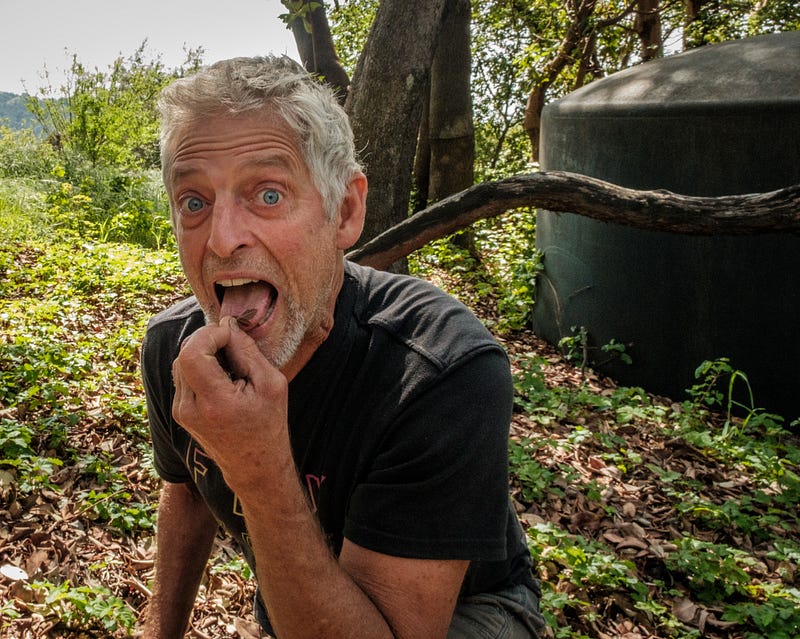
On the way out, paid a return visit to see Theo, the kind-but-eccentric fellow who had given us a lift up the dirt road in his truck on Day 1. The subject of living with poison oak came up, and Theo told us he stayed immune by eating it in small amounts. On the way out, he plucked some fresh young leaves from the end of a stalk and placed them on his tongue like a human billy goat, and swallowed — perfect capper.
After a tough slog down the dirt road that led us in, we were back at the cars, and everything changed back to The Built World, ready or not. So incredibly grateful for this time.
I kept around 200 of the images I shot that week and have included a few of them here. The full Lightroom album is available if you’re curious (comments allowed if you have an Adobe login), and the Flickr album populating slowly as I trickle them out.