
A Week Exploring Picos de Europa
For most people, the will to be in contact with Nature borns from having an inner space within ourselves that modern society simply cannot fulfill. There’s often a need of escape to something that can give us such strong yet pure emotions — whether it is peace, freedom or adventure — which I find Nature can do effortless.
I feel that the most rewarding and fulfilling trips are often the ones where you decide to discover a certain location motivated by its natural beauty. They allow us to stop and reset, taking a look outside the spectrum of our daily routines; to see that we live in a planet that has the ability to carry around without us.
By allowing us to absorb natural landscapes through a peaceful and open spirit, it ends up being a great way to be in contact with ourselves and the intentions we want to put in our life. It’s the simplicity of things that we are exposed to, as José Saramago better once put it (Baltazar and Blimunda):
So perhaps life was simply to sit on the grass, holding a calendula without stripping off the petals, either because one already knew the answers or because they were so unimportant that to discover them would not be worth a flower’s life.
As for me, the trips where I am nearest to nature are also usually the ones that offer me the most pleasant and frequent memories since, ultimately, memories are made of reflections of what you saw but also feelings you felt when you experienced it.
Picos de Europa
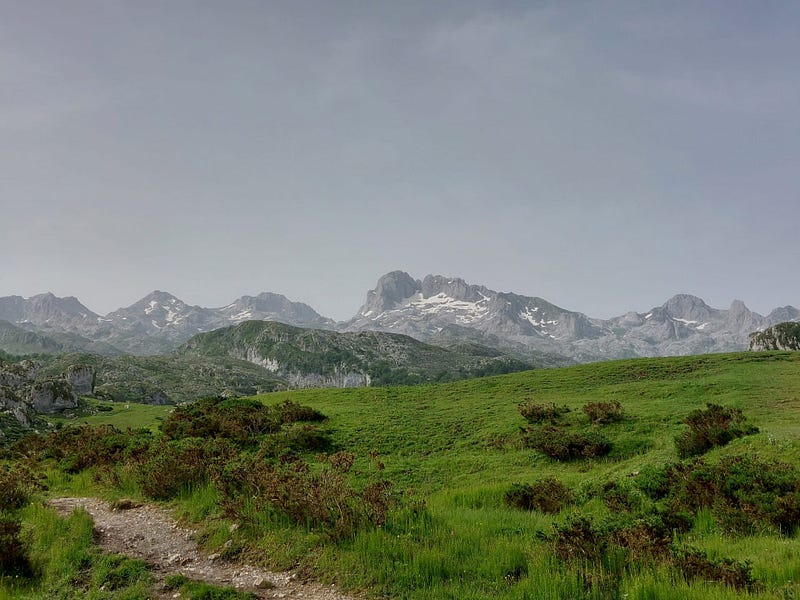
In June 2022 we went on our way to explore one of the most beautiful places in Europe — Picos de Europa. This National Park is located in the northern part of Spain and its spread across the provinces of Asturias, Cantabria and Castile and León.
It is safe to say that one trip does not do justice to all the vast number of treasures you can find in this region. Knowing this, we were mostly moving from place to place for the whole trip, staying in different places and exploring different areas throughout the day. Moreover, we decided to book additional stays in other areas outside of the National Park.
Day 1
Because stopping in a Spanish city is always worthy, halfway across our first day road trip between Portugal and Spain was the city of Salamanca, in the northwestern area of Castile and León.
Cities in this country really have their own unique aura, and you cannot really find any other atmosphere that looks and feels exactly like the one you find in Spanish city life. It pulls you closer to the always-chatting people on the street, to the late ending days and inviting-looking esplanades, almost giving you the sensation of fusing between the noise and the heat.
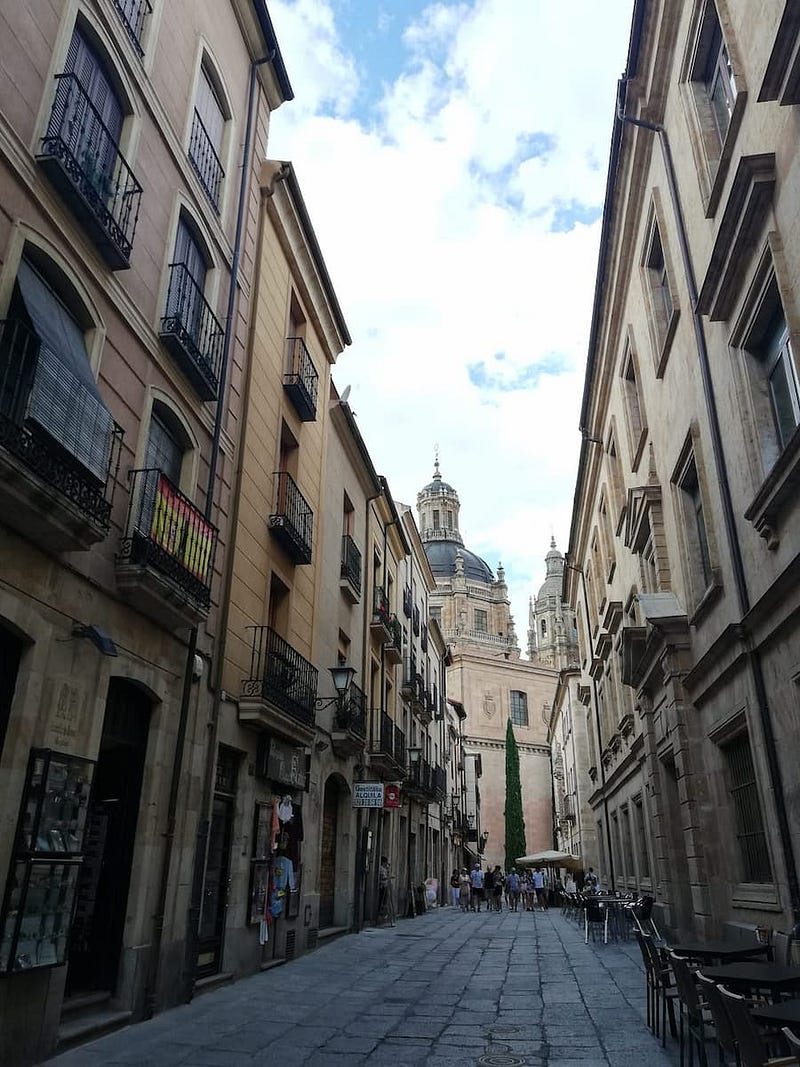
Needless to say, the topmost rule (I at least try) not to break in Spain is to absorb the street energy — let go of all the uneasiness and stress, and just eat and enjoy the food, the people, life itself, as one rich table of goodness for the soul.
Day 2
Waking up early, a long way was to go until reaching the north. Car riding in Spain can be quite painful for the spirit, especially in the summer, when everything is so dry and out of life. So I can definitely remember what it felt like, after several hours driving in the midst of the desert-looking fields, to finally start to witness the mountains slowly forming in the horizon and the gradient change of the weather.
The second stop of our trip was the lovely and delicate Cantabric town of Potes, which is already located in the region of Picos de Europa, and hence very much higher (and surrounded by breathtaking landscapes).
I cannot express enough how delightfully surprising this town was, and how promising it felt to experience it as the first stop after entering the mountains. The only struggle really was deciding where to stop for lunch, as this small place was packed with inviting and good looking restaurants.
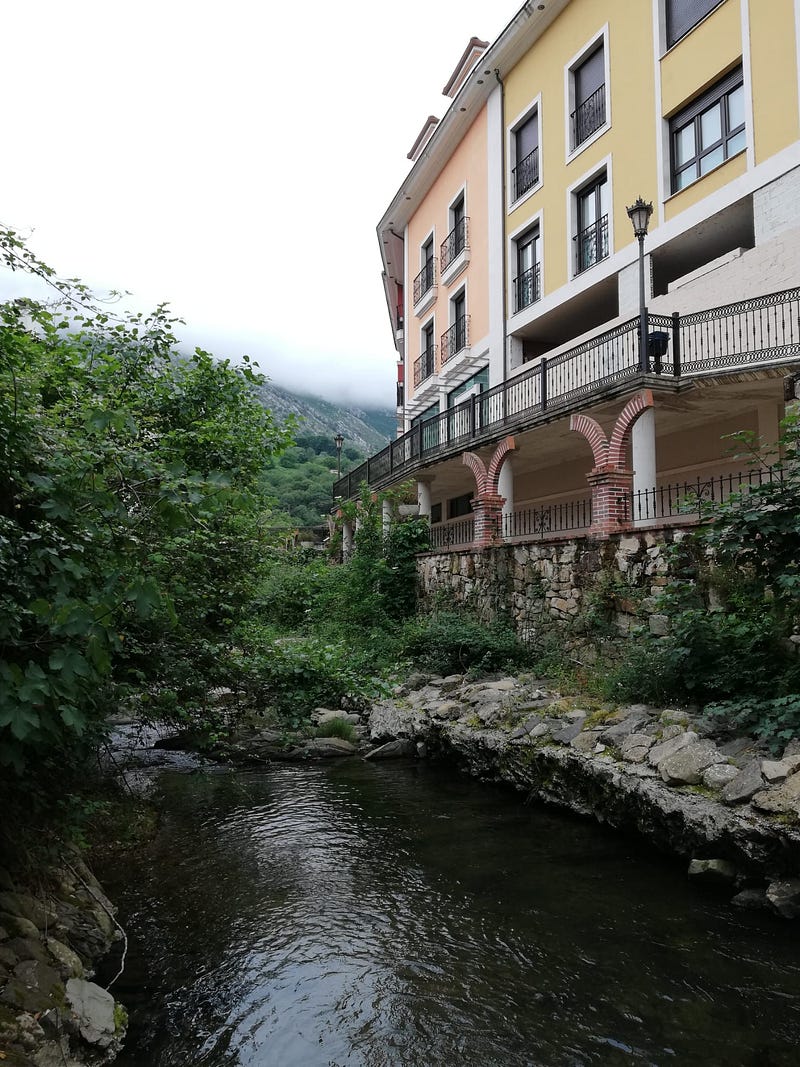
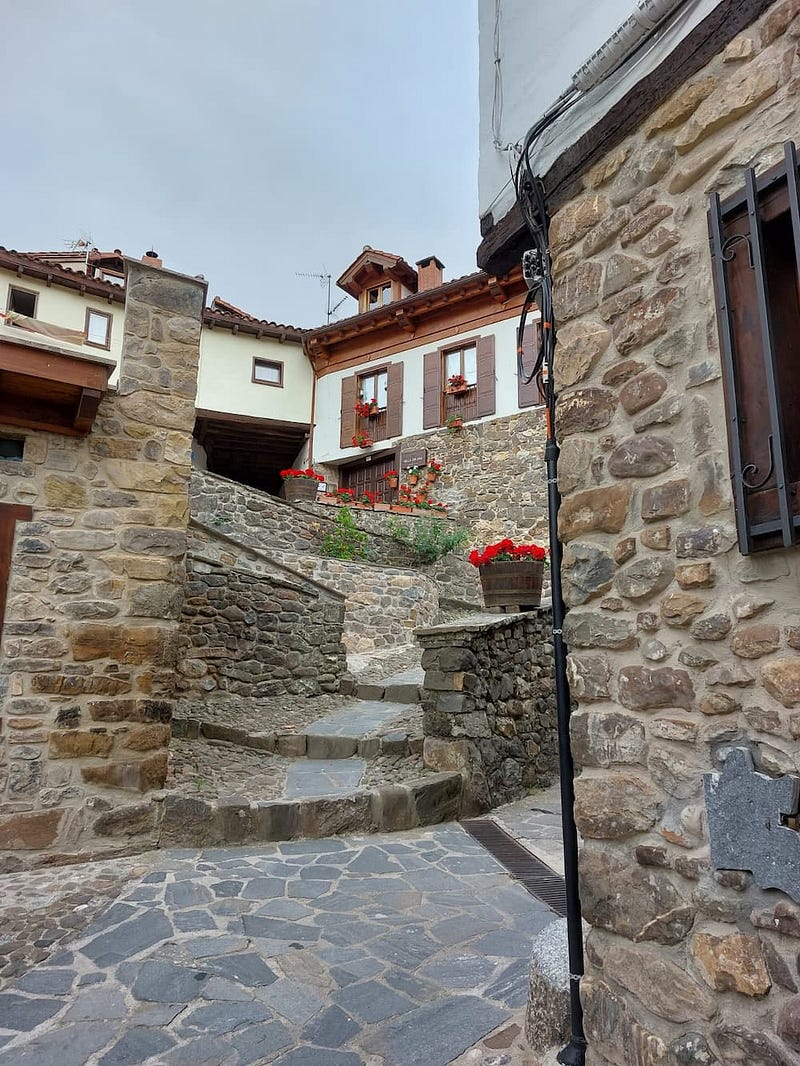
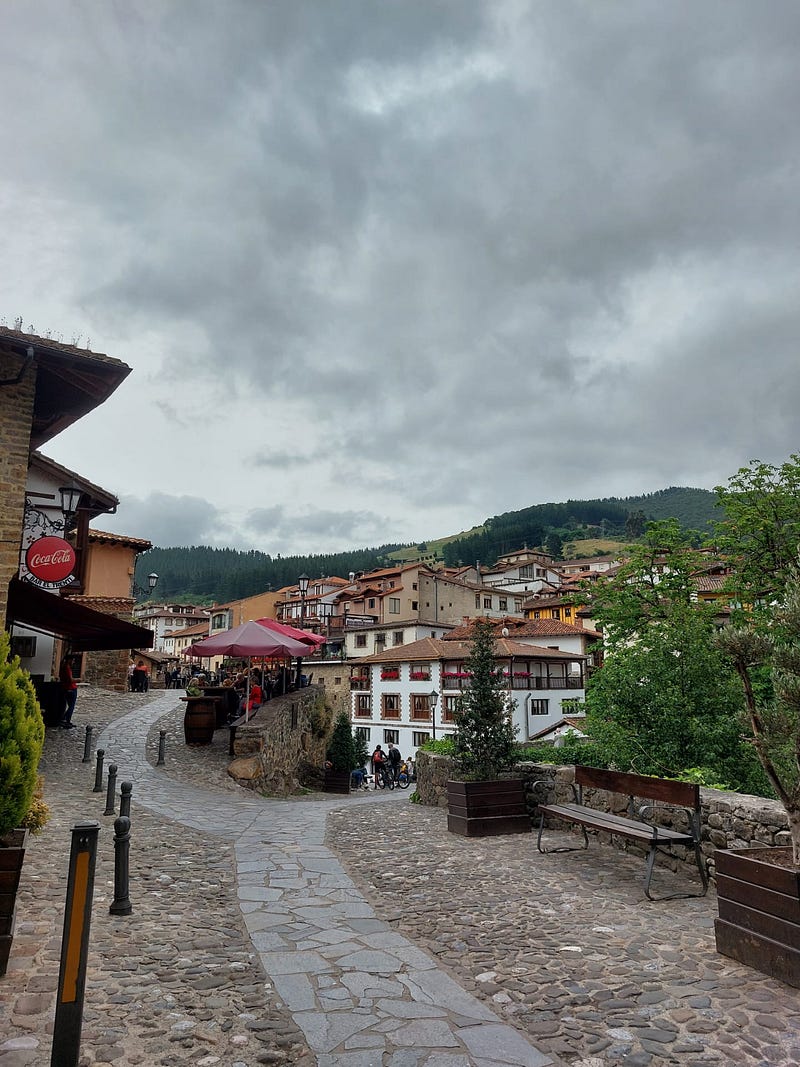
The beauty of this picturesque town still strikes me when looking at the peacefulness of these images. It was one of those places you could experience on the right day, at the right moment.
For the evening we proceeded to go to Arenas de Cabrales, already in the Asturias region. We stayed in this welcoming town for two nights, to be able to make the most of the following hiking days.
I recall this quite cozy town with a happy memory. It was a misty place, a gateway to Picos de Europa where hikers and bikers met, serving as a welcoming point before heading into the nearby mountain trails (which there are great many of across all the Park).
Day 3
Known for its endless number of hiking trails, people are often drawn to Picos de Europa not only by its evident beauty but also for adventuring through its many pathways that cross different areas of the National Park. Our aim for these days was to get to know a couple of trails that are located reasonably close to Arenas.
Ruta del Cares trail
Early rising at 5am, we packed our lunch, put on hiking boots and drove just a few minutes until reaching the tiny place of Poncebos. This is where the most famous walking path of Picos de Europa starts, with about 12 Km of walking until reaching the small remote village of Caín. Before and along the trail, you can also spot indications for other merging tracks.
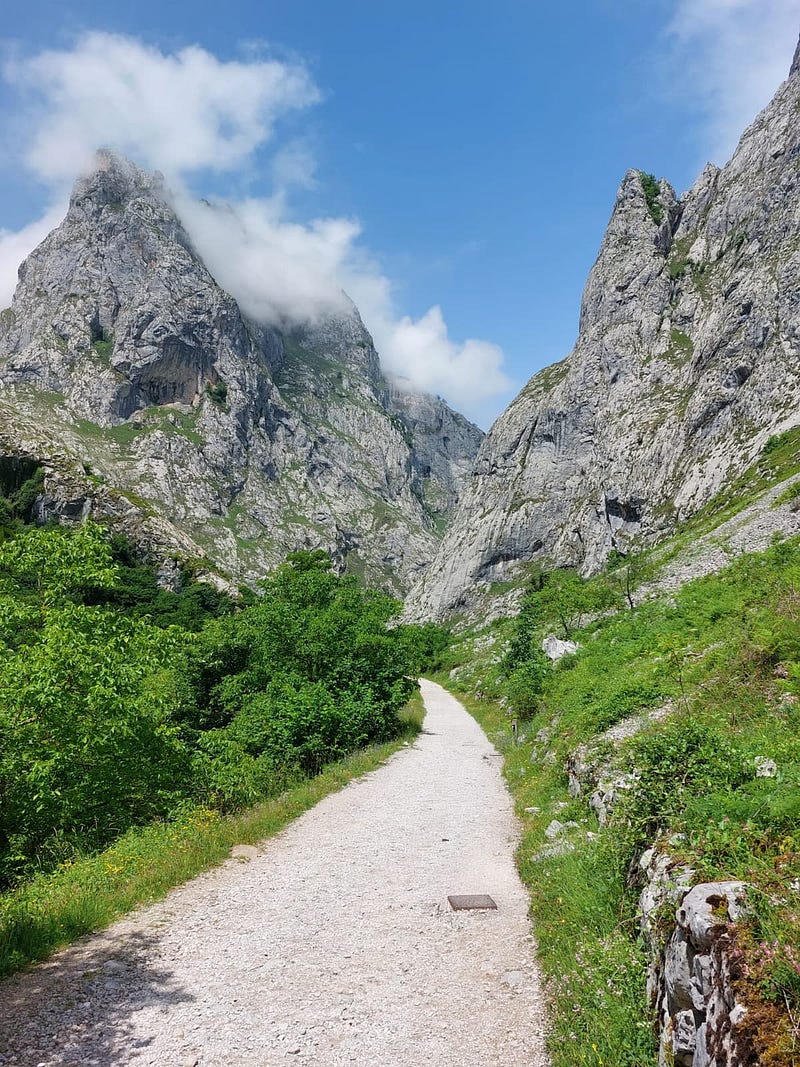
The Ruta del Cares trail follows the pathway of the Cares River, standing high above the riverbed, and carved between the steep slopes of the mountain walls. The initial part of the trail is much edgy and mostly made of rocks, whilst having considerable elevation gain. As you progress, the path widens, and the journey gets substantially more relaxed (at least, speaking from someone that is not tremendously passionate for heights).
As to this point, the scenery is by far the most breathtaking I have ever encountered. The pictures can alone speak for themselves.
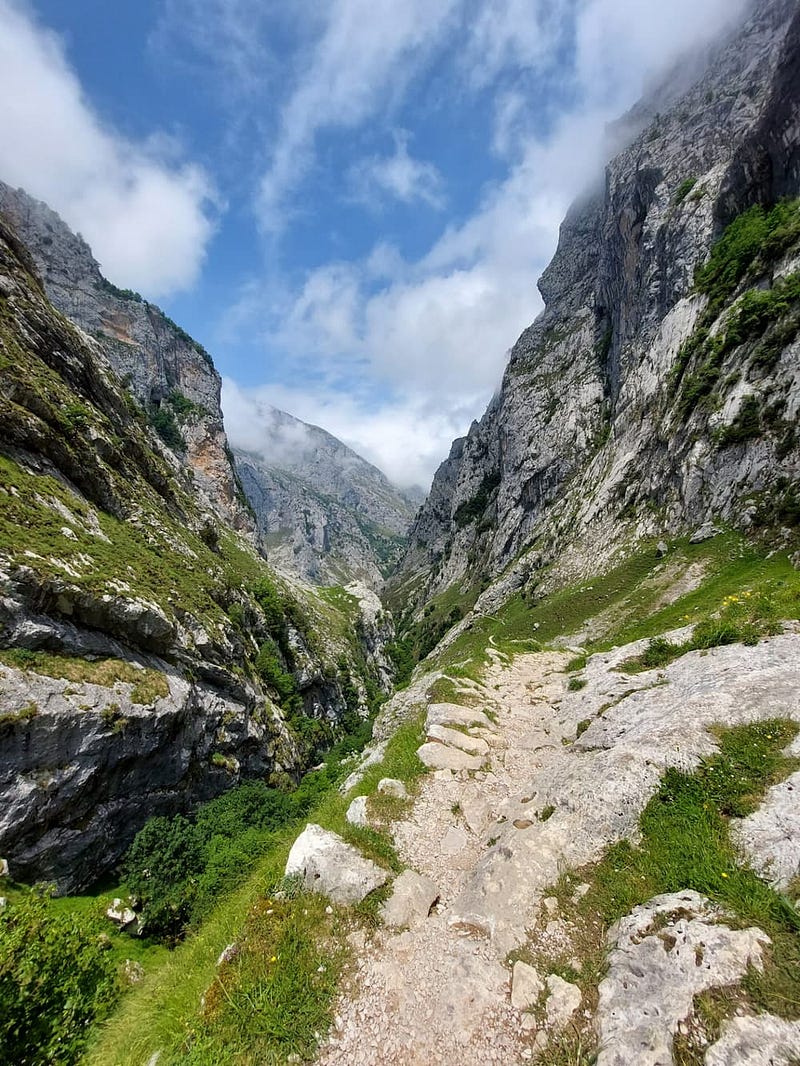
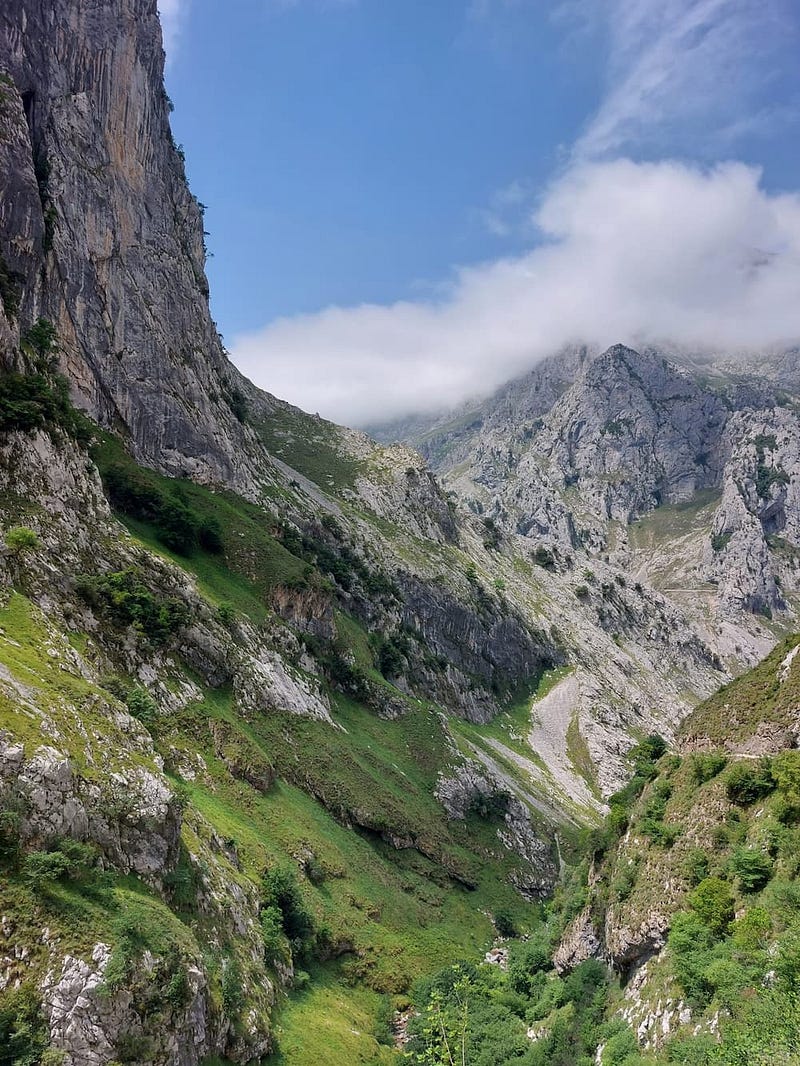
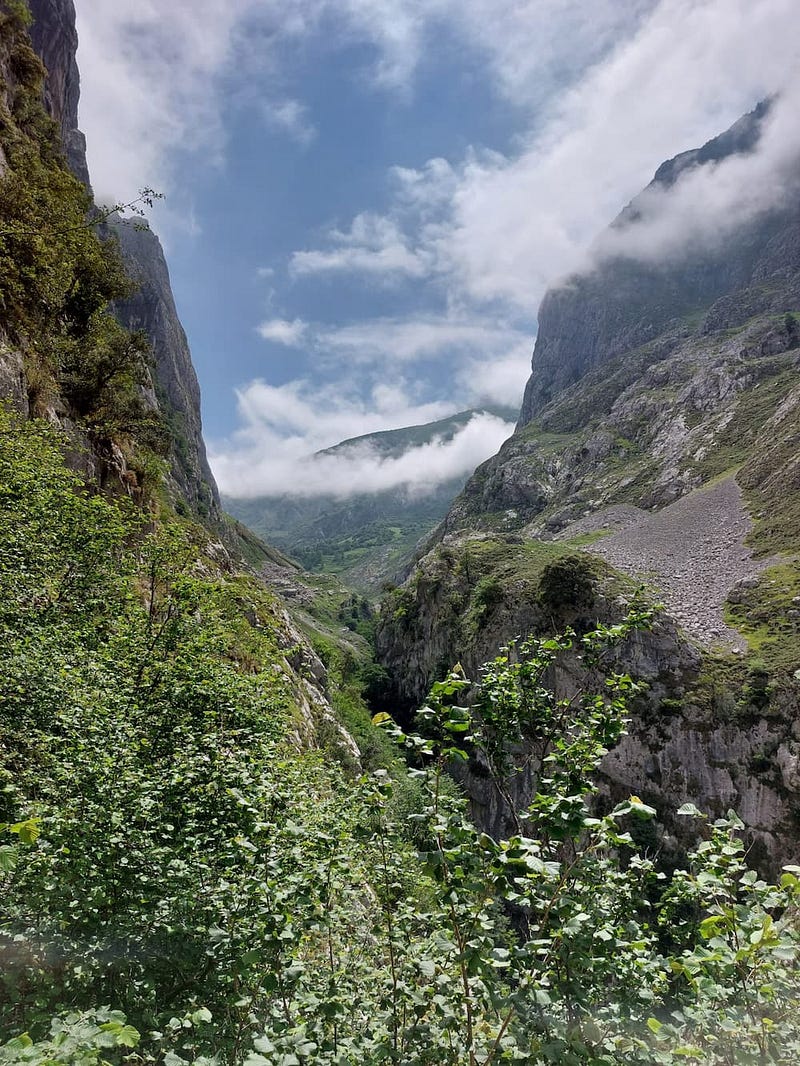
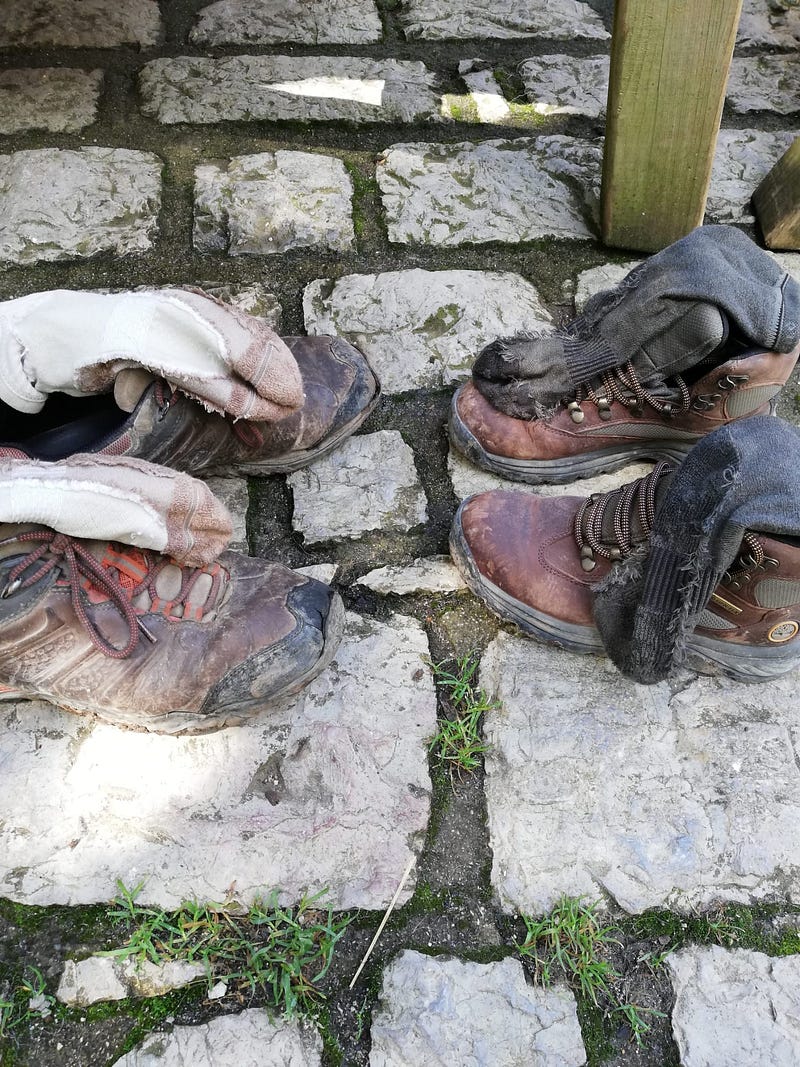
Reaching Caín after less than 4 hours, I strongly suggest happily removing your shoes and rest your feet in the cold and clear blue waters. This beautiful village is surrounded by mountains, and you can actually stay accommodated here if you wish to do so. We ended up enjoying our lunch with a beer in a friendly café.
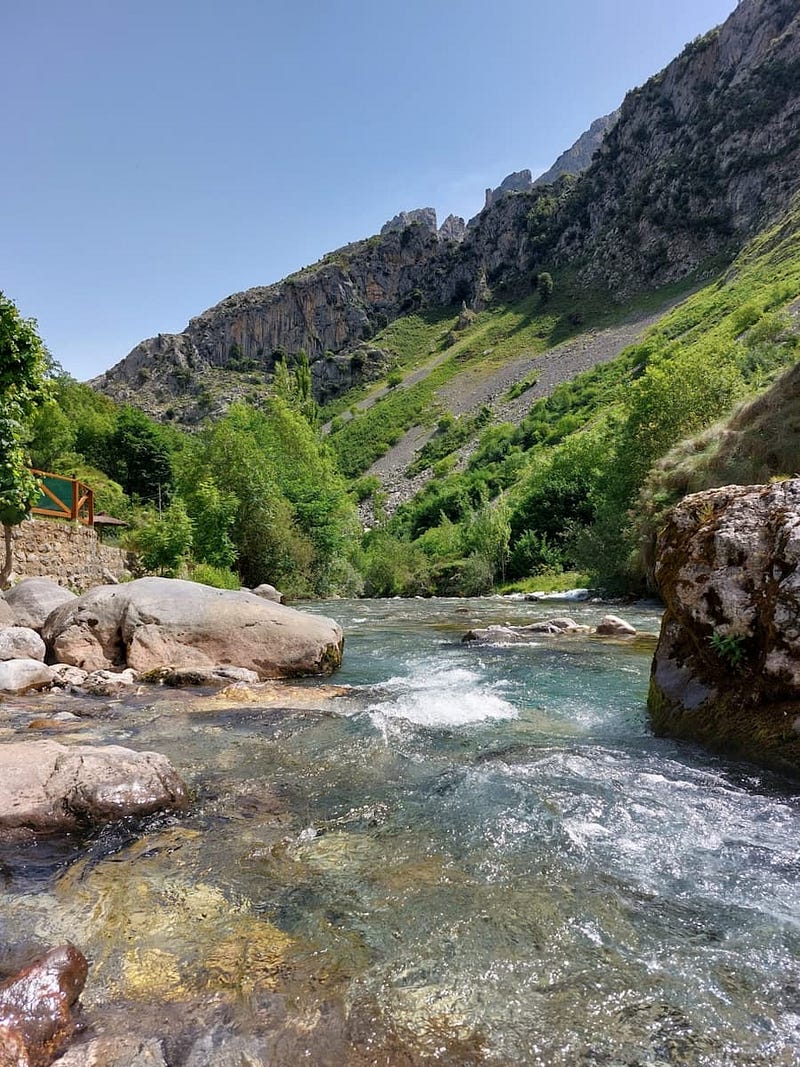
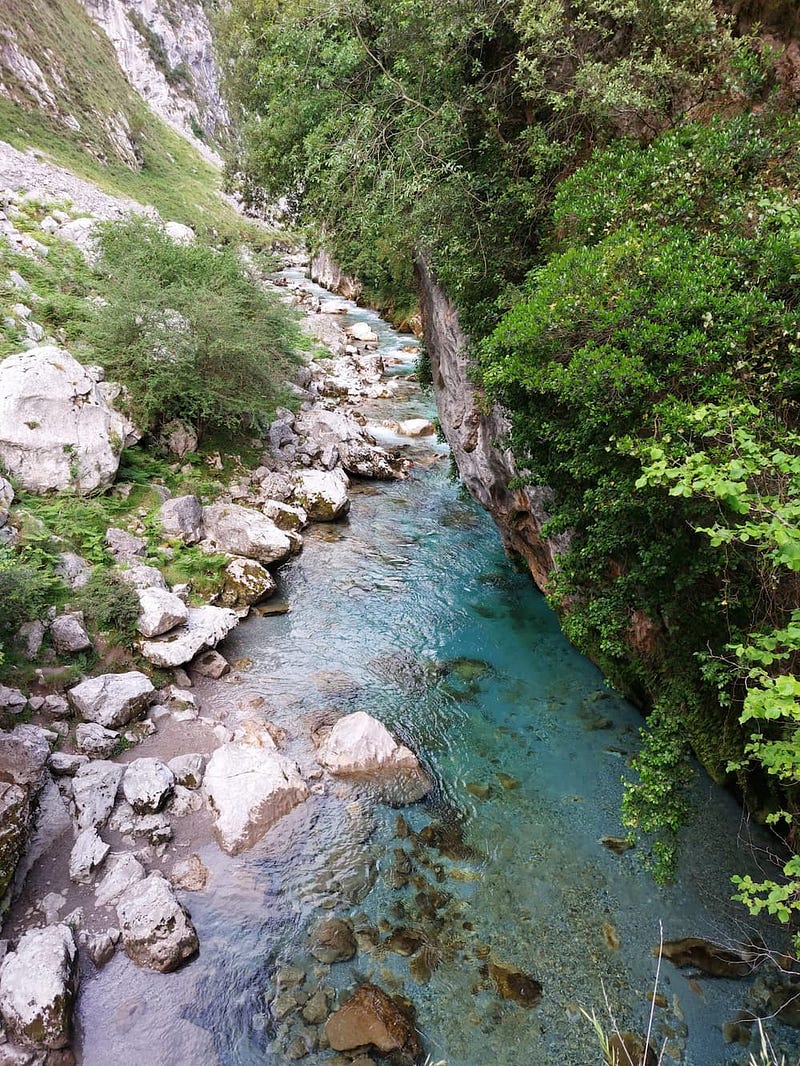
Back we went to the trail, making our way again to Arenas de Cabrales, enjoying a both rejuvenating and well-deserving dinner with a full soul and a fatigued body.
Day 4
On this day, Poncebos was once more the starting point of another slightly shorter — yet way more challenging — trail.
Ruta del Canal del Tejo trail
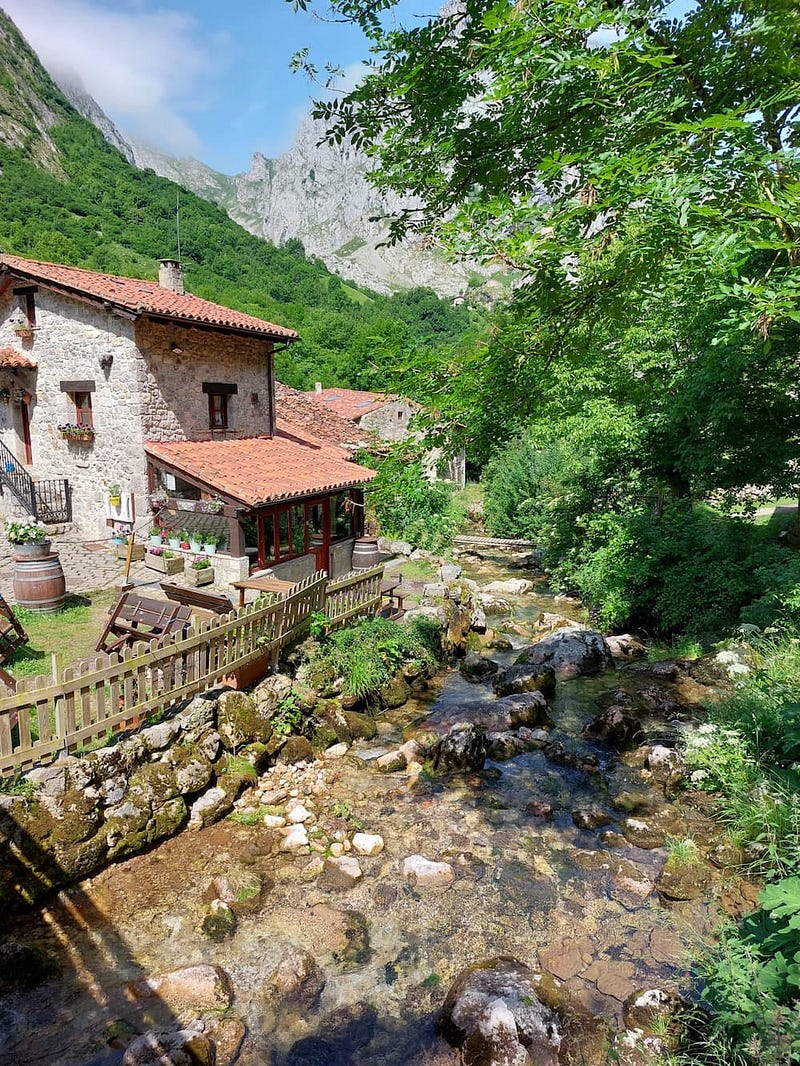
Being another widely known trail in this region, this pathway sets the walking connection between the small population of Bulnes, which is located in the very heart of the mountainous formation, and Poncebos. This is the route that once allowed its residents to go outside the village by foot, however in the current days the village is also accessible through a funicular.
The trail goes side by side a magnificent and deep gorge for the most of its course and consists of around 8 Km of fairly inclined hiking, for which I definitely recommend good hiking shoes and maybe some trekking poles if you happen to have it.
Not very far away from Bulnes, the path flats down and you can rest for a bit, gazing up the mountains which now surround you, and continuing alongside a creek where you can eventually adventure into a cold (cold) swim. It feels as if the mountains themselves are welcoming you into their core.
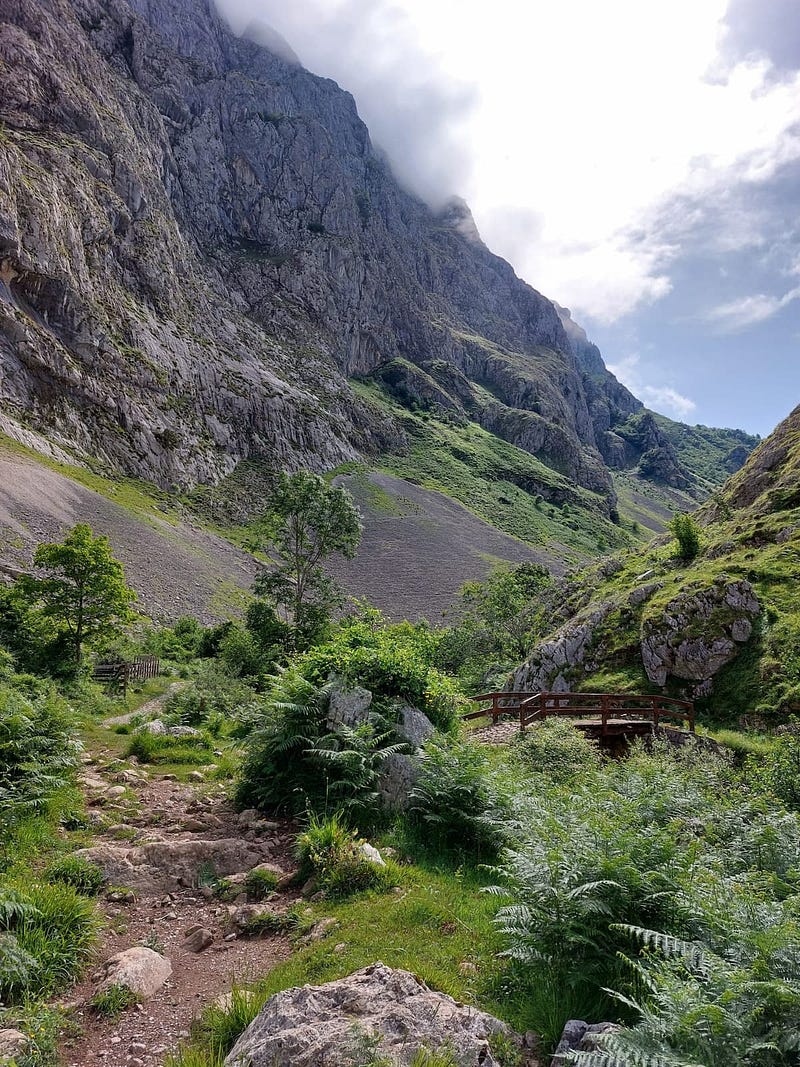
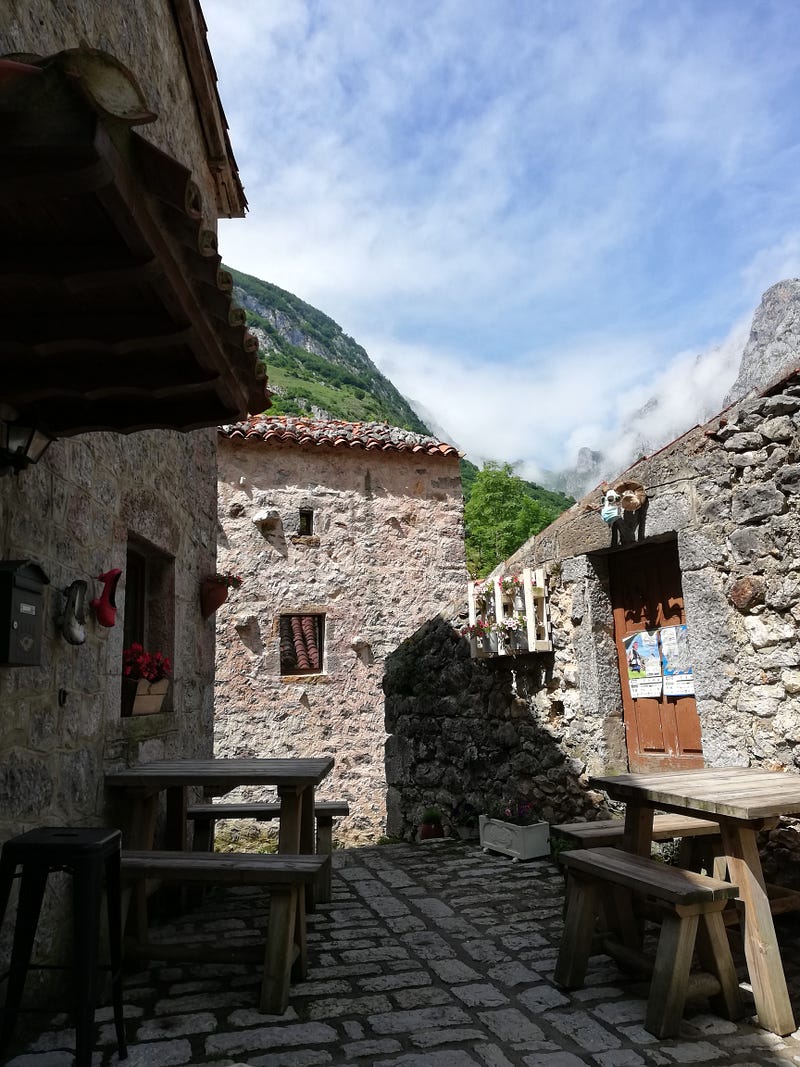
Reaching the tiny place of Bulnes was as warming as it could be. Surrounded by close, imposing high peaks and bathed by a river, Bulnes had its own atmosphere, with several hikers passing by and tourists enjoying themselves in the inviting outdoor tables.
If feeling like walking a bit further and up, you can witness the highest peak of this entire mountain range — Naranjo de Bulnes — from a viewpoint nearby.
Having had lunch and now with rested legs, we followed the same trail back and afterwords went back to civilization, closing the day at the city of Cangas de Onis, where we longed for two nights.
Back it was a glimpse of city life. At the end of the night, with the hotel window left open, we fell asleep amongst the chatter down the street and an ocasional singing from one of the restaurant’s tables.
Day 5
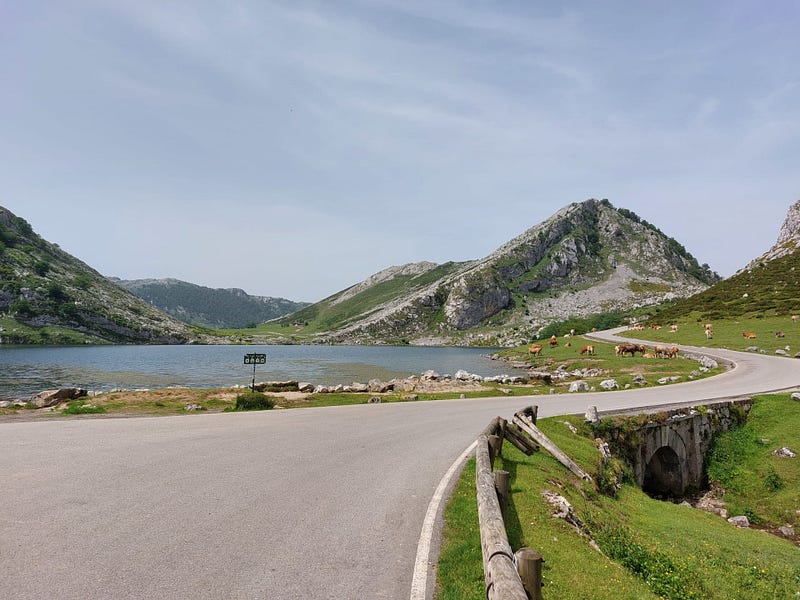
Another beautiful purpose of our trip was to visit the Covadonga lakes, not very far away from here Cangas de Onis. The glaciar lakes are risen to over 1000 meters of altitude and are home to several shepherds and many, many wandering cows.
Up there above the clouds, one can breathe in and enjoy up-close sights of the grandiose lakes (if the time of the year so allows it) and cherish the closeness to the animals. This unique place also gives you the opportunity to look into the horizon and realize the vastness that makes up the National Park.
Day 6
Heading off to the northern coastline of Spain and leaving the mountains behind, off we went for a not so long trip until the next stop at Ribadesella. Just barely leaving the mountains, you reach this fairly big town and realize how already close you are to the seaside, which in itself is really curious.
Quite early in a refreshing and clear morning, not much was happening besides the casual singing of a few seagulls and the slow ripping of the waves. We took a stroll, witnessing the chill sunny wakening of the town, walking by family neighborhoods and stepping feet on the beach, which was next to colorful grand houses.
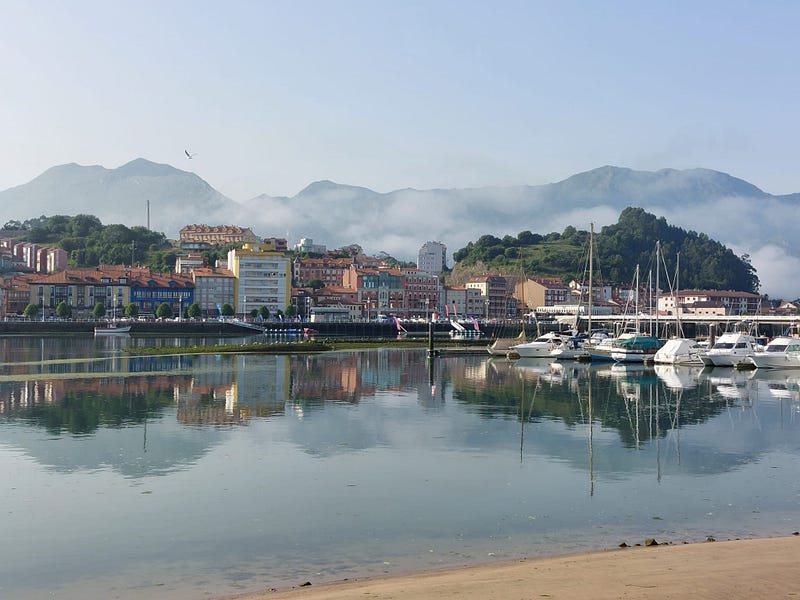
Initial plans were made to stop in a few other costal places but the fog from that day did not really allow to see much. So, after doing a quick stop at Lastres, we headed until the big, way more touristy, city of Gijón.
In this too big of a city, we had a surprisingly heartwarming lunch in a restaurant/tea house we found, called OKAERI. We were definitely in need of a balanced, warm and simple meal, and this place did not disappoint. In fact, to this day I think it is one of the best vegan meals we ever had.
Moving south, we reached Oviedo to end the road trip for the day. Not so big and packed like Gijón but still constantly moving, this city had a lot to offer. After wandering around and resting our feet in one of its main gardens, the evening was set complete by enjoying an Asturian cider in the famous Gascona street.
Tiredness eventually strikes us at the end of a long day of moving around. At the hotel, we hear the murmur from the restaurants and the people passing by and we feel like our spirit is still very much alive, because the city itself feels alive.
Day 7
Before finishing uncovering the dazzling wanders of Asturias, next stop was in Las Ubiñas — La Mesa Nature Park which is 30 Km away from Oviedo. This is where the Senda del Oso route is located, which began as an old mining trailway, now converted into a pedestrian and cycling lane that takes up a total of more than 54 Km.
We didn’t follow the full extension of the route, only doing a total of about 2 hours cycling. In the beginning of the track — Entragu — you have the opportunity to rent a bike and, since this is an out-and-back trail, ask for transportation back.
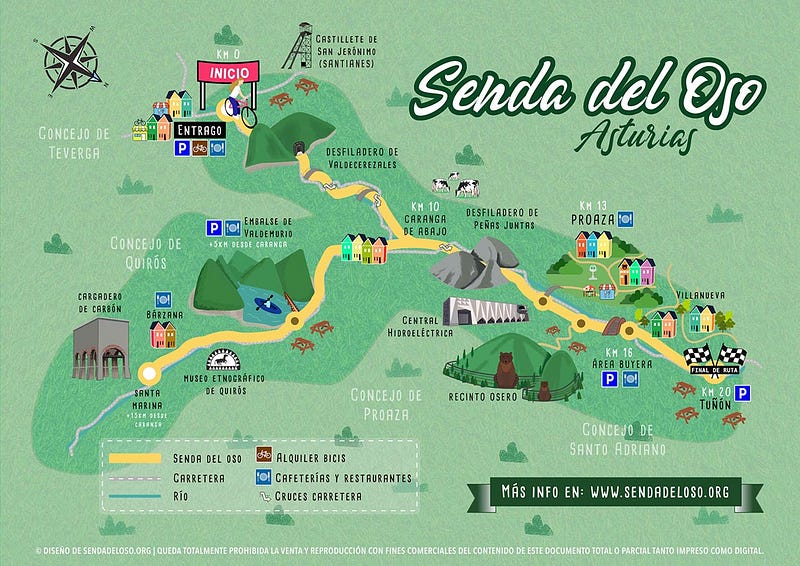
The main attractions of the Senda del Oso route are of course its present beauty throughout all of its course, but also the fact that the trail passes right next to a bear enclosure zone. We weren’t lucky enough to see any.
This pathway is inserted in the dense green forest heart, passing through bridges and tunnels, alongside creeks and roads that carve the tall mountains. The heat was exceptionally unbearable on this day, and the humid mountainous air did not help much throughout the ride. Some parts of the track are also in not-so-great shape but, overall, it was a beautiful trip.
On this extremely hot yet satisfying day, we rested on the remote area of San Salvador, a quick drive away, at this settlement called Alesga Rural. This is a family business accommodation which is just so pure, simple and honest and we felt so grateful to have had the opportunity to stay in this cozy place for the night.
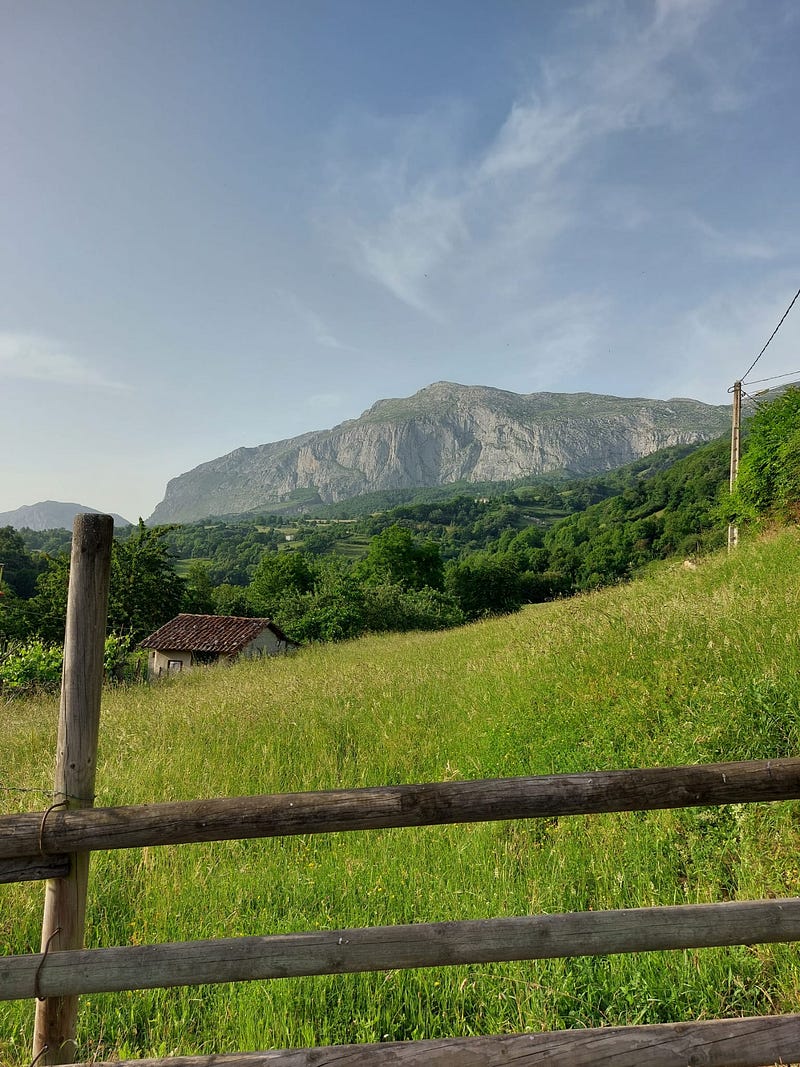
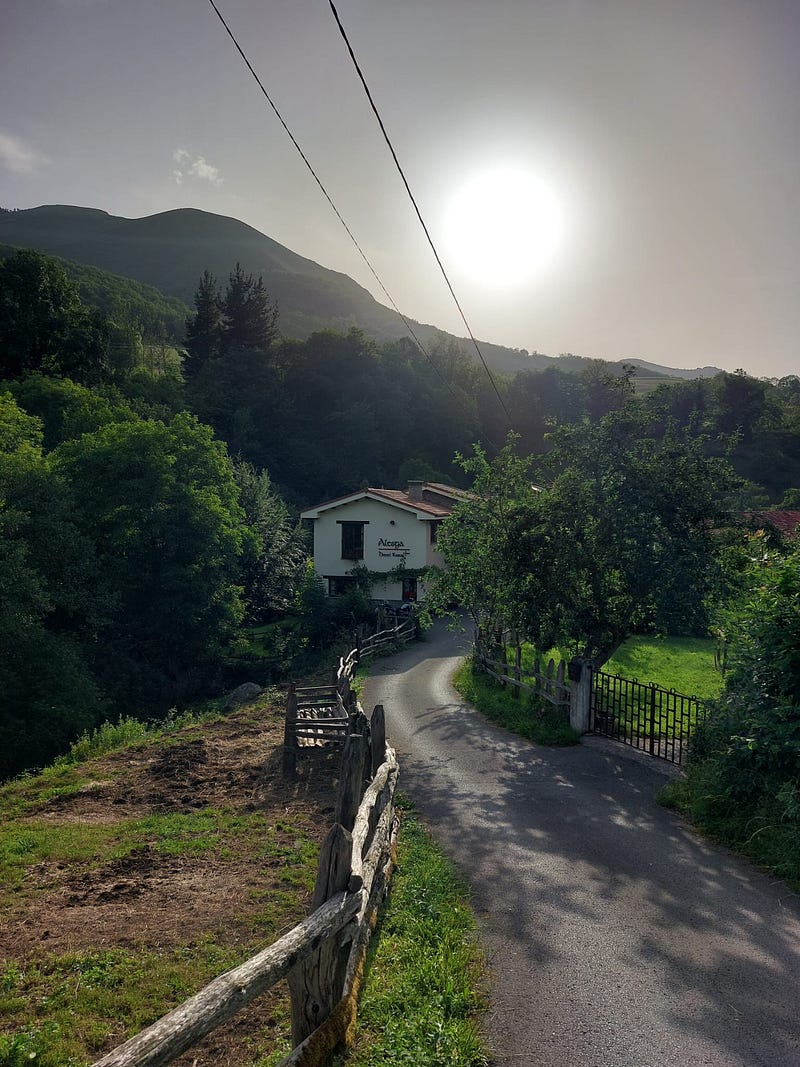
The hot evening was closed with a huge and well-deserving roasted pepper and tuna sandwich which we made on a big picnic table surrounded by light-green fields, bees and quietness. After dinner, we stopped on the hostel’s café which was likewise empty and quiet, just like everything around it seemed to be. We had a warm quick chat with the owner and had a read, closing the long summery day the best possible way.
Day 8
The last travel day in Spanish soil was dedicated to resting our body. We had initially planned to stay at the city of Ponferrada before entering Portugal, but the truth was that stopping at a city was not exactly what we were looking for, at this point.
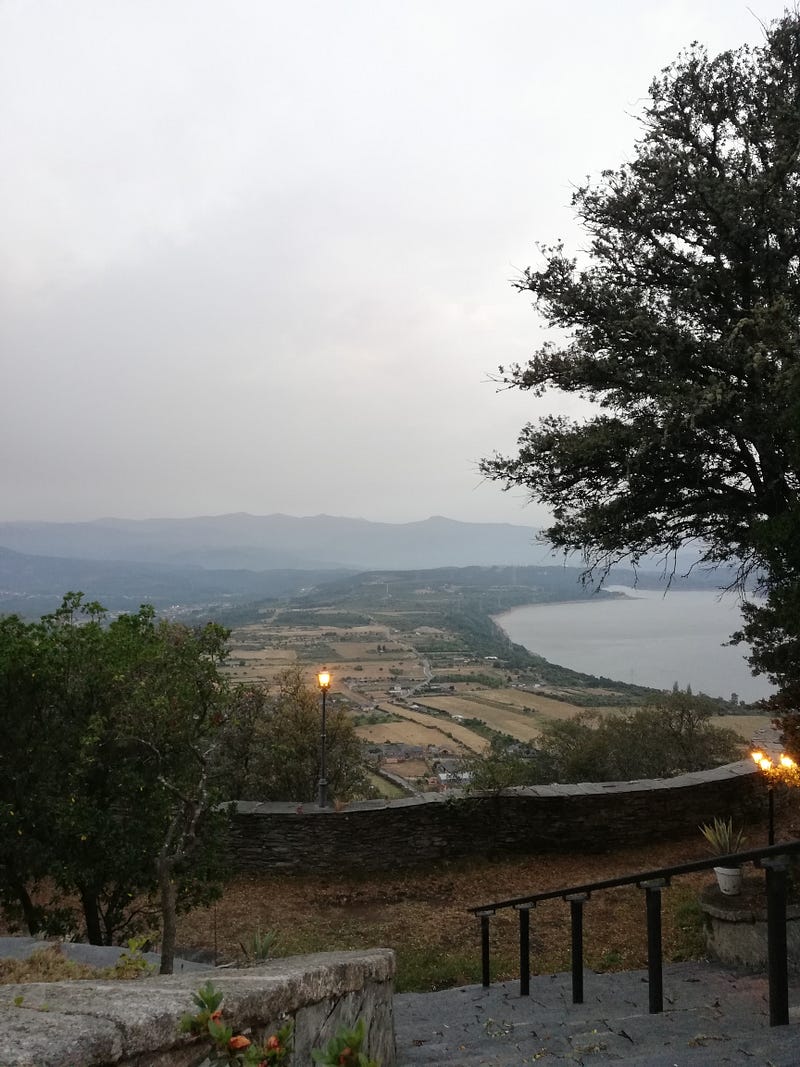
And so, the last-minute decision was to revel in a spa day at the village of Congosto. We stayed at this elegant place called The Rock Suites & Spa, which was isolated enough, located on top of a hill with a stunning view over a nearby water reservoir. Looking back, this was the perfect strike, since the weather ended up turning very stormy that day.
The night was ended listening to the pouring rain at the hotel’s bar which had a wide charming balcony with lit streetlamps. We enjoyed a gin and a read, closing the dreamy chapter that was formed by the experiences of the last few days.
Travelling in itself is a precious gift one can be lucky enough to have, but it is definitely what you make of it that matters and eventually stays and grows with you.
The opportunity of seeing new environments is a humbling and grateful experience we should approach with an open mind. The participants in these experiences are not only the ones searching for them but also the people and places that are there to receive you.