
A wealth tax is necessary
Tax the rich…
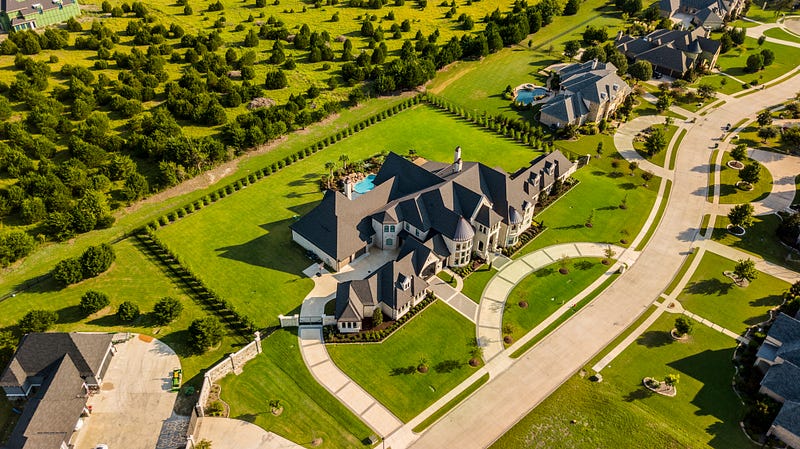
American-style capitalism slowly bound the wounds and creates a new caste system based on wealth. But that’s not the goal of capitalism in his essence. It was supposed to be an economic system, not to become a social system. Sure, in America was possible for people to go for this goal but only because of the money dream, so it transformed itself into a rich caste system. Historically, this caste system (the British-influenced form) wanted to keep all-powerful groups and their occupied provinces separate. That proved to be a convenient way for the British to pit different groups against one another and consolidate their power. But that purity had gone with times. The biggest problem now isn’t based on consumerism or purity it’s capitalism's uncanny ability to extend far beyond commercial zones. It might reach as far as possible is accepted and can reorder social and power systems. Hurts all of us when it undermines democracy or when it masquerades values like faith, race, or feminism to make money. So how can this will be reversed? Placing a wealth tax maybe?
In the early days, capitalism brought people together and was not fiercely exploited by greedy corporations. Who are the worst off? Who are the people who have been given the least chance to do well? The first question it’s basically the saddest ever because it goes back to pit groups against each other instead of asking how capitalism now complicates things. People are tired of working longer hours for low wages. They don't longer rely on the establishment to solve problems. Tax the rich they say lately. Capitalism eroded institutions and unions making a brave statement about individualism. In order to save things that matter, we have to choose not to be able to buy votes in a democracy. Abraham Lincoln said: “The dogmas of the quiet past are inadequate to the stormy present…we must think anew.” The solution is not simple. Is not to change capitalism. America was built on the idea of separating powers between different institutions to protect the most important - the people. To separate the powers of capitalism from the spheres of democracy building some protective walls around the things that we cherish most. In order to do that all must first understand that society does not run only for a wealthy elite. Those times are gone. People with all this new technology everywhere, are asking why are not seeing an improved standard of living. A valid question that in the American search for identity, had always found an answer. Organized money to be dismantled by organized people. Because corporations building businesses of unimagined size and scope forgot that they are restricted to their purposes and limited to aggregate undue power and social influence. They only knew one idea: maximize productivity and profits. By contrast, now people are asking for this acceptance that corporations return something valuable to society at large. Still, the dark side of the grand bargain that we as citizens struck to incentivize entrepreneurial innovation. From this perspective, fighting inequality is not the only goal.
Society gave corporations superpowers and from them, we got the super-elite with their big pockets. Today, the top 1 percent hold nearly as much wealth as the bottom 90 percent. The greatest injustice of the US system is that billionaires in the top four hundred pay less than the middle class. A wealth tax is obviously necessary because will be effective straight away. With a threshold on net worth wealthy would not be able to hide and hoard their incomes easily. The wealth tax could rectify imbalances and repair the damage it has caused to an entire class of workers. Emmanuel Saez and Gabriel Zucman made a paper in which they estimated the wealth tax base between 9 and 13 trillion dollars for a wealth tax applied to the 0.1% of richest families in the USA. In this regard, if the rich have to pay taxes each year, it becomes harder for them to gain even more wealth. In principle, a wealth tax could apply to all people becoming rich suddenly not only to the top 1%. Therefore, tackling inequality with a wealth tax would improve support for anyone who is smart enough to put it into the next elections discussion. The only concern is redistribution and evasion in tax havens. All are resolvable but one piece in the big puzzle still comes down… we all want some sort of justice, we just disagree about what kind of it. So why is not a wealth tax in place right now? Because the economic and political power of the super-rich dictates the game. The shared fiction in which nothing is allowed to be ordinary anymore.
This work here is entirely reader supported so If you enjoyed reading it please consider sharing it around and SIGN up here to get all my future articles directly to your inbox. Also if you feel like you can throw some money into the tip jar gladly will be accepted. Thank you for the support!