
A way to help the local economy when you travel in developing countries
Consider custom-made sewing projects
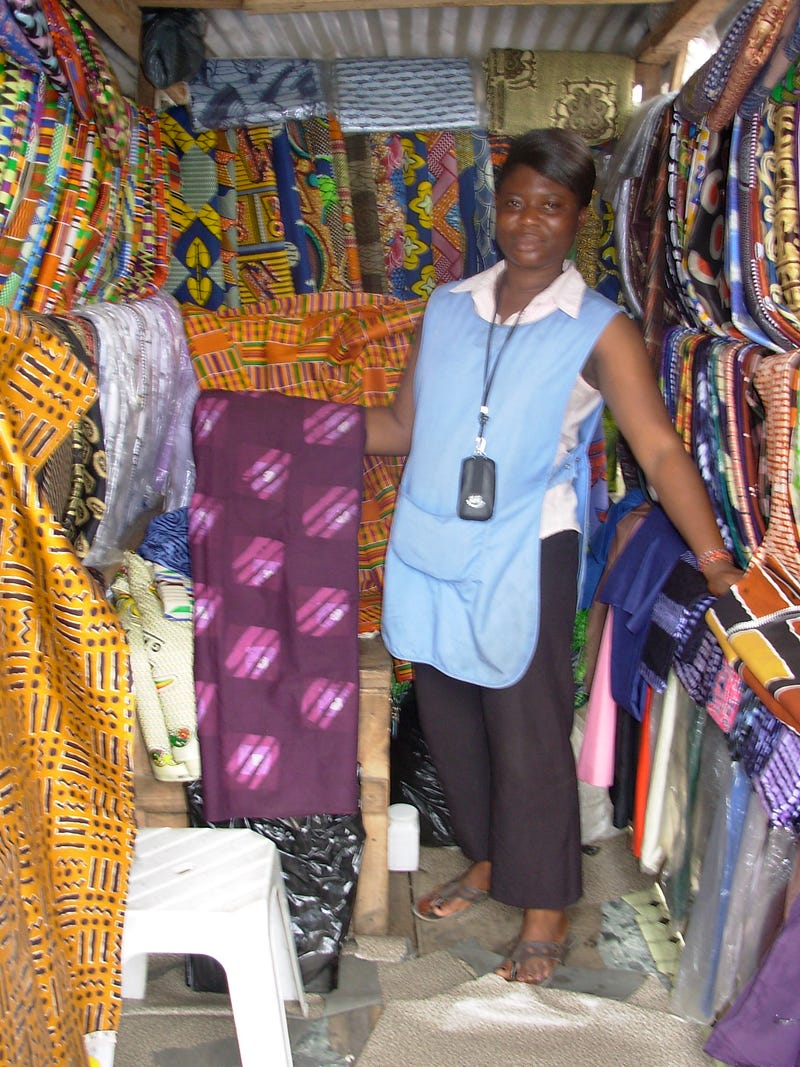
Wherever we visit, every traveler amongst us helps the local people. We spend money in hotels, restaurants, grocery stores, on local transport, and in a wide variety of marketplaces.
When I served in the Peace Corps in the Islamic Republic of Mauritania from 2003–2005, I happened upon a new-to-me way to pump some needed and much appreciated funds into the pockets of local people: sewing.
The idea of having clothing custom made had never occurred to me before I arrived in Mauritania. I guess I am an off-the-rack kind of guy. As it turns out, though, in Mauritania, purchasing fabric and hiring a tailor was always cheaper than buying ready-made clothing.
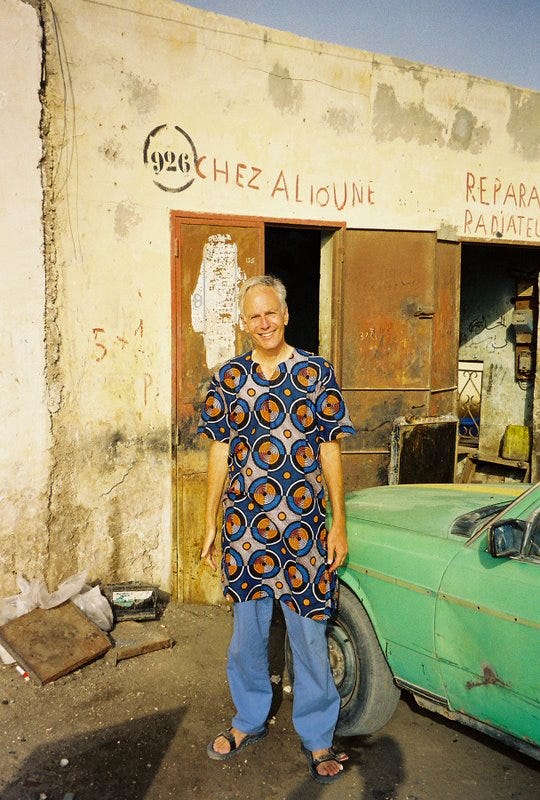
In the Peace Corps, we were encouraged to wear clothing in the style of the people with whom we lived and worked. The locals very much appreciated that we were wearing their fabrics and styles.
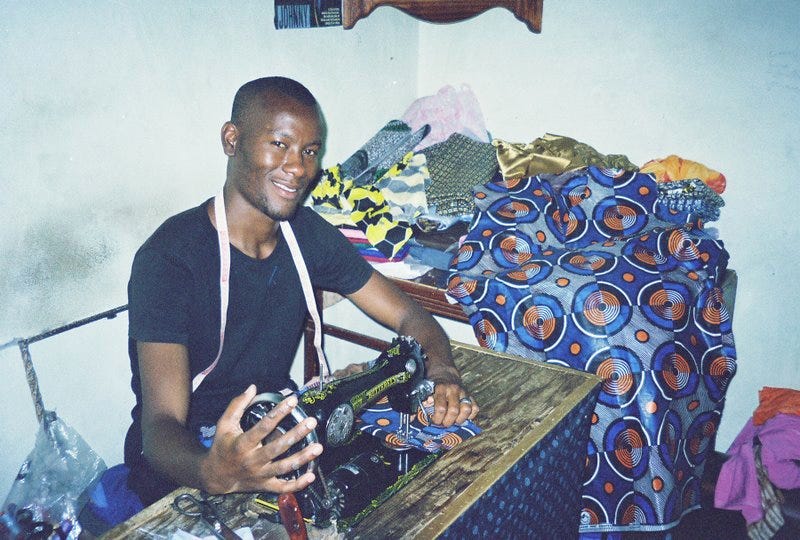
During my time living in Nouakchott, the capital city, an enterprising Moroccan man living there brought in a lot of items normally sold at IKEA stores, to see if he could find a local audience for buying them. One of the products was an apron, which I bought and then used as a pattern for having more aprons made using local fabric. I brought these home with me as gifts for family and friends.
The two items I have most commonly made when I travel are shirts and gift bags for bottles of wine. I have had shirts made in Ghana, India, Indonesia, Mauritania, Rwanda, and South Africa.
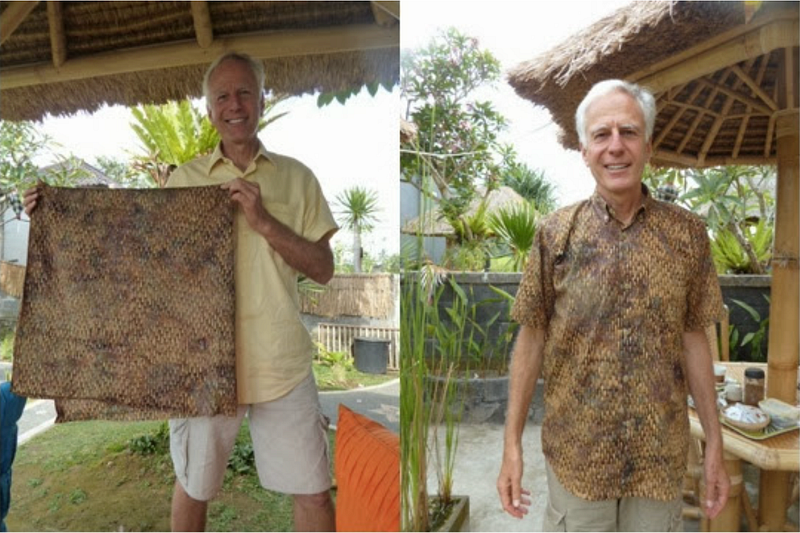
Cloth gift bags for bottles of wine are small and easy to pack and transport. Typically, I will bring one along with me when I travel; this serves as the model I give to a tailor to replicate. I usually source the fabric locally, but on a recent trip to Guatemala, I gathered several bits and pieces that had been sitting in a drawer at home. I had a local seamstress use them to make more wine bags. I have had wine bags made in Armenia, Guatemala, India, Mauritania, Mexico, South Africa, Tanzania, and Uganda.
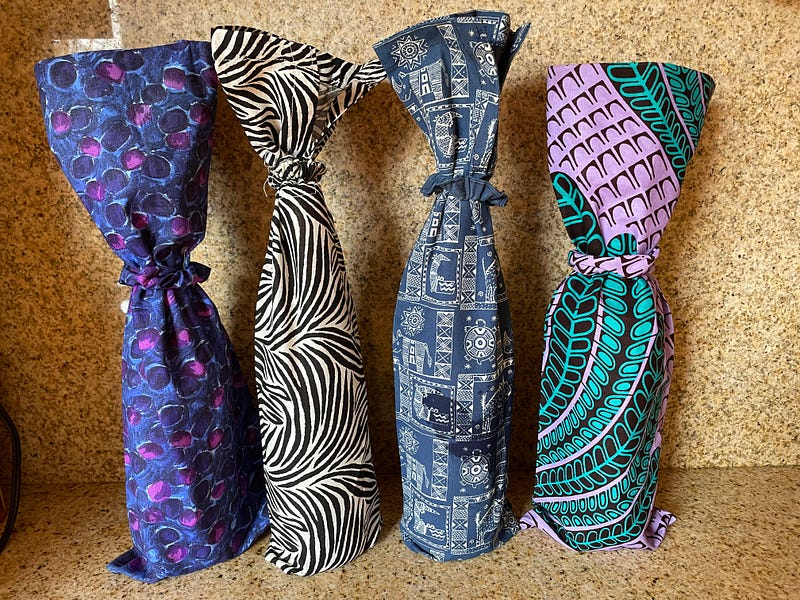
In addition to having shirts and wine bags made, I have also had other work done on my clothing: turning a long-sleeved shirt into a short-sleeved one, tailoring a shirt to make it smaller so that it would fit better, turning over a fraying collar to the other unfrayed side, and sewing together many pieces of fabric in order to make a duvet cover.
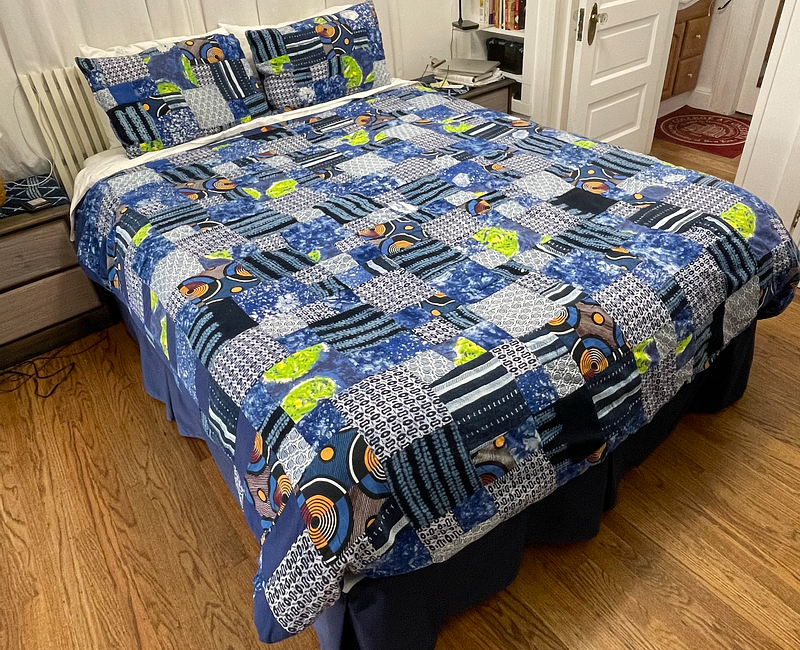
The duvet cover was probably the greatest challenge. I cut up all the pieces when I was at home, and I brought them with me on a trip to Haiti. I was visiting friends who were working at the US embassy. As such, I had time on my side because even though this project was going to take longer than the time I had for my visit, my friends were able to mail the finished product to me when it was completed.
I found that I was no longer wearing my former Mauritanian clothing, but the fabric was still in good condition, so I repurposed it this way and continue to sleep under it every night when I am home.
Helping local people in this manner can take a bit of planning. If you have a garment that fits you well and that you enjoy wearing, you need to plan on taking it with you so that a tailor will have a model from which to work.
If you are not sure what kind of fabric will be available locally when you arrive, you can shop before you leave home and bring some with you, preferably washed and dried by machine so that it will not further shrink after you have had your clothing made.
I have consistently found that wherever I go, tailors and seamstresses are not only easy to work with, but I am happy to make a significant financial difference to them and their families by providing them with work.


