
Travel Memoir
A Very Good Year Indeed
What a year in Granada taught me — and how I’ll never forget it
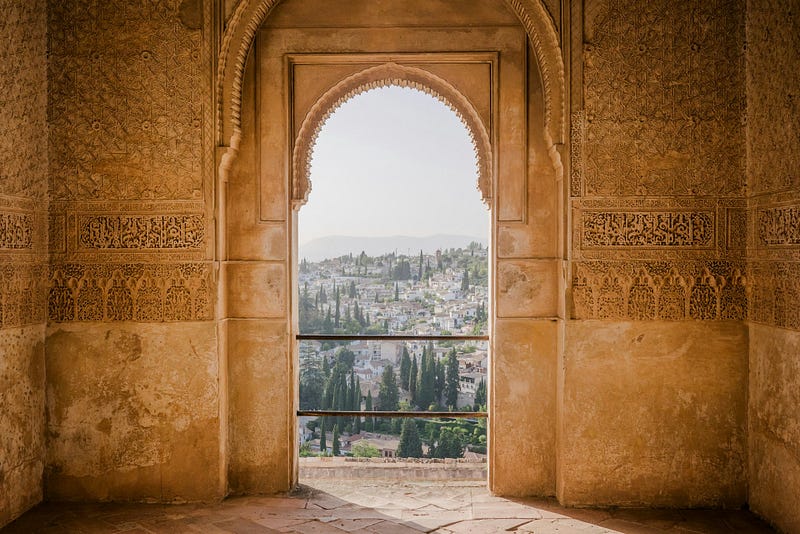
I arrived in Granada in 2002 with a bag. I had been teaching English in Warsaw for two years and needed a change of scenery.
My flatmate in the Polish capital had left behind a LEARN SPANISH book, so I had been slowly going through the chapters and accompanying audio tape.
I had given up learning Polish after my first year there, as I just couldn’t get my mouth around the sounds. It’s a dramatic and intriguing language, but it wasn’t for me. Spanish on the other hand seemed like a nice compromise. I already spoke French and a smattering of Italian, so I didn’t find it that difficult.
So when my contract ran out in Warsaw, I took a flight via Munich to Málaga in sunny Spain. I had a contact in the city who said he could get me some hours at a language school, but the place didn’t enthral me. I don’t know why— it was on the sea and it was warm. But I found it more of a holiday destination, or transit town for Brits being funnelled down to the resorts on the Costa del Sol.
So I took a bus to Seville. Only I didn’t. There was a mix-up at the bus station, clearly my Spanish wasn’t quite there yet, and I ended up getting on a bus to Granada. Two hours later, I arrived in the city.
An hour after that, I had somewhere to live.
After getting off the bus, I wandered into the city and noticed posters on the walls asking for roommates. It was September and the university was starting up, so students were looking to fill up rooms.
I had bought a prepaid cell phone in Malaga, so I rang a number. A young guy called Xavi answered, and after I asked him about the room in my best Spanish learnt from Chapter 6 of LEARNING SPANISH — Requesting a Room — he asked me when we could meet.
I told him in about fifteen minutes, as I had just got off the bus and was walking into town. There was a slight hesitation in his voice, but he gave me the address. Ten minutes later I was sitting in his flat with his brother Seba drinking a beer.
I lived at Calle Falcón for a year. The brothers studied in the week and at the weekends, they went home to their parents. This was a bonus. For three nights a week — and university holidays — I had the flat to myself. In central Granada as well. All for about 100 Euros a month!
I quickly enrolled on a Spanish course and met more people in my first week than I had ever met in my entire life. People from all over Europe and the States, had come to study and live in Granada, either as part of their degrees. Or, like me, just for the hell of it.
The plan had been to get some teaching work, but as the money I had saved up from Poland, was lasting longer than I thought, I put it off and enjoyed the city.
Monday to Wednesday, I chilled out at Calle Falcón with the brothers. Then on Thursday nights, I headed out into the Albaicín, the old Arabic quarter, where the majority of the people I knew lived. Often not returning home until Sunday evening.
We partied hard. We drank litre bottles of Mahou beer like water, and bottles of DYC whisky like tea. All fortified with various substances, two Welsh brothers from Merthyr Tydfil seemed to get hold of with frightening ease and quantity.
Then I ran out of money.
It was always going to happen, but the thought of teaching English again terrified me. That’s the thing with teaching. Once you’re into the groove, you press REPEAT every week. But once you stop, it’s hard to press PLAY again.
It wasn’t as if there wasn’t any work. There were probably twenty language schools in Granada, some of whom had offered me work in September when I had dished out my CV on arriving in the city.
I started following up leads, and within two weeks, I had more work than I wanted. One job concerned teaching employees of Philip Morris in a plush hotel in the Sierra Nevada mountains that Granada lies at the foot of.
The students were tedious corporate types who seemed to know everything about everything. But as I lived in luxury for a week with all my drinks and food paid for, plus a decent wage at the end, I didn’t complain.
I did it for about two months before the contracts dried up, and then ended up teaching technical English at the university. For once, my Biology degree came in useful, even if most of the time we talked about football and food.
The months fell away, and before I knew it, it was summer again. HOT! So I spent the time hanging about the Albaicín with friends, drinking, smoking. Or sitting on verandas reading or listening to music, and generally doing not much.
Then I left.
It's a decision that, almost twenty-five years later, I still can’t understand. One morning, I woke up in Calle Falcón where I still occasionally slept, and felt the need to leave.
I don’t know why. I had friends in the city, I had a life, I had a job, I had a place to live, I had learnt good if not perfect Spanish.
So why did I leave? Why did I go back to England and end up sleeping on my mate’s couch in Nottingham?
Why did I take a teaching job in Plymouth, teaching the Royal Navy’s foreign recruits English, when I could be dancing the night away in the shadow of the Alhambra!
It sounds melodramatic, but leaving Granada signalled the end of my youth. That was the point when I threw in the towel. Gave up! And I’ve never felt the same since. Never quite had that carefree spirit again.
I’ve done many good and interesting things since then. But nothing compares to that year in Granada. And perhaps the decision to leave was necessary. To cement the memories of my time there so they could never be forgotten.
I did return to Granada a year later. But it wasn’t the same. It never is when you visit an old place where you used to live to meet up with old friends you used to know. It’s like visiting ghosts, and I wish I hadn’t gone. It left a bad taste in my mouth about what could have been but never was.
Some things are best left untouched. Best left how they were. Because for me, Granada was a very good year. A very good year indeed.


