
A unique model of tourism
What it was like to be an unexpected tourist in Bhutan
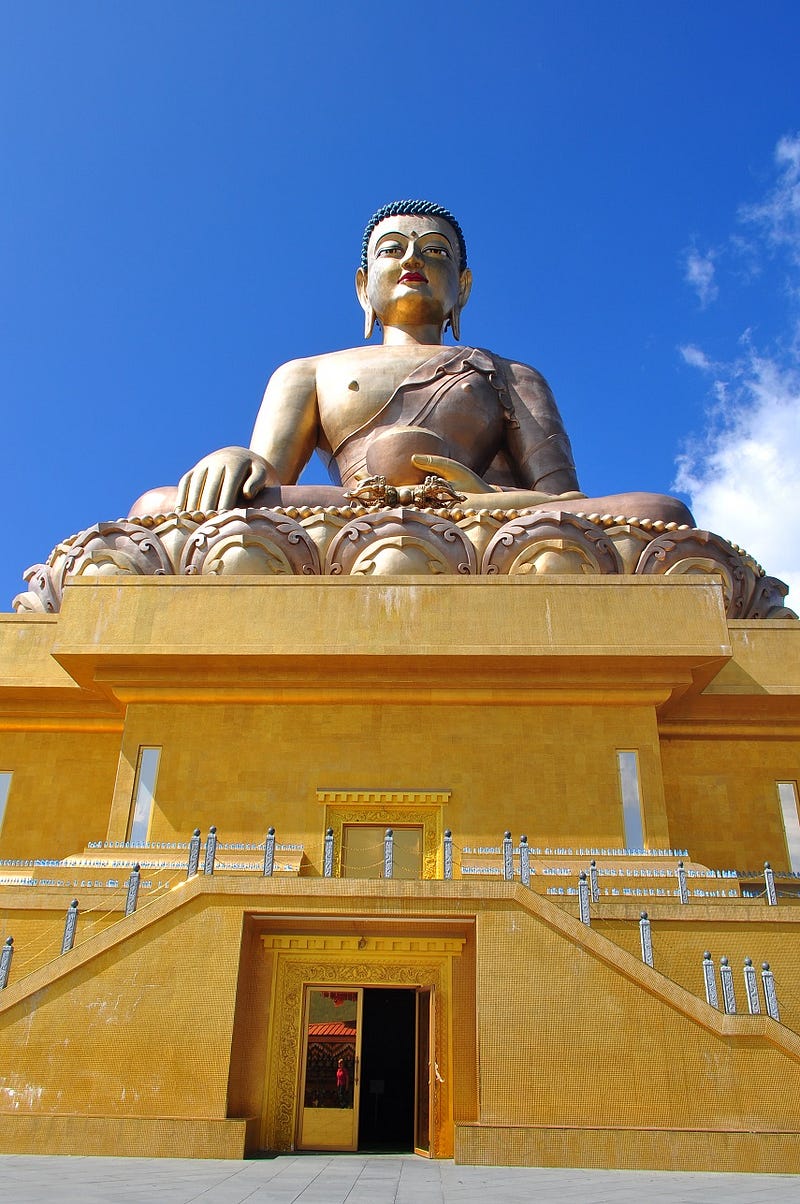
“I can’t walk anymore. It’s too hot”
Tshering said, panting with beads of sweat over his brow. I could tell from the look on his face: he had picked up a crazy tourist from the Phuentsholing border.
He’s my expensive travel buddy foisted on me by Bhutanese law at the Phuentsholing border when I crossed over from India. In all my travels, I would have been most happy to travel with a local — except that this time, he came with a hefty fee and I was bleeding cash every day in Bhutan. I had not planned on spending so much money in Bhutan, and credit card options were limited in this country — so I was running out of physical cash fast.
In my attempts at stemming this seemingly endless cash bleed, I had insisted on not hiring a driver in Thimphu. We’ll explore the city center by foot — better to see the city, I told him. And now here we are at the edge of the city center by the side of the road towards Buddha Point, with him in his traditional Gho under the blazing hot sun.
Just take off the thick jacket, I suggested. It’s silly to wear such thick clothes in this kind of weather.
“No”, he replied. “It’s the rules.”
Wow, even the guiding attire is mandated by some rules, I thought. That’s why so many people were still in traditional attire even on a hot sunny day when a T-shirt would have been a lot more comfortable. It just didn’t make sense to me, until I realized that wearing traditional attire for tour guides and drivers was mandated by rules. This, I was to discover, was just one of the many rules in this hidden kingdom in the Himalayas.
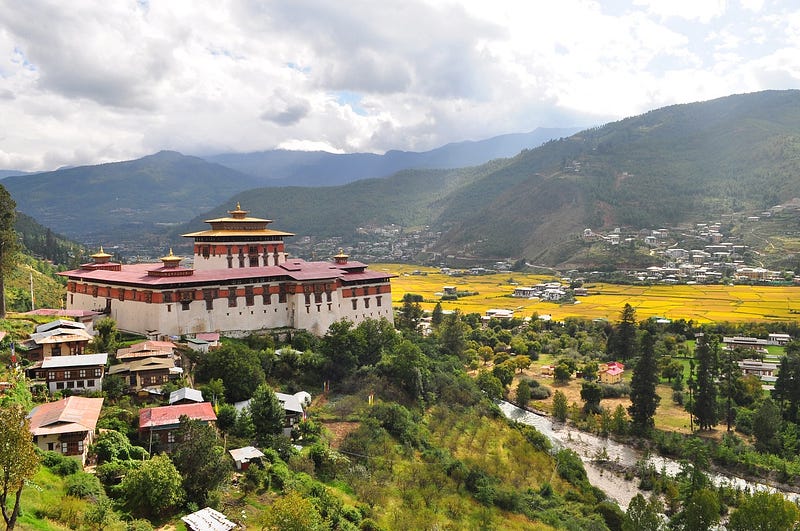
At first impression, these rules could come across as excessive and bewildering. But I grew up in a country where there are rules for everything — so I understood that there would be principles and patterns of implementation of such rules. More interestingly, are these principles in harmony with the locals’ own principles and belief systems? Or do people comply out of fear of punishment? This varies on a continuum depending on which part of the world you are in.
So I tried testing a few buttons. But somehow circumstances didn’t allow me to go through with them.
Is it really impossible to get around without a guide?
You definitely cannot get into Bhutan without a registered tour guide on your immigration record (unless you are a local visitor). But when inside Bhutan, is it really impossible for me to get around without a guide?
The first time I tried shaking off Tshering by insisting on walking up to Buddha Point myself, we both found a ride up to Buddha Point instead— two kind old ladies stopped by the side of the road and offered us a lift up. We came down hitching a ride in his brother’s car (don’t ask me how — he was a really committed tour guide).
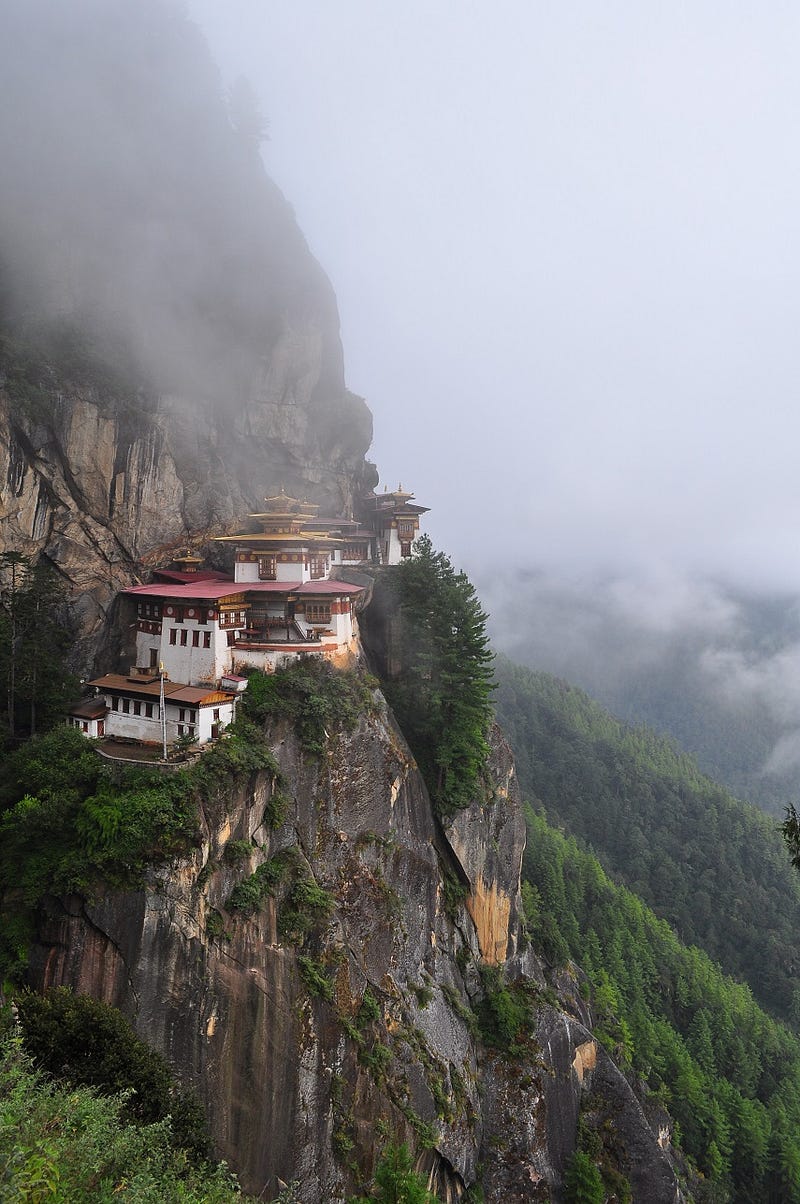
The second time, we were both in Paro and I insisted on walking up to the base of Paro Taktsang (Tiger’s Nest) myself before dawn.
Somehow, darkness transforms the normally docile stray dogs in the day into aggressive barking creatures before dawn (Tshering tells me that it is because of the evil spirits that roam about). My unfortunate guide and his driver were terrified and made sure to chase away the barking dogs for me with their car. Turns out, my guide and driver could both go to jail if I had been bitten by a dog that morning. That made me feel really guilty about my behavior.
And it dawned on me that although the laws and rules can come across as onerous, the same laws and rules also ensured the safety of the tourists and ensured a basic minimum standard of care regardless of the tour guide. This is in line with the Buddhist principles of shared responsibility — we are not only responsible for ourselves, but towards others too; and we should behave in a way that leads to the benefit of both us and others too.
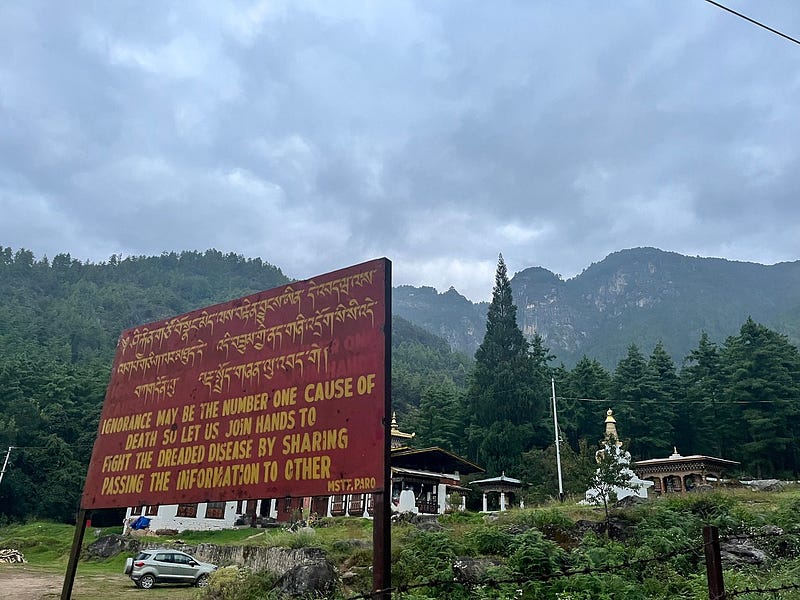
But people don’t just survive on principles alone. Life is practical, and people need money for their basic needs. People also need to have jobs, and the tourism industry is the second largest industry in Bhutan.
The core principles behind Bhutan’s form of tourism is High Value Low Volume tourism. For me as a tourist to experience their country and culture, I would also need to contribute back — and that’s how this unique form of tourism can be mutually beneficial and sustainable in a hidden kingdom in the Himalayas with limited resources. This is probably why it is mandated that all tourists have to pay a Sustainable Development Fee in Bhutan. Furthermore, as many people across their society should benefit from tourism — which is why drivers, who usually are not fluent in English, also have to be hired when tourists travel outside of the main cities.
Interestingly, at every guesthouse or dining establishment that serves tourists, the accompanying guide and driver will get complimentary food or accommodation as well — so you do get a sense that the government is also taking care of their citizens at the same time.
Although the money earned as a tour guide is one of the more well-paying jobs in Bhutan, my guide, Tshering, was also deeply religious and the concepts of merit, karma, dharma seemed to be in line with his work ethic; I was his responsibility, and even if there was a possibility that I may not have sufficient physical cash to pay his fees (he was well-aware of it), he would still attempt to discharge his duties well.
At all the tourist sites, he would do his best to explain the history of the place, who were the important figures and why, and what are the local beliefs. Over the course of the next few days, I would also meet with one of his older brothers, his younger brother and sister-in-law, as well as his girlfriend. His girlfriend’s family owned a guesthouse and made one of the best Bhutanese meals that I had in Bhutan.
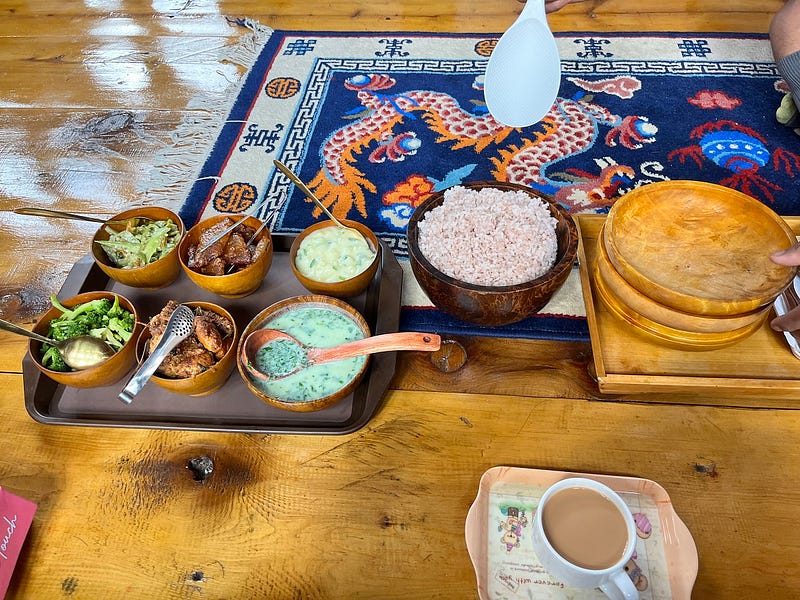
So yes, I think it’s impossible for a tourist to get around Bhutan without a guide, unless you’re a local visitor. But, after understanding more about the country, the culture and its people, being a responsible tourist is probably the best way to respect the country, so that they can continue a sustainable form of tourism. (But the caveat is also that you’d have to be a tourist with deep pockets)
Being in Bhutan was definitely an eye-opener for me.
After crossing over from the organic chaos that was India, Bhutan was quiet, clean, and governed by a bewildering array of rules, tradition, religion, and the monarchy — whose presence was in every aspect of Bhutanese society. I’d see photos and pictures of the king and the royal family everywhere — on billboards, in restaurants, hotels, all government buildings and in shops everywhere in the city.
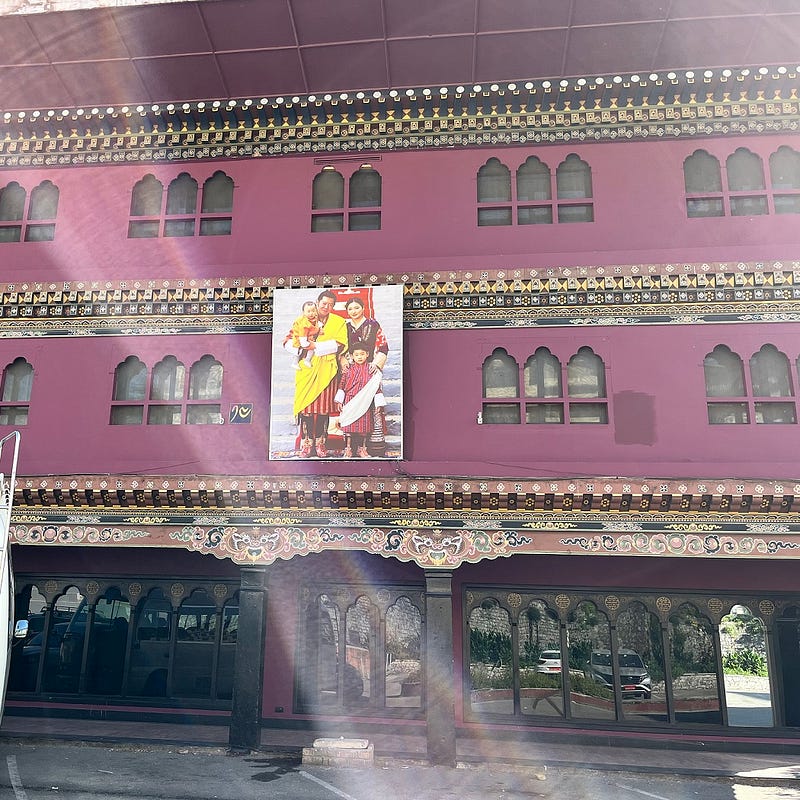
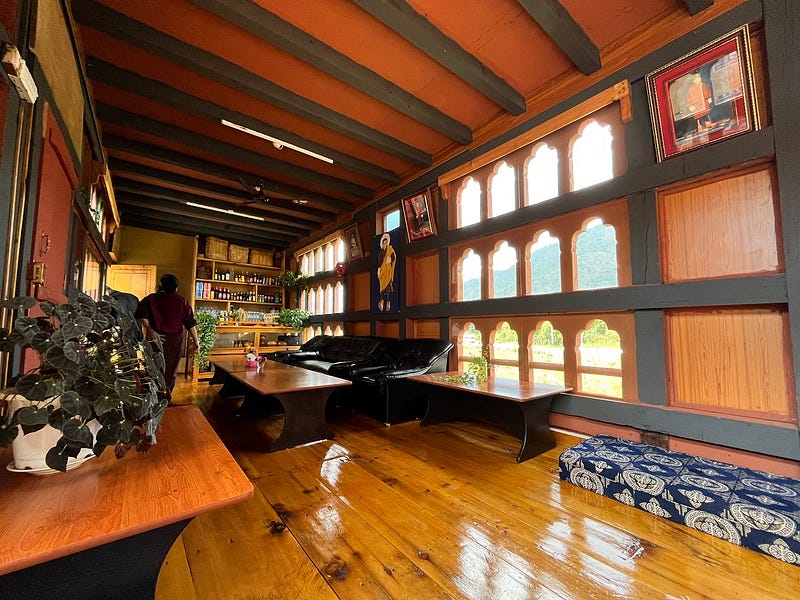
But unlike in some other places, these outward displays of respect for the royal family seemed to stem from tradition, respect and cultural norms, rather than strictly enforced. He’s the People’s king, Tshering would tell me. And I didn’t sense any traces of fear or resignation when the locals say that.
Is it really a happy place?
Well, it depends on what is your definition of happiness really.
I didn’t see anyone laughing wildly or spiritual yogis exuding an aura of happiness — people were just going about their daily lives and minding their own business.
Society isn’t as cut-throat as in some Asian cities where cash is king and people go all out to make a profit at others’ expense. Yes, there’s inequality, and you do see obvious differences between the affluent elite in the cities and the poorer rural folk in the countryside. But there’s no homeless people on the streets, and no ostentatious displays of wealth by the elite either.
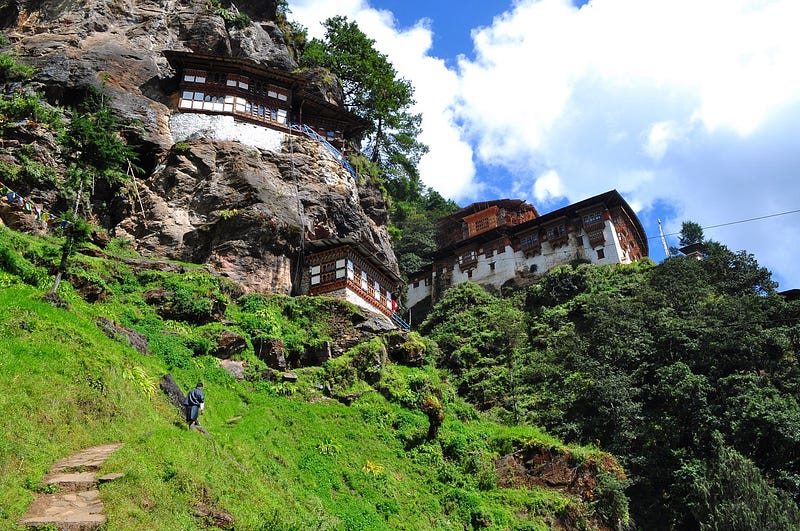
You do get a sense that people are deeply religious and Buddhist principles provide the core guiding principles for their way of life and the principles of governance — and it is also concurrently reinforced by the overall culture and the physical environment. Monasteries are everywhere, and along trails and outside monasteries, you’d see signboards with philosophical messages from Buddhist teachings.
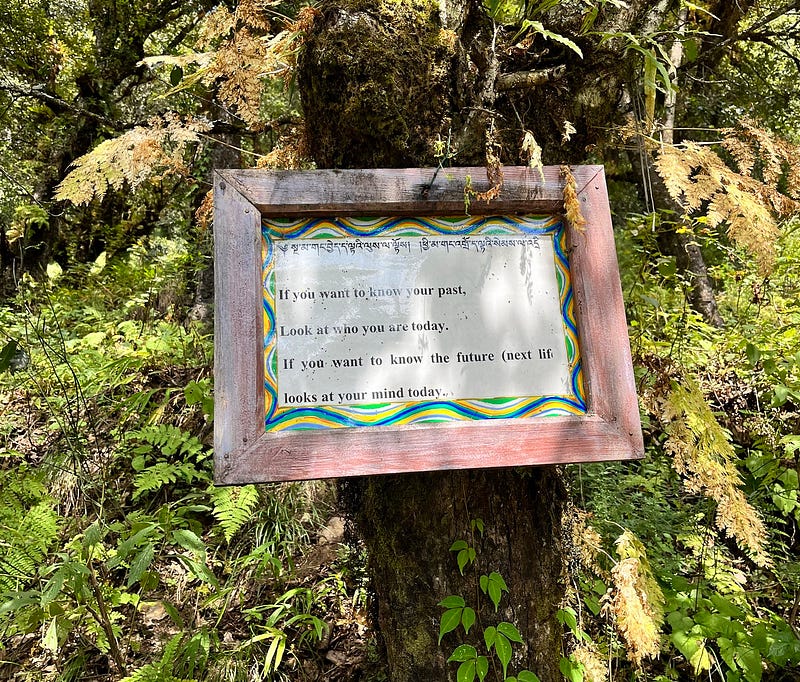
City buses in Thimphu all have signs ‘TAKE A RIDE AND BE HAPPY’. Lockers in the state museum have writings to tell visitors to be happy. Are people really happy here? I asked Tshering once. Yeah, I think only you are not happy, he replied back. (Yes, I would have been a lot happier if I was a tourist with deep pockets, I wanted to reply back)
Kinship and family ties are also deeply valued as well. I suppose all these — people, family, religion, government, monarchy, environment, tradition and cultural heritage — would confluence together to create a overall prevailing culture where people are reminded to be grateful for what they have, to help others where possible, not to be too attached to your current life and circumstances, and to live in harmony with the environment. If circumstances didn’t go your way, you place your faith in the Gods above, and you respond in a way that helps you to accumulate merit for your next life. All these create a sort of satisfaction with life.
(Disclaimer: these are just the observations from an unexpected tourist in Bhutan for a short duration)
So I had unexpectedly stumbled into Bhutan as a tourist, burnt my pockets through the process, but come out of it with a better appreciation and understanding of what sustainable tourism in a hidden kingdom in the Himalayas with limited resources looks like.


