
A Ukrainian Woman’s First-Hand Account of Forced Labor in Nazi Germany
Revisiting my mother’s forced labor and liberation experience written by my seventeen-year-old self
I am in the process of writing a narrative non-fiction about my parents’ lives as Nazi forced laborers. While writing, I have been researching as much as I can about what could have happened to them and what actually did happen to them. They have both passed away, so I can’t ask them anymore.
The historical records of their experiences during WWII are sparse, and my memory of what she told me thirty-five years ago is fuzzy. Therefore, I could not believe my luck when my sister found my high school essay one week ago, written in cursive back in 1988, based on an interview with my mother.
My mother was a strong and stoic woman who never complained, never showed her emotions, and never shared with me her true self. She left the emotion and crying part to my father. However, her work ethic was astounding, raising twelve children on four hours of sleep by herself while my father worked two jobs to support our family.
On a day in the Autumn of 1988, I hesitantly approached her about writing a paper about her time during WWII as a Nazi laborer. I thought for sure she would tell me no and that she didn’t want to talk about it.
Unexpectedly, she said yes! I never realized, at the time, what an important historical account this would be, as well as a story of survival and perseverance against the odds.
Perception of a 17-year-old girl
I want to share some excerpts from my 1988 essay written by an almost seventeen-year-old girl who was only two months younger than my mother when she went to Germany. This is the story of a girl seeking answers to questions about her mother, not unlike the fifty-two-year-old woman still seeking them today.
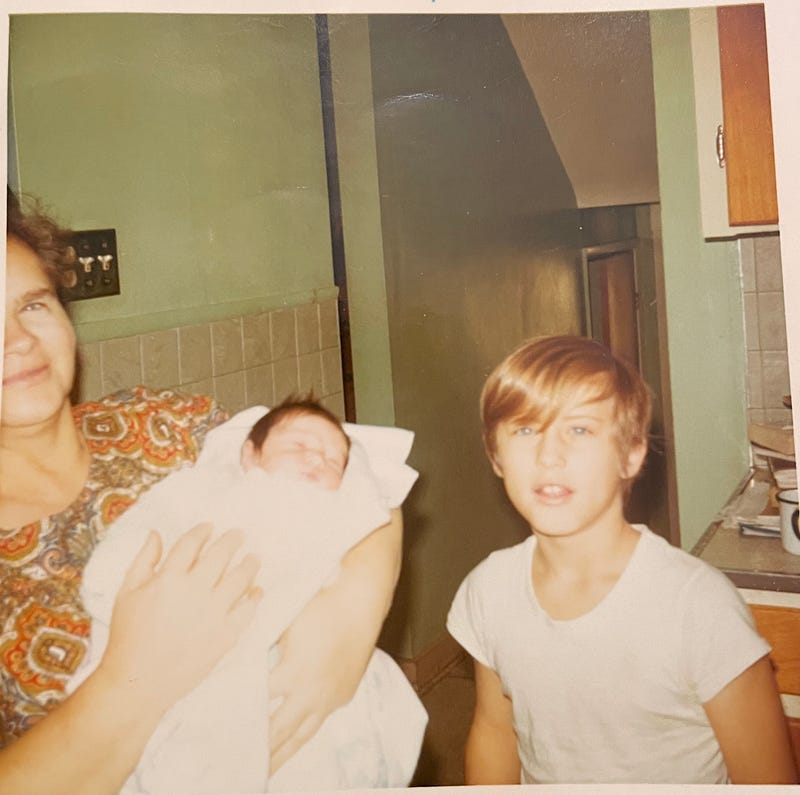
“On a cold night in 1941, the thin wooden house consisting of only two rooms could not keep out the chilling autumn wind but young Sofia did not notice. ….Leaving her family’s small farm in Western Ukraine had been her last resort because she was too tired of an empty stomach and not enough clothing to keep warm. Hitler had offered her more as he had offered to many other conquered people.
….At seventeen, Sofia did not understand the politics of Hitler, but she did understand her determination to help her family with the resources they needed…..”
Some people might think my mother went willingly to work in Nazi Germany because she believed in the policies of the Third Reich, but they would be mistaken. Some Ukrainians were fascist as were many Europeans of the 1930s. Many Ukrainians initially supported the Nazis because they hated communism, wanted independence for their country which they thought the Nazis would give them, or just wanted a full belly.
“The next day, on October 6th, Sofia said goodbye to her family but promised to return in three months, which was guaranteed to her by the Nazis. Sofia had no idea this would be the last she would ever see of her family and homeland…..
When she finally arrived in Eastern Germany, she was immediately sent to work on a farm. The nightmare began when Sofia realized her life had not changed, and she was not allowed to ever leave Germany……”
My mother signed up for a three-month visa, but when she arrived in Germany, she was corralled on overcrowded trains, poked and prodded in transit camps, and finally taken to a farm. The farm owner took away her identity papers, and she was forced to wear a patch with the acronym “OST” which meant “Ostarbeiter”, Eastern Worker in German. She was forced to work twelve-hour days in knee-deep snow picking potatoes and turnips in clothes that didn’t keep out the winter chill.
“Learning that better jobs were readily available in Berlin, Sofia and her friends illegally hid on a train but were arrested in Berlin. Nazi law stated that only Germans could ride the trains. After spending three weeks in prison, Sofia was sent back to Magdeburg and the greenhouse…..”
My mother told me nothing about her time in prison, but I have since learned the Nazis put forced labor runaways into re-education camps where they were starved, humiliated, and tortured into submission. They returned to their same place of work gaunt and defeated.
“…until March 1945 she was moved to Braunschweig to a larger factory that manufactured everything from bombs to airplanes…. American bombs dropped every day, and the guards tried to force the workers to hide under the factory, but they refused because they knew this would mean certain death if the factory exploded.
Sofia and other workers scattered, but the German guards shot at them and sent German Shepherds to attack them. One day Sofia hid against a wall while she heard the bullets of machine guns fly overhead, but she was too terrified to move.”
I never thought to ask my mother the name of the bomb factory where she worked. I naively believed these criminal companies would have been closed, and the names would be of no value.
I was very wrong.
Most German and foreign subsidiary companies that used forced and concentration camp labor laborers still operate today: e.g. Volkswagen, Siemens, Daimler Benz, BMW, General Motors, Ford, Eastman Kodak, BASF, Hugo Boss, etc.
My mother’s eyewitness accounts sound eerily familiar to the historical record published by Volkswagen in 1996, eight years after I had written and lost this essay. The Place of Remembrance of Forced Labor in the Volkswagen Plant can be accessed using the link here. I am not sure if I will ever be able to confirm 100% if she had worked for Volkswagenwerk, as she claims in some of her post-WWII paperwork, but in my heart and soul, I believe she did.
“Sofia would also watch Jewish women and children who were prisoners and lived under the factory dig graves in the forest on Sundays. She took pity on them but there was nothing she could do to help them. She was powerless to give them clothing or shoes for their ragged feet.”
My mother was a compassionate woman. She would welcome, feed, and shelter any person or animal in need. It must have broken her to see people treated even worse than she was and not be able to help them.
“Finally, the day of American liberation came, and Sofia traveled back to Magdeburg to find her friends. When she arrived, the Americans had left and the Russians now occupied the city.”
Many freed, forced, and concentration camp laborers were not told that the Allies in Potsdam had carved up Germany into occupation zones. My mother had walked into a trap.
“Sofia’s fear of the Russians forced her to flee Magdeburg. She walked along the roads in the sun and rain but hid in the forest when Russian soldiers used the roads. Arriving in Braunschweig again, Sofia decided there was nothing left for her there.”
My mother’s fear of communism gave her the courage to flee to the West, eventually making it to the American zone and a Displaced Persons Camp in Hanau.
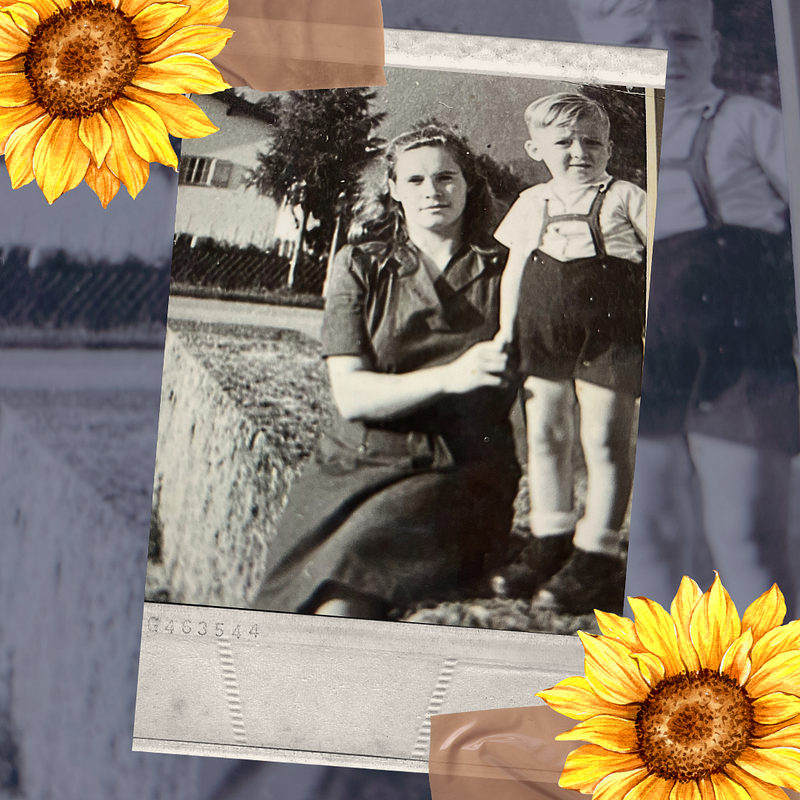
“Sofia longed to return to her beloved Ukraine but could not because the Soviet Union had an iron grip on the area. Sofia strongly believed freedom could not be compromised and said goodbye forever to her homeland. This is the story of my mother, Sofia Pawlyk. She is still haunted by her lost family and devastating life in Germany. The longing for her homeland has never subsided. She knows this is a dream never to be fulfilled. She can never return to her homeland because of the Communism she fears to death.”
While this ending written in 1988 seems so hopeless, it was not!
Soon after writing this essay, the Soviet Union opened its doors with perestroika and glasnost. Soon after, my mother visited her family in Ukraine for the first time in almost fifty years, rekindling her lost years with her sister and half-brother and their families.
I believe the years of open borders helped to heal the trauma my mother faced from her experiences during WWII and her separation from her family during the Cold War prior to her death in 2005.
“But I think I will keep her dream alive. Someday I will visit her homeland and find the charm and beauty for which she so fervently longs.”
In 1996, I kept that promise to myself that I had forgotten. I signed a two-year contract to work in Kyiv, Ukraine, and came to my mother’s homeland for the first time to live. She returned to Ukraine with a few of my siblings while I was there, and together, we visited her family for the first time.
Whenever I feel depressed or think my life is bleak, I remember my mother and the adversities she had to face to survive the Nazis, flee the Soviets, and make a new life in a free country like the United States; I recognize my own strength in her to overcome those adversities.
When I think about the kindness, compassion, and generosity she displayed to others even when she had little herself, I remember to be kind, respectful, and generous to others.
When I think about what she overcame to make a life for me in the United States, I never take this country for granted.
Thank you for reading my story.


