
A Tuscan Vineyard = Beauty, and a Metaphor For Strategic Development
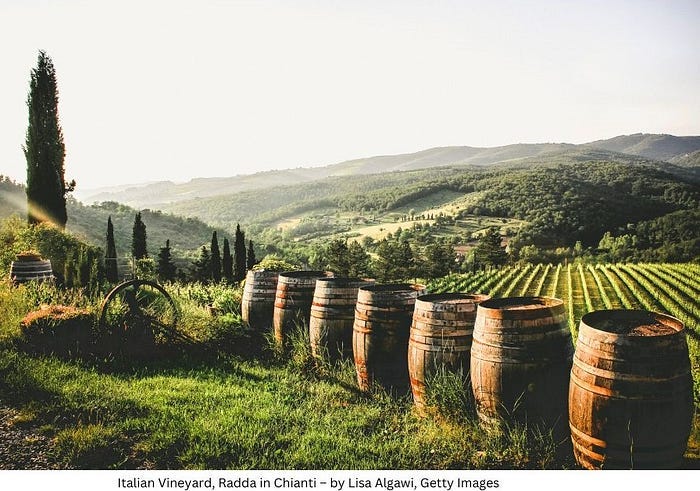
For seven years of my early career, I lived and worked in Tuscany, and like most people there, did many things to make ends meet. While guiding tours, I would tell people stories about famous artists and politicians’ rivalries, what it was like to live during the plague years, why the medieval painting was so flat, the Renaissance painting quite accurate (secret, midnight dissections…), and baroque art so ornate, about 300-year turf battles, and papal assassination plots.
Along the way, I pointed out modern-day details that remind us of the particulars of history. There was the semi-circular indentation on the rock façade, carved out by centuries of the metal ring falling back against the surface after the horse reins were untied (and visitors headed back home).
Or, I would have the visitors marvel at a renaissance villa’s large footprint and its wrap-around “bench”, which was for potential borrowers and business partners to visibly sit, as they waited for their appointment with the oh-so-important merchant-villa-owner.
Note those tall towers on medieval dwellings — why? That indicated a powerful family, taking up space within the walled city — it is so often about showing off your bling. I also got to take people on wine tastings, show them the beautiful countryside, and tell them a bit about how wine was made.
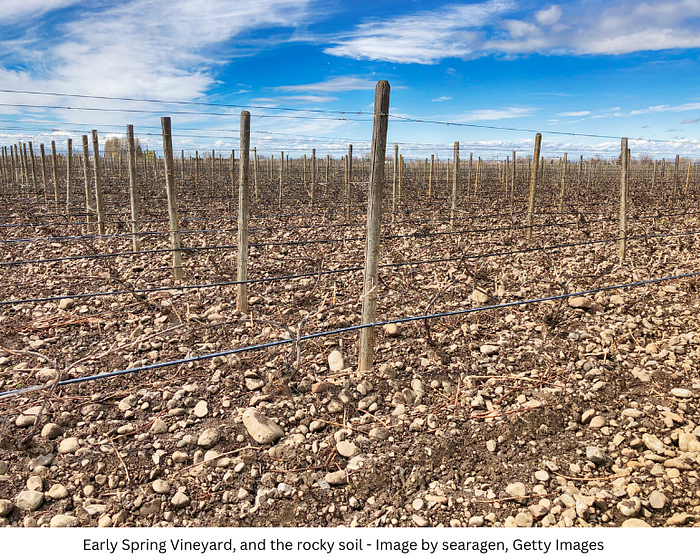
My friends tell me, “The wine here in the Chianti is so good because the soil is rocky and dry. The grapes will not grow too fast.” When preparing a vineyard, the soil is tilled and the big rocks are removed. When the vines are planted they do not actually bear fruit for three or four years. Once they do, there is then a multi-step process to growing the best wine grapes. And every year has it’s own cycle as well.
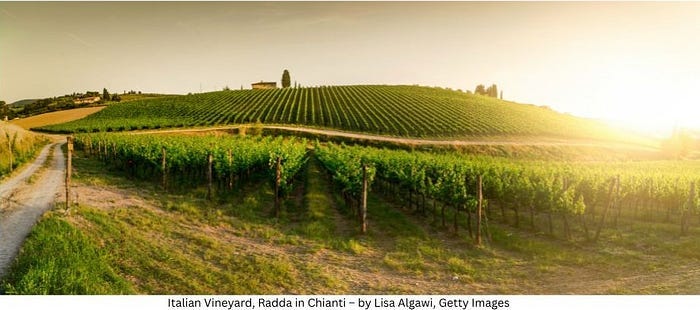
If you were to drive by a vineyard in March, you would see a desolate field of gnarly upright sticks. In April it starts to bud and by June, the vineyard is a beautiful hillside with rows of fresh leafy vines, perfect for the photographer or painter’s imagination… especially given the nearby fields of poppies in May, wheat in June, or the sunflowers in July.
Though the leafy vines are beautiful, the foliage is trimmed and excess grape bunches are culled in June and July… to facilitate light and air circulation among the best bunches of grapes and ensure the photosynthesized sugar is concentrated into fewer, high-quality grapes.
As the September harvest approaches, most of the work has been done, the wine-making machines are being cleaned and the vintner waits and hopes… hopes for no rain the last few weeks, which would “explode” the grapes and dilute their sugar content, or even worse, create mold. In mid-September, the activity and fun pick up — we call all our friends to help at the vendemmia.
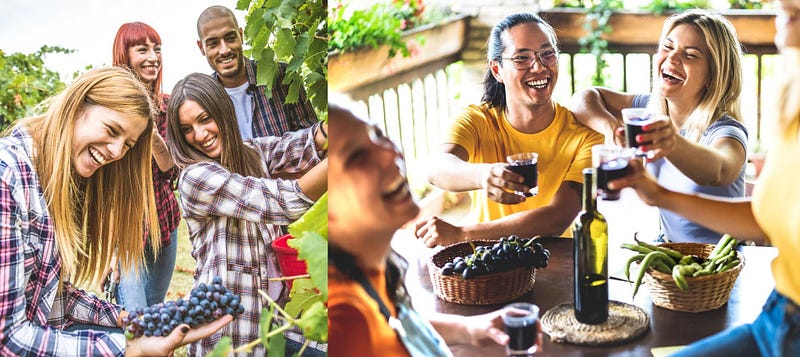
Everyone walks through the vineyard, pail in hand, bent over, cutting off the grape bunches by hand, enjoying the early autumn weather, complaining about the backaches, and teasing each other about getting old. It takes hours, sometimes days, and gets tiring, yet remains enjoyable, hopeful, and inspiring. And after the day of hard work, everyone sits down to a feast of abundant, seasonal food, teasing, and camaraderie.
A strategist or CEO goes through an analogous cycle in their business. S/he directly deals with or navigates around the biggest challenges or rocks, leaving the small rocks for employees to take care of — challenges to make them think and grow in quality. Pruning the foliage and excess grapes, or culling the seemingly beautiful projects with an enthusiastic following, to avoid dissipating energy from the goal of the business (in this case, good wine).
Then that tension-filled time of waiting for results, hoping “for no rain,” of accepting that we must work hard, but some things are out of our control. And the actual vendemmia, or grape harvest, is that glorious time of pulling everyone together to work hard to meet the deadline… and celebrate when it’s over.
If you would like to discuss leadership metaphors, transferable lessons, or how to develop a thriving organizational culture, please comment below or get in touch via my linktree.