
A Truth Units Manifesto: Part 1
In 7 postulates, versus 95 theses

The truth units articles published so far have received constructive critiques. The most substantive and detailed came from an article by Benjamin Cain, which addressed the “academic philosophy” side of truth units. Part 1 below of this article attempts to show how truth units answers the issues he raised.
Other constructive critiques came on the practical “applied philosophy” side, from Steven Gambardella, as well as A.P. Bird, Hazlit, Martin B, Palmer Saylor III and others. I’ll attempt to address those issues in Part 2.
Benjamin Cain saw truth units as an epistemology with unanswered questions in it. These “holes” (my term, not his!) weaken the academic rigor I’ve been aiming for. So back to the drawing board. After trying to fill in those holes, it dawned on me they were there for a purpose.
Epistemology is about the theory of knowledge, especially with regard to its methods, validity, and scope. Epistemology is the investigation of what distinguishes justified belief from opinion. — Oxford Dictionary
Truth units are intended as a practical epistemology. Truth units don’t replace, revise or add to established epistemology. Instead, truth units are a pared-down, reductive epistemology.
If epistemology, as Oxford says, is an “investigation” then through 7 postulates, truth units proposes to suspend some of that investigation, in order to create a “field kit” of epistemology that can be applied in day-to-day life to address — if not resolve — intractable, everyday questions and debates.
The relationship between truth units and epistemology mirrors the relationship between a medical field kit and a state-of-the-art, comprehensive-care hospital.
A reductive epistemology can be more accessible and useful to more people. Consider Routledge’s Epistemology: A Contemporary Introduction to the Theory of Knowledge, Third Edition, by Robert Audi. If you review the table of contents on Amazon (click “read sample”) you’ll see how much there is to learn and digest. This limits the number of people who understand epistemology, and the extent to which they can apply epistemology in everyday discussions with other people.
Imagine MAGA people reading Audi’s Epistemology and realizing all their epistemic mistakes. Quite a stretch, isn’t? Wouldn’t it solve a lot of problems though? Yet we are advised. even with spouses and family members, that it’s a good strategy to “meet people where they are.” Truth units facilitate this strategy.
What Makes an Animal an Animal?

Reducing epistemology is like reducing the definition of an animal. Encyclopedia Britannica says “Animals are multicellular eukaryotes whose cells are bound together by collagen.” Wikipedia says “With few exceptions, animals consume organic material, breathe oxygen, have myocytes and are able to move, can reproduce sexually, and grow from a hollow sphere of cells, the blastula, during embryonic development.”
Eukaryotes? Myocytes? Blastulas? What if, for practical purposes, we just said “animals breathe, eat, move and reproduce sexually”? If you used that definition as a checklist to determine which of all species were animals, you’d get a small percentage wrong, but you’d get through all the species much faster.
The 7 Postulates
Here are truth units’ 7 postulates. You might think of them as working assumptions for a practical epistemology, as a guide to fitting epistemology in a knapsack.
1. Reality exists but is ultimately unknowable. What we truly know is the contents of our consciousness. Reality is represented to consciousness by the unconscious mind, which transforms raw sensory data into mental “images” for the “self” to observe and process. These “images” — the “contents of consciousness” — are all the “self” has to work with toward any knowledge of “outside” reality.
2. All contents of consciousness are on “equal footing.” You could think of these “images” as photos in a photo gallery. Despite different subjects, they are all photos. The only difference between them is what they show. The mind decides, consciously and unconsciously, what each photo shows — some photos show the outside world, some show thoughts, some show memories or futures or fantasies, some show awareness of the self, etc. With some photos, you don’t know what they show. Each photo is called an “experience.”

3. Most experiences are experiences of other experiences. What a photo shows is the first or “base level” meaning attached to the photo. The first meaning of a photo might be “this is a sound” or “this is a pain” — although such meanings are often not conscious. Among “sound” photos, the mind attaches additional meanings to the photos, like “those two sounds are different” or “those three sound alike.”
Over the course of life, further meanings accrue. A particular set of visual, sound and motion images might mean your dog. Other such sets might mean other dogs you encounter. A superset of these sets might mean the broad concept of dog — maybe including things that make you think of dogs, like the shape of a cookie or a cloud. To think of these sets of meanings is to have an experience — you might experience (think of) members of these sets, or you might experience (in thought) their set-ness — for example, the “nesting-ness” of matryoshka dolls.

4. Sources of meaning are all on “equal footing.” Some experiences are attributed to “pre-programming” of our minds — instincts, emotions, neuronal structures, etc. The source of an experience is has no bearing on the experience itself. Anger is an experience. The idea it is an emotion is a meaning we add to it. Gobbling down a burger can be characterized as a choice or out of instinct. The only difference between the two is in one case you experienced a choice, in the other you didn’t.
5. Most meanings build on other meanings. At the “base level” is the first meaning attached to an “image” in consciousness. Meanings get built on that “base level” substrate. The substrate and the first layers of meaning are typically unconscious. Newborn infants are minimally conscious of the world. They don’t “see” much of the world because they haven’t given what they see meaning. Consequently they don’t remember much of infancy when they are older.
6. Meaning structures can be modeled with “meaning primitives.” In computing, all meaning is encoded in ones and zeroes, no matter how rich or complex the output. The mind’s structures of meaning — regardless of their actual structures — can be “modeled” similar to computing’s ones and zeroes, in which each increment of meaning is a “building block.” Any structure of meaning can be “built” out of these blocks, like in computing.
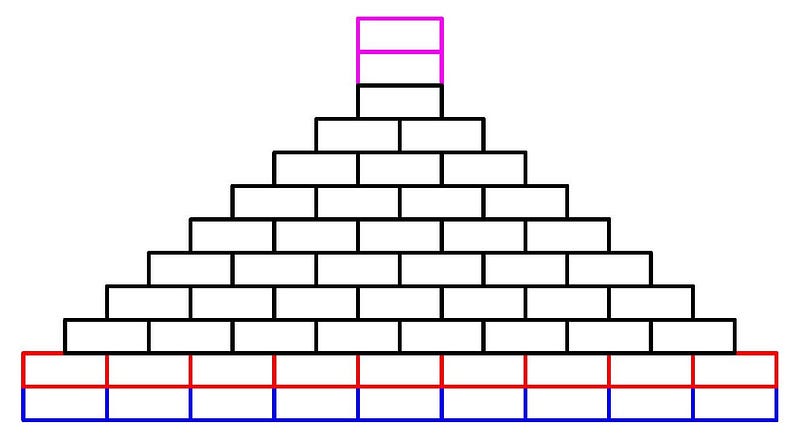
7. One building block is called a “truth unit.” A truth unit represents: (1) an input, (2) the processing of this input, and (3) the output of the process. The processing is broadly called a “test.”
The input can be a question or an assertion (since a question can be phrased as a range of alternative assertions). The output is “true” from 0% true (“false”) to 100% true.
The elements of a test can be parsed as: (a) select the test, (b) run the test, and (c) inspect the results of the test.
The (1) input, the three test elements (2 a, b & c) and (3) output are respectively called (1) Claim, (2) Test, (3) Evaluation, (4) Result, and (5) Verdict. Other truth units articles discuss these five components, and how truth units work in more detail.
You might ask “If a truth unit is a primitive unit of meaning, why is it called a truth unit, rather than something else? Like a meaning unit or a belief unit?”
First: because we refer to some of our higher levels of meaning as perception, reality, thought, belief, fact, truth, knowledge, etc — and of these, truth is popularly seen and used as the most encompassing. “Truth” is the most intuitive signifier for the entire span of meanings, from lowest to highest levels.
Second: the abstract structures we call perception, reality, thought, belief, fact, truth, knowledge, etc, can all be modeled in truth unit structures.
From an evolutionary perspective, the mind is built to answer the questions “what is going on? and what should I do about it?” The mind does plenty of other things, but the things the mind does to answer those two questions — deciding what is true, the “truth decision process” — can all be represented in truth units.
To be clear, the mind, in its truth decision processing, does not do truth units. Yet the truth decision process can be represented in truth units. You could think of truth units as “reverse-engineering” of the mind to produce a functional equivalent.
Impact of the 7 Postulates
These postulates took certain pivotal epistemological questions and issues off the table to allow for the construction of truth unit structures.
In the Lego® world, a lot of things (like life-size zebras) can be built with Lego blocks with more or less 90% accuracy. When accuracy closer to 100% is desired, Lego includes in its kits custom pieces that are not conventional Lego blocks. For instance, they might provide “heads” with faces painted on, which you can plug into an assembly of standard Lego pieces representing the torso, arms and legs.
Conversations about perception, reality, thought, belief, opinion, fact, truth, knowledge, etc, quickly get complicated in today’s world. I wish I had the epistemological chops to handle such conversations. (I’ve seen TV journalists stutter trying to explain what a “fact” is to MAGA politicians trying to distort reality.) But even if I did, I know other people wouldn’t sit still long enough to hear me out. I almost never explicitly invoke truth units in conversation. At most, I’ll ask “what’s your test for believing what you say is a fact?”
In more academic terms, truth units reduce epistemology to a study of meaning, with the premises:
(1) Everything in epistemology is built out of meaning. (2) Meaning is what the mind creates out of the contents of consciousness. (3) Meanings themselves are part of the contents of consciousness.
We can intuitively accept many of our meanings are based on other meanings. Truth units asserts that maybe not all meanings are based on other meanings above base level, but that assuming they are can have significant practical benefit.
You could say truth units set the stage for developing a “language-game” for talking about what’s true. Right now, the rules of the game allow anything to be called true. Only vaguely do the current rules specify field boundaries, scoring, illegal moves, and penalties. Without more specific rules, with anything being called true, we see civilization threatened.
Part 2 (this article being Part 1) will talk more about:
(1) What is seriously problematic in the current rules (2) The resulting threats to a civilized, effective society (3) How truth units language-game rules can contain it
With the rules rewritten, people can still call anything “truth” but the rest of us will have an easy calculus for scoring how meaningful their “truth” really is as truth.
Learn more about truth units: