
A Trophic Cascade in My Own Backyard
This is what happens when we mess with Mother Nature.
“The sun shines not on us, but in us. The rivers flow not past, but through us, thrilling, tingling, vibrating every fiber and cell of the substance of our bodies.” — John Muir
It began with a scurrying of little feet and a tidal wave of small furry bodies launching themselves from the top of my Australian Tree Fern out into the darkness. I shone my flashlight up into the fronds, and the reflective retinas of what looked like a million rats shone back at me.
I had hung several varieties of bird feeders — each filled to the brim with a different variety of special seeds and worms for the finches, chickadees, bluebirds, orioles, and the myriad of other avian varieties which frequent my yard — from the arching trunks’ branches. And, I had also provided my local squirrel family with a hanging basket of nuts, seeds and fruits.
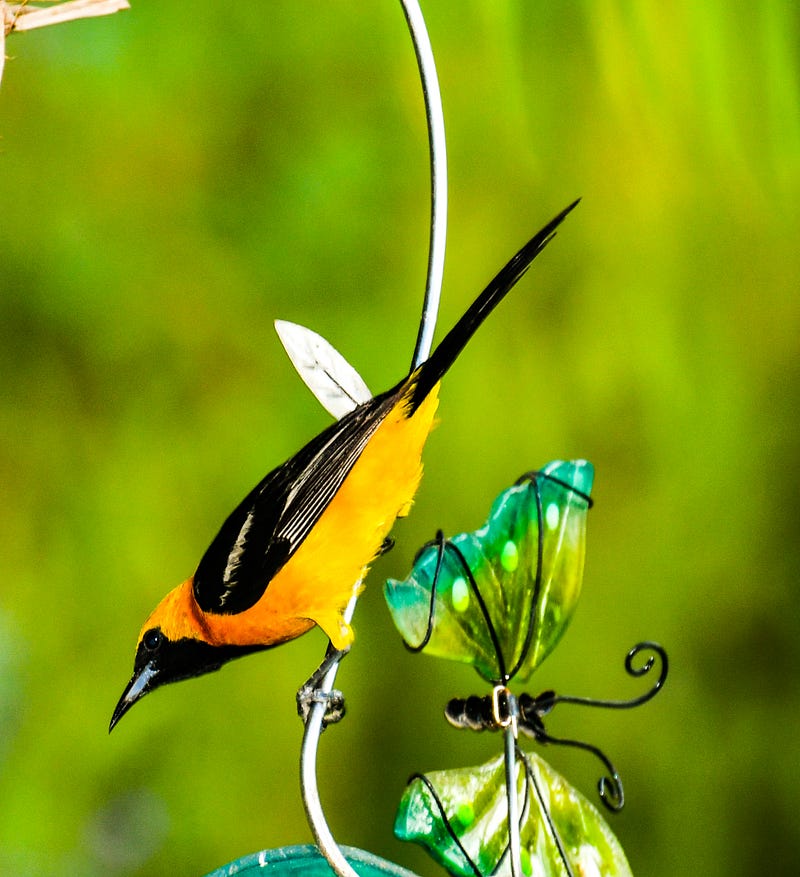
I had felt so good about caring for the wildlife in my own backyard. In some ways, it made me feel slightly better about the state of the environment and the plight of birds worldwide.
But what I had not anticipated was that I was feeding more than birds and squirrels.
I thought my feeders were being emptied very rapidly. But I didn’t put it all together until that moment when I stood there with the flashlight, watching rats scurry away in a frenzied panic.
So, I “rat-proofed” the bases of the trees in the front and back yards by wrapping them with aluminum (painted brown), which the rats couldn’t climb over. It sort of worked.
But, I also had not anticipated the racoons, who now were coming not only for a midnight feast of bird food, but were joining the rats in dining on all of the satsuma tangerines, which were just coming into season.
And then, the rats ate through the wiring for my sprinklers. And, they broke into my garage, which was where the bird food was kept.
After foaming over the small hole through which the wires for the sprinkler passed into the garage, and cleaning up the mess, we thought we had it handled.
I had also, at this moment, restrained myself to keeping only two feeders going, both of which had been doctored up with a variety of anti-rodent gadgets.
And then the air-conditioning stopped working. Yup — they ate the wiring! $850 later, it is all fixed again, and the wires have been encased in foam to prevent further gnawing.
But the absolute worst part of all of this it is that my next-door neighbor has now put out traps with poisoned bait, despite my pleas not to do this. So, sickened and dead rats are showing up in my yard daily.
My kitties, who had a safe, fenced-in, area that they could play outside in for just a little bit each day, are now in danger because of these poisoned rats.
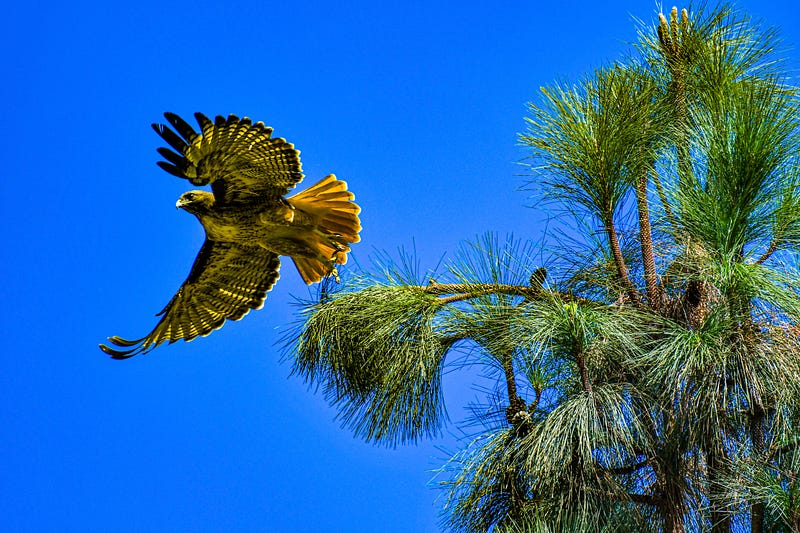
And so are the hawks and owls who live in the treetops on the hill behind my house.
And it just makes me sick to my stomach.
This scenario is what is called a trophic cascade.
When we, humans, interfere with nature’s patterns, whether our intentions are good or not, we frequently disrupt the food chains and throw everything out of whack.
Perhaps the best example of this is what has happened in Yellowstone Park. For years, wolves had been hunted and driven off of the land which they had roamed freely for generations. It was tragic for the wolves, but the truth is that the tragedy stretched further into nature’s treasure troves than anybody had even realized.
In 1995, the wolves were reintroduced to Yellowstone Park. The initial intent was to contain the deer and elk population, which had exploded. Their surging numbers, and the resultant over-grazing, had denuded the forests. Many of the deciduous species, such as upland aspen and riparian cottonwood, had been decimated.
The wolves not only began to bring the deer and elk populations back under control, they also counter-balanced the power of the coyotes, whose numbers had teemed in recent years.
This, in turn, revitalized the fox population (because there weren’t as many coyotes hunting them), which then affected the odds of survival of small rodents and ground-nesting birds, which in turn affected the consumption of roots, buds, and insects, which in turn affected the balance of local plants, all the way down to the fungi.
This cascade of effects rippled through to the beaver colonies too. More beavers meant more dams, which beneficially affected the course of the rivers, which then affected fish, otter, mink and waterfowl populations.
This cycle is called a Trophic Cascade.” I invite you watch this incredibly beautiful and touching video called “How Wolves Change Rivers.” It demonstrates how one small change can affect the course of a multitude of populations, and can even affect the course of the waterways and the land itself.
We, modern humans, most of the time do not even have a clue about how our actions affect the rest of the natural world.
But if we don’t start paying better attention, we will be the ones paying the ultimate price.
Perhaps one of the most urgent issues today is the loss of ancient stands of old-growth trees and rainforests, rapidly being lost to burning or clear cutting over most of the globe. These ecosystems contain wisdom and medicines which we have not even begun to tap into yet.
If we don’t stop this mass destruction, this knowledge will be lost forever.
What if some substance which could eradicate cancer naturally is to be found in those forests, and we, rashly and unknowingly, destroy it? If so, we will have no one to blame but ourselves.
Humankind, in its arrogance, has replaced many of these forests, originally composed of varying species of trees and mosses and birds and bugs, with monocrop stands of trees cleared of all undergrowth, bereft of the vital funguses and bacteria normally found in the forest floor.
We are only beginning to glimpse and understand how trees communicate with one another through underground “synapses” of bacteria. Just like the individual neurons in our own brains, these trees do not exist in isolation, and really should not even be looked at as independent entities.
There are “Mother Trees,” who feed young saplings through the bacterial web underground. And there are those Grand Dames, who, when they sense they are dying, send out all of their resources to their surrounding friends.
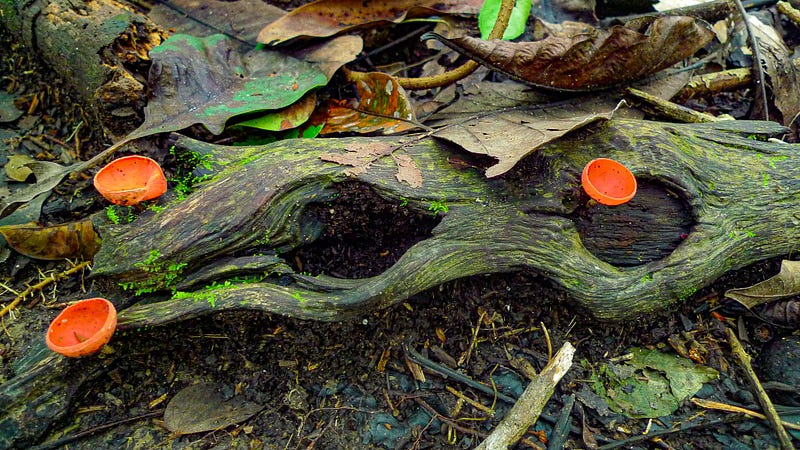
Trees also warn their neighbors through chemicals released into the breeze about predatory bugs. And, when trees fall to the forest floor, they become hosts to a multitude of creatures while also providing a rich humus soil for new seedlings. And the fallen angels also provide a newly-opened patch of light in the canopy for the juvenile trees, languishing in the undergrowth, to reach towards the sun.
Trees understand how to thrive together, living in symbiotic relationships with each other. If only people could do the same….
I recently listened to a TED talk by Suzanne Simard called “How Trees Talk to Each Other. ” I believe this is a talk everybody should listen to. She describes injecting radioactive isotopes into Douglas Firs and Paper Birches and then looking for those isotopes in surrounding trees. She speculated that the trees not only communicated with each other in one direction, but that the communication is actually a two-way conversation. And, she was absolutely correct!
They communicate underground with carbon and nitrogen and water and phosphorous and hormones through the “world wide web,” of bacteria and fungus running underneath a healthy forest floor.
She describes “Hub Trees,” the ancient ones, who hold the wisdom of the forest. And she analogizes cutting down those hub trees to removing the rivets from an airplane. One too many rivets and the whole system fails.
We need to save our Old Growth forests, repositories of knowledge which we are not even fully capable of understanding yet.
And when we do cut trees, we need to save the legacies, the Mother Trees and Hub Trees.
And we need to regenerate our forests with a diversity of species.
Mother Nature knows how to heal itself, if we only give her a chance.
The problem is that we may not be around long enough to see her once she is healed.
Like the fungal web under the forest floor, we are all connected to each other and to the rest of the natural world, and we are subject to the repercussions of the damage we have wrought.
In my own little corner of the planet, I am attempting to restore balance to the bird, rat and racoon populations by now only providing bird food in a place that solely the birds can reach. I, quite honestly, have no anger towards the rats. They are simply doing what rats do. And so are the racoons.
The trick is to live in synchronicity with them.
We need to start to understand that we cannot control nature. We are a part of nature. And, just like to so many species before us, we are not immune to extinction.
At this point in time, mankind seems to actually be mankind’s (and an infinite number of other species as well) biggest predator. In destroying our environment, we are setting ourselves up for our own extinction event.
Erika Burkhalter is a yogi, cat-mom, photographer, and lover of travel and nature, spreading her amazement for Mother Earth’s glories, one photo, poem or story at a time. (MS Neuropsychology, MA Yoga Studies).
Thank you for reading this story about a topic so dear and important to me. You might also enjoy:
Story and photos ©Erika Burkhalter. All rights reserved.