avatarBitcoinShrimps

Free AI web copilot to create summaries, insights and extended knowledge, download it at here

1267

Abstract

do the same thing.</h3></div> <div><p>learn.block6.tech</p></div> </div> <div> <div style="background-image: url(https://miro.readmedium.com/v2/resize:fit:320/1*RXMrBrAN_jbXYho6f2G23g.png)"></div> </div> </div> </a> </div><div id="b004" class="link-block"> <a href="https://learn.block6.tech/heres-an-easy-yet-very-profitable-way-of-trading-everyone-can-pull-off-8619ade679d3"> <div> <div> <h2>Here’s a simple, yet very profitable way of Trading everyone can pull off.</h2> <div><h3>Countless people seem to often overcomplicate things, so today I’ve pulled together a very basic but also very…</h3></div> <div><p>learn.block6.tech</p></div> </div> <div> <div style="background-image: url(https://miro.readmedium.com/v2/resize:fit:320/1*byU39OxuCAQ9p_BG4U3QOQ.png)"></div> </div> </div> </a> </div><h2 id="abc5">Draw those trendlines</h2><p id="4a24">One thing I recommend doing is color coding your trendlines. This might sound childish but is actually very helpful as there always are dif

Options

ferent trends, depending on the timeframe you’re looking at.</p><p id="ade6">My colour scheme:</p><p id="12e3">Daily Timeframe (1–14 days) = Light Green</p><p id="2c5a">Weekly Timeframe (14–30 days) = Orange</p><p id="7b60">Monthly timeframe (30+days) = Pink</p><figure id="fa6e"><img src="https://cdn-images-1.readmedium.com/v2/resize:fit:800/1*ZK8Sgnxp7tedY37pD9pDbA.png"><figcaption></figcaption></figure><p id="a833">As you can see you can actually have a Weekly downtrend while actually being in a daily downtrend, this is the importance of using colours to differentiate the timeframes.</p><p id="e847">Entry:</p><ul><li>Higher Low in a downtrend, OBV touches trendline</li></ul><figure id="aa2c"><img src="https://cdn-images-1.readmedium.com/v2/resize:fit:800/1*jE8jBq9qrUG1BJZ4HqQm8A.png"><figcaption></figcaption></figure><p id="4b11">Or</p><ul><li>Lower High (LH), OBV touches trendline</li></ul><figure id="60ac"><img src="https://cdn-images-1.readmedium.com/v2/resize:fit:800/1*UDwoS-1KLz5c8CYMgdFSGw.png"><figcaption></figcaption></figure><p id="294c">Exit is when the OBV trendline breaks.</p><p id="c757">Stop loss gets placed at recent swing High/Low (or closer if you want to minimize stop loss at the risk of getting caught out).</p></article></body>

A trading turtorial on On-Balance Volume OBV

Last week, I talked about the MACD, one of my favourite indicators to use and how I specifically like to use it. This week, I’ll show you another indicator which I very much like using
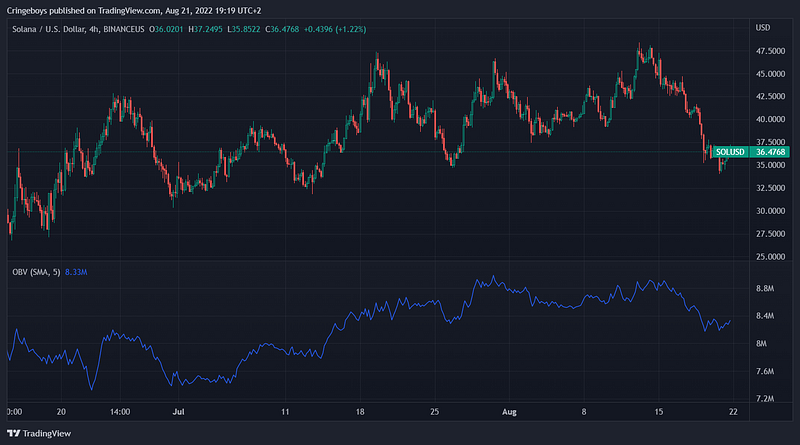
What does it do?

On-Balance Volume (OBV) measures the buying/selling pressure = volume behind the price movements.

How to trade it

It’s the same story is what I mainly do with regular price and also with MACD, I draw trendlines.

It’s so deceivingly simple but yet so effective.

If you’re not comfortable with drawing trendlines, I recommend you to check these articles out:

Draw those trendlines

One thing I recommend doing is color coding your trendlines. This might sound childish but is actually very helpful as there always are different trends, depending on the timeframe you’re looking at.

My colour scheme:

Daily Timeframe (1–14 days) = Light Green

Weekly Timeframe (14–30 days) = Orange

Monthly timeframe (30+days) = Pink
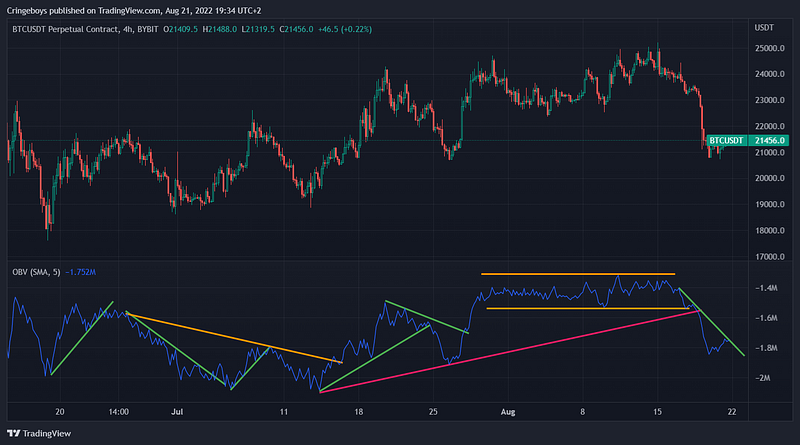
As you can see you can actually have a Weekly downtrend while actually being in a daily downtrend, this is the importance of using colours to differentiate the timeframes.

Entry:

  • Higher Low in a downtrend, OBV touches trendline
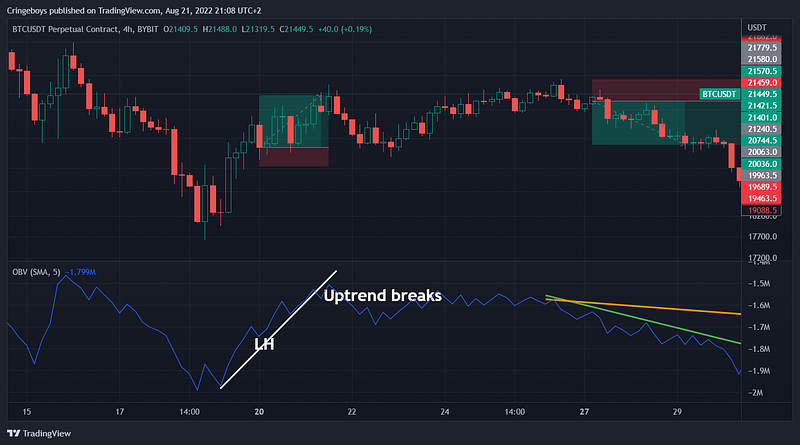
Or

  • Lower High (LH), OBV touches trendline
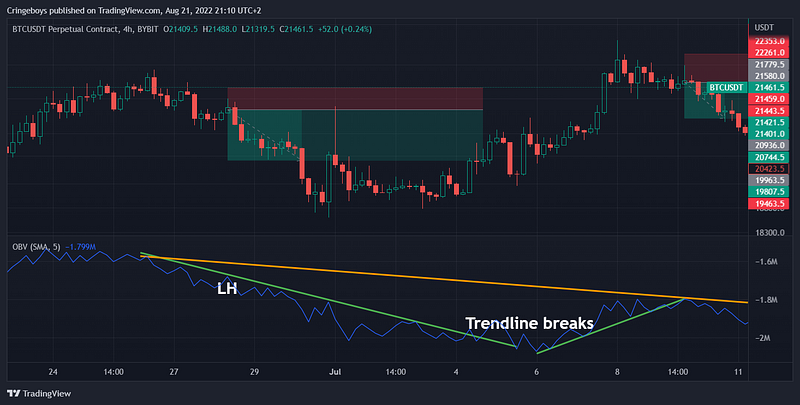
Exit is when the OBV trendline breaks.

Stop loss gets placed at recent swing High/Low (or closer if you want to minimize stop loss at the risk of getting caught out).

Finance
Trading
Crypto
Cryptocurrency
Bitcoin
Recommended from ReadMedium