A Thousand Little Acts
The racial angst of international travel during the Trump administration
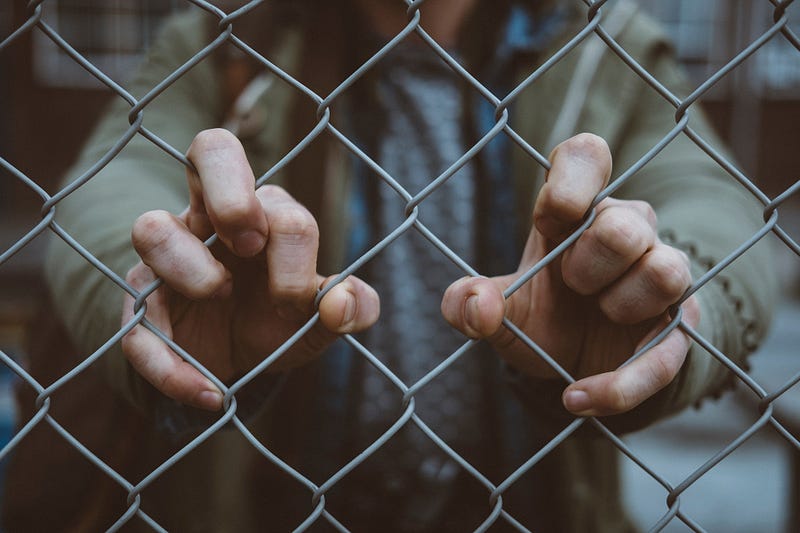
I pulled my wife aside where our two daughters couldn’t hear. I felt her muscles tighten. She fixed me with an intense look that reflected the same concerns that burdened me.
“We need to agree on something now,” I said. “If the border agents try to separate us from our children, there can’t be any compromise. We have to fight to stop them, fight dirty, gouge their eyes out, kick them in the groin, keep kicking when they fall, scrape their throats, and rob them of the ability to breathe.”
“You mean fight like they’re trying to take our children away,” she said without hesitation, her voice hard.
I paused, torn between the prospect of worrying her and a need to walk through the scenario. Familiarity speeds up your reaction time, and a fraction of a second could be the difference between holding your child close and watching helplessly as she is scooped up and carried away by a nameless man down a distant corridor.
“We will not recognize their authority to take them under any circumstance.”
“No.”
“There shouldn’t be an issue, but we have to be resolved.”
She nodded. If it came to that, we would be united. Scant comfort.
America in the era of child separation
Our travels had taken us to Peru, my wife’s home country. We tried to go every year so the girls could practice their Spanish and my wife could reconnect with her friends and family.
But this year, while we were in Peru, the United States government under the direction of President Trump began a policy of tearing children from the arms of their mothers at the border. Many of them were refugees guilty of nothing more than a desperate flight from persecution.
As a citizen of the United States, you’re told that you should be proud of your country. You’re indoctrinated with this belief. If you dare to say you’re not proud, you’re ostracized.
I watched as the government stole children, and I felt shame.
I will always feel shame for those actions. The actions of my country.
A history of bigotry
It hadn’t started with child separation. They’d been denying entry for certain people on religious grounds, there was even talk of stripping green card holders of their documents, and walking back the rights of naturalized citizens.
My wife had been naturalized under Obama. Trump seemed fixated on undoing everything that had been approved under the previous administration.
Theoretically we’d be fine, after all, as a privileged white male nothing bad could ever happen to me. My children were citizens by birth, but Trump had talked about removing birthright citizenship too.
Idle talk, or something else?
As of that moment, we were all in possession of proper documentation.
We should be fine.
We should be fine.
We should be fine.
Then again, they told us we had freedom of speech in grade school, right up to the moment you swore and got thrown into detention.
Police brutality
A cell phone video had been making rounds on social media which featured a police officer flat out lying about a driver’s legal rights. It came out later the driver was a lawyer.
“You can’t film me sir.”
“I’m afraid I can.”
The lawyer knew the law, but his knowledge didn’t do him a lot of good as he was dragged from his car, beaten, and arrested. Ten years from now he’ll probably reach a lucrative settlement, but that won’t make the news. Perhaps he’ll be walking by then too.
Laws are complex.
Customs agents have a starting salary of $27,000 a year.
Do they know the law?
Are they trained in the law?
How inclined will they be to recognize your rights in an era of bigotry?
How well vetted are they?
Child trafficking
Reports had been trickling in of children separated at the border who were sexually abused during their time of detention, by border agents.
Border agents ran a Facebook page where they altered photos to put the head of Alexandria Ocasio-Cortez onto graphic images of sexual assaults. They defended it as only a joke.
You’re in limbo at the border, a gray area where your rights are only a matter of legal theory.
Will the agents recognize them?
Nobody ever gets anything right. If you ask for a napkin at the drive-thru you won’t get it. Travel agents can’t copy your passport number onto your ticket correctly. Immigration officers spell your name wrong on your entry documents and because of another person’s mistake, you find yourself sitting on a plane going back to wherever you came from.
Nobody cares about getting anything right.
The day of the flight
We got off the plane in Chicago after a ten hour flight. We were tired, halfway awake, halfway in a dream.
I looked at my wife.
She looked at me.
We were nervous.
We should be fine. We were legal. We were privileged. I was making a big deal of nothing. I was overreacting.
Overreacting?
To the prospect of having your children taken away?
Immigration
It was dark at the immigration checkpoint. The line moved slowly. There was no chatter. I was reminded of cows at the slaughterhouse.
Finally the way was clear, an agent gestured at us. He looked at my wife and tensed. Her Latin heritage was obvious, as was my children’s. His eyes tightened and his jaw clenched. His hand, which had been resting on the keyboard in front of him, slid out sideways to the edge of his desk.
That is what’s called a furtive movement.
His hand’s pathway to his weapon was now clear.
For a brief moment, I imagined grabbing the gun and pistol whipping him until his teeth were broken stubs and the tension in his muscles evaporated into a lengthy death rattle.
Instead I smiled.
“Here are our documents, sir.” I offered him the blue passports.
US Citizens
At the sight of our passports, the tension disappeared and his hand returned to its initial position. But he wouldn’t make eye contact. Instead he cast each of us a cursory glance to make sure our faces matched the pictures in our documents. Then, he stamped the passports, pushed them at us, and waved us on. I caught the documents before they tumbled off the desk and we moved away.
A moment later we had our bags and were through the gates.
Outside, it was a regular day, sunny, blue skies. The kind of pleasant afternoon which could trick you into thinking you were not surrounded by danger.
No reason to panic
Businessmen hailed taxis. Families struggled with mounds of luggage. People brushed by each other on their way to distant terminals, sharing a brief moment of proximity before separating never to cross paths again.
Standing there, observing, it was impossible to tell which among them supported our government’s policy of child separation.
Around fifty percent, based on the results of the last election.
Indifferent.
Then again…
The invisible majority are content in the delusion that they were somehow protected from enduring the repercussions of this policy. Some might even go so far as to think there was justice in it, righteous authority.
How could they not understand that the only way to spare your own children from abuse is to work tirelessly to protect every child? You can never afford to turn a blind eye.
We don’t lose our humanity all at once.
It’s eroded through a thousand little acts of indifference.


