avatarJD Adams ~ Stories From the Mountain

Summary

The provided text discusses a personal theory proposed by the author's grandfather, linking rain, snow, and high humidity to altered human behavior due to the supposed disruption of the brain's surrounding energy field.

Abstract

The article titled "A Theory of the Effects of Rain on People" recounts conversations with the author's grandfather, who suggested that moisture in the atmosphere, including rain, snow, and high humidity, can affect human behavior. He posited that the presence of water in the air disrupts the energy field around the human brain, leading to a "short circuit" that causes people to act differently, often taking risks they wouldn't normally take. The grandfather, referred to as "Pop," was an intelligent and thoughtful man who, despite battling lung cancer, shared mesmerizing stories and theories with the author. While there are studies on how weather affects human behavior, Pop's theory is unique in its focus on the interaction between atmospheric moisture and the brain's energy field. The author reflects on the logic of the theory, considering the body's energy composition and the anecdotal evidence of people's driving behavior in rainy and snowy conditions, and invites readers to share their opinions on the matter.

Opinions

  • The author's grandfather was a wise and reflective individual whose opinions were always supported by reason or explanation.
  • Pop believed that rain and snow could lead to a "short circuit" in the energy field surrounding the brain, causing unusual behavior.
  • The author has observed people, including family members, performing risky actions while driving in the rain or snow, which seems to support Pop's theory.
  • The author acknowledges a lack of scientific studies directly backing up Pop's specific theory but notes that existing research tends to focus on temperature and the tendency for people to stay indoors during wet weather, which affects behavior in other ways, such as lowering crime rates.
  • The author is open to the idea that the human body and brain are surrounded by an energy field that could be influenced by atmospheric conditions, suggesting that there is some logic to Pop's theory.
  • The article concludes by prompting readers to consider their own stance on the proposed relationship between weather and human behavior.

A Theory of the Effects of Rain on People

Conversations with My Grandfather — From the Mountain

First let’s further define rain as rain, snow, and high humidity. The following was one of many discussions I had with my grandfather before he passed away in 1967. After school in Junior HS and into Senior HS I would head to my grandparents' house, visit with my grandmother on the front porch, and then head upstairs to visit with my Pop. That was our nickname for him.
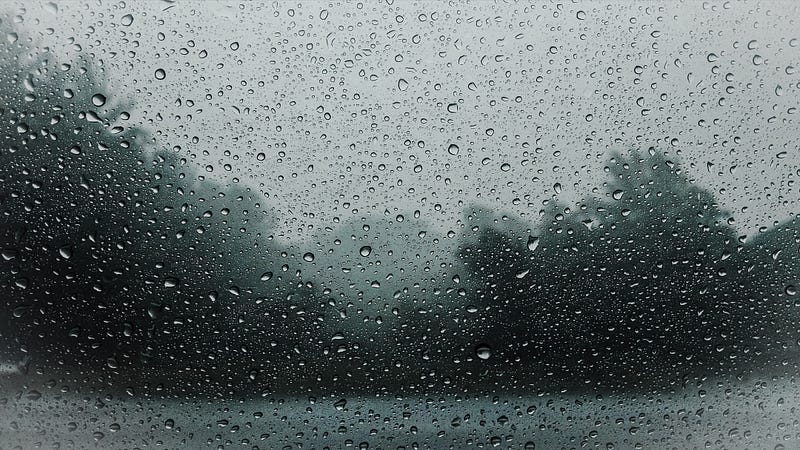
Photo by Joy Stamp on Unsplash

Pop was a very extraordinary man, very intelligent, opinionated, and thoughtful. And he was dying from cancer of the lungs. A tough old Irishman, it took four years for cancer to win out. When he said something though, he could always back it up with a reason or explanation. Our conversations, and the stories he told, were mesmerizing.

One such example of one of his theories had to do with how moisture in the atmosphere affected us. I haven’t really found any studies that can back up his theory, but then I have never heard of any such theory with the exception of my grandfather.

The theory is based upon his original theory of the human brain being encompassed by energy. Simply put, he surmised that electrical energy and humidity/water do not mix well. In essence, the energy around our brains would “short circuit” during weather that brought high levels of humidity.

The result was quite logical. Rain and snow would short circuit the brain and cause people to take chances, and do some things they normally wouldn’t do. There have been some studies but they focus more on temperature and associating rain with the desire of people to remain inside, thus lowering crime rates for example.

Pop’s example was driving an automobile in the rain. He correlated a rise in accidents to the rain’s effect on the brain. The logic was that people would tend to take chances and do things they normally wouldn’t do. I have witnessed people doing some pretty stupid things when driving in the rain and snow. My brother comes to mind.

To me, this all makes sense. Our bodies do consist of energy. There also is an electrical energy field that is a part of this that surrounds the brain. So the logic for this theory is there. What’s your opinion?

Brain
Energy
Rain
From The Mountain
Life Lessons
Recommended from ReadMedium