
A Terrible Thing to Waste
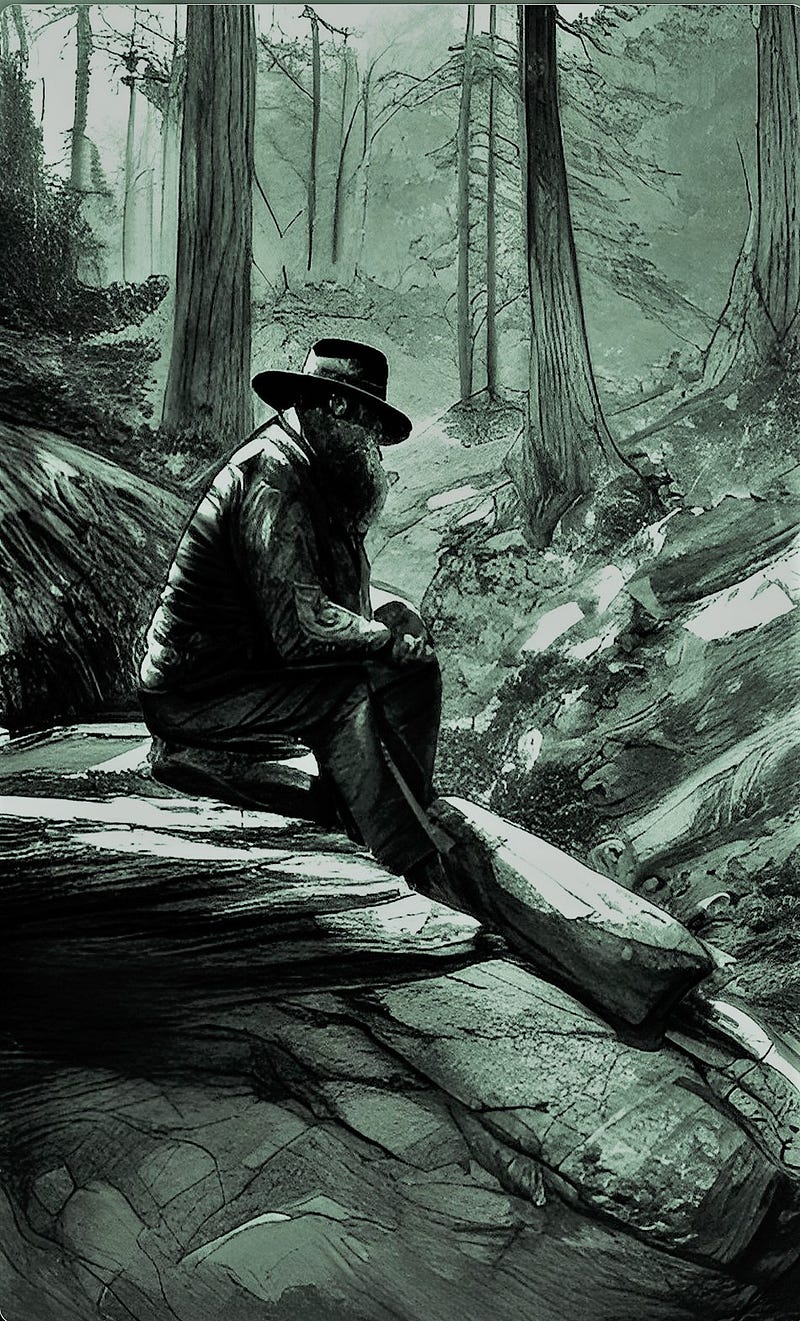
While walking in the woods, I came upon a small man sitting on a big rock.
“Hello, sir,” I greeted him.
“Hello,” he replied, “It is nice to learn so much about you.”
“Have we met before?” I asked.
“No, I do not think so,” he said.
“Then what could you have already learned about me?” I asked.
“I learned that you chose to walk in the woods today,” he said.
“Yes, I guess I did, but why is that so important?” I asked.
“Every choice that a man makes, prioritizing one thing over another, reveals either a compassionately evolving or selfishly decaying aspect of his heart and spirit,” he explained.
“Wow, I didn’t expect that response. That was intense, and a little unnerving. Are you some kind of philosopher?” I asked.
“I’m just a small man sitting on a big rock,” he replied.
“And I’m just a tall man going for a walk,” I said.
“And yet we are both part of the spiritual evolution of humanity,” he said.
“But not everyone believes in spirituality, or in spiritual revolution,” I said.
“Evolution, not revolution,” he replied, “and not just any kind, but the evolution and ongoing spread of mankind’s compassionate potential.”
“But I’m not responsible for all of mankind,” I said, “I’m just one human being.”
“Who isn’t?” he asked. “But are we not all part of a bigger picture? When you focus on and act upon your potential for goodness, you lift all of humanity as well, and when you act compassionately, either toward yourself or others, you are increasing the amount of compassion in the world.”
“Wow, that’s heavy,” I said, “almost as heavy as that rock that you are sitting on.”
“Infinitely heavier,” he replied.
“But I thought we were talking about priorities,” I said.
“We are,” he explained. “That which you prioritize reveals the depth of your character, the kindness of your heart, and the strength of your will, which then spreads to others.”
“I suppose it does,” I replied, “and the spiritual evolution of humanity is dependent upon our potential to increasingly spread compassion and wisdom in a way that no other creature on this planet can.”
“Wait a minute!” the small man said. “I’m supposed to be the wise guy here. I’m the one sitting on the rock.”
“Sorry,” I said. “I got carried away, but I think what you were about to say is that everyone’s priorities become ripples in the vast ocean of humanity, one that will either progress or regress in its morality and decency.”
The small man laughed. “Actually, that’s better than what I was about to say. I was just going to warn you that there’s a snake ahead on the left path. So be careful if you decide to go that way. Choose the right path.”
“Thank you for the warning,” I said, “and sorry about putting words in your mouth. I do it to myself as well.”
“No harm done,” he said.
“Choosing the right path sounds right to me,” I said.
“And people will know you thusly,” he replied. “In each new moment, you prioritize one thing over all other things that you could do, think, say, write, read, or focus on in that moment. Each choice exposes something about you.”
“That’s a lot of exposing that I never thought about before,” I said.
“But you will now,” he said.
“But aren’t there things that demand my attention, things that prompt me to immediately focus on them and respond to them instinctively, without any conscious prioritization?” I asked.
“You mean like a snake crawling up your trousers?” he asked.
“Up or down!” I said.
“Yes, but after initially reacting, do you not think about your next move, and then consciously choose it?” he asked.
“Perhaps, but I think that you are giving my thinking more credit than it deserves,” I said.
“What is something that you like to do,” he asked, “besides walk in the woods?”
“I like to write,” I confessed, “but don’t tell anyone.”
“Well, each time that you sit down to write, you have the option to write about anything at all,” he explained. “When you decide what you are going to write about, you are prioritizing that topic over hundreds of other topics that you could write about instead.”
“But most of the time, the first sentence that I write just comes to my mind. It’s not really a conscious thing,” I said.
“But then you choose whether to proceed with it, do you not?” he asked. “At that moment, you reveal that among all things that you could be writing about, this is what you want to write about the most.”
“This is freaking me out,” I said.
“Truth can do that,” he reminded me, “but truth would be a terrible thing to waste.”.
“But don’t our feelings compel or unconsciously trigger many of our choices?” I asked.
“They are part of it,” he said,” but they do not replace our ownership of the choices that we make and the actions that we take, all of which declare our priorities to the world,” he explained.
“But I could be misleading everyone,” I said. “It might appear that my priority is to help others or to save the world, but I might instead just be acting selfishly and deceptively, all while taking advantage of the goodwill of others.”
The small man laughed again. “Are there some things that you want to confess to me?”
“I prefer not to,” I replied.
“Well, the good news is that you chose to go for a healthy walk today,” he said. “You made it a priority, and it was a positive choice, one that is good for your wellbeing.”
“But what does that have to do with the compassionate evolution of humanity, or me, for that matter?” I asked.
“You are being kind to yourself, today. You are embracing peace and physical wellbeing,” he said, “not laziness, conflict, distress, or bad blood.”
“I understand that my choices reveal the priority that I place on mental, physical, and spiritual goodness, but my priorities can change,” I explained.
“And?” he asked.
“And good is better than bad,” I said.
“Ha! Well said, oh tall, walking man,” he replied. “Thank you for stopping by. I have enjoyed our chat today.”
“Thank you, oh small, sitting man on a big rock,” I said.
“Let us talk again, sometime,” he said.
“Yes, let’s make it a priority,” I replied.
-
© Randall Snyder


