A tale of transformation — from hierarchical to agile Organisations

I’m working at a medium-sized IT company in central Europe. My base is the city of Basle, which is at the border to Germany.
It was the evening of the 1. April 2017. Our local management told us that our organization is too slow and too segmented for the modern market. We need to change our way of work.
Before this day, we had a hierarchical organization with a location manager, department managers, and team managers.
When someone needed help, he had to go to his line manager and ask him if he can get someone for you. He was then in charge of finding someone. At the same time, he was responsible for the commercial part of the department too. In other words: He was a salesperson as well. This process was cumbersome and slow.
Further on, all information about the state of the location was accessible only to the management team.
Among other issues, this caused a detachment of the “simple worker” from the bigger picture and the targets of the company.
With the change of our organization form, we eliminated all managers and team leaders and departments. Now we have only our location manager, which reports to the company leadership.
Our Leader told us that now we have direct responsibility for our activities and our planning.
But he didn’t tell us how we should organize ourselves.
- How should we form teams?
- How should we define team leadership (not management, but real leadership)?
- How should we decide on questions when we don’t have any manager, which makes the decisions for us? This is an excellent question if you think about it.
We formed a team to find answers to these questions and many more questions, and we spend nine months discussing them.
We decided to use Holocracy (https://www.holacracy.org/) as a template and to extract all we need from the Holocratic principles and processes.
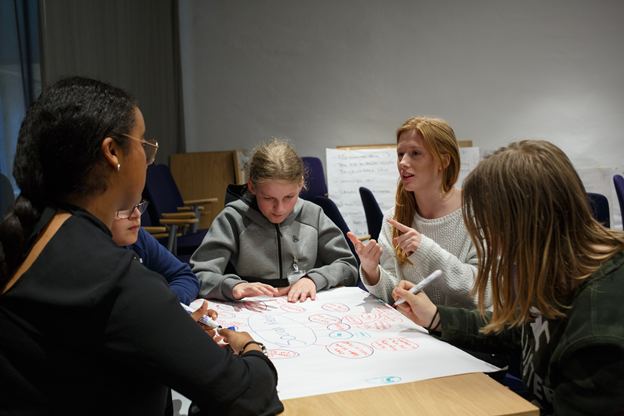
We were an inhomogeneous group of people:
- Two technical oriented guys (including myself)
- A Principal Consultant with a wide range of knowledge (professional and social)
- An assistant
- A Project Manager
- Another Project Manager with a philosophical background
- A Salesperson and former department manager
We learned a lot during these nine months of discussion, but we produced very little text as an outcome.
We produced a How-To document on how we should organize meetings without a manager and without someone who acts as a discussion leader (I don’t mean a moderator).
And we produced a nine-page long document, with the description of how we should organize ourselves.
As we experienced a lot of gossips (for example, because of the lack of output), we decided to dissolve our team with the publication of the second document.
We got applause when we communicated our dissolution to our colleagues. That was a real pain for us.
In the end, nobody used our document, as they considered it useless and too vague, to be of any use.
During the following months, we created a speech out of our experience and tried to tell this story to as many people as possible in- and outside of our organization.
My colleagues even delivered F.U.N. events (Fuck-Up-Nights, read here for more: https://fuckupnights.com/).
They concluded that we don’t need a rule book for our cooperation.
I don’t agree at all with this conclusion!
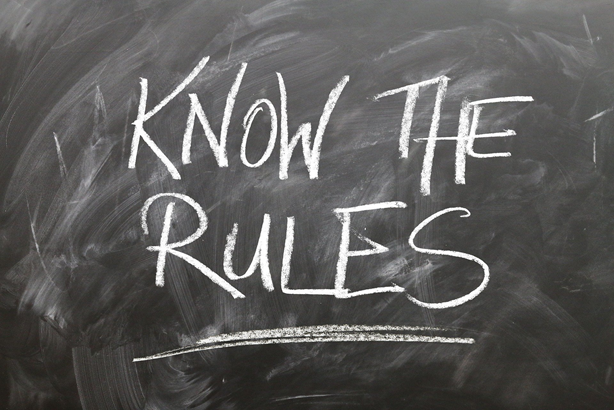
The reason why I don’t agree with this is that at the moment everybody does his job in the best way, he or she thinks.
Unfortunately, this can be very different from another person’s view. This discrepancy causes unnecessary friction in the collaboration.
As no general rules of conduct exist, every team needs to define rules, to define their collaboration. But they don’t realize that they have to create such rules of conduct and collaboration for each project.
Then, some colleagues are working mostly alone, believing that they don’t need to adhere to common-sense rules. These colleagues cause much more pain.
One lesson learned from the nine months spent with the discussions described above is how many things such an organization needs to define.
The following list includes the most prominent topics:
- How to meet
- How to solve conflicts
- How to decide
- What are the roles in the Organisation
In addition to this list, which is not conclusive, you need some high-level documents like:
- The Vision of your organization
- The Mission of your Organisation
- What the Organisation expect from each member
- Some general paper to describe the collaboration in general For example, “Use the best assumption possible when talking to a colleague.”
I must emphasize that all members of the organization must be involved in the approval process of the documents described above.
With the involvement of all members during the approval process, you can make sure that everybody supports the new rules. This support is vital for any organization.

The process of how the organization makes decisions must be defined as one of the very first rules to make sure that all further decisions are taken together.
I hope that my organization will find the right way and starts formulating the needed rules. We are wasting a lot of time and energy due to the lack of these rules.
As hope alone doesn’t change anything, I’m will start working actively in that direction again.