
WRITING
A Tale of Rejection
I was 8 years old and I wanted to be a novelist
It was the summer of 1971. I was 7 years old (almost 8, thank-you-very-much). I had just read E.B. White’s Trumpet of the Swan. Finishing a novel always brought a time of grief for me. The characters who had been alive for me during those chapters were now no more.
Was I capable of creating that same magic?
I decided to try. With lined paper and a pencil, I knelt at the coffee table in our living room. At that spot, I commenced my Magnus opus, which I would later call, The Artificial Grass Problem.
It was about a bird — a robin. (As at least one author of The Elements of Style would have surely agreed, anthropomorphic animals make the best protagonists.) This robin — Little Robin — lived in a tree in a suburban yard, where he would feast daily on succulent worms.
One day Little Robin comes home to find the entire lawn replaced with AstroTurf. With the help of a new friend, Squirmy the Worm, our hero overcomes this obstacle.
I’ll stop here. Lest I risk any possible future non-disclosure agreement with Disney, it’s best to avoid any potential spoilers.
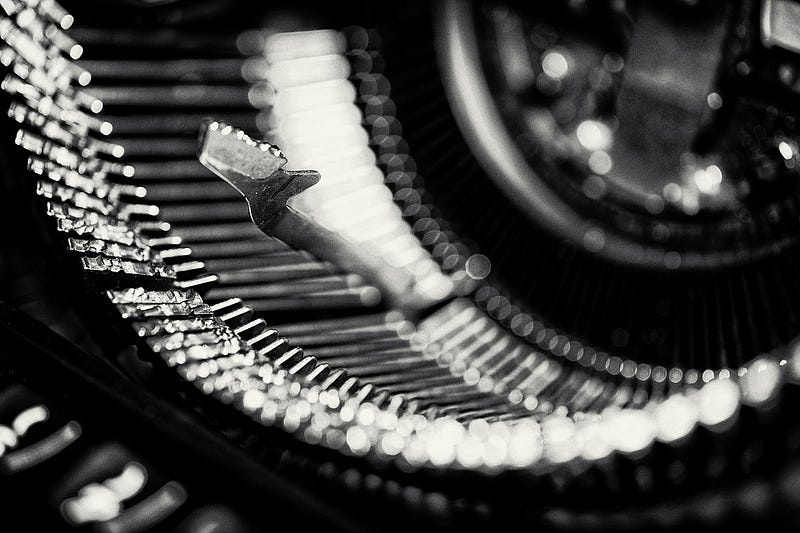
I hammered out my tome on an Underwood manual typewriter. It was 5 pages long, including illustrations, which my brother provided. I then folded up my pride and joy and stuffed it into a 3 by 5 envelope, which I addressed to the Readers Digest. I included a SASE and a cover letter which began like this:
Dear Sir or Madam:
I have a little story here that I want published.
After a few weeks, I became concerned about the fate of my manuscript. I penned a follow-up query and fired it off to the Editor. The next day, I received a form letter from Reader’s Digest. Regretfully they were unable to make use of my story at this time. “At this time!” Hope!
It was signed, Natalie.
Some days later, I received a hand-written note from Natalie. She had received my follow-up letter. Natalie hoped that my manuscript hadn’t been lost in the mail after she had sent it back. “Sometimes that happens, you know.”
Touched by her concern, I sent another note, advising her that, yes, I had received my manuscript — not to worry. I had now sent it off to another magazine that had recently published The Lorax. Perhaps they catered to a more suitable readership.
Natalie responded to the chit-chat in my third letter. And that’s how I, at 8 years old, became pen pals with a slush pile editor at Reader’s Digest.
Our friendship continued for years. My brother and I would each write her letters. Natalie would write back. Eventually, she got a promotion at Reader’s Digest. Then she married a scientist. She wrote us about his research. (He studied mucus. You can imagine what two pre-adolescent boys did with that information.)
I have since lost touch with her. I was the first to stop writing. My brother continued the correspondence a little longer.
I think about Natalie often. I wonder if she knows that I finally got published in Readers Digest! In 2017, they printed a one-paragraph anecdote for which they paid me $50. (You can read it here: Whose Mom is it, Anyway?)
That was a half-century ago. I didn’t grow up to be Stephen King. But maybe that’s the point. I was an ordinary kid, treated with respect by a member of the adult world. And that feeling of respect stuck.
So Natalie, if you are reading this, thanks for the encouragement!
Read Medium articles until the cows come home with a Medium membership. (If you use my referral link, I get a piece of the pie.)