
A Surgeon and a Transporter
Deployed and doing what I can to fight COVID-19
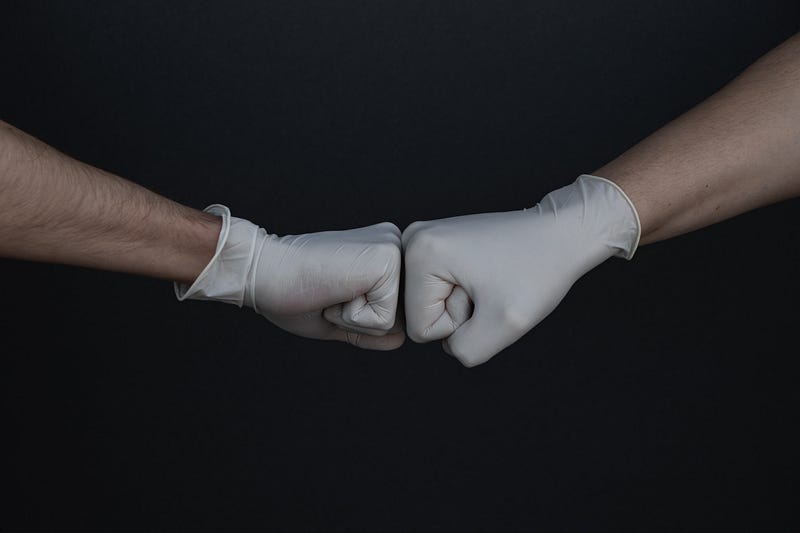
I realized that the masks and gowns aren’t that bad for me, since standing, sterilely scrubbed, for three , five, eight hours is not that unusual. The constant gloves and sweaty neck. But what is different is the N95 is a little tighter. And the elastic ear band really does hurt after hours and hours! Surgical masks that we wear in the operating room have a tie-on string so you can kind of fit it to your head. A tiny thing like that, and I had taken it for granted all these years.
When we’re all covered up, no one can tell you from Adam. On two occasions I’ve had a nurse yell at me after I transported a patient upstairs. I was in two layers of gown, full head gear and I am not tall, white, nor male and the immediate assumption is that I’m a (volunteer?) transporter who doesn’t know what I’m doing. It may be slightly true, I can drive a stretcher and move patients with the best of them, but yeah the IV lines and tubes and pumps can be a shitshow to someone who doesn’t usually handle them. But still. Yelling at me to hold on, to stop in the hallway, to not touch anything. It’s okay that you don’t know that I’m a surgeon volunteering to do this. But is it okay to talk to anyone that way? Even a transporter? No. Or a nurse from another floor? No.
I get that emotions are high here — I witnessed an event that put me ill at ease: a nurse screaming at an elderly patient. The situation was this: the patient was clearly demented and agitated at baseline, and his family had dropped him off because he hadn’t been eating much and thought he might have coronavirus. He sat up in his stretcher and tugged at his lines, his shirt, his sheets. He yelled for the nurse constantly but didn’t have any specific requests. When finally the nurse came back with some milk of magnesia (for his CT diagnosis of constipation, he also had coronavirus), he refused to drink it, saying ‘That stuff tastes like shit!’, pushing her hand away.
‘You have to, it’s for your own good,’ she tried.
‘No!’ he shouted again, making like he was going to escape the bed and the hospital all together.
Incensed, she threw the milky liquid down and stomped her foot. ‘You have to drink this, otherwise you have been here all this time for nothing! Can’t you see there are people dying in here? There are much sicker patients than you and I need to help them but instead I am standing here arguing with you! You have to take this medicine now!’ She fumed, chest heaving.
‘No,’ he said quietly, his hands waving aimlessly in the air.
‘Well I can’t waste my time with you!’and she stormed away, ripping off her mask and gown and telling the others nurses at the station that she needed a minute.
So yeah, the emotions are high. I think everyone’s tired and stressed and being asked to do more and more with less and less. Going above and beyond what can be asked of a sane individual. The housekeepers are being paged after every code. The respiratory therapists run around with vials of blood and ventilators. The x-ray techs coax distressed patients to sit up so they can slide the film board behind them. All of us milling about in gowns and masks, anonymous, synonymous.
But can I give a shoutout to the Uber drivers? Every night I ride with them, close to midnight, and they tell me that all the customers they’ve had, though fairly consistently, have been doctors and nurses (and other healthcare workers). One of them told me they drive by the hospitals and without fail, will get a fare. Most of us are working odd hours and it seems, in odd parts of town. Public transportation is slightly risky and it’s too far to walk. One man told me all of his friends’ latest conspiracy theories about the virus, then went into detail about the sports each of his three daughters played growing up. I encouraged this last part, always having been a big fan of athletics for young women. I know team sports played a huge part in my development.
Another driver told me all about being a young Greek man living in Australia, back in a more racist, machismo time. He studied and teaches Kung fu, and demonstrated with a resounding thwack! how he used to split marble slabs in half with his bare hands (I am unsure what would have happened had the armrest actually cracked). He once fought an Australian police officer. How it happened was that he had been stopped several times on different occasions at traffic lights and was called racist slurs and then punched for no apparent reason. One night he returned glumly home to his aunt, who finally suggested to him, ‘Why don’t you fight them?’ So the next time he was stopped, he met the sergeant, a beast of a man, known for being the biggest brute in his county, rough and rugged. The sergeant threw down his cap, and the challenge was accepted.
‘You have to start’, my Greek friend said calmly. So the sergeant threw a punch, and in response my Greek friend landed his fists in such quick succession that the sergeant’s jaw and ribs were broken and he laid on the ground, curled up into a ball, before anyone knew what happened. The Greek stopped, because his private principles prevented him from kicking a man who was down. The sergeant’s deputy, witness to the duel, took him to the hospital. Apparently the Greek and the sergeant became great friends after that.
‘Do you think he…respected you more because you fought him?’ I asked.
‘Yes,’ my driver answered, unequivocally. Yes.
I cannot deny it. Perhaps this crisis brings out the worst in us, but also the best in us, in the form of the stories we share. Times like these, unprecedented times like these, bring us together.
So yes, it’s okay if you mistake me for a transporter because they are what is most needed around here. Essential. Nonexpendable. Vital. Behind these masks are more than healthcare heroes, there’s the transporters and xray techs and housekeepers and Uber drivers, they’re the ones behind the scenes, the ones out there every day (perhaps because they don’t have a choice), the first to fall.