
A Student Handed Me Her Phone, and I Immediately Called Our Counselor
The scary reality of kids and smartphones
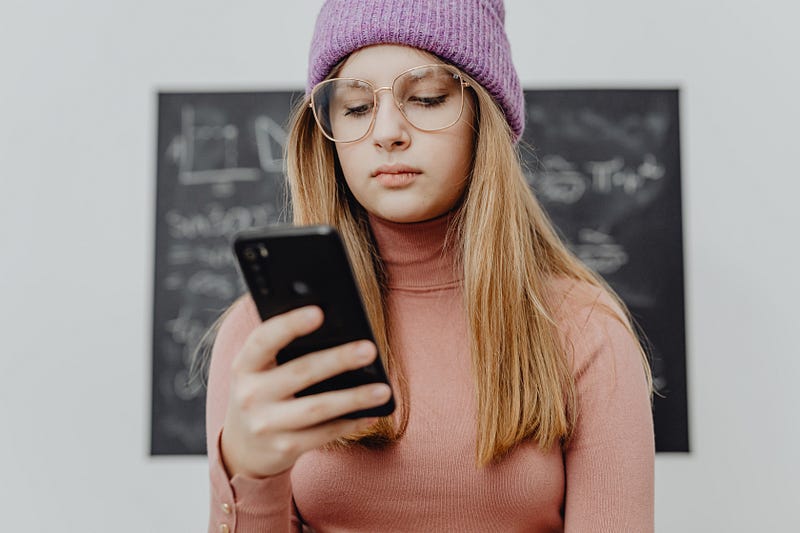
I work in a school with over 550 kids. I know as much as anyone how problematic smartphones can be for kids.
I’ve consoled girls who were crying in the bathroom because they were left out of a group chat. I’ve confiscated Apple watches when they were being used in the back of class to text inappropriate emojis about a teacher.
Like many schools, we don’t allow students to bring their phones. And yet they have a sneaky way of showing up inside our school walls every day.
But I was still shocked last week when I chaperoned an overnight trip for our fifth grade students and actually caught a glimpse of what a student had been doing on her phone.
Joanna has been on my radar for years.
She’s a sweet girl, barely 12 years old. She adorns her backpack with pink plastic keychains that clatter as she walks. She wears a friendship necklace around her neck.
Her mom is a single parent who struggles with mental health issues. Joanna is highly sensitive — she’s often self-conscious about her physical appearance, and she wears a coat with a hood indoors to cover her hair when she doesn’t like how her mom braided it.
I’ve noticed signs of depression in Joanna over the years, and I’ve tried to connect her with counseling services. But her mom has declined to fill out the consent form. Her mom thinks that any problems with Joanna can be solved by a stern talking to at home.
Lately, things have gotten worse. Joanna often writes on her papers and tests “I hate myself” or “I wish I was dead.”
She’s expressed suicidal ideations and even threatened to harm herself. Each time, our counselor performs a risk assessment and creates a safety plan. But Joanna’s mom still hasn’t consented to counseling.
When I planned our fifth grade overnight trip to an outdoor education center, I knew I would need to keep a close watch on Joanna.
Joanna was radiant that morning. Her mom had taken her to the salon to get her hair done for the trip, and she proudly flaunted her look without a coat or hood in sight.
But then, right before we boarded the bus, Joanna handed me her iPhone.
We had prohibited phones on the trip, but Joanna was anxious, and I’d agreed with her mom to let her bring it as long as I could keep it with me. We agreed to call her mom right before bed, but otherwise it would be safe in my bag for the trip.
When I sat down on the bus with Joanna’s phone in my hand, my heart dropped.
Her home screen image was an X-ray photo of a skull with a large metal weapon going through it. It was incredibly disturbing, and I wondered where on earth this sweet 12-year-old girl had even found an image like this.
That image made me do something I knew was risky.
I snooped.
My finger hovered over the photos app on her phone. I knew that clicking there could open up all sorts of problems. If she found out, I could lose the trust I’d built with her over many years. It could also reveal something I would have to address seriously, especially as a mandated reporter.
It could have been better not to know what was in that phone.
But I clicked, and I was shocked by what I saw.
In her camera roll were image after image of ideas for self harm. There were screenshots from TikTok of hands holding guns, of Clorox bleach being poured into a martini glass. There were images of pills being hidden inside children’s candy and shards of glass inside sandwiches.
And even worse, there were pictures she had taken herself. Pictures of self harm, of self-inflicted scratches and wounds on her thighs.
There was even a photo she took after cutting a boy’s name into her left thigh, with the knife she used to do it proudly held up for the camera.
When I saw these photos, I knew I had to act immediately.
I called our school counselor from the bus, and we agreed that I would keep close watch over Joanna during our trip. I also called her mom to ask that we meet right when we returned the next day.
I made sure Joanna’s bunk was close to mine, and I checked on her frequently. When we arrived back at school the next day, I met with Joanna’s mom privately. I handed her the phone, and I asked her to look through the photos.
Joanna’s mom sobbed uncontrollably in my office. I pushed a box of tissues across the table toward her.
She expressed guilt for not having watched over her daughter more closely. She thought she had been monitoring Joanna’s phone use, but Joanna had still managed to open a TikTok account, engage in frequent group chats with her friends, and find all sorts of images online that had likely worsened her self-harm ideations.
This little rectangle of shiny plastic and glass, an object that fit easily in Joanna’s back pocket, was a portal into all sorts of dangerous places that had enabled her depression and exposed her to images that were far too mature for her eyes.
Luckily, there is a mostly-happy ending to this story.
This reality check was the shock it took for Joanna’s mom to recognize Joanna’s need for counseling. It allowed us to move forward with the mental health services she desperately needed. And we helped her mom put additional protections on the phone that would limit her exposure to TikTok or other apps we didn’t want her using.
Though I’m confident Joanna is now getting the help she needs, the few minutes I spent with her phone in my hands left me more cautious than ever about the danger of unsupervised technology for our kids.
I’m a few years away from confronting this dilemma as a parent myself, but I know it’s coming soon.
Kerala Taylor wrote a compelling piece recently about her own 11-year-old daughter’s desire for a smartphone. She cited some alarming statistics, including that as many as a third of TikTok users may be under the age of 14.
Most of us already know about the potential damage of social media and frequent phone use in kids. But it’s also easy to feel powerless when confronting these monsters head on.
We struggle to control our own use of these little rectangular boxes in our back pockets. Controlling our kids’ use of them can feel insurmountable.
But if I’ve learned anything from my experience with Joanna, it’s that we simply have to. Our kids’ health and safety are at risk, and sometimes to a degree we may not recognize until it’s too late.
To an outsider, Joanna just looks like any other sweet 5th grade girl who loves the color pink and walks arm-in-arm with her girlfriends on the playground. But an iPhone led her down a dangerous path that she kept hidden from the adults in her life.
Snooping on Joanna’s phone may have been risky, but it was a risk I’m glad I took that day.
Thanks for reading! Sign up here to join my newsletter and learn when I publish next.