Health & Fitness
A Strong Base for Your Nature Pyramid
What’s at the bottom is at least as important as what’s on top

The pyramid is a trendy way to give recommendations. It makes them catchier. There’s the new food pyramid. There are pyramids for sleep, physical activity, social-emotional learning, and mindfulness, among others. And then there’s the nature pyramid, sometimes called the nature connection pyramid, which is the focus of this article.
That’s a lot of pyramids to keep track of. These pyramids are intended to make things simple, so let’s keep it simple. The nature pyramid is designed to answer Tim Beatley’s question, “What amounts of nature, different nature experiences, and exposure to different sorts of nature, together constitute a healthy existence?”
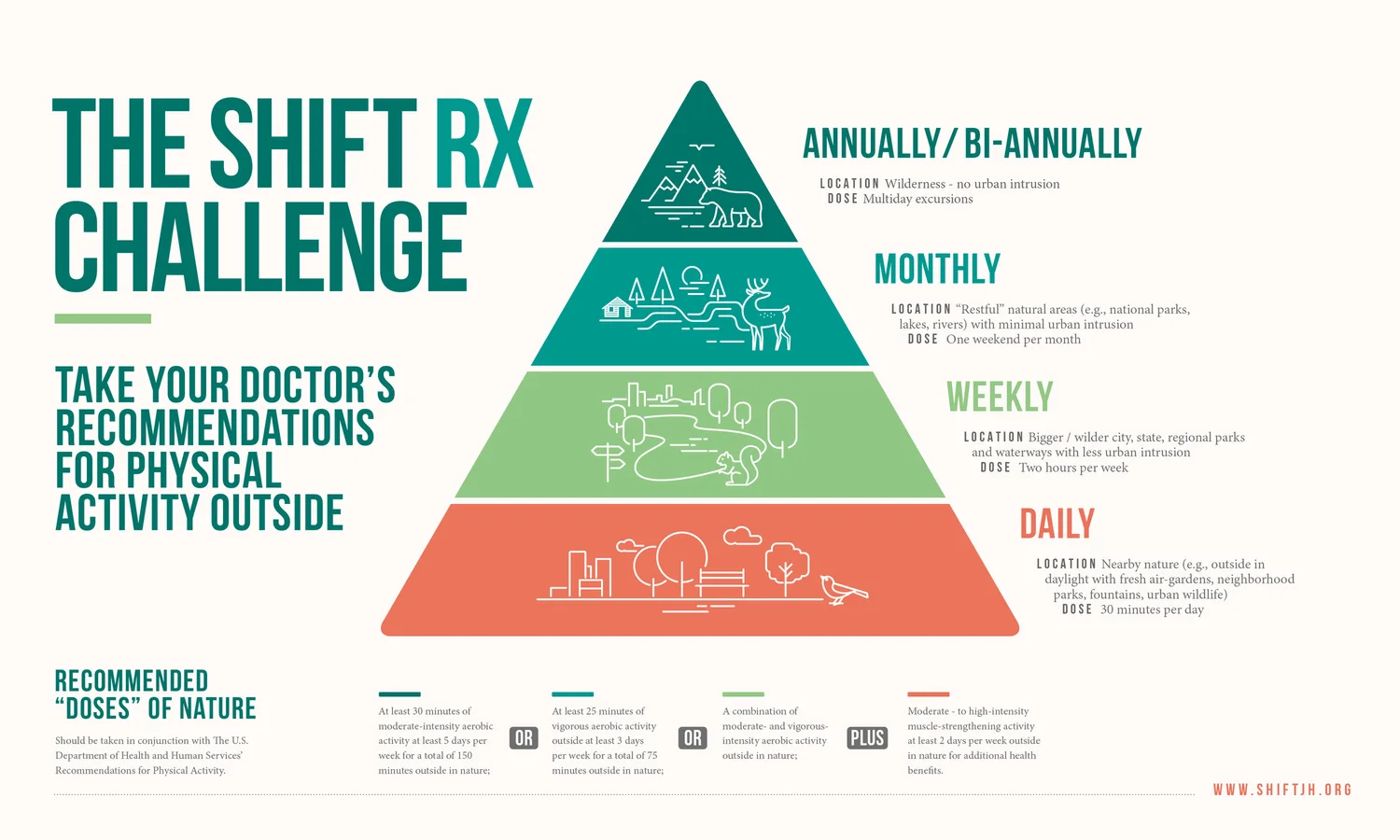
The simple answer is we should visit local parks, green spaces, and blue spaces on a daily (or near daily) basis, spend a couple of hours in larger natural areas once a week, have more lengthy experiences in wild places once a month, and — at least once a year — we should spend several days in true wilderness.
Research shows following this simple prescription can optimize our physical and mental health. It can lower stress and the incidence of disease. It can increase feelings of well-being, creativity, and connection to others.
What amounts of nature, different nature experiences, and exposure to different sorts of nature, together constitute a healthy existence?
Along with diet, sleep, and exercise, time in nature is now recognized as one of the four pillars of health, In fact, spending time in nature is closely intertwined with the other three pillars. For example, sunlight produces serotonin and reduces stress, which in turn helps with sleep and regulates appetite. And, of course, spending time outdoors pairs well with exercise.
Since the 1970s, there’s been growing awareness that food is medicine. We now know that time in nature is medicine too. Time in nature is even being prescribed by doctors. It's the best kind of drug — unlike other drugs, its side effects are healthy ones.
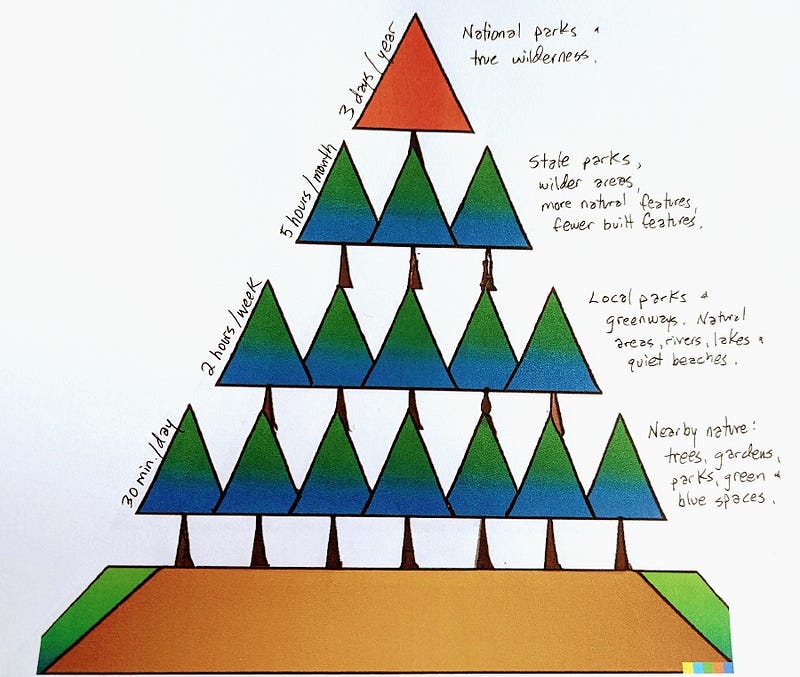
The top of the nature pyramid, represented by longer periods of time in wild places such as national parks helps reset our brains by lowering stress levels, amping up the production of alpha waves, and boosting creativity and feelings of well-being.
In the case of the food pyramid, the stuff at the top (fats, oils, and sweets) is what we should use only sparingly. With the nature pyramid, the stuff at the top is the best stuff — and we probably can’t get too much of it. In fact, modern life usually prevents us from getting enough. It’s reassuring to know that the stuff at the base of the pyramid — daily exposure to nature, even in small doses — has many of the same benefits and does everything from reducing blood pressure to strengthening our immune systems.
The good news is that short periods of time in green spaces, even having lunch outside under a tree, helps form a strong foundation of good health. For example, even a short walk in a local park exposes us to the benefits of sunlight, nature sounds, phytoncides, and the fractal patterns present in nature.
So print out this graphic of the nature pyramid, tape it to your refrigerator, and get to work on building that base. Start small. Take your lunch or your workout outside. Take a longer walk in a greener space. Even once a week. You’ll be glad you did.