A Story of Modern Slavery
In the Words of a Former Slave
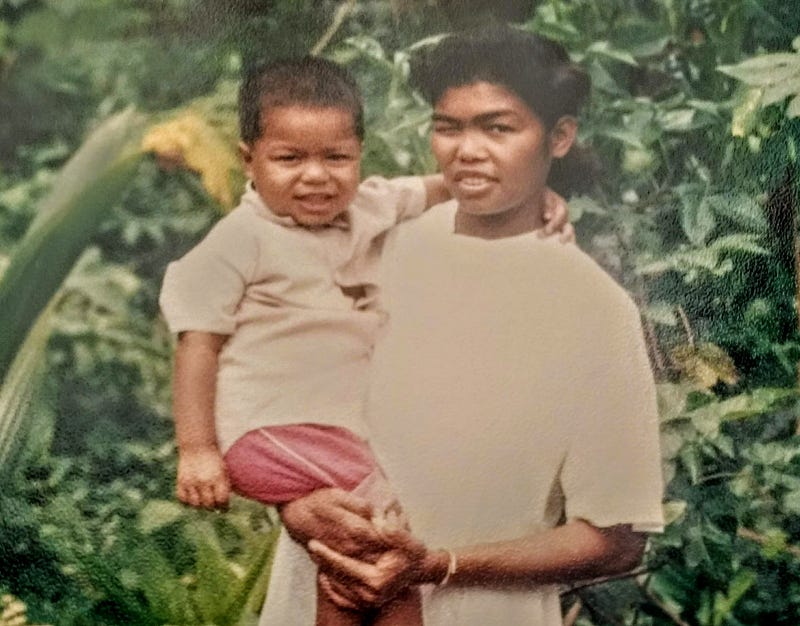
Josie Buendicho-Conchada told me how she lived as a slave in the household of a wealthy Manila lawyer. She began the tale referring to herself as a “servant.” The details soon painted a more sinister picture. Her account below is condensed.
I recorded the conversation with her permission and translated it to English. The interview took place in the hamlet of Tamala (rhymes with Shangri-La) in General Nakar, Quezon, Philippines. We spoke Tagalog. My native tongue is English and hers is Umiray Agta. My comments to her appear in italics.
I was the first one [of four] to arrive there at our master’s place. My duties basically were to take care of the children, clean the house, do laundry, cook rice…
I spent a year and a half there, it seems. I really ended up crying way too much. I wasn’t used to — wasn’t cut out for that sort of work… I was only fifteen then, so I was just a child. I didn’t know anything yet.
Our work here in our place wasn’t like the work in Manila where things are cleaner. It wasn’t like this life we are living here.
There were a lot of us together there but we couldn’t talk freely. For instance, if a bunch of us servants were telling stories among ourselves, no matter what we were talking about, somebody would notice us talking. One of the children we were taking care of would say, “Oh, Big Sister, they are telling stories.”
Just like that you would be punished. You would receive a beating. They would hit you until your shins really turned black and blue from it.
Later, maybe, you would be doing laundry, and you would also have a child to watch over. Then, if you made a mistake with the laundry, and any of the laundry was still soiled, that brought on a beating too.
Cleaning the house, it was like there was a guard for the house help, watching over them. And if you made a mistake you got beaten again.
When they went out to watch a movie or take a walk, they would lock you in the house. There was no — If it burnt down then how — We would have died there inside. We could not get out because it was locked up. The gate was locked too. How could we get out?
It was like a jail.
Yes, it was like we were imprisoned there.
The owners of that house sound like bad people.
Bad, bad, bad. They were so rich. I tell you, rich people really look down on poor people.
Sometimes I would go to sleep at one in the morning and wake up at three or four. They made me sleep sometimes with nothing but a curtain for a blanket. That would be my only covering, and I would be cold. I would be sleeping on cement without even a mat.
When I woke up around four o’clock, I would clean the house, cook rice, do laundry. After that was bath-time. Then I had to take care of the child.
I was staying with one family, and my companions were staying with the man’s parents. One morning over at their place… This old man, who was their master, laid down a hundred peso bill in his office. That was where he laid down the money. This [newly arrived] child saw the money, took it, and hid it.
They had a lot of different servants there. He asked all of his servants about it. “You all come here, because I have something to ask you.”
They said, “What is it, sir?”
He said, “Which one of you took the money?”
These women denied taking it. They said, “My gosh, it was not us, sir.”
He said, “Oh, who else would take it? There is nobody else here to take it. You are the only ones here.”
Nobody admitted to it. He made them all squat, sir, for a beating — all the various servants. These were long-time servants that he made squat. They even had to pull down their pants for it. They even had to pull down their pants when they squatted.
That is what really made me cry so many secret tears there at my masters’ place. I said, “My Jesus, sir, maybe that is what will happen to me too, and I really won’t be able to take it that way, sir — even being naked, even squatting, even being beaten. Oh Jesus!”
Now, these companions of mine, like Aunt Sanang, they saw it too. And she was even just new there too. She saw that these companions of hers were being made to squat. And the other ones from here, like Uncle Jose’s foster child, Romeo’s deceased wife, they said, “If that is what our master is like, we will escape.”
They said they would escape. I was there when they were planning it. Sanang, Asyong’s wife, said, “If you will come along, Josie, we are going to escape tomorrow night.”
I said, “I can’t come along with you because you know that I am really locked up in our house. I can’t get out. Only my finger will fit out through the openings in the cement or the iron grills…”
The ones who were planning to escape woke up around three o’clock. They had stolen the key from their woman master. They said they stole it.
They told me to steal a key too. They said, “You come on now and do it!”
For me it was really a scary thing when she had been brave enough to steal that key.
They opened the gate to the entrance there by the kitchen. Then they put the key back where it belonged, and they left the house. When the two of them opened that gate, it made a lot of noise, so they took off running. The path they took was through a muddy vegetable patch.
The household broke into a noisy uproar when they went out to look for the two servants who had escaped. One of [the remaining house help] spotted Aunt Sanang. She really sank down into the mud. All that was sticking out was her nose. Just her nose — she had really sunk down into it.
The wife, the former wife of Uncle Romeo, walked along the street. She didn’t leave the road. She got picked up by the car. She got picked up in the evening. She was caught again by our master. Then the other…
But it was like being a slave, not a servant.
Yes.
It was really like being a slave!
Yes sir. We were like slaves there, not like servants. And they should not have looked at us that way, sir, if we were servants.
Now the other one, Aunt Sanang, was well hidden. I was sleeping all this time because they thought I might try to go along with them if they woke me up.
Aunt Sanang, after her companion had been caught, walked along the road. She was spotted by the police. She was apprehended, and they said, “Well, well, maybe this is a burglar.”
They took her away, and Aunt Sanang cried. Aunt Sanang said, “Please don’t take me like that, sirs, because I am really just escaping from my master.”
She was all covered with mud, sir. All of the clothes she had been carrying, sir, were covered with mud…
The police were carrying clubs, and they threatened to hit her. She said, “Don’t hit me, sirs, because I really haven’t done anything wrong. I am not a thief, sirs, and the truth is really that I live in the [name deleted] household.”
“Ah, yes, those people are really rotten… Since that is what’s going on, we will help you. Where are you from?”
[The police got her to a bus and sent her to Infanta. From Infanta one reached Tamala by outrigger or by walking over a mountain.]
She was still scared. She was terrified they might catch up with her in Infanta. She said they might catch her there, but she finally got back here…
Those of us left behind at the house were in a tighter spot than ever. They thought we might try to escape like the others.
I said, “I want to escape too, but I really can’t do it. I can’t escape because what would I do? I don’t know anything about Manila…”
Now we were really under guard. Even if I just had to go outside to buy some food at the market, Big Sister went with me. She went along even though I was the only one buying things. They said it was because I might escape.
But I was still able to read the Kapalaran sign on the bus that came here to our place. I said, “Oh, if only I could get on it, but they don’t give me any money. They just buy me clothes and things for my body.”
You had no salary?
I had a salary. I just didn’t know how much they were paying me… It wasn’t even enough to cover my expenses for living with them…
When we were taken to live there, our master gave [the person who brought us] about five hundred pesos… So I said, “Maybe she just sold us.”
She really did sell us because she never came back to see us again.
I said, “Gosh, I really can’t take this life of mine!” That is the sort of thing I said.
You were really slaves!
[section omitted]
My other companions decided to escape too. Then there was nobody left in my life who I knew, so I was going it alone in this really big house. I was still taking care of the child.
The ones who escaped went out through a terrace way high up. They tied together some bed sheets and went out a window where they could barely fit their heads and bodies through. It was so high up! When we looked down from up there, the people just looked tiny even if they were adults.
After they got through, they went to the place next door where our neighbors lived. They went inside, and the owner of the house saw them. He said, “Oh, where are you coming from? Why did you come out from way up there?”
The two who were escaping fell down. They said, “Please sir, we really need you to hide us because we just can’t take our master’s punishments any more.”
He said, “If that’s how it is, then come on into the house and I will hide you and look for a new place for you to stay…”
So I was really on a solo flight there in that huge house. I said, “Jeez Oh Man! I can’t take this.”
My work for my master — when I was done working at my master’s place, which was just a little place that was being rented, then I went next door to work in this really big house. They didn’t even give me so much as a peso for it. I said, “This is really tough!”
Still a slave.
Yes… One evening I was doing laundry and I seemed to be getting sleepier and sleepier. I fell asleep doing laundry right there in the bathroom. I fell asleep with my hand around the soap. What woke me up was hot water being poured on my back.
It startled me. I asked, “Why, Big Sister?”
She said, “Why were you sleeping here in the comfort room?”
I really got drenched there, sir. I got showered with hot water from a thermos. I was soaked.
I said, “Big Sister, why would you do something like that? What I did wrong was such a little thing. Your ought to just say, ‘Don’t do bad things like that any more.’”
But no, right away I got soaked with the water.
I thought, That’s it. I am really going to fight back. That’s what I was thinking.
I told myself I could really kill a person… But no, the compassion within me prevailed. Compassion for myself as well as for my fellow human being.
I really did want to take revenge because I had even been attacked with a hot iron. I had been ironing clothes earlier the same day that I got soaked with the hot water — in the morning…
My master said, “Iron my clothes.”
So I ironed the clothes — I wasn’t very good at ironing yet — and apparently one of the pieces of clothing got a little burned. Just a little bit. It wasn’t even the clothes she wore to go to work, just the everyday sort of clothing.
Well, my skin ended up getting scalded! Gosh! When she put the hot iron up to my face.
Ah!
Yes. I used my arm to ward it off and my arm got hit with the iron.
I said, “That’s enough , Big Sister, this punishment of yours for me. If you have even a little compassion left in you for me, I can’t go on like this for you. Find somebody, madam, who will do a good job here for you.”
Josie told her masters, “Please send me home… I really miss my mother.” They relented. First, they made her train a replacement. Then they put her on a bus to Infanta. She made it to Tamala in time for Christmas.
Josie’s humanity inspires me. She felt compassion for people who abused her. Like any normal person, she also felt like killing them. Their abuse had pushed her beyond the restraint of fear but not of love. She challenged them as moral beings. They let her go.
Josie Buendicho-Conchada’s account first appeared in:
Byers, T. R. (1999) Incorporation of Umiray Agta foragers into the stratified social support network of a small community in the Philippines [Doctoral dissertation, State University of New York at Buffalo].