
Nature Photography, Whales
A “Spyhopping” Humpback Whale with her Calf
An unusual sighting in Maui
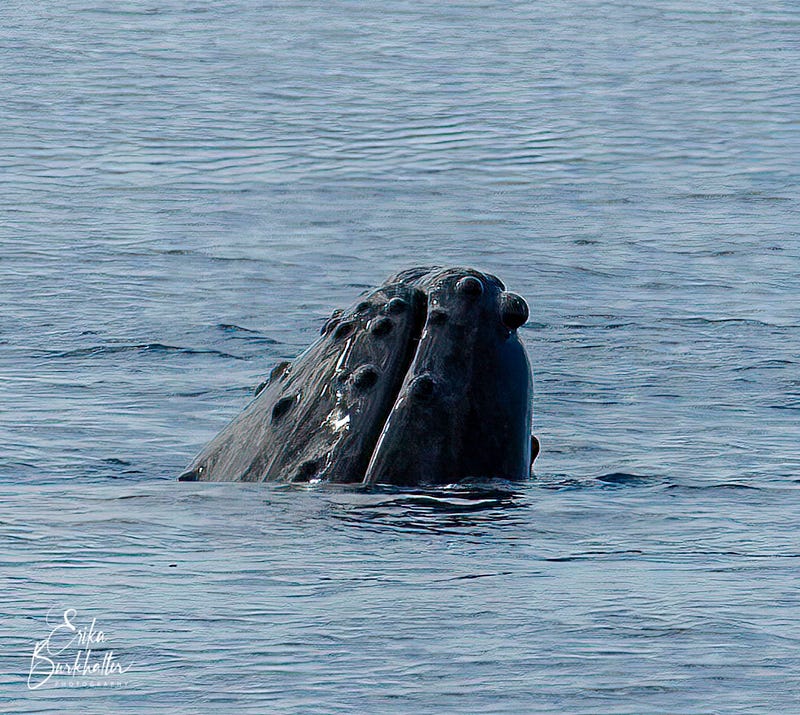
While whale watching in Maui a few weeks ago on a Pacific Whale Foundation cruise, we spotted this somewhat unusual sight while leaving the Lahaina Harbor. It’s called spyhopping. And it’s just what it sounds like.
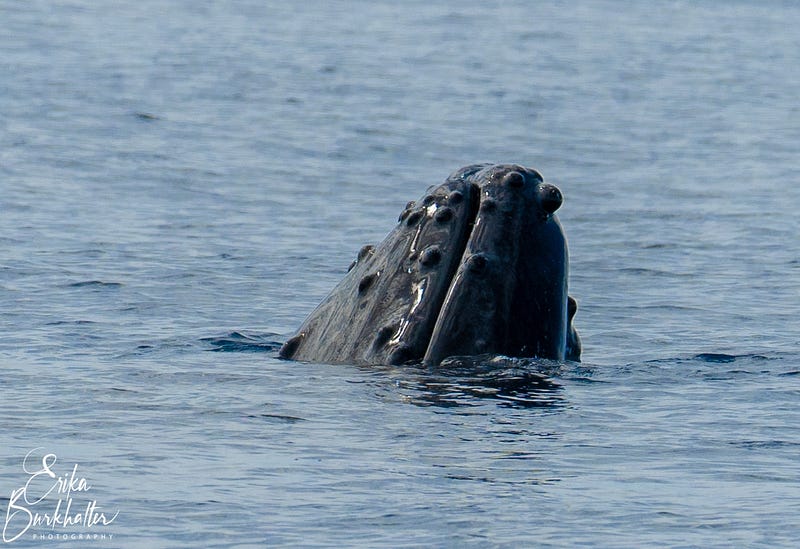
This Humpback whale was, literally, spying on us, most likely because her baby was right there with her and she wanted to keep her eye on things. When cetaceans (whales and some sharks) do this, they hover, sometimes with their eyes above the water, sometimes with their eyes just below the surface. They can hold themselves in this position for a while — thirty seconds or more — and they use just their pectoral flippers to keep them afloat.
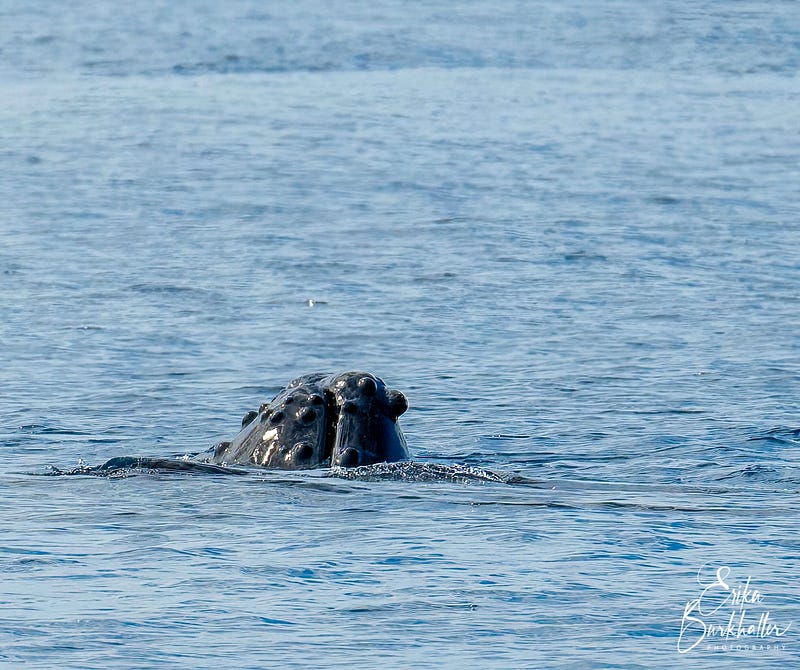
While this behavior is somewhat unusual, we felt extra lucky to watch the little calf frolicking all around her. You can see him just breaking the surface of the water in the photo below.
Humpback whales migrate from the krill-rich waters of Alaska to Hawaii to mate and to give birth to their babies. The newborns do not have as much blubber as the adults and they need to be in warmer waters for their first few weeks.
While the babies nurse from their moms to get big and strong enough to make the journey back to the northern waters, their parents are actually fasting the entire time they are in warmer waters, because there is no krill for them to eat there.
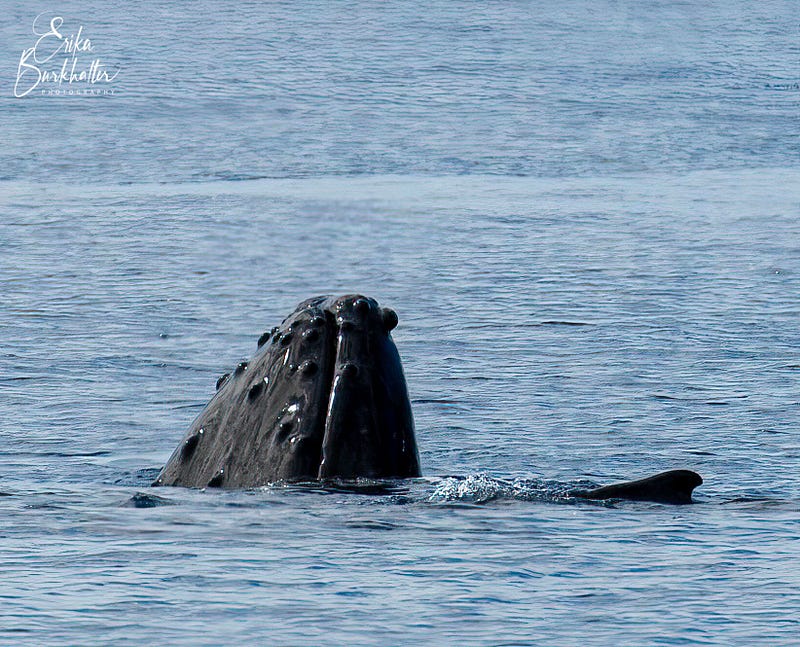
In the next photo, the baby has circled back around once more, but mom still has her eye on us.
Adult Humpbacks are normally around forty-six to forty-nine feet long (females are about fifteen percent bigger than the males) and babies are about fourteen feet long at birth.
As you can see, these whales have bumps, or tubercles, on their heads. Believe it or not, these are actually hair follicles connected to a sensitive set of nerves. These tubercles are thought to sense temperature changes in the water and the speed at which the whale is swimming. They likely also help with the hydrodynamics of swimming by increasing lift and decreasing drag in the water.
As you can see in the photo below, even the babies have these bumps.
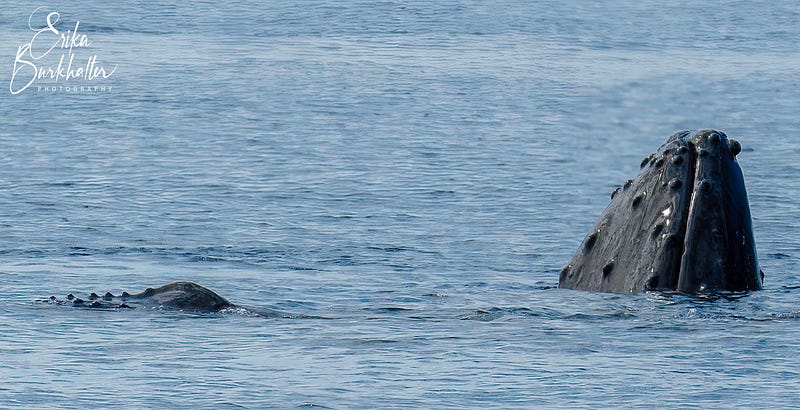
This baby, probably just a few weeks old, was having so much fun swimming in circles around mom. In the next photo, you can see he’s made another pass. His “hump” is more out of the water this time and you can get a sense of how big even the baby “giants of the sea” are.
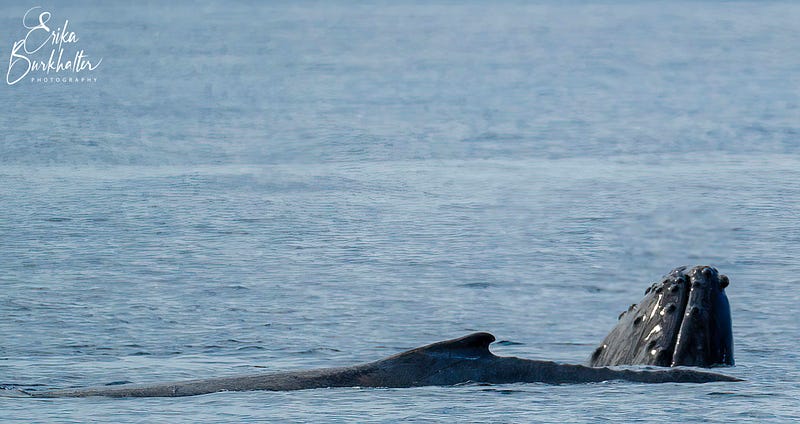
After a couple of minutes of play time, the baby dove and we didn’t get another glimpse of him. But mom stayed vigilant until we were safely out of sight.
Thank you to the Pacific Whale Foundation, a research and educational group based in Maui. PacWhale Eco-Adventures are based on nearly four decades of marine research and ecotourism experience. Every trip is led by certified Marine Naturalists who provide a truly unique, educational and fun adventure at sea.
Erika Burkhalter is a yogi, neurophilosopher, cat-mom, photographer, and lover of travel and nature, spreading her love and amazement for Mother Earth’s glories, one photo, poem or story at a time. (MS Neuropsychology, MA Yoga Studies).
You might also enjoy:
If you’re interested in keeping up with my poems, photos and musings, you might consider subscribing to my stories.
If you enjoy reading on medium, you can help the many talented writers here by joining. It helps to support the arts and to keep us writing!
And, because I’ve had a few people asking lately, if you’re ever interested in purchasing a photo, just leave me a note.
Story and photos ©Erika Burkhalter. All rights reserved.


