avatarAllisonn Church

Summary

The website content describes a spring art and poetry practice, encouraging readers to engage with spring-themed poetry and create art inspired by the verses.

Abstract

The article outlines a creative practice that involves reading visual poetry about spring and creating artwork in response. It recounts the author's personal experience with this practice during the early pandemic, where structured homeschooling included reading poems by Mary Oliver and William Wordsworth to their child, who then illustrated the imagery evoked by the poems. The article suggests using various mediums like paint, chalk, or collage and invites readers to submit their poetry-inspired art to the "Blossoms of Beautiful Minds" publication on Medium, under the subtitle "Wednesday Wings Week #7." It also provides links to spring poetry available online for those who may not have poetry books at home.

Opinions

  • The author values the combination of poetry and visual art as a meaningful educational activity.
  • Engaging with poetry in this way is seen as flexible, allowing for both literal and abstract interpretations in the resulting artwork.
  • The practice is considered beneficial for embracing the beauty of the season and can be a source of joy and inspiration.
  • The author encourages sharing personal experiences with this practice, suggesting a community aspect to the activity.
  • There is an appreciation for the accessibility of poetry and art resources online, making it easier for people to participate in this practice from home.

A Spring Art & Poetry Practice

Wednesday Wings Week #7
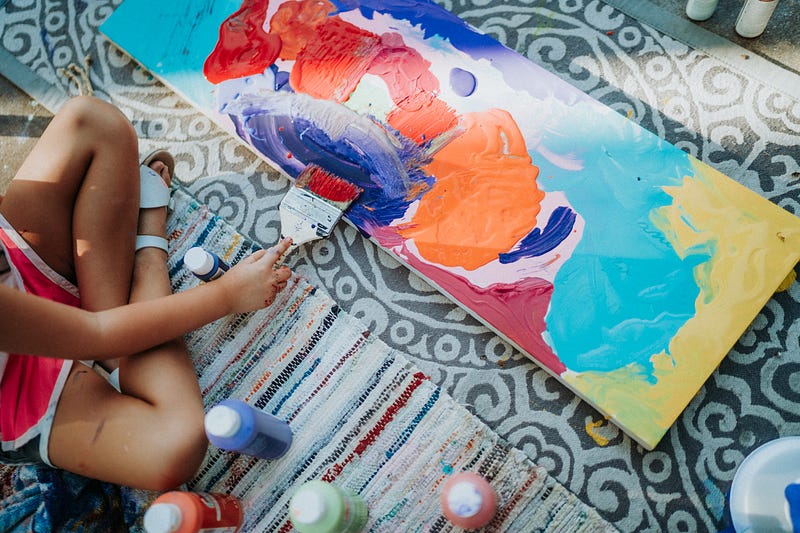
Photo by Brittani Burns on Unsplash

In March 2020, the early days of the pandemic, we tried to make our homeschool experience resemble public school. We learned in more formal ways, with planned activities and collectible outputs.

At that time, I foraged through my poetry books and gathered up the most visual verses about spring. My son sat on the sofa with a pad of blank white paper and a box of colored pencils, and I read to him.

The goal was for him to draw whatever images came to mind while he listened to the poems — these could be literal or abstract, illustrative or inspired.

My favorite was his response to Mary Oliver’s poem, “Spring.”

On a different day, we followed a similar protocol but with colorful chalk in the driveway. I read William Wordsworth’s “I Wandered Lonely as a Cloud” in the fresh March air.

If you don’t have many (or any) poetry books at home, you can use the internet. You can even find some beautiful spring poetry on Medium, like this one by Tulip Chowdhury:

Or this heartfelt description of springtime joy shared by Tesie Mills:

You or your child can use any medium you like to create art inspired by poets — paint, chalk, collage. You can focus on feelings, key words, or building a narrative. Anything goes!

If you’d like to share the poem that you read, the ensuing art, or a story about your experience with this practice, please submit it to Blossoms of Beautiful Minds! Use the subtitle Wednesday Wings Week #7.

Happy reading, happy creating, and happy almost-spring! 🌸

Nature Learning
Education
Unschooling
Homeschooling
Poetry
Recommended from ReadMedium