Leadership
A Special Forces Soldier Taught Me How Leadership Works in Three Words
Being in the presence of the right person can be worth more than a six-figure college education.
Six months into being a police officer, I nearly shot a man. I was about to enter a mobile home for a reported home invasion. The caller was hiding in a backroom while the suspect held his friend at knife-point.
Being in a rural area, backup was still a few minutes away. I didn’t want to go in, but it also felt wrong to wait. I was scared, but I had to go in. Luckily, as I swung the door open, I saw him.
A man covered in tattoos was hiding behind the front door. He was holding a crowbar, and not in an “Oh look what I just found” kind of way.
It was more of an “I’m not going back to prison” kind of way. I stepped back and drew my gun as he came out from behind the door. He stepped toward me, almost close enough to use the crowbar.
After a short pause, he put the crowbar down. Ugh, that was close. Had I not seen him through the crack of the door, I don’t know how that call would have ended.
It would be the first of a lot of close calls.
I became a police officer at 22. After a few years and a few incidents like this one, leadership was a skill I possessed. Well, you know what the adage says about assumptions.
A chance encounter with a future mentor showed me the truth — I didn’t know the first thing about being a leader.
A Chance Encounter, or so I thought…
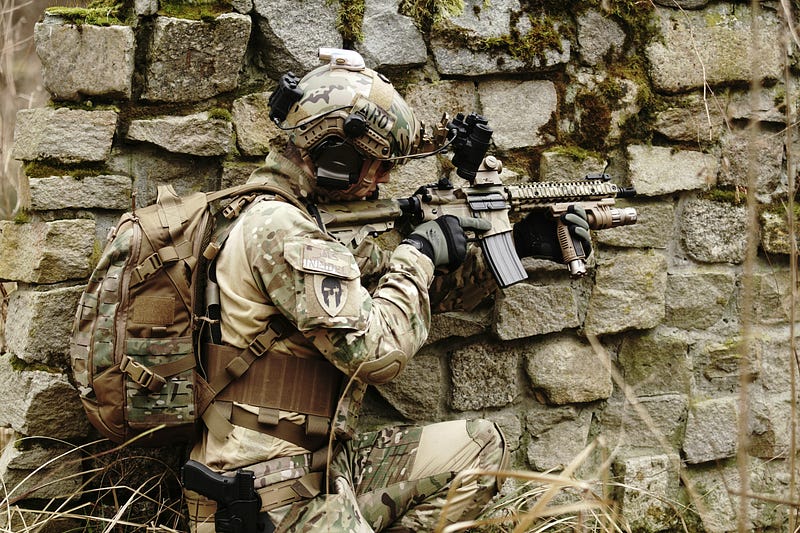
Chris was a special forces soldier who was a legend in my police department. Unassuming and kind, you’d never know he’d spent years of his adult life-fighting wars in countries most Americans can’t locate on a map.
One night, as I was running out of our barrack to handle a burglary call, Chris appeared out of nowhere and asked if he could accompany me. Knowing I could use some backup, I told him to hop in.
He was a stranger to me, but off we went. We never caught the suspect, but Chris and I got to know one another that night.
I didn’t think much about that meeting until a few months later.
The Beginning of My Education
Chris reappeared at the barrack where I worked and pulled me aside. He was great at this, appearing almost out of thin air and without warning.
“Josh, are you interested in working street gangs with me? We work when and where we want. It’s good work, but we hustle.”
Chris ran a small unit that worked the cases you signed up to work. They targeted the most violent offenders. Gang members, drug traffickers, and fugitives. Chris also had the privilege of hand-picking who he wanted in that unit.
I couldn’t believe he asked me. Fifty other police officers deserved that spot. I didn’t deserve it, but accepted his offer.
I didn’t know it then, but Chris not only knew who I was, but his riding with me that night to the burglary call wasn’t an accident.
It was an interview. He wanted to see for himself how I made decisions. He wanted to know how I treated people and how I conducted police work.
I’d go on to work with Chris for three years. He would disappear for long stretches — off fighting wars only to dive back into police work when he returned.
Yet he didn’t tell war stories. Chris didn’t tell me how to lead; he showed me. I watched him run investigations, handle confidential sources, and write search and seizure warrants. All while leading the unit.
It all seemed effortless for him.
As Rosalynn Carter said, “A leader takes people where they want to go. A great leader takes people where they don’t necessarily want to go but ought to be.”
Chris was the first to speak up in meetings, regardless of who was in attendance. It could have been the president of the United States; if Chris had a question or concern, he would voice it.
He heaped praise on his people often and in public. He fought for them behind the scenes without ever telling them.
If the unit failed at something, he took the blame. When it succeeded, he gave us the credit.
He cared about me and the other men in the unit. He knew the names of our spouses and children and what we ate for lunch. He understood our strengths and worked to fix our weaknesses.
If there was bad news to be delivered, he gave it to you immediately and directly.
The Burdens of Leadership
Chris called me late in the evening one night after we’d worked an early shift.
“Josh, I just wanted to tell you that my marriage ended today, and I’ll be out tomorrow.”
We were close friends, but those words rocked me. I knew his wife, and I knew Chris wanted me to hear it immediately and from him, not the rumor mill.
He never told me, but I suspect his dedication to work left little time for anything else, including a home life.
Chris made consequential decisions immediately and owned them, no matter the outcome.
While we knew that Chris nearly always had the answer, he often asked me how I wanted to handle a situation and supported my answer without hesitation.
He knew the law and our policies. More importantly, when situations became critical and our safety was in danger, he knew when to stray from those policies at the risk of reprimand.
Department policy is good, but it only anticipates some possible situations. Knowing when to break a rule may be the hallmark of the most influential leaders.
To this day, Chris is the most capable leader I’ve ever worked with. He had a right to be cocky, even arrogant. Instead, he was always the student.
He never spoke of his accomplishments or ability, only of what he could have done better.
His ability had one unintended consequence — it laid bare all the ways in which I was not him. I cared about my career, my goals, and my promotions.
I wasn’t a leader at all.
Leadership Lessons
I would go to several leadership schools after my time with Chris. I even obtained a degree in management from Johns Hopkins, which focused on leadership.
After all that, I still learned most of my leadership knowledge from Chris. Being his friend and colleague was more valuable than a six-figure education.
We over-complicate leadership. Chris taught me that leadership isn’t found in a classroom, a textbook, or a conference where you pay thousands of dollars to listen to some self-professed guru preach at you.
It’s found in being highly competent in your craft and ensuring your people know that you care about them. Chris did it by valuing my opinion and putting my needs and wants ahead of his own.
He was always truthful, even when the news wasn’t good.
He was also fearless in his ability to ask questions and give his thoughts. He would stay late or come in early if needed, simply laughing it off and calling those things the “burdens of leadership.”
Years have passed since my time with Chris.
I would later quit my detective job, walking away from police work. I needed something new.
While I lost my love for the job, I always remembered the importance of Chris’s lessons.
Mission, Men, Me
Outstanding leadership is simple, but it isn’t easy.
It requires honesty, caring, and willingness to adapt, all while putting the needs of your people above your own.
You do that day after day, year after year.
Chris showed me the way leadership works in three words, and in this order:
Mission, Men, Me.
Want weekly tips on what’s working for me on Medium? It takes ten seconds — sign up here.