
A Society That Puts Equality Over Freedom Will Get Neither!
A society that puts freedom over equality will get both!
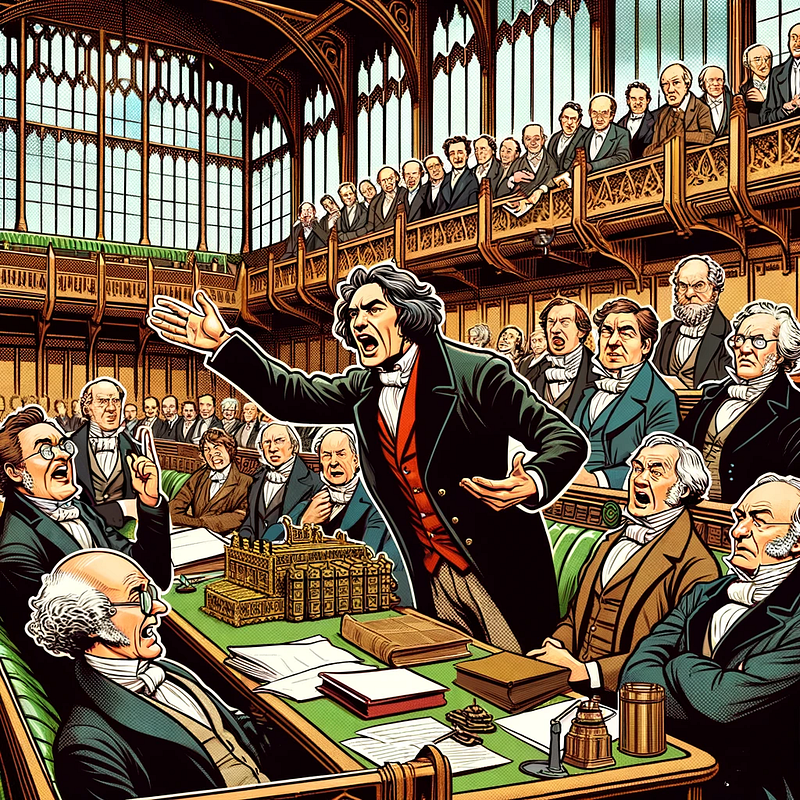
The above is a quote from John Stuart Mills.
And it rings very true today where the amount of virtue signaling is deafening. We are not accused of prejudice as long as we are accusing the other person of prejudice.
We are OK to say no to one person in the name of everyone being accepted.
The whole wokeness culture makes no sense. It is inherently self-contradictory. It does not withstand even a basic intellectual analysis.
For example, if we are supposed to accept everyone and everything. Why do we need to control the narrative? Why do we need additional controls on free speech? Why is it always the wokist left that demands more control over the narrative?
The debate between prioritizing equality or freedom has been going on for a very long time. It is a cornerstone of political philosophy and governance. The tension between these two ideals is not only theoretical.
Where a country chooses to be on the scale has a very tangible effect on its policies, laws, and cultural norms. And the decision where to be on that scale varies significantly between different parts of the world.
John Stuart Mill’s view was the following. A society that prioritizes freedom over equality will achieve both. He also says that the reverse may lead to neither If this is the case it is of course a profound observation. An observation that should have important practical consequences.
It especially warrants further exploration, considering today’s political leaning toward wokeness.
The Paradox of Wokeness
An intense focus on equality defines the rise of ‘wokeness’ and political correctness. Personal freedom on the other side — is not seen as such an important quality of a good life.
The woke movement wants to ensure that every group feels equally respected. However to do that the movement is willing to impose restrictions on what can be said and not. Many argue that these restrictions infringe on freedom of speech and expression.
It’s a paradoxical quest. One where the strive for inclusivity often leads to exclusivity in other forms.
Historical Perspectives
Historically, political figures have grappled with this balance. Thomas Jefferson famously said, “I prefer dangerous freedom over peaceful slavery.”
This highlights the inherent risk of freedom. Which is the risk that people might say or do things that are disagreeable or wrong. However, the alternative, as per Jefferson’s view, is a kind of bondage. Both physical and intellectual.
Political studies often highlight the risks of initial moves toward additional controls. The controls are put in place in the name of equality, or to limit the“dangers” of freedom. Such societies are initiating a move that often ends up with a totalitarian society. Once you start on the route of additional “controls” it seems difficult to reverse it.
The “Journal of Political Philosophy” made a study of the effects on a society from restricting free speech. According to the study it can lead to a suppression of diversity in thought. Avoiding this effect should of course be the primary aim of a free society.
The Role of Freedom in Achieving Equality
To challenge and potentially change societal norms we need freedom. Especially freedom of speech.
The civil rights movement has heavily relied on the freedom to speak against the status quo. Martin Luther King Jr. has a famous quote that underscores this. He said, “Freedom is never voluntarily given by the oppressor; it must be demanded by the oppressed.”
In this light, freedom can be seen as the soil in which the seed of equality grows. We need the ability to express dissent, challenge ideas, and propose changes. Without this level of freedom, there is no way of, achieving true equality.
Equality Through Freedom
So what is the basis for the view that freedom leads to equality?
The idea is based on the notion that freedom is good. For the positive growth and development of any society. When individuals are free to pursue their individual ideas and innovations society benefits.
Thus freedom increases the living standards. And higher living standards lead to a higher level of equality. This is true for most societies when we analyze history.
In contrast, when enforcing equality means restricting freedom the dynamism of society stops. And living standards go down. Resentment and stagnation follow which is always the breeding ground for inequality. These are societies where resentment and lack of understanding of others increase.
A Balance of Values
The challenge for any society is finding the right balance. Philosopher Isaiah Berlin notes in his essay “Two Concepts of Liberty”, that freedom for the wolves often means death for the sheep.
In other words, absolute freedom can lead to the oppression of the vulnerable. Therefore, a balance must be struck. A balance where freedom is used responsibly. Where measures for equality do not become oppressive.
Conclusion
The pursuit of equality is a noble and essential goal. But it should not come at the cost of freedom. A society must not put too much emphasis on controlling speech, thoughts, and actions in the name of equality. Because doing so may end up stifling the very diversity and innovation it seeks to promote.
We have to remember that freedom and equality are not mutually exclusive. They are interdependent. A society that promotes freedom lays the groundwork for true equality to flourish.
Thanks for reading — please like and comment — tell me your views on the above. Please follow me if you want to read more on similar topics.