
A Smile a Day Keeps the Doctor Away: The Role of Joy in the Face of Sadness
After eight years of working in the charity sector, having founded an arts-based school for homeless youth, I left to put little ceramic feet on ceramic cereal bowls.
I can’t think of a more frivolous thing to do after having saved lives (or at least contributed to their saving) than going into the home accessories industry and focusing on whimsical dish ware.
But, in fact, I think this new direction is every bit as important as what I did with homeless youth, because both businesses underscore the tremendous value of and need for joy in our lives.
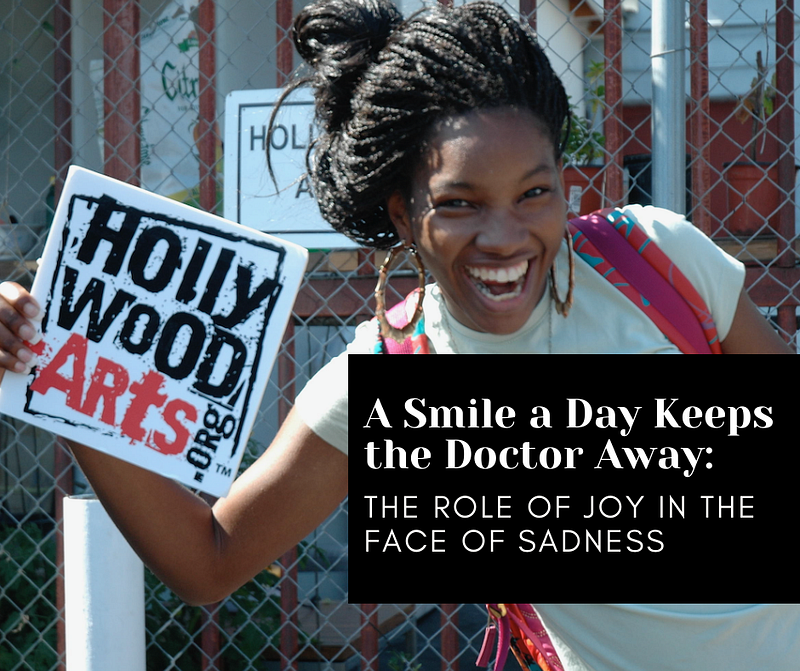
I built Hollywood Arts to help homeless young adults.
I hypothesized that I could get very hard-to-reach homeless young adults with very little formal education and no real interest in rules, or indeed their own futures, to have a different experience of their lives through access and involvement with the arts, music, performance and fashion.
I was right.
Why?
Artistic experiences are enjoyable experiences, and we are hard-wired to seek out pleasure and avoid that which is unpleasant.
No doubt there is some evolutionary basis for this.
Activities that brought us satisfaction were joyful to execute or experience, and usually had rewards that would help us succeed — such as cooking.
Activities that were unpleasant were less likely to be experienced and would require more effort to complete or be ignored entirely — such as housecleaning.
I would argue that is why so many of us play music while we clean! Music, an enjoyable experience, makes the tedium of the work more fun.
Hollywood Arts used the Mary Poppins approach to education: A little bit of sugar made the education go down.
Hollywood Arts used the arts to reach at-risk young adults and to educate them about things they thought they didn’t want to learn — for example, using music software to teach basic computer skills. Hollywood Arts made learning joyful, which brings me back to little ceramic feet on bowls.
Putting feet on bowls turned the common cereal bowl into a living creature.
The footed bowl, with his fat, round belly, hanging over two little legs, conjured up all sorts of delightful images of our own childhoods, of worlds where anything is possible, where Alice had her first tea in Wonderland.
Why is this important?
Because joy is.
I believe joy is a key component of human development — one with limitless powers to influence and affect us.
Joy releases endorphins, changes the way we look at something, and brings us together.
Ever hear the expression “a smile a day can keep the doctor away”?
Laughter relaxes the whole body, boosts the immune system, and protects the heart. Not a bad set of physiological reactions to something as simple as bringing more joy into our lives!
An observation I made repeatedly at Hollywood Arts was how happy the students were during classes or working independently.
I wondered why that should matter. Why should it matter as long as they were learning?
Because we learn better when we are in a joyful state. We are more alert and more actively participating in the experience.
In my travels around the world to some of the poorest places on the planet I found that people would frequently rush to share with me their most joyful object or experience — a meal, a song, a path they liked to walk.
All cultural groups value joy because all people do.
The experience of things that are joyful is a basic and universal human impulse, an emotional response we all share.
When I show bowls with feet to people, they all — from the curmudgeonly old man to the harried and busy retail worker — stop and smile.
I believe this is because we all long for that place we used to know, that place where our imaginations were free to roam and turn the worlds around us into magical encounters with princes, and princesses, and walking dish ware.
A place where we feel free, even temporarily, from the real challenges that surround us.
And I think that’s a really important place to keep nearby.
Is a footed bowl going to save lives? Certainly not. Could it contribute to the betterment of our own lives? Yes.
Because for all of us, finding a way to add a little more joy in our lives can only make our lives better.