Skydiving | Mishap | Survival
How A Near-Fatal Skydiving Mishap Increased My Self-Confidence Part 2
Do or Die
.jpg)
IMPORTANT: The subtitle reflects reality. I am not sensationalizing this incident at all. My jump on that day could well have ended up very badly. Also: if you haven’t read PART ONE, you should start there.
SIDE NOTE
Now, before I get to the actual jump, I need to add an important bit of indirectly-related information. At that time, and it was in July, there had been some unusually severe forest fires up north in the province, and some of that smoke and its smell was apparently reaching all the way down to where we were. We couldn’t see or smell it from the ground, though.
MY EXIT FROM THE PLANE
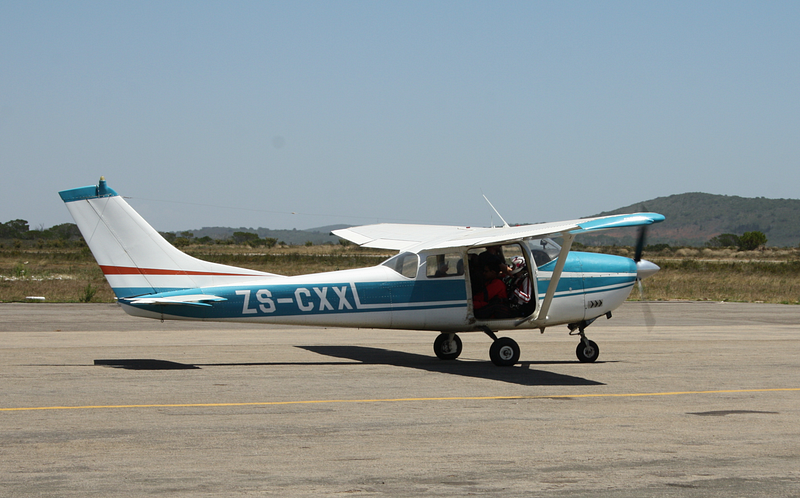
The pilot reached the desired altitude and the instructor told me to get ready. He said to step out and so I did. I moved down the wing, holding on to the top of it as instructed during ground school. It was definitely a nerve-racking moment. I was told to “Let go! Now! Now!”.
I formed a star shape and counted up to 5. I looked up at the cords, and everything was fine. Good start! But as soon as I’d done that, my ordeal started. The first thing I noticed was that there was a very bad smell in the air. This was the smell of the smoke I mentioned earlier. And, almost immediately, I started feeling nauseous. My first reaction was…
Whatever… I need to keep my wits about me. Now is not the time to forget what I’m supposed to be doing because I’m feeling sick.
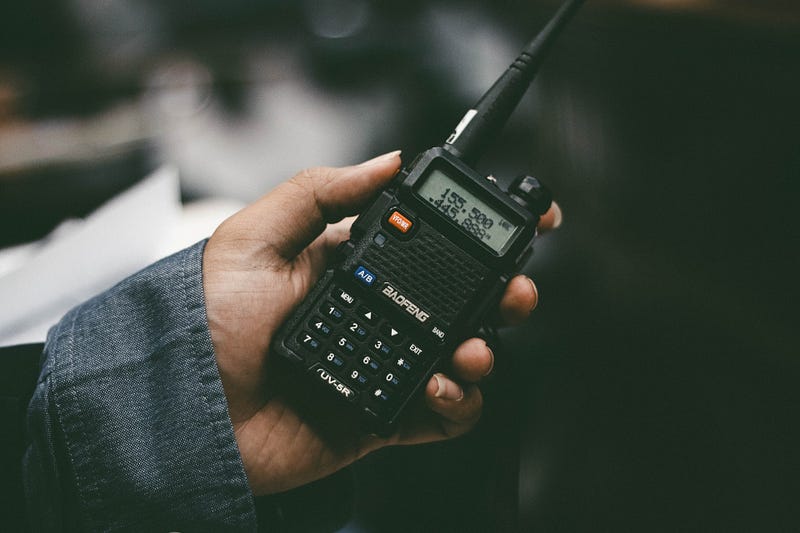
Shortly after having this thought I heard the ground instructor come on the radio, call my name, and tell me to…
Start pulling on the right side to begin forming the “S” shape.
Before continuing, I need to mention that I was fit overall, worked out regularly, and was definitely not “weak”.
So I began pulling on the cord and found it very difficult to get any result from that at all. It was giving in a little, but barely. Not at all what I had been instructed to expect under “normal circumstances” during ground school. The ground instructed me again to…
Pull harder on the right side in order to maintain the correct pattern above the DZ area.
THE DESCENT
At this point, one of my two friends has just exited the airplane and started his own descent. He’s beginning to receive instructions from the ground in-between the ones I am receiving, hearing everything being said on the channel, and my other friend is still sitting on the plane just listening and waiting for his turn to go.
In any case, I’m pulling hard enough that the lactic acid is building up inside my arms and they are starting to get sore already. Then comes the first very worrisome message… The ground instructor, always speaking in a calm voice, tells me…
You are starting to drift away too far from the drop zone, and soon I won’t be able to see you anymore. You need to come to the left.
I continue to pull on the handle hard, and it’s still not enough. Meanwhile, I can hear commands going out to my second friend, who is now beginning his descent, and to my first friend, who is nearing the landing zone (LZ) “already”! Then comes the last bit of instruction I would hear from the ground…
I can’t see you anymore and I’m going to lose radio contact with you… Find somewhere with an empty space to land…

ALONE WITH MY CANOPY AND MY THOUGHTS
A few seconds later I couldn’t hear anything coming from the one-way radio anymore. Meanwhile, the first friend has landed successfully and the second one is about to do the same. Both of them are wondering what’s happening with me and very worried, as can be expected. The skydiving company is sending two of the instructors in a car to try and keep track of where I’m at and where I’m going to end up landing.
On my end, all I can think of is…
Stay focused.. stay focused.. look for a wide and empty space to land….
By now, I’m starting to feel light heartburn due to the nerves, in addition to the feeling of nausea that hasn’t left. But I couldn’t care less, I’m just thinking about surviving this ordeal.
Before I continue with the next part, I want to take some time to explain where I was moving toward. The airport itself is located a few kilometers outside of the city. The normal DZ is in a large cleared-up field with trimmed grass. As I understand it, I lost radio contact after having drifted over a kilometer outside of the designated area. And I’m still going farther.
The next major problem is that the direction I am moving toward contains an industrial park with some buildings, a highway, and a river, in that order. I’ve been pulling hard on the handles for most of this descent so far and I’ve now gotten low enough that I can start looking for an actual spot to land on in the distance. Along the way, I notice an area that looks somewhat promising.
I have no way to judge how large or how small this area is or what’s around it from where I “sit” in my canopy up there. So I go in extra-hard on the handles, one side at a time, trying to somehow “S” my way toward that. In my mind, I am coaxing my way into this and it is absolutely a do-or-die situation. There’s no easy way out of this whatsoever.
THIS IS IT
I’m starting to gain traction with my movements and finally heading in the direction I am trying to. Arms painfully sore. As I am making my way closer to the ground I come to the scary realization that the area I’m getting to is surrounded by power lines, too. I see a space with an area that looks like it would be a good one to land on, except that it’s a part of the field that is surrounded by four buildings.
I can’t tell how much space there is, or exactly how big the buildings are. But I’m fairly certain that there is enough space to attempt my landing here. The parachute is going where I want it to by now and so I focus on what to do in order to land. And that’s the next major problem… I have no idea how high I am! The plan was for the instructor to tell me when to flare (“break”), not for me to guestimate it during my first jump, and in a smaller and more challenging field on top of that.
Descending at 15 ft/sec doesn’t leave any room for error. Additionally, I can now see that there are what look like street lights nearby this part of the field. I’m also looking at the buildings and trying to remember exactly what they taught us to do in case we end up crashing into a building while landing. There is a specific recommended position to take… Similarly, there were also instructions provided regarding emergency water landings.
I have no intention to test those options out though, so I do my best to steer clear of the power lines and the buildings. I try to gauge my altitude based on the street lights, not knowing exactly how tall they are. I’ve been trying to keep my legs in the recommended position for a few minutes already, together and somewhat extended, but not too tense (!). And, at last, I make a judgment call and I pull as hard as I can on both of the handles to stop my descent, and stop I do. Almost right away, I fall vertically from where I was, I hit the ground, and a second later I’m laying on my back with my eyes closed.
THE AFTERMATH, AND FINDING OUT WHAT HAPPENED
All I can think of now is…
Stay down… down even try to move. Pay attention to your body to see if anything hurts. Open your eyes slowly.
As far as I can tell, I’m not hurting anywhere I hear some voices nearby. I open my eyes. and the two instructors who were tracking me in their car are leaning over me and asking if I’m OK. I tell them that I think so. But I need a couple of minutes before getting up. A few minutes later I get up and feel nauseous right away. I have a headache too. I walk to the side where I think I’m going to vomit but that doesn’t happen.
The guys tell me that I fell from about 30 feet when I flared, and I rolled down the one-meter-tall grass over a distance of about 5 meters after landing, none of which I was aware of. It happened in the blink of an eye, really. The only visible “damage” was a big surface scratch on my neck from the grass.
Eventually, we get in the car and drive back to the airport, which I think was something like 1,8 Km away. My friends are extremely relieved to see me, of course. The owner has been investigating what happened, and we come to find out that the pilot made a mistake on his flight plan and dropped me off in the wrong location as it relates to the direction of the wind, before going on and dropping my friends off in the correct locations.
Being pushed by the wind the way I was made it much more difficult to control the parachute, and also exposed me to the smell of that smoke, which my friends hadn’t really noticed much themselves.
GOING HOME
I’d originally arrived in my car, driving both myself and my friend. But this time, I’m feeling sick and my friend drives instead. I tell my story to my parents and I just go lay down for 2–3 hours to rest. The headache and nausea finally subside and I’m feeling fairly OK when I get back up. Looking back, there’s no doubt that I suffered a concussion. But because it’s probably the only one in my life, there were no lasting side effects from it. It simply healed.
GETTING BACK ON THE HORSE
The following day, on Sunday, I’m talking to my friend about what happened. We’re both feeling like, all-in-all, I handled myself and the situation quite well, and had it not been for the pilot dropping me off in the wrong spot in the middle of that wind, I would for sure have made a good landing just like my friend had.
It just felt like a shame to end my experience this way. My friend suggests that we should go back and do it again so that I can have a good experience, and he would really enjoy doing a second jump as well. We agreed and called the school back, and we booked our second jump for Tuesday, two days later. This time, we, of course, did not need to go through ground school again, and so the cost was lower.
The owner apologized again for what had happened and promised it wouldn’t happen again. We did the jump and I had a very successful landing, right on target, as did my friend.
CONCLUSION
I think that the main takeaway here is definitely that, If you find yourself in an emergency situation, try not to panic and focus on clearly thinking through your options. Getting through this definitely gave me a huge boost in self-confidence, and it also has helped me to put things in perspective that much better.
All the best,
Pascal
PS: You can go here to read other personal growth and development-related articles and stories, or read more about me here.