
A Simple Way to Not Getting Caught After Stealing Like an Artist
If you steal this way we’ll let you keep the loot.
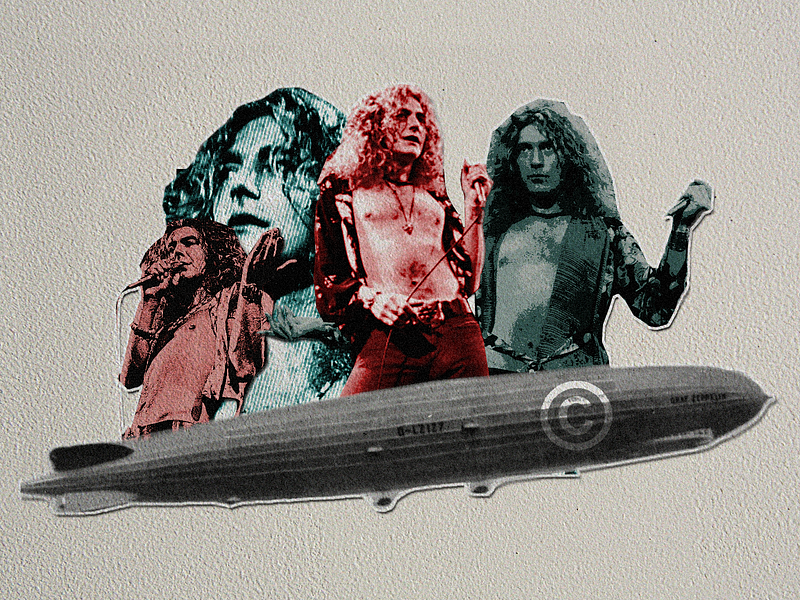
The guys made millions of bucks on it and never said, ‘Thank you,’ never said, ‘Can we pay you some money for it?’
That was said by Randy Wolfe, a guitarist you’ve never heard of, former member of Spirit, a band you didn’t know about, that composed a guitar riff you 100% would recognise.
It was in his song Taurus, a name that won’t ring any bells, because you’ve heard the riff under the credit of a different band, and a different song.
Led Zeppelin’s Stairway to Heaven.
And yes, they made millions of bucks on it, never giving credit to Wolfe
Now, if someone has to be deemed the “person most damaged by Stairway to Heaven,” that’d be every music store employee that had to endure the tune being played by aspiring teenagers trying out guitars. But still, Wolfe had a point.
Spirit released Taurus in ’68. Led Zeppelin played with Spirit in their first U.S. concert. Three years later, Led Zeppelin releases Stairway to Heaven with a melodic sequence suspiciously similar to Taurus. And the millions of bucks poured over them.
“Where’s my money and my song credits?” Asked Wolfe, resentful. To this day, nowhere.
In 2014, a lawsuit was filed in Wolfe’s name, accusing Led Zeppelin of copyright infringement, in an attempt to reclaim the bucks and the credits. But the jury found in favour of Led Zeppelin.
So what’s the trick here? “Get better lawyers”?
It would certainly help if your purpose is to become a buccaneer of the creative world, raiding ideas and amassing a treasure of dishonourable royalties. But I’m not trying to turn you into a crew member of my black-flagged ship.
Instead, I want to share a way to steal honourably. Because every idea is a kind of theft anyway — although more akin to a subtle pickpocket rather a plundering rampage. “Creativity is knowing how to hide your sources,” says the common wisdom.
Although, with this technique, you don’t even have to hide your sources.
You can even directly mention your sources as you pitch the idea, and no one will go “Oy, that’s not yours, shame on you!” You won’t be seen as a ruthless corsair of the arts — if anything, you’ll be seen as a likeable Jack Sparrow. But that would be taking the pirating metaphor too far.
I call this technique the “fundamental twist”
If there’s a Stairway to Heaven riff equivalent to writing that should be banned, or at least severely mitigated, that’d be quoting Steve Jobs when talking about innovation.
But he did used this technique, stealing directly from others, mentioning his sources whilst pitching the idea — and was still called a revolutionary. So here’s a Steve Jobs story.
In 2007, he supposedly revolutionized the phone market with the first iPhone. But was it innovative at all? It’s true that back then we were still using MySpace and rating YouTube videos with stars instead of likes. But it’s not like we were cave people, frustrated for painting buffaloes in the complete darkness of our caves, only to see our futuristic saviour Steve Jobs going, “Ladies and cavemen, I present to you: fire.”
The iPhone had nothing original on it. In fact, Jobs said it himself during the presentation.
He announced, “Today we’re introducing three revolutionary products. The first one is a widescreen iPod with touch controls. The second is a revolutionary mobile phone. And the third is a breakthrough internet communicator.”
Sure, you can throw the words “revolutionary” and “breakthrough” in there, but a phone is a phone.
So what was the twist?
The iPhone didn’t travel in time, couldn’t light a fag, nor tell you if you were eating enough veggies by farting directly into it.
The twist?
“Are you getting it? These are not three separate devices. This is one device.”
The audience went nuts, in the way I imagine them reacting to the finale of Lost if it had a proper payoff. The iPhone had nothing new, but it fundamentally changed phones by bringing those three core features together.
To quote Jobs again before we permanently ban doing it, “Creativity is just connecting things. When you ask creative people how they did something, they feel a little guilty because they didn’t really do it, they just saw something.”
Every idea is a theft because we’re just connecting previously existing things. You can see it in the film industry too. Alien was pitched as “Jaws but in space,” Titanic as “Romeo and Juliet but on a ship,” and I haven’t fact-checked this one but I’m sure Justice League was pitched as “The Avengers but worse.”
Every artist has a good reason to steal from others
Look, I know Led Zeppelin is a bad cautionary tale. They allegedly stole from other artists and still made it big. There’s no clear moral, like “And then Led Zeppelin shouted ‘Wolf! Wolf!’ but they lied so many times no one in town believed them, so the wolf ate all the royalties.”
I could give them the benefit of the doubt if they wouldn’t have been caught ripping off songs on at least sixteen other occasions. Some of which were taken to trial and they were forced to give credit and bucks to the original artists.
But this is not even about the bucks, the prestige, and the glitter of fame and fortune.
This is about advancing the conversation, building on what exists to take your art to its next step. That’s what Newton meant when he said “If I have seen further it is by standing on the shoulders of Giants.” A quote he stole, by the way, from Bernard of Chartres, who said “We are like dwarfs on the shoulders of giants.”
If you don’t make at least one fundamental change to everything you steal, you’re not pushing further your art, craft, business, market, or whatever little cosmos you’re exploring.
Steal honourably — and we’ll let you keep the loot
At this point, you won’t be surprised to know that Randy Wolfe didn’t invent that sequence of chords, nor he was the first to use it. It dates back to the 1600s folk song To Catch a Shad. And here are The Beatles having a go at it in Michelle.
And I bet that if iPhones could make us travel in time to trace the trail of breadcrumbs, like Hansel and Gretel did finding their way home, we would arrive at one single, unmistakable moral:
Real artists steal in subtle ways, and the intention to hide their sources is what move their art forward.
And if you find success but didn’t know how to be subtle about your thefts, don’t forget to say “thank you” and pay the original artists some money for it.


