
A Simple Trick to Get Over The Fear of Failure
Stop fear holding you back from pursuing your dreams
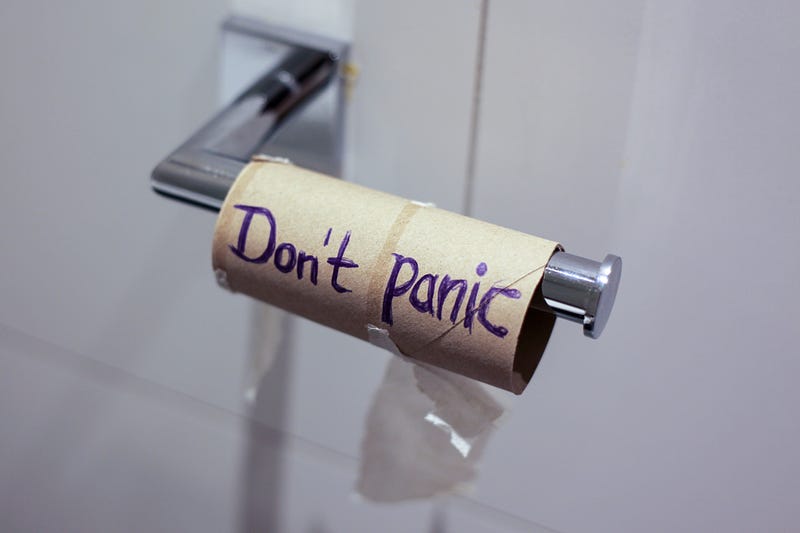
When we are about to pursue something out of our comfort zone, there are often barriers in the brain trying to hold us back.
Humans tend to have a Negativity Bias and think about all the things that could go wrong.
As expressed in verywellmind:
The evolutionary perspective suggests that this tendency to dwell on the negative more than the positive is simply one way the brain tries to keep us safe.
If we are looking to show our work for the first time and put ourselves out there, our fearful brain may try and talk us out of it.
We may fixate on the embarrassment it could cause if it doesn’t succeed, and how our peers will laugh and think less of us.
Again, through evolution, we survived by being part of a tribe so moving away from doing something normal may lead to opposition from fellow tribe members.
We are conditioned to want to fit in so the judgment of our peers, whether we want to admit it or not is important to us.
How to stop this fear preventing us from chasing our dreams
Suzy Welch, a business writer actually came up with a simple trick in her book called the 10/10/10 that looks at just that. This bullet-proof method will help reprogram your brain. Even the worst-case scenario (which we are likely already thinking about) will be nowhere near as bad to our live as we think.
What is 10/10/10
When we are faced with a tough decision or want to pursue something but fear is holding us back we can use the 10/10/10 principle.
Asking the below 3 questions really puts things into perspective. When doing something outside of our comfort zone:
- How will we feel about it 10 minutes from now?
- How about 10 months from now?
- How about 10 years from now?
If you put yourself out there things may not go the way you want them to go.
So let’s take the example of putting yourself out there and pursuing your dreams. You start posting on social media about a new venture. And it goes absolutely terribly.
No one comments on your post and shows any signs of support. The only people who comment start trolling you and sending abuse.
This is probably all of our biggest fear when wanting to put our work out there in the digital world. We know the potential benefits, but at the same time, there is a real risk of rejection and humiliation.
So let’s follow the 10/10/10 rule and see what happens, even if things go wrong. I will answer the question based on how I felt when I first posted something on social media that was outside my comfort zone and didn't get the support I wanted. I will answer based on how I felt at the time as if someone had just asked me these questions.
- How do you feel about it (10 minutes after the event)?
I feel pretty terrible. Deflated that I didn't get support from my peers. This has put me off from doing something like this again. Maybe I should just stay in my lane and stick to the 9–5.
- How do you feel about it (10 months after the event)?
Ah yeah, I vaguely remember that. That did not go well. Was a shame it didn't go the way I hoped. But honestly, haven’t thought about it much since.
- How do you feel about it (10 years after the event)?
It hasn't been 10 years yet, anywhere near. But I can say with absolute confidence I won’t care at all. A distant memory. Not even a memory. I barely remember it a few years on. 10 years could have healed much worse rejection than this.
This rule can be applied to all walks of life. Imagine you wanted to ask someone out on a date. And the person you like says no and that they just want to be friends (yeah, yeah)
- How will we feel about it 10 minutes from now?
Probably pretty crushed. Your confidence has been knocked as you have just been rejected. But a small part of you may be glad that you took the plunge.
- How about 10 months from now?
Unless it was someone you liked for a really long time and you have to see them every day, you would forget about it and moved on with your life. Worst case, the occasional memory of how bad you felt about the rejection.
- How about 10 years from now?
No part of you will care about what happened. I remember a similar thing happening to me 10 years ago.
At the time, I was pretty crushed. But now, I honestly couldn’t care less. Barely remember what she looks like. When I think about it now, I even find it funny.
In Summary
We are conditioned to want to protect ourselves and think about the immediate consequences of chasing our dreams. So we immediately fixate on the things that could go wrong. This usually makes us settle for a pretty average life that brings little joy.
The above examples were the worse case outcomes and still did little to us, except short-term embarrassment and a little kick to the ego.
But what if these didn’t go bad? Maybe you change your life by putting yourself out there and unexpected opportunities come your way. And maybe she says yes and you meet your future partner.
Don’t let fear of failure stop you from getting started. We are conditioned to be fearful of what could go wrong from our evolutionary past.
But even if something does go balls up, in 10 years' time you will probably look back and laugh.
And hell, you will probably have a good story to tell.


