
A simple process to make your PKM more personal
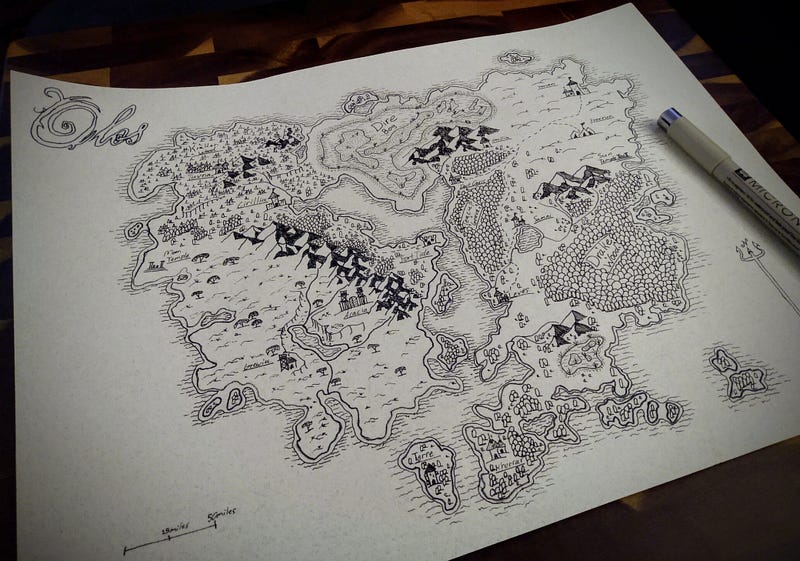
When building out our Personal Knowledge Management (PKM) systems, it’s very easy to make them all about the ‘Knowledge’ at the cost of our notes being ‘Personal.’
As we wade through content, more and more notes appear in our app and we can start to fool ourselves into thinking that our Second Brain is growing nicely, when in fact all we have is a graveyard for the various books we’ve read and podcasts we’ve listened to.
We think the more information that we’ve collected, the more knowledge we have gathered without realising that our brains don’t work in that way. In reality, the more information we gather, the more confused about a particular topic we become.
That’s because knowledge doesn’t come to be until we take the time to think about what all of the information we’ve collected means to us.
All the information that we’ve collected is useless until we sit down, process it and force ourselves to distil the key parts that are relevant to the way that we’re living our lives.
Introducing “Maps of Content”
One of the best ways I’ve found of distilling this information is to create Maps of Content (MOCs) for important topics and themes.
The idea of a ‘map’ comes from Nick Milo’s “Linking Your Thinking” class, but also applies to how Shane Parrish compares our knowledge on a particular subject to the way that a particular area is shown to us on a map (see Mental Models, Volume 1).
In the book, Parrish argues that a map can’t possibly be a direct representation of a particular area or it would be useless. The maker of the map has to decide what scale their map should be at and what features should be left out so that readers can use the information that they need to navigate an area quickly.
For example, while we’re driving, Google includes all the street names in their Maps app to help us get around. But they leave out the name of every shop by the side of the road as that’s not important to us.
In this way, the map maker has decided what is important to us and their decisions allow us to know the important parts of a particular area without knowing every detail. It’s not a stretch to say that we are being influenced by the decisions or objectives that the map maker has made.
The same can be said of the knowledge we consume online.
Every article, podcast and video has been filtered by the author according to what they deem to be important. They can’t contain every small piece of information in a 500-word article, so they decide what to include and what to leave out.
As such, we are influenced by their decisions and only gain small pieces of information on a particular topic.
In other words, we know small details of a particular area but we don’t know the full territory.
To be able to gain an overall understanding of a single area, we can read multiple articles on the same topic. However, we must take the time to pull all of this information together and become our own cartographers.
It becomes up to us to build our own map from the pieces of information that we find in books, videos or articles to build a map that is directly relevant to our own goals and circumstances.
Building your map
A Map of Content is simply a homepage for a particular thought or idea that is designed to give you an overview of something based on all the other thoughts and ideas that you’ve consumed.
Therefore, start with a topic that you’ve read a lot about or is of particular importance to you. This could be a theme like “leadership” or “courage” or it could be something more defined like “Habits” or “Writing.” I’ve seen some people build much more factual MoCs like “Causes of The Second World War.”
The topic doesn’t matter so much — the point is that this is a page for you to pull together your thoughts on something that is of importance to you.
And they should include your thoughts. When building out an MoC, I tend to use the following headings:
- Key ideas — summaries of themes made in the books or articles that I’ve read on the theme.
- My thoughts — Do I agree with these summaries? What do I like and not like? How relevant are they for me today?
- References — Links to the key books and articles that have formed your thinking (or further reading that you’re going to do)
- Overlapping areas — Links to other areas of your PKM that echo the thoughts you’ve found here.
Finishing Up
I’ve discovered the process of building out Maps of Content to be a therapeutic process. By forcing myself to form a particular view on a topic, I find that:
- I’m much clearer and more intelligible when talking about a particular topic with friends
- Next steps and actions that I may want to implement are much clearer and easier to understand when being viewed in one particular note rather than having to scan through multiple notes
- I have a starting block in terms of where I currently stand when reading more information on the topic.
One last thing to bear in mind is that, just like a map of the road gets updated over time, so should your maps of content be updated too.
As you continue to consume more information on a particular topic, you should update your MoC as your opinions change or become reinforced.
As the map-maker, you decide which pieces of information are most relevant and important to you. You decide which parts of the map should be left out and you decide what content in your PKM should be sign-posted and which pieces of information are not relevant to you at all.
That doesn’t mean those pieces of information should disappear from your PKM altogether. It just means that you have decided that they are not relevant enough to be included in the high-level map view of a particular theme.
If you find yourself confused or muddled on a particular topic, I’d urge you to set aside some time and focus on building out a Map of Content for it.
Not only does it allow you to break down your thoughts and opinions, but it also helps you put them back together and get a grip on how smaller ideas fit in with other areas of your life.
One last thing
If you found the article above useful, then there are three things that you can do to support my writing:
- Hit those clapping hands so that other people with your interests will become aware of the article. Hopefully, they’ll find it useful too! 👏
- Follow me here on Medium so that you become the first to know when similar content is posted
- Carry on the conversation. Either leave me a message here or get in touch on Twitter/X or Mastodon. I promise I’ll get back to you!