
A Simple Four-Step Process for Overcoming Negative Feelings
Transformative advice from a Jesuit priest and psychotherapist.
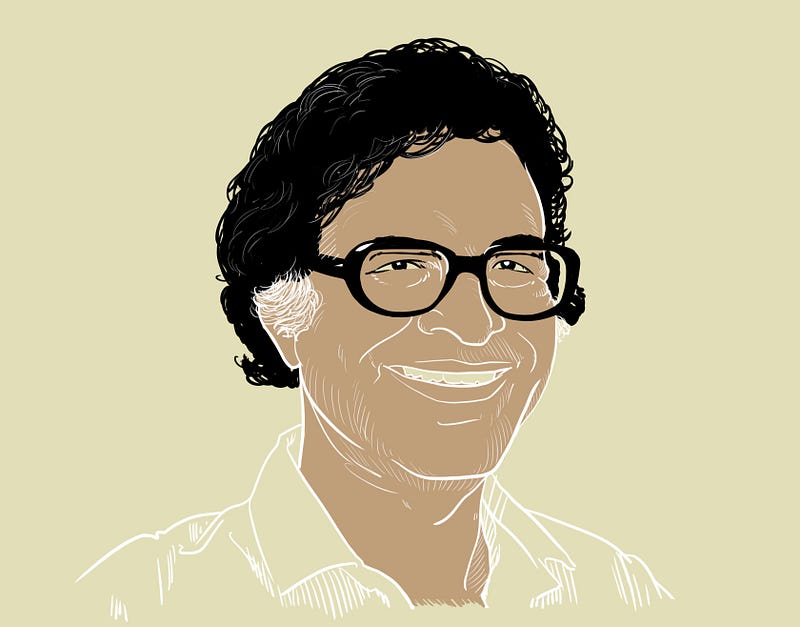
Anthony “Tony” de Mello was born in the early ’30s in Bombay — present-day Mumbai. One of five children, de Mello grew up to become a Jesuit priest and psychotherapist.¹ Much of de Mello’s spiritual writing focuses on mindfulness and emphasizes the need to spiritually “wake up”.
I find de Mello’s advice for dealing with negative emotions simple enough to use immediately and profound enough to practice, as he recommends, “a thousand times”
“Identify the Negative Feelings in You”
This is hard work. You’ll need to begin by slowing down. Negative emotions are often frenzied and fast — forming a foam that fills the mind and makes it difficult to think clearly and recognize the reality of the present moment.
So when you feel a negative emotion, say fear or anger or frustration, stop. Identify it. Say, ‘I feel _________.’ Write it down or tell someone else. It doesn’t matter. What matters is that you identify it, because you can’t overcome what you don’t understand. For some, step 1 will come easy enough. For others, especially those who have ignored their feelings, it will be its own sort of frustration. Stick with it.
From now on, attempt to look at your negative emotions with a distant curiosity. It may feel disheartening to realize how often you have these negative emotions, but take heart! If you’re able to identify the emotion, you’re already on your way to overcoming it.
“Understand That They Are in You, Not in the World, Not in External Reality”
Whatever negative feeling you’ve identified is yours. It’s not mine, and it’s not theirs. It’s yours. You can’t give it to anyone else or blame it on anyone else. This is a frustrating bit of reality, and, at times, it can feel anything but fair. But it’s definitely empowering.
Circumstances may have triggered your negative emotions, but they only triggered what was already there inside of you. Don’t worry though. If they’re in you, you can do something about them.
In step 2, you must fully accept that your negative emotions are yours, and no one else’s. Reality is neither angry nor joyful. Reality is impartial. You, on the other hand, are not impartial. Accept that your negative experience of life is not caused by life, but by your experience of life.
“Do Not See Them as an Essential Part of ‘I’; These Things Come and Go”
Once you’ve accepted the radical notion that your feelings are your feelings (full stop), you can begin the process of becoming aware that your feelings are not you. They are transient. You are not happy. You only feel it. You are not sad. You only feel sadness. These emotions are yours, but they’re not you.
At times, we stay stuck because we’ve identified ourselves with the negative emotions we experience. It’s hard for the angry person to be anything but angry. It often works in the form of a self-fulfilling prophecy: we’ve experienced so much negative emotion that we identify as that emotion. And in the process, we lose the awareness of our true identity and we behave in accordance with the truth we have spoken over ourselves. The person who has self-identified as angry will find it hard to live any other experience. The same goes for all negative emotions.
Take courage and separate you from your emotions. You are so much more than how you feel. See your emotions as clouds that float through the sky of your being. They come, and they go, and they change before you know it. One minute you’re angry like a bull, and the next moment you’ve softened into the shape of a content clam.
You are not your emotions. For more on this idea, read my article, “I am not happy. I am not sad.”
“Understand That When You Change, Everything Changes”
We can change the way we experience problems, people, and circumstances by changing ourselves. We have the incredible power to change the reality of our lives. This is not “woo-woo spirituality”. This is just the recognition that we can’t change anyone but ourselves. We can’t even change most circumstances — certainly not the really difficult ones that we’d like to change. Does anyone want to erase this whole COVID-19, coronavirus, pandemic thing?
One reason we react and become overwhelmed by negative emotions is that we find it extremely difficult to take this kind of responsibility for how we feel. It can feel like a burden to accept that I feel the way I feel because of me. This doesn't overlook difficult experiences brought on by others or by life, but it reminds us that no one and nothing can make us feel things. That’s our power.
When we change our perspective of the situation, when we let go, when we take responsibility for our feelings, everything changes.
Negative emotions are a part of life. But, at times, they can be overwhelming. To overcome negative emotions and find increasing peace, consider Anthony de Mello’s simple four-step process.
So, next time you feel a negative emotion, try the following:
1. Identify the negative feelings in you: Feel what you feel. Name it and seek to understand it.
2. Understand that they are in you, not in the world, not in external reality: Accept that the way you feel is the way you feel. You didn’t “catch” negative emotions, and no one made you have them.
3. Do not see them as an essential part of ‘I’; these things come and go: Although your negative emotions are yours, they re not you. Identifying yourself by the negative emotions you feel will only make them take root more strongly. There is a you that is not any of these things.
4. Understand that when you change, everything changes: You can change the way you experience problems, people, and circumstances by changing yourself. You are responsible for your feelings, which is both scary and immensely freeing.
Instead of living our lives in a reactive state because of negative emotions, we take an active role in our emotional life by following these simple steps. Like any lifestyle change, you won’t be finished with this after day one. You’ll need to run through these steps many times. Or, as de Mello writes, “Put this program into action, a thousand times.”
Thanks for reading my article! It represents day 23 of my current 30-day writing project.


