
A Short History of the Politics of Slavery in America
The subject of slavery reared its’ ugly head for Republican candidate, Nikki Haley, unfortunately the Republican Party and Haley failed miserably, again.
When asked what was the cause of the civil war, Candidate Haley could not bring herself to say the word slavery.
Ever since Reconstruction, there has been one political party that has downplayed that loathsome part of American history.
Yes, Abraham Lincoln was a Republican and Democrats at the time opposed the 13th amendment, but between both presidents Roosevelt and the ‘great commoner’ William Jennings Bryan, the party’s literally flip-flopped their political platforms.
Alabama Senator, Tommy Tuberville (R) in an interview with CNN, insisted that being a white nationalist meant someone was being a good American. When the interviewer defined white nationalism — “ A white nationalist is someone who believes the white race is superior to other races.” Senator Tuberville retorted, “Well, that is some people’s opinion.”
Florida Governor Ron DeSantis (R) recently suggested some African Americans actually BENEFITTED from slavery by learning skills. Things have not changed since longtime South Carolina Senator Strom Thurman (R) (48 years) vehemently opposed civil rights legislation and defended segregation for the rest of his life.
The Civil War was fought because of slavery. Period. Not for states' rights or any other reason.
Alexander Stephens, the vice president of the Confederate States of America, stated in his cornerstone speech, “African slavery exists amongst us the proper status of the negro…”. Stephens told the world that Thomas Jefferson was right when he insisted that slavery was, “the rock on which the union would split.”
As if that wasn’t enough, Stephens goes on, “ The great truth, that the negro is not equal to the white man; that slavery subordination to the superior race is his natural and normal condition.”
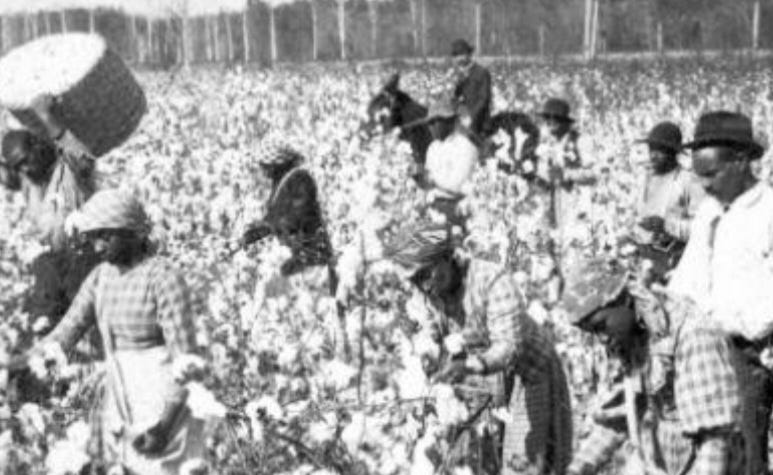
Between 1800 and 1840, cotton production in the south went from 40 million pounds per year to 871 million pounds per year, an astounding 2078%. By 1860, over 2 billion pounds of cotton was produced in the American South. All provided by virtually free labor.
Enough for rich plantation owners to opt for war to protect their wealth. They would not be doing the fighting anyway.
After the horrors of the civil war, Southern historians needed a reason for the war other than slavery and the greed of plantation owners.
So, Southern Authors conjured up the Lost Cause. They have time and time again written about how slavery was a latter subject on why the war was fought. States rights were their reason for the carnage of the civil war. Albeit, slavery was the right they grieved. Southern authors have always romanticized the nobility, purpose, and chivalry of the Confederacy, and from there, the lost cause made it into American school curriculum. Slavery was almost an afterthought.
After the comments and actions of these politicians (or lack there of) one has to wonder when the United States will heal from this black eye of its’ history? The answer may well be never. Not as long as it can be used as a divider of the American people.