
A Seed of Kindness Can Sprout in the Harshest Conditions
Spread kindness everywhere, even in places where it seems unlikely to grow.
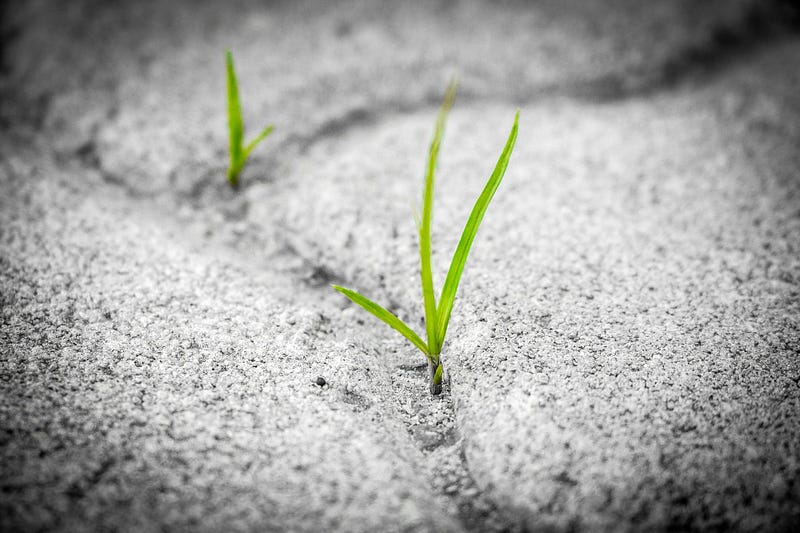
Kindness can grow in the most unexpected places.
Years ago, I was assigned a patient named Sam*. He was a challenging guy who didn’t want to attend therapy, so in the beginning, he often canceled or no-showed our appointments. When Sam did show up, he would intentionally try to provoke me with rude comments which made it difficult to establish rapport. Nonetheless, his therapy was mandated, and Sam apparently needed help, so we continued to work together.
Slowly, Sam and I established a working relationship. He lacked a verbal filter and rarely apologized for hurtful comments, but he began making more of an effort in therapy. I appreciated that. He stopped no-showing and only rarely canceled our appointments. With lots of prompting and encouragement, Sam began to acknowledge that his interpersonal and anger management skills needed work.
I tried to supplement our individual sessions with group meetings, but Sam was usually asked to leave the group because he was too disruptive. I think he prided himself on rubbing people the wrong way. Sam expected that people wouldn’t like him, so he pushed them away first.
Sam and I worked together off and on for a few years, and he never fully let his guard down with me, but he did make progress. Although he continued to have interpersonal struggles, these difficulties became less frequent, and his overall mood improved.
I did my best to model kindness while I pointed out inappropriate behavior and suggested areas for change. When Sam spoke rudely to me, I addressed it and then moved on with our work. I never gave up on him because I knew under the rough exterior was a guy who was hurting.
When Sam met his treatment goals (mostly), and it was time to terminate care, he said he wasn’t sure if he had gotten anything out of our work together. It’s hard not to take that personally, but I knew I had given our treatment my best effort, and I suspected he had too. If Sam had benefited from our time together, he probably would not have told me anyway.
Two years after our last session, I saw Sam again.
I arrived at the clinic early and could hear my phone ringing as I walked towards my office. Since the clinic was closed, I knew it was an emergency call.
The caller was a friend of Sam’s, and he told me that Sam had experienced a tremendous loss that night. A loved one had died in a traumatic accident, and Sam fled the hospital after hearing the news. He was not answering his phone.
I hadn’t spoken to Sam in years, and I had no idea what his level of functioning was at the time. I knew that despite his tough-guy attitude, he loved his family deeply, and would be devastated by this loss. I was worried about him.
After instructing his friend to contact the authorities and tell them his concerns, I called Sam’s cell phone, hoping he might pick up. There was no answer, so I left a message.
All I could do was wait for him to call me back.
One hour later, when the clinic doors opened, Sam walked in and asked to see me. We walked silently to my office, and when I closed the door, he allowed his grief to flow. It was the first time I had seen an emotion other than anger from him.
Later, Sam told me that he had been sitting in the clinic parking lot when I arrived in the pre-dawn hours. He wasn’t sure at that time if he was going to stay and talk to me. Although Sam didn’t answer my call, he listened to the voicemail — several times. When he was ready for help, Sam came to me.
Many years ago, I didn’t give up on Sam, and he didn’t give up on me. Although there was little visible growth during our sessions, kindness and support took hold, and when the conditions were right, it grew.
Many of us plant seeds of kindness that we may never see grow — teachers, social workers, judges, nurses, and volunteers to name a few. A hot meal, clean socks, and a kind word can make a difference in someone’s life.
If you worry that your words and actions don’t matter because you haven’t seen an immediate impact, I’m here to tell you that every act of kindness makes a difference. We have more power than we realize, and these seeds of support and care will grow — some immediately, while others take time.
I’m relieved that the kindness I showed Sam years earlier made a difference during his crisis. It was hard for him to ask for help, but he knew I would not turn him away. The seed I planted had roots that were strong enough to support growth even in the harshest conditions.
Where will you spread your seeds of kindness?
*The name and all identifying details have been changed to protect privacy.
Jill is a clinical psychologist, blogger, and spreader of kindness. She shares behavioral health tips every Sunday on her blog.
This story was brought to you by Spread the Ripple. We are a publication dedicated to kindness. Kindness is our superpower. Read more stories and come and write with us here: