
A Search for the Whitespace Character
How do you represent nothing?
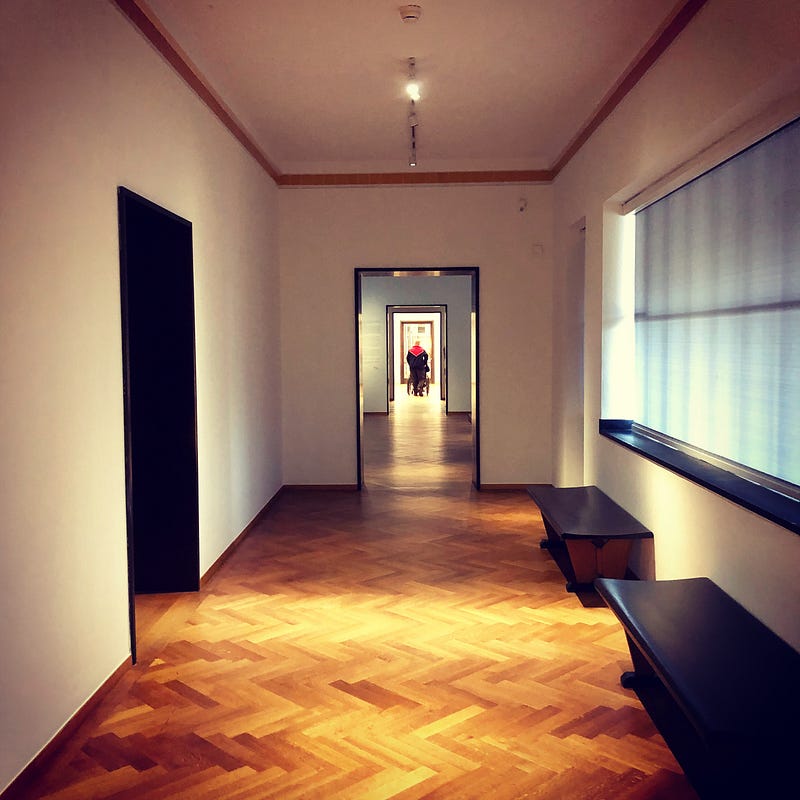
How do you represent nothing?
It’s a surprisingly challenging problem, which has spawned an annoying array of solutions.
For normal users, the typical method is to use a space. Here’s one:
See it? No? That’s one challenge. If you’re trying to draw out code — especially on paper — a space doesn’t really cut it when it comes to representing whitespace.
Underscore is a better option:
_
At least you can see it’s there. It’s a good substitute for an explicit space character if you’re writing out code on paper.
But there are some times when you need an underscore to be an underscore. What if you’re using in in a variable name? What if you’re using Regex, where it has an explicit, non-space meaning?
That’s where Unicode U+2423 comes it. Offically called the Open Box character, it was used starting in the 1980s to represent black space in handwritten code.
␣
Medium is able to show it. Many text editors are not.
I wanted the Open Box to be the symbol for this publication, but Photoshop couldn’t handle it. So I had to type one into Word, make it huge, screenshot it, import that into Photoshop, and magic erase out the background to get the actual character. It was a lot of work to represent nothing.
I think this underscores (pun very much intended) the challenges of different character sets. Unicode is great, but inconsistently implemented. And font designers are happy to give you a ~ or a &, but they’re less likely to make it all the way down the unicode chart to obscure control characters like the good old fashioned ␣.
I’m glad I was able to find it for my logo here. The next time you see it used, remember that representing nothing — especially in code — is a surprisingly challenging proposition.


