TRAVEL. ADVENTURE.
A Salt Mine That Got Converted Into an Entertainment Park
An indoor park like you’ve never seen before
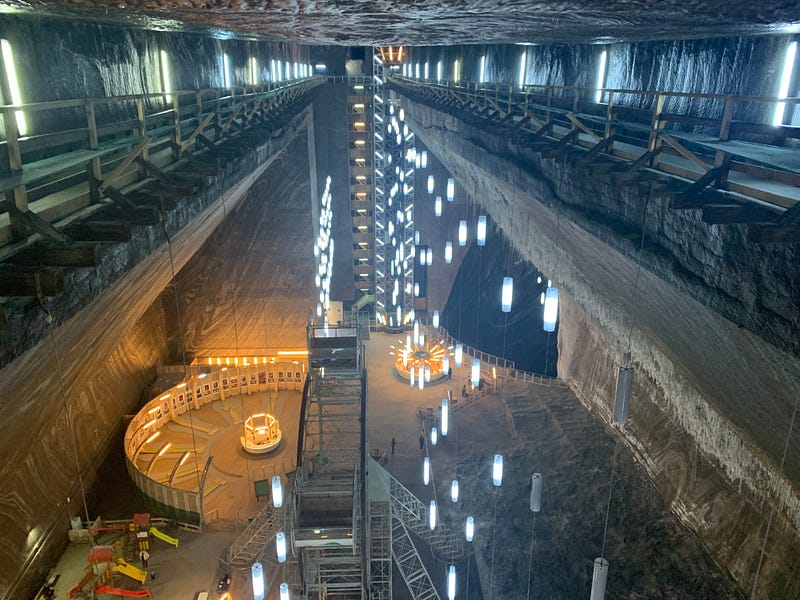
I guess we’ve all been to some sort of a mine before. Usually, they are either tiny and dark or huge with a wide-open space. But never have I experienced or seen something like this before.
An entertainment park inside a salt mine.
Yes, you did read that correctly. In Romania, you can find an underground entertainment park with a Ferris wheel below the surface.
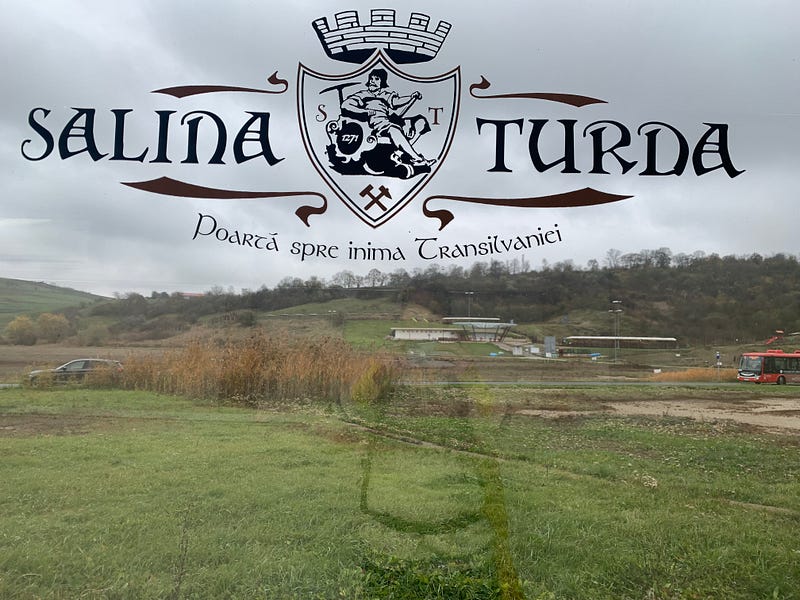
There is nothing spectacular to see from the outside and we had to take a couple of detours to get there because every second road my GPS navigated us toward was either a one-way or under construction.
But eventually, we got to the mine.
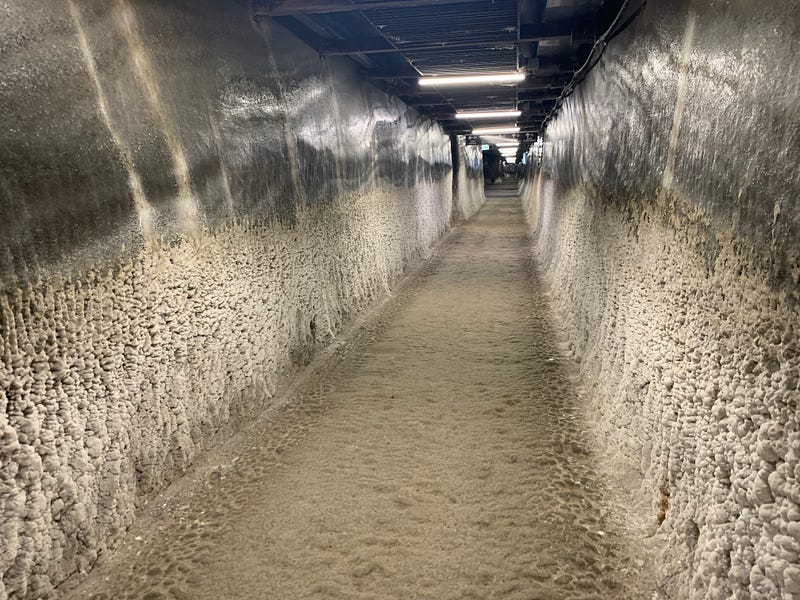
“Salt was first extracted here during the antiquity. The mine continuously produced table salt from the Middle Ages, the mine being first mentioned in 1075, to the early–20th century (1932).
Since 1992, Salina Turda has been a halotherapy center and a popular tourist attraction. In 2008 the salt mine was modernized and improved under the program PHARE 2005 ESC large regional/local infrastructure, worth six million euros. It was reopened for tourism in January 2010.” — Wikipedia
As you are walking into the mine through a narrow tunnel, you get to the Josef mine. A large hall where you’ll see the Ferris wheel standing in the middle.
Furthermore, you can find table tennis courts, a mini-golf station and a bowling alley. There is a playground for children and a small souvenir shop that also sells drinks.
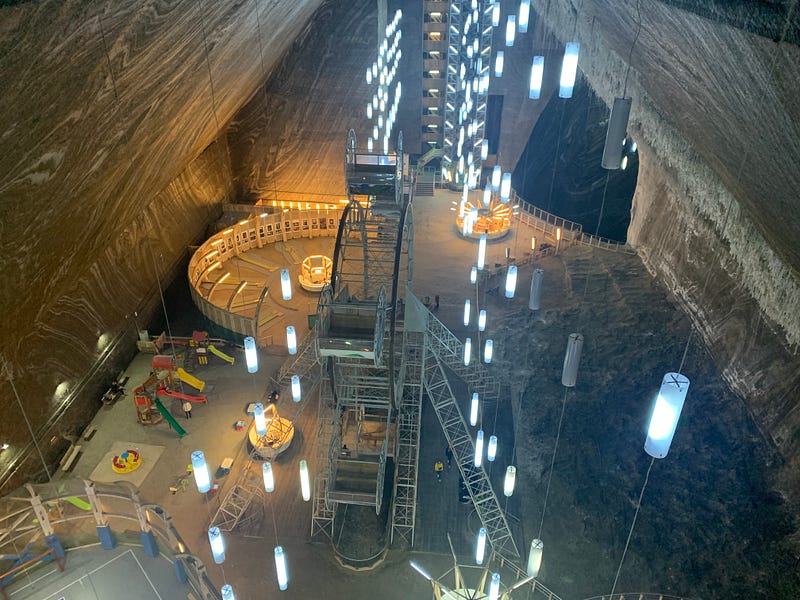
Before we could discuss where we go down, my father was already halfway down the stairs. While I’m surely not a lazy person, I do prefer taking an elevator down and walking the stairs up.
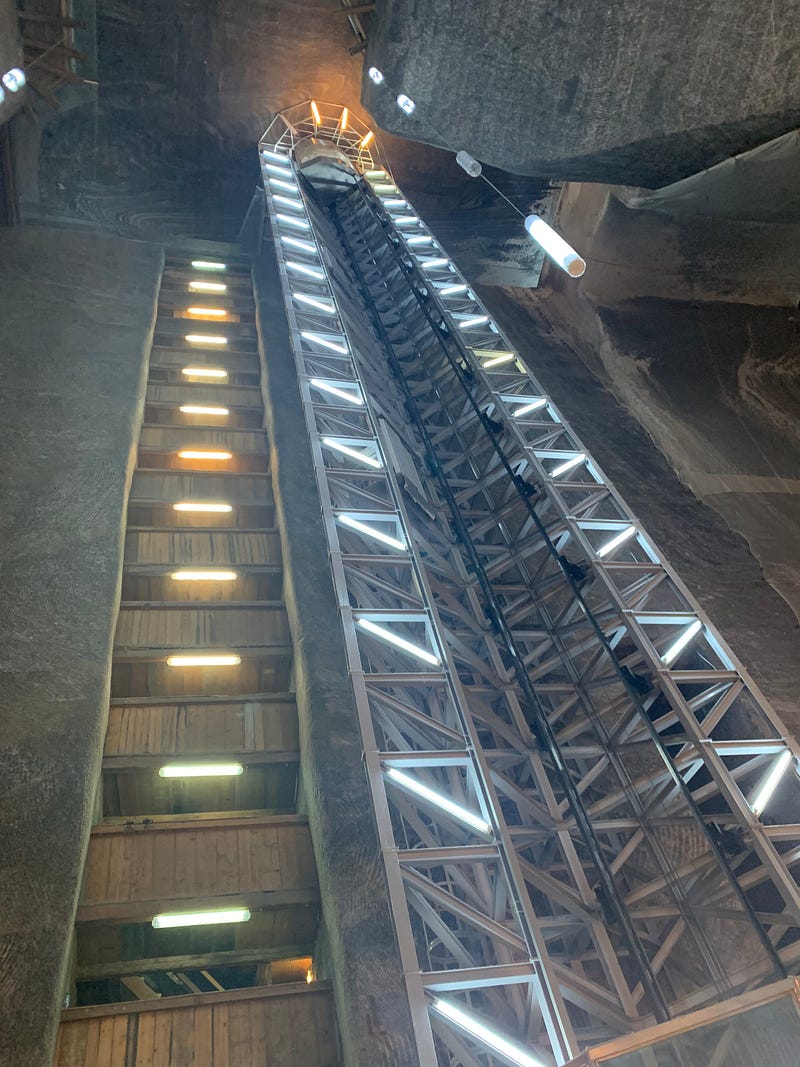
Too late for that, so we stepped down the long wooden staircase.
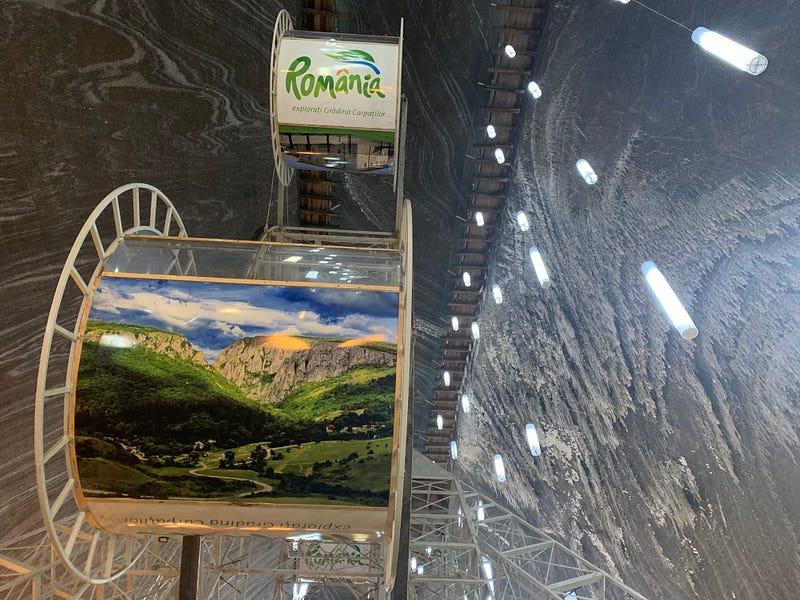
David was a little disappointed since the only activity he was interested in doing was playing bowling and the bowling alley was closed but those are things we’re prepared for traveling in low season.
We walked further and looked down onto the Terezia mine.
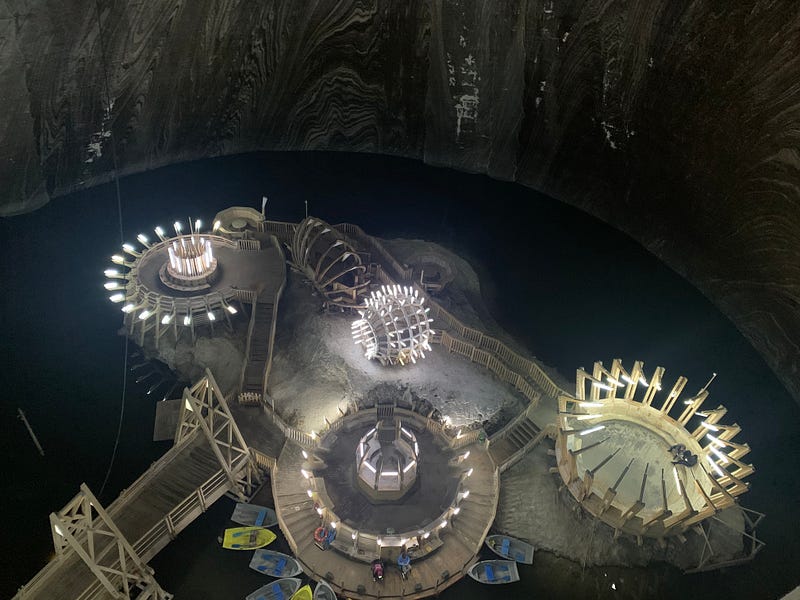
The Terezia mine is the oldest chamber that can be visited within the facility. The exploitation of salt started here in 1690 and ended in 1880. After the extraction of salt from this mine ceased, it was used as a disposal chamber for the rejected and unusable salt blocks from extension works of the Franz Josef gallery.
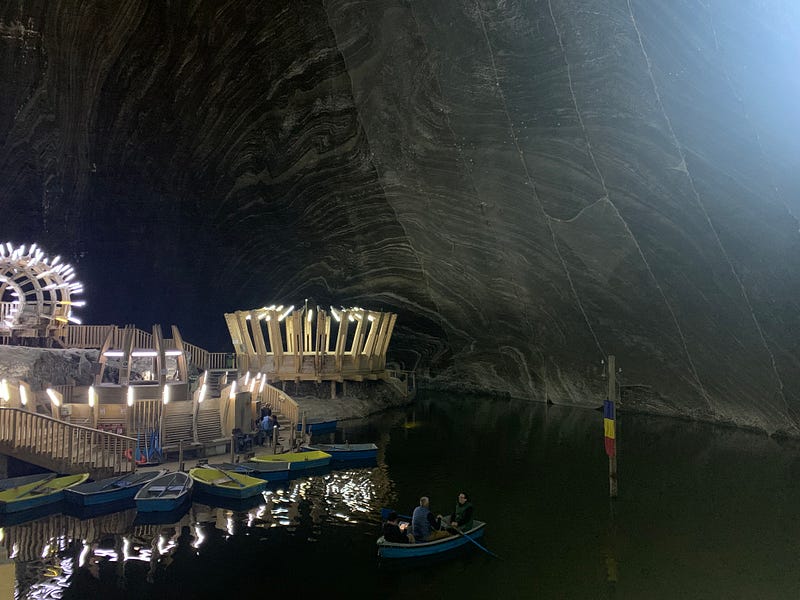
After the base of the mine was flooded an underground lake was formed, with a “salt island” in the middle of the lake. This is where today another attraction is located. You can rent a boat to circle around the island inside the mine. It’s not a big lake but surely a fun activity for families with children.
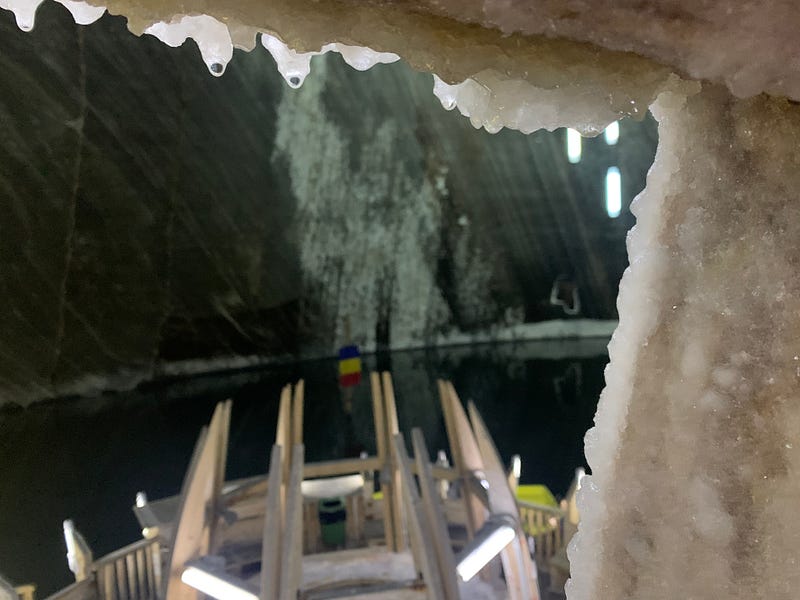
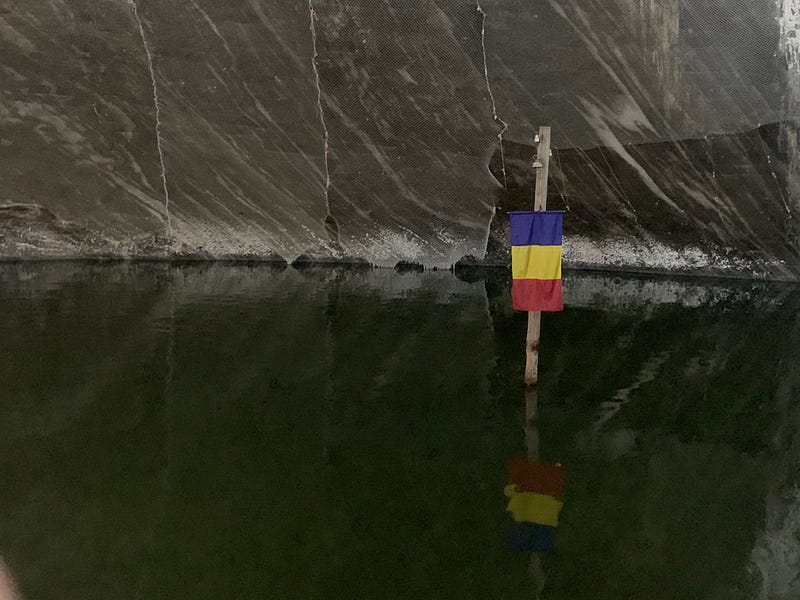
David liked the Romanian flag inside the lake. He mentioned how proud Romanians are of their country judging by all the flags you can see while driving through the cities and villages.
Yes, they do have a very different level of patriotism than what you get to see in Germany. And it’s good. I think a bit of patriotism is good for a country.
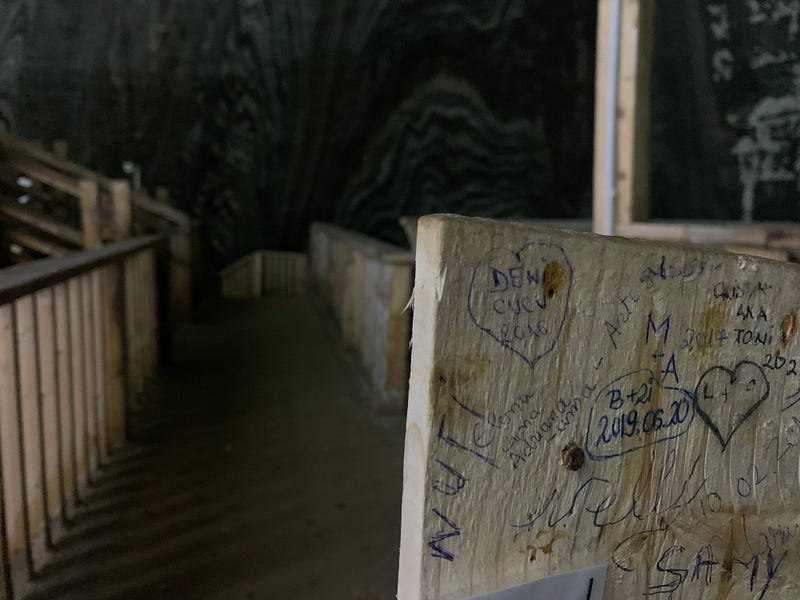
Talking about behaviors I cannot get around the topic of vandalism. Wherever we go on this trip, we do see graffiti and scribbles on rocks, walls, or any kind of wooden surface. Just like here. On the wooden construction pieces. They are covered in handwritten notes.
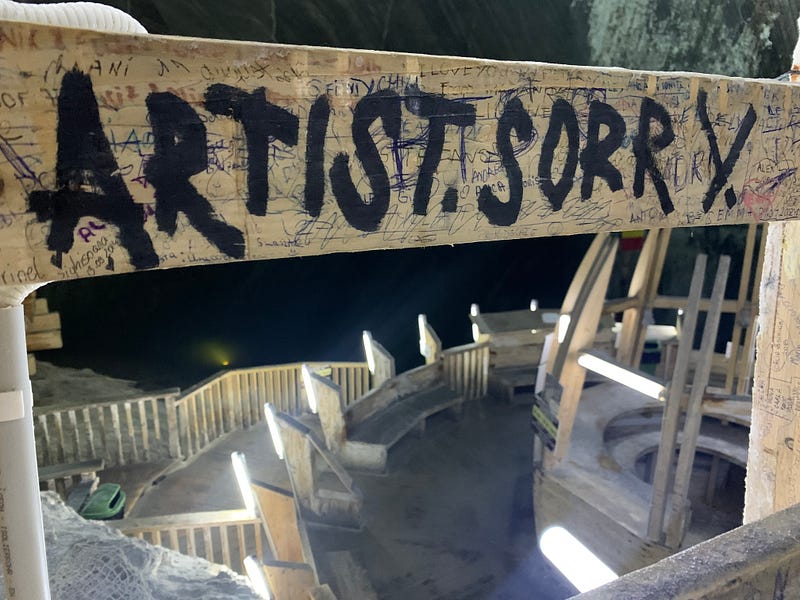
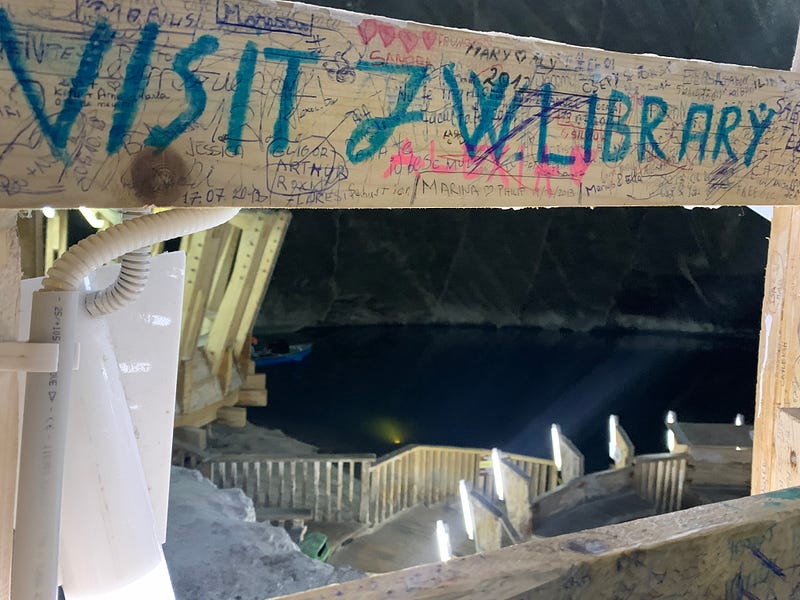
The base of the Terezia mine is located 112 meters below the surface and the lake has a maximum depth of 8 meters. The lake was once formed due to the built-up of infiltration water.
Talking of which. Do you see the salt “waterfall behind us?”
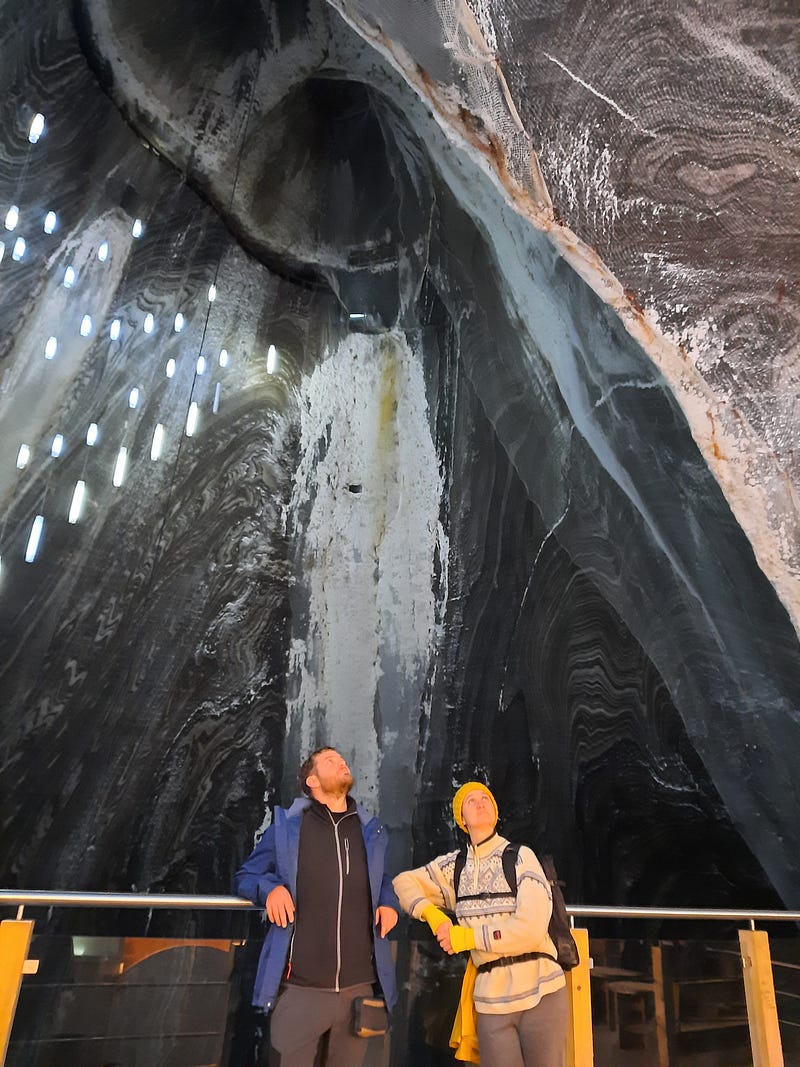
Getting back up the lower mine, we now took the stairs needing to bend down not to hit our heads.
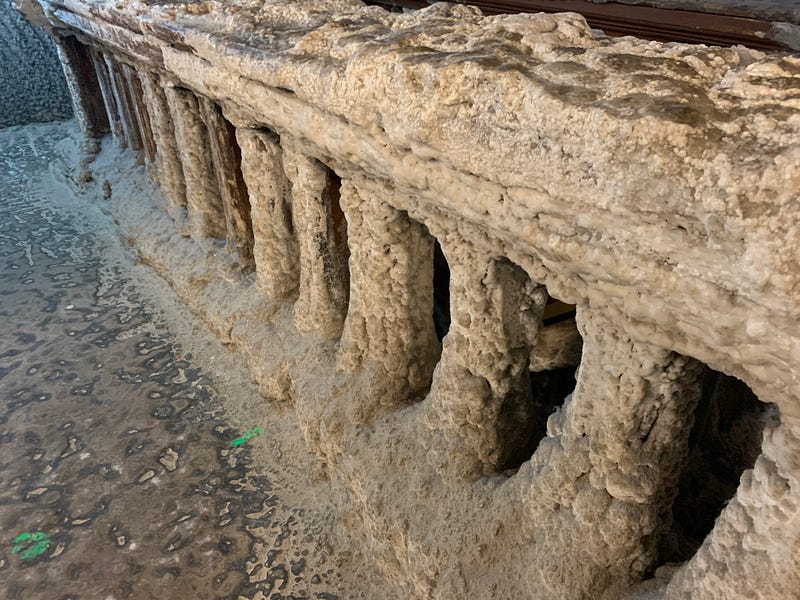
Yes, of course, everything inside this mine is built of wood. Everything else would rust within minutes.
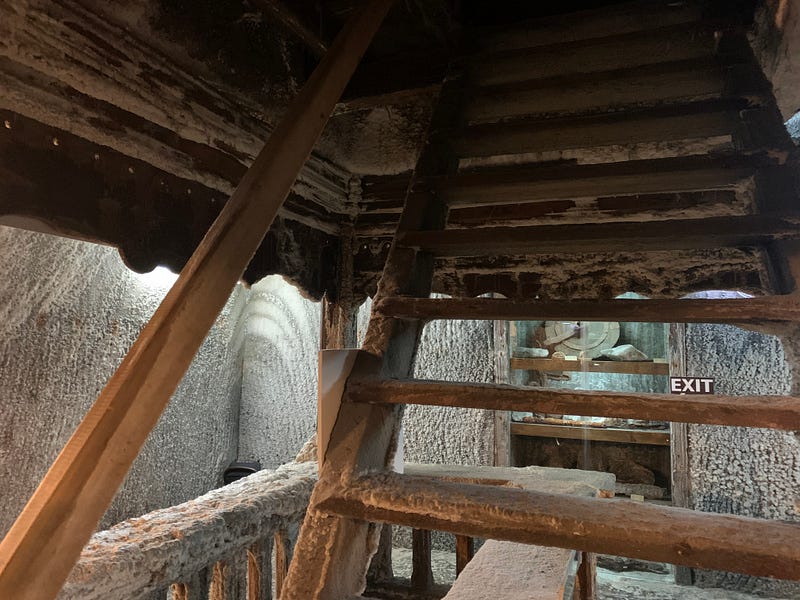
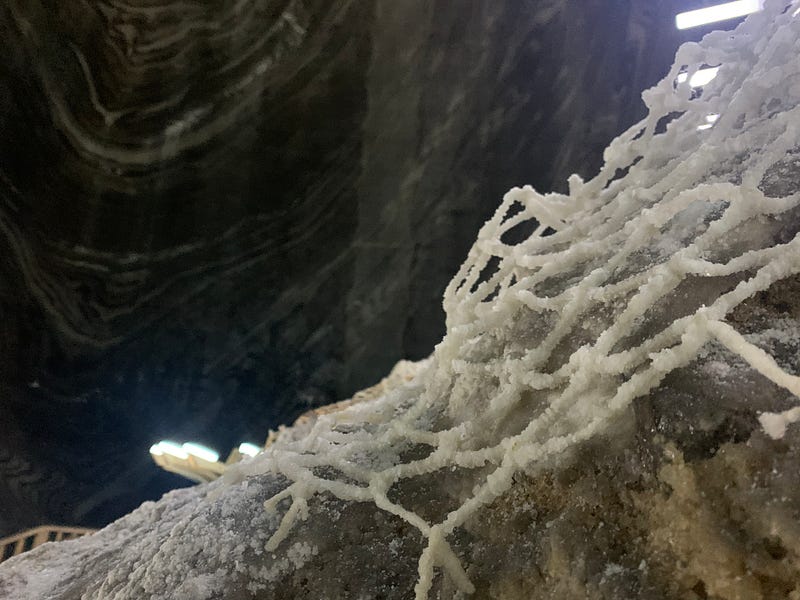
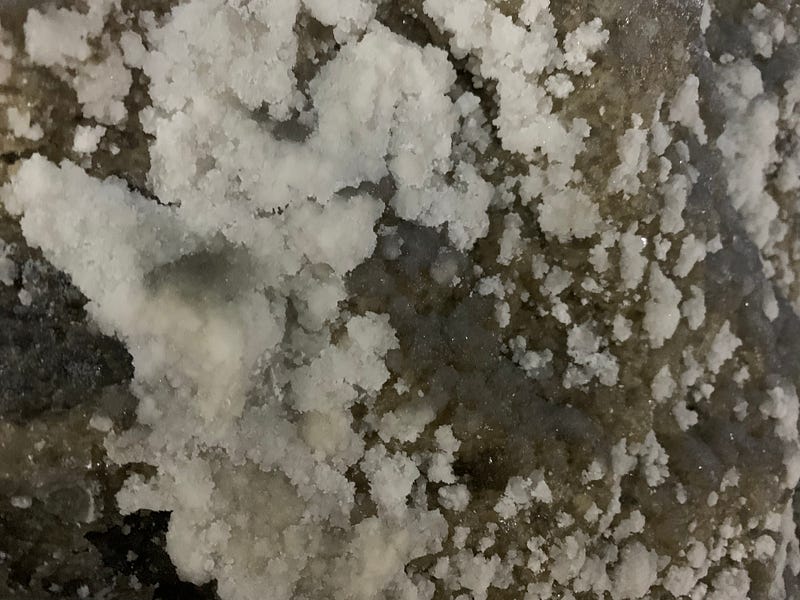
Some of the wooden frames also do get covered in salt crystals or even layers of salt. But wood gets preserved even longer in a salty environment.
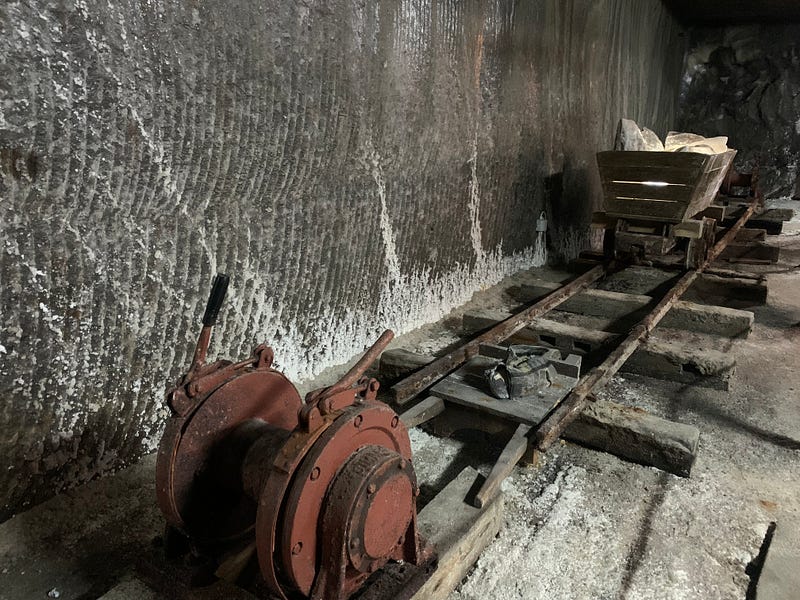
We went all the way back up taking the panoramic elevator. In the long tunnel, we walked further ahead and got to the extraction room.
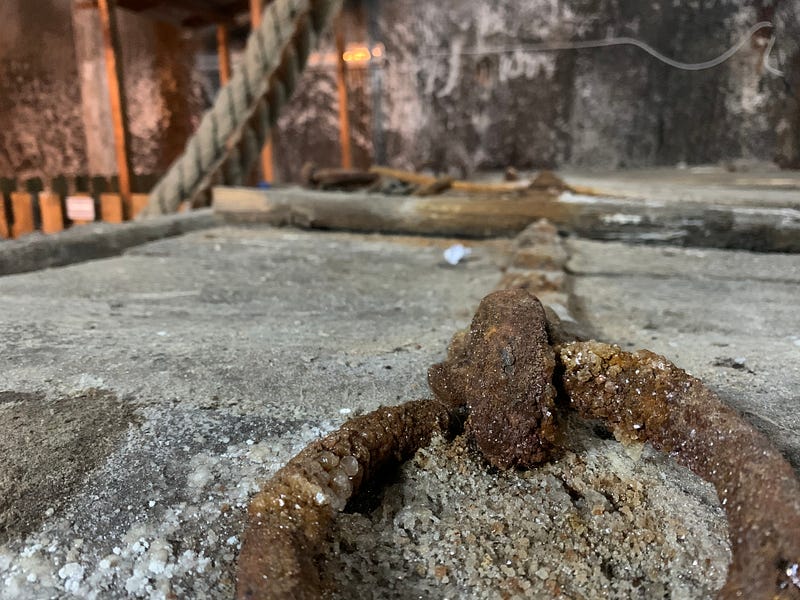
This is a little sad because they used horses to get the machine working. Horses would walk in circles all day and most of them would be blind after 2 weeks since they did not get covered their eyes after returning to the surface. From extreme darkness into bright daylight.
Also, the conditions were really hard in the mine and the horses had to “retire” after a maximum of 6 months working down there.
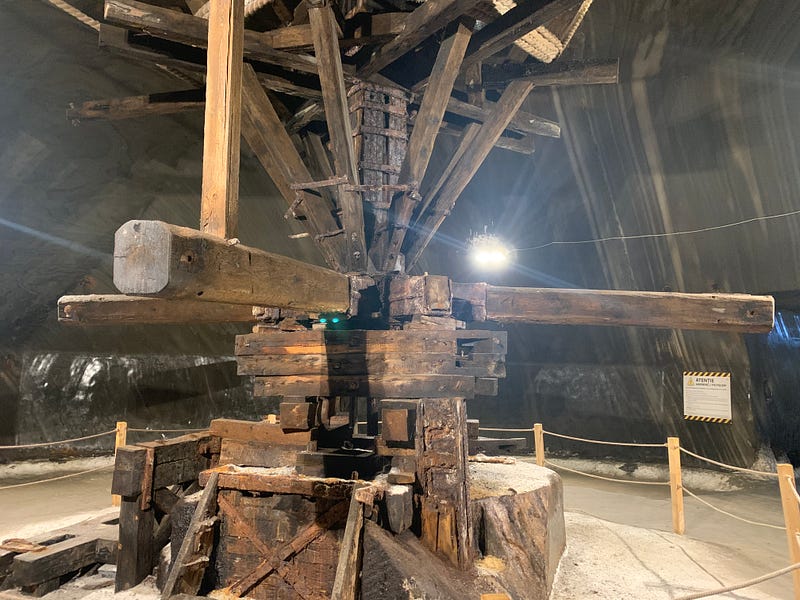
We walked into another room closed by a door leading to the “balconies”. The balconies were closed to visitors, I guess its construction isn’t safe in today’s eyes.
But what was interesting in this room was the echo. The echo chamber as it was called opened up into the big mine and high-pitched voices would get echoed back up to 20 times.
Yes, we did play with the echo. A lot. It was fun.
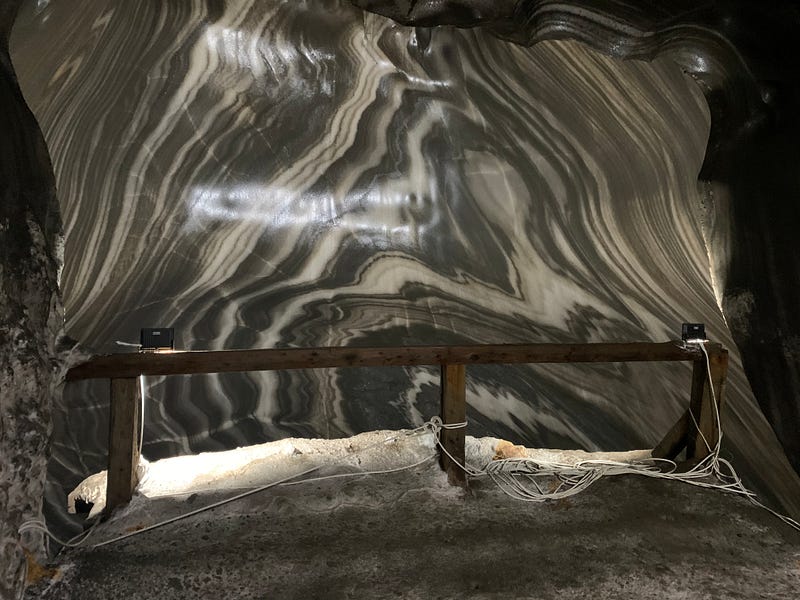
What else to say about the mine?
Well, there was a lot of salt. Everywhere.
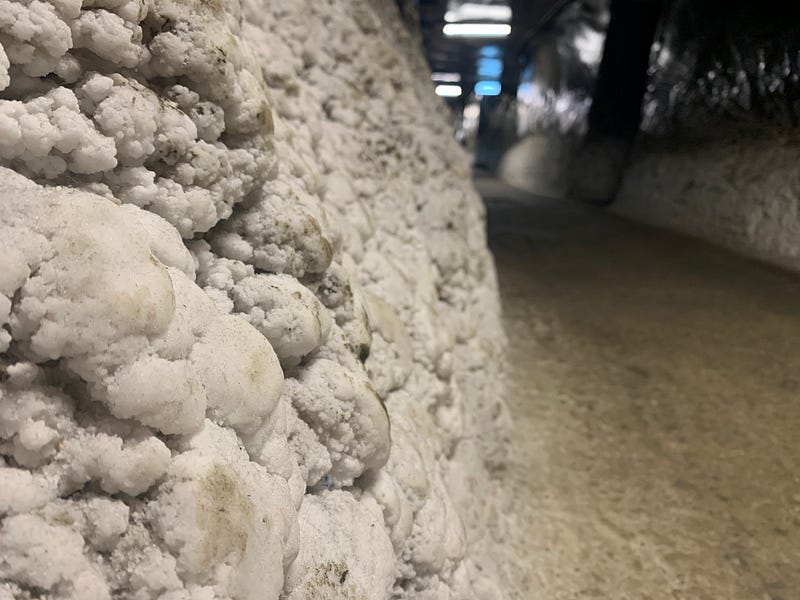
We stopped as we got to the old tunnel leading to the original exit as the signs recommended us to go back to the new entry if it was where our car was parked. Here was anyway nothing else to be seen than in salt-covered walls.
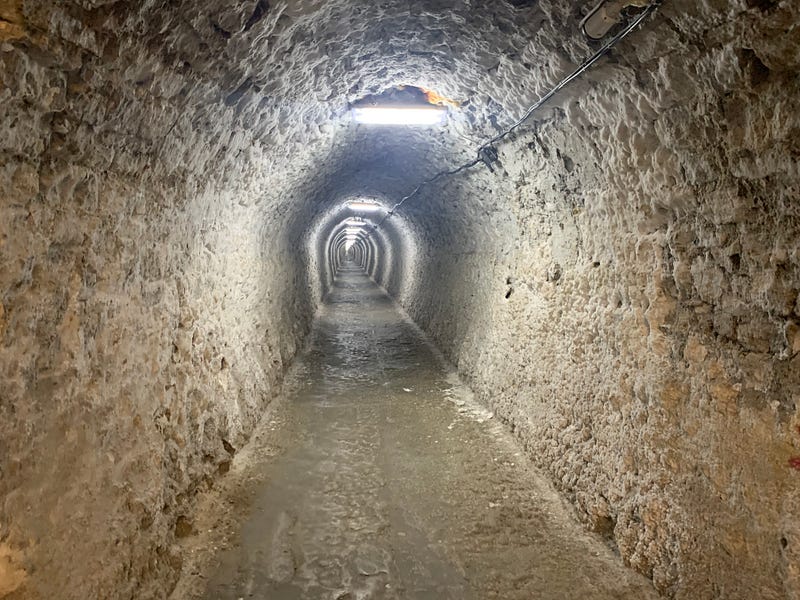
So here you go. This was our excursion to the salt mine in Turda (Salina di Turda). I hope you enjoyed this walk with me. Our day wasn’t finished yet but the second part of the day we spent in the sunlight or let's say at least above the ground.
Stay tuned…
More about our travels to Romania:
Join my email list here if you would like to read more travel essays or sign up for the Medium membership to receive unlimited access to my and other writers’ stories out here (I will receive a commission fee in return).